Chapter I
Children of the night visitors: the old stories behind the tieflings
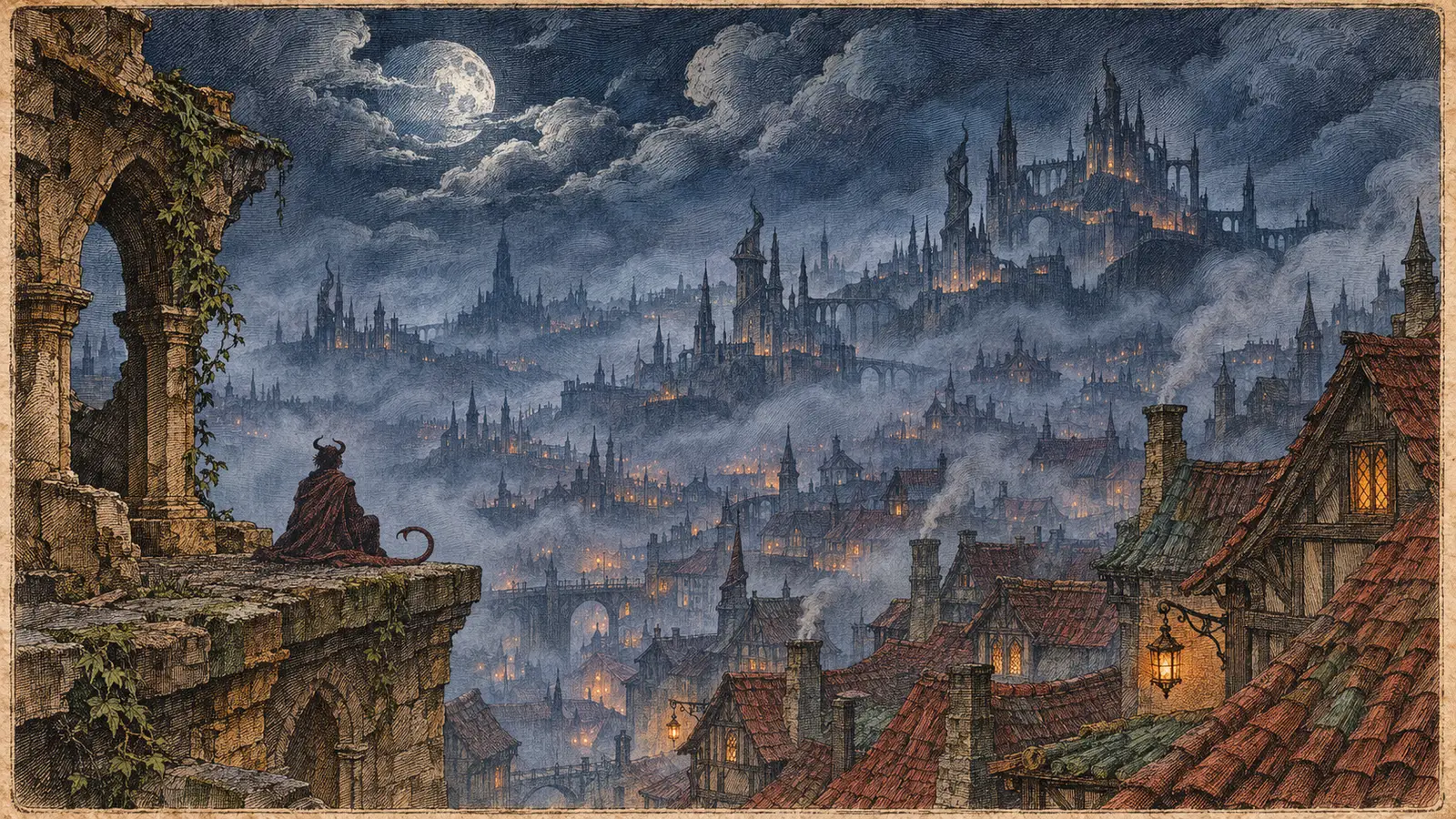
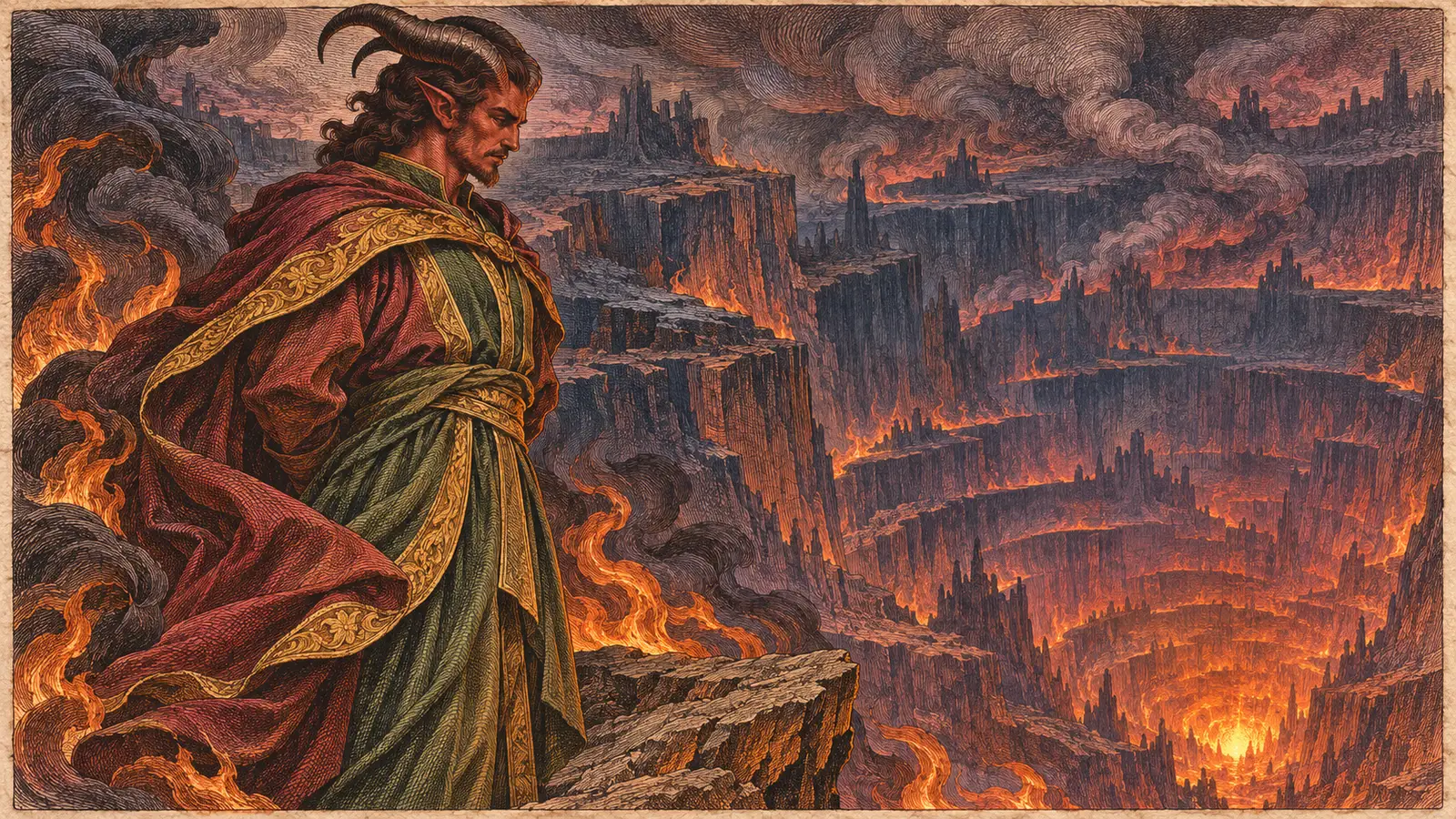
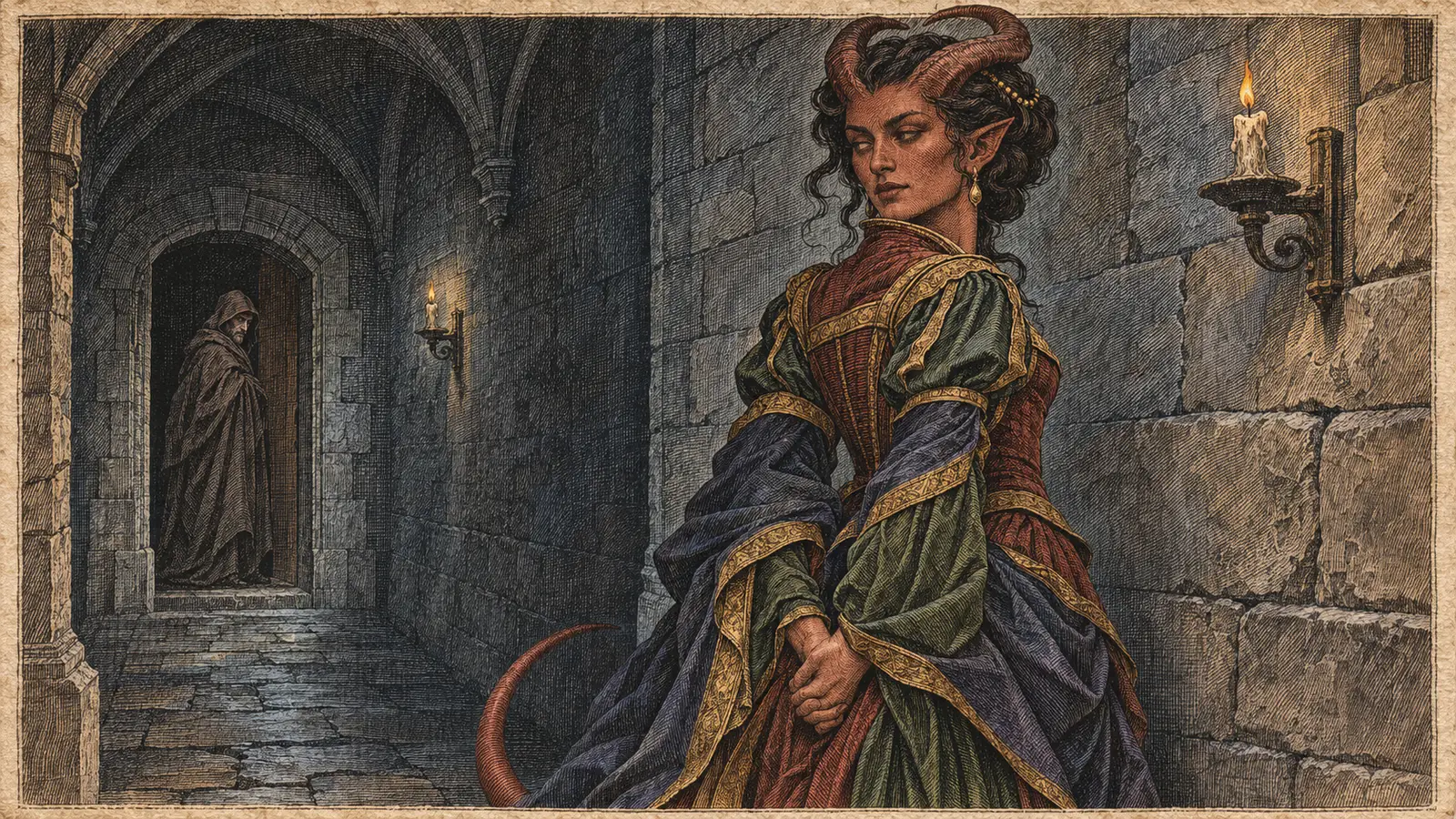
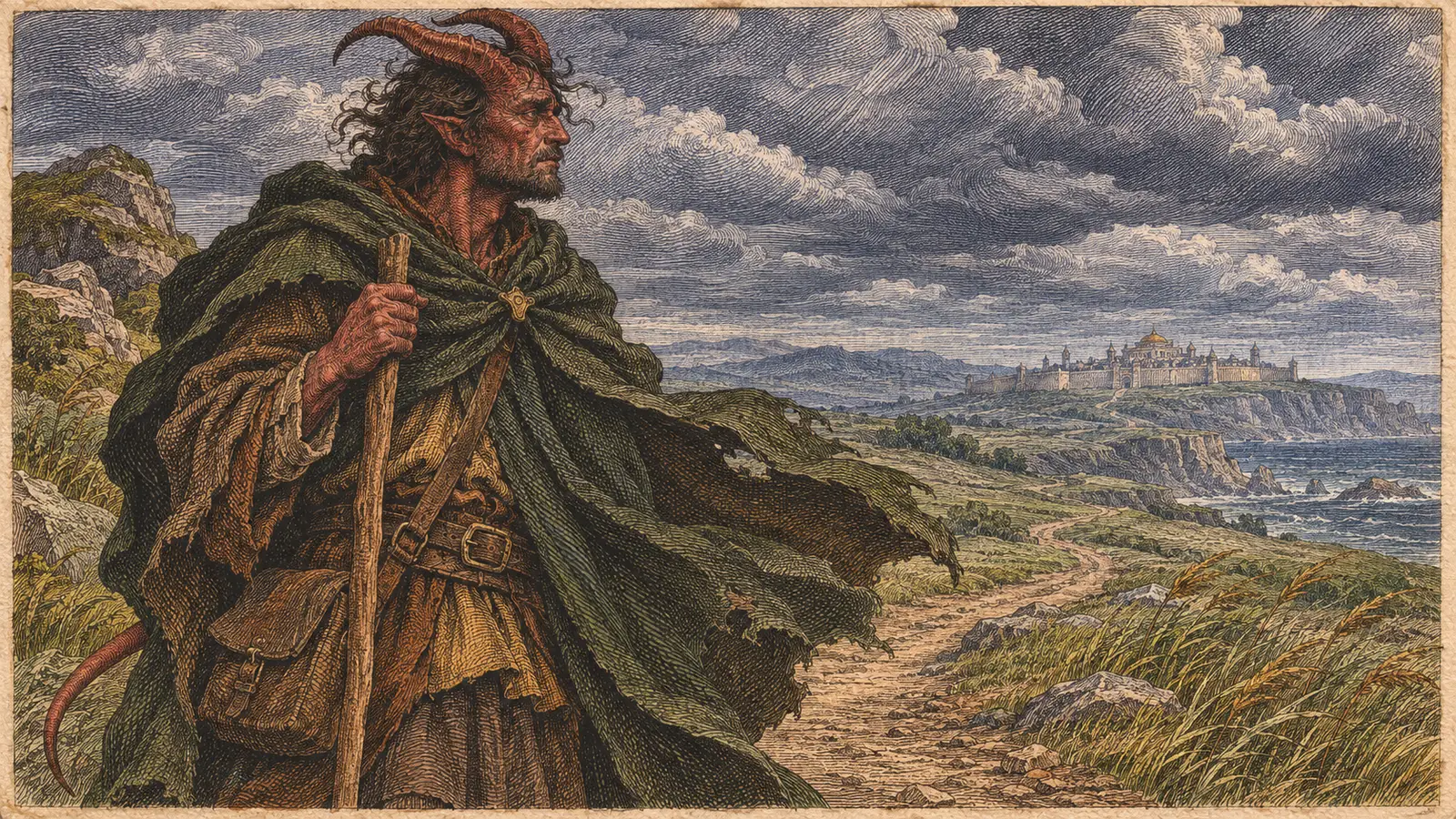
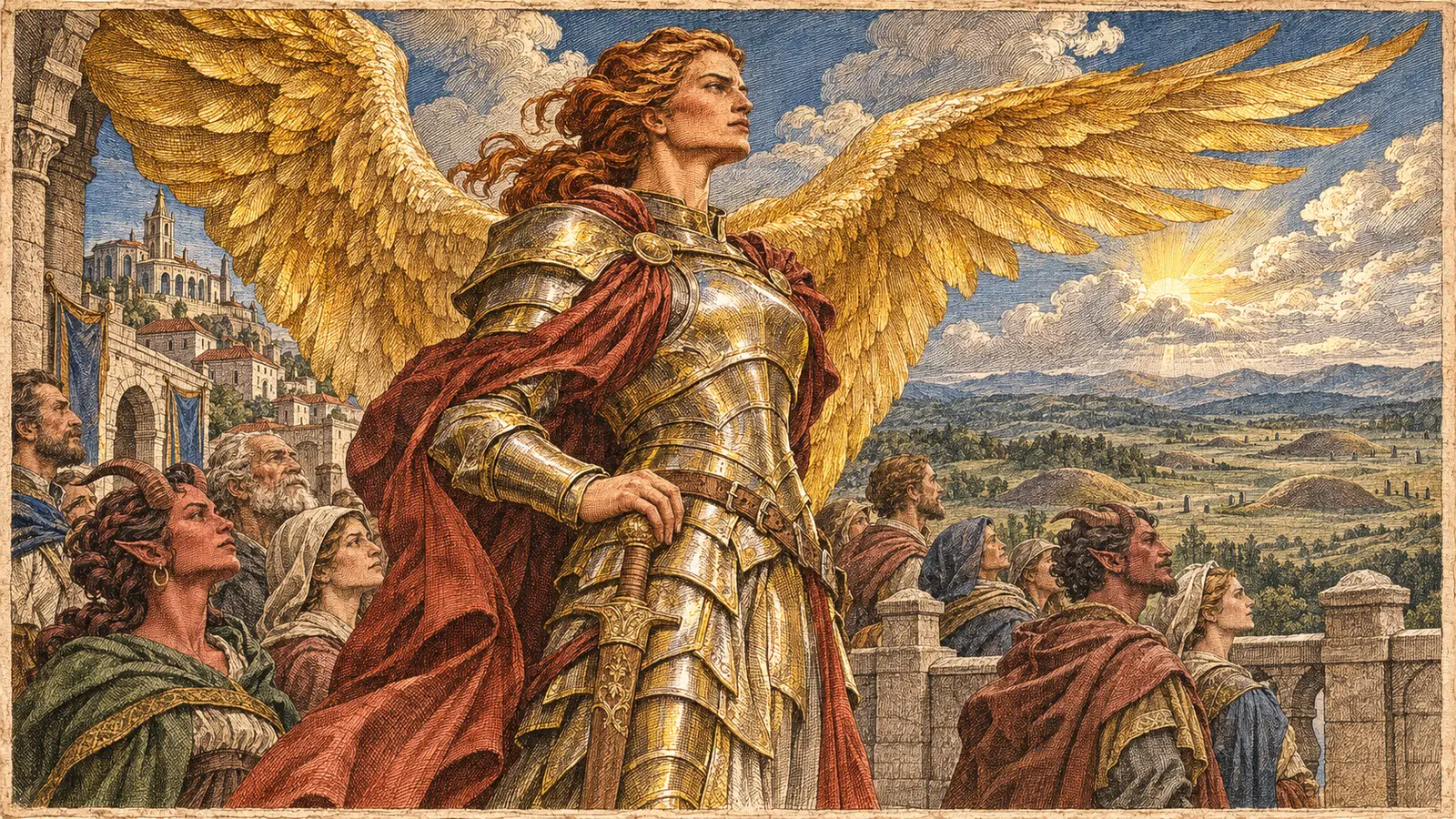
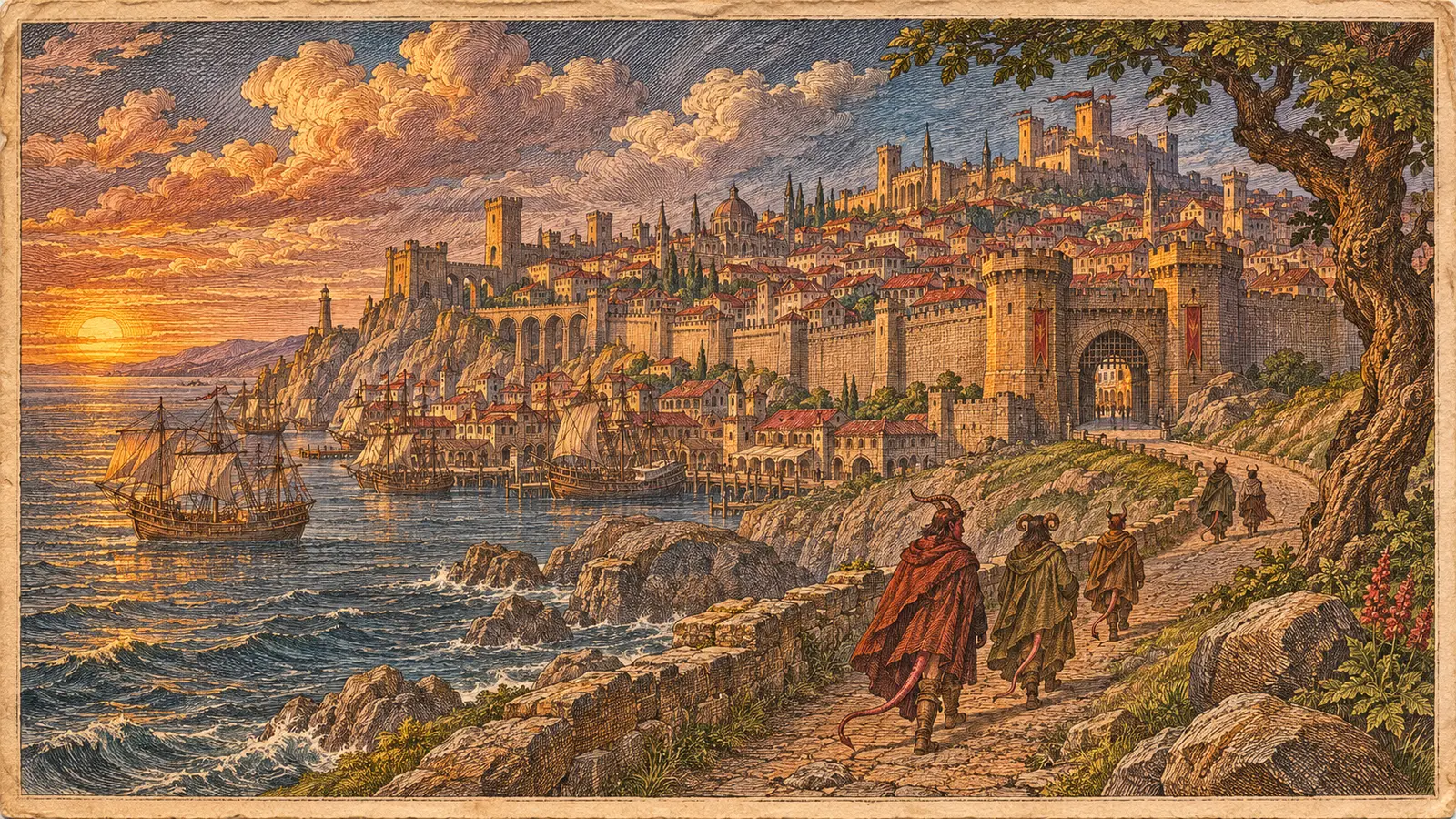
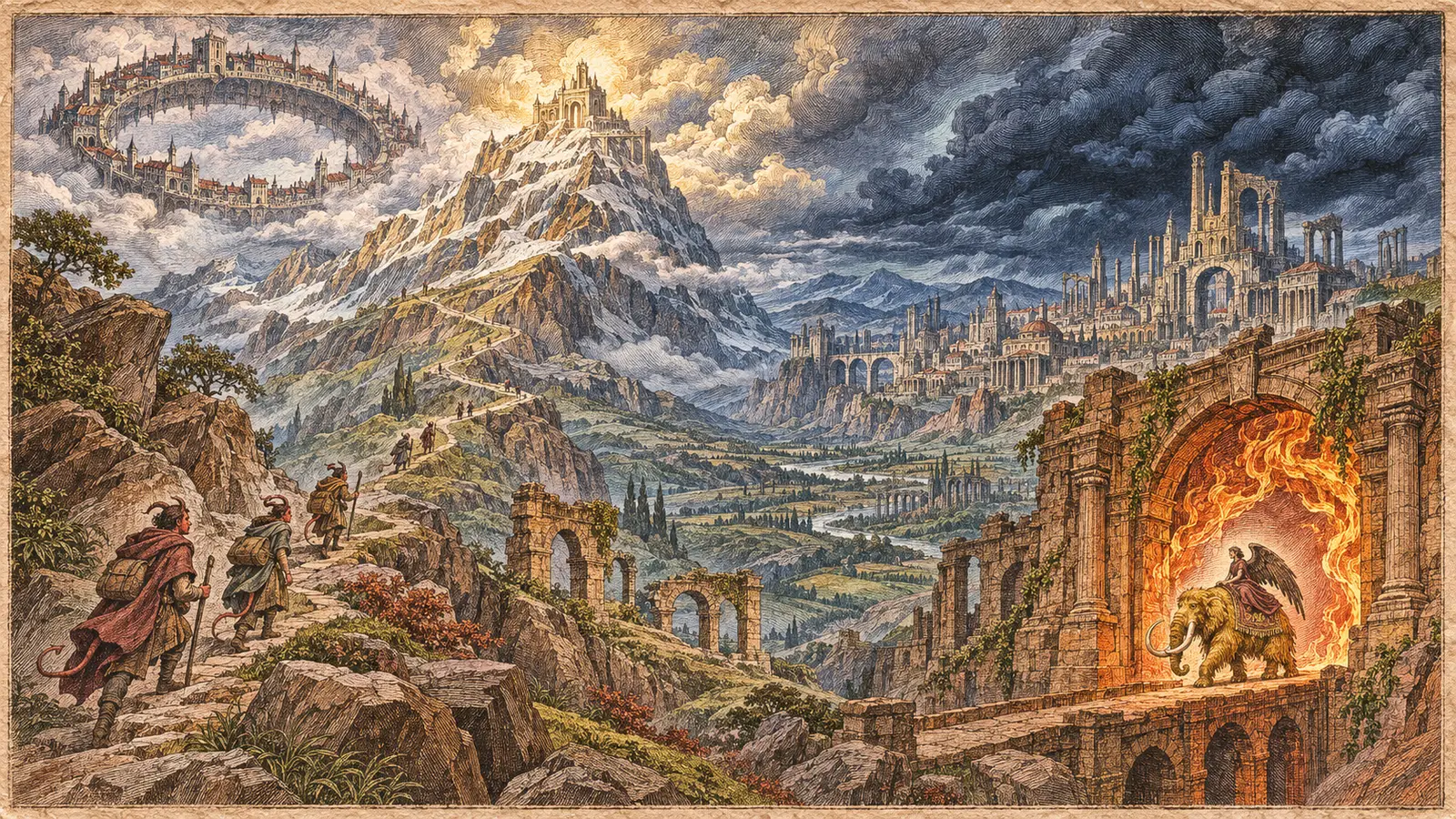
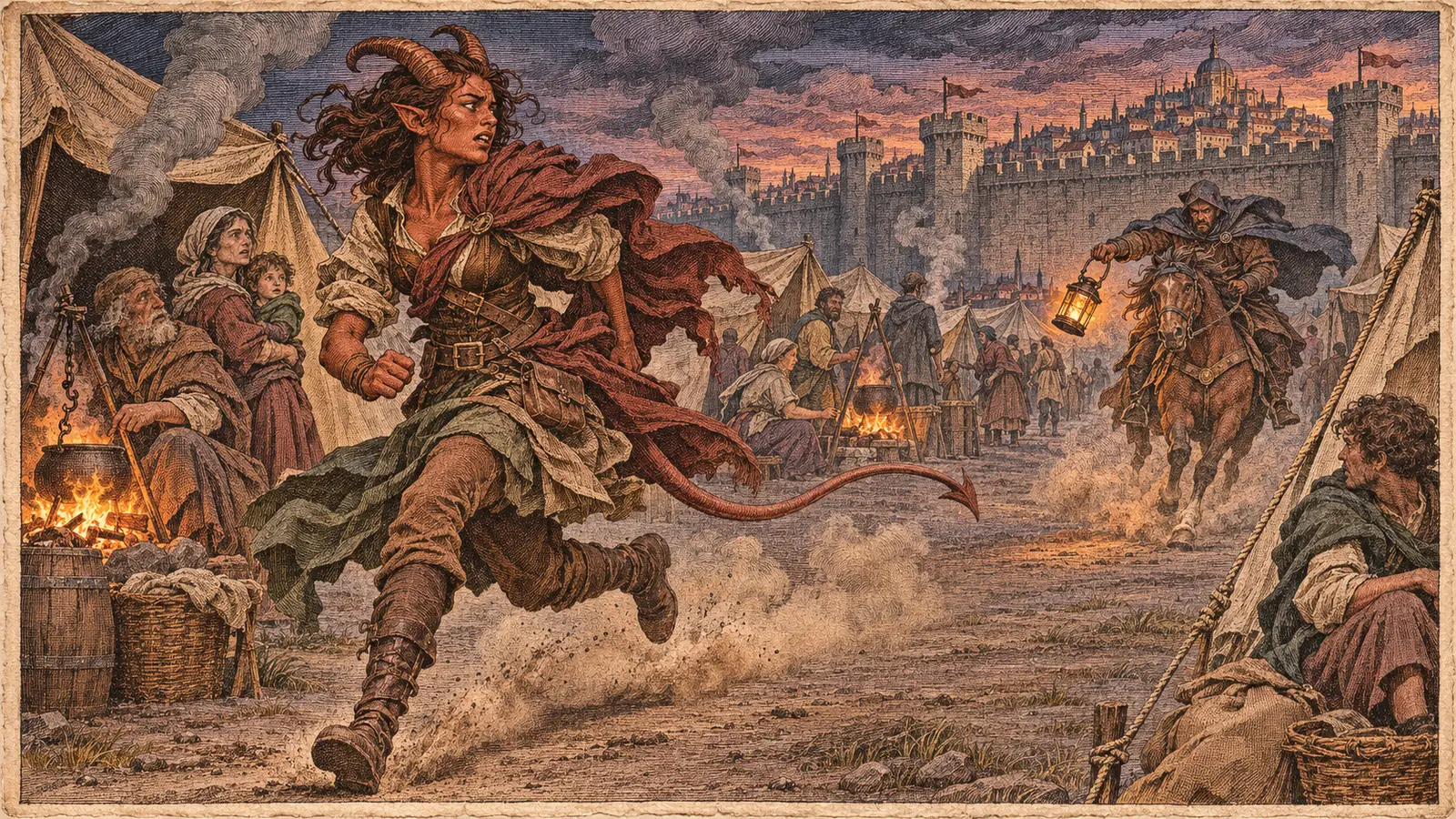
Tonight's story follows the tieflings, the horned and quiet-eyed children of the Lower Planes. We'll start in the folklore that came before them and walk through the alleys of , the ruins of a fallen empire, the nine layers of Hell and the refugee camps outside Baldur's Gate. By the end we'll see how a people who began as a whispered rumour in the City of Doors became some of the best-loved figures in Dungeons and Dragons.
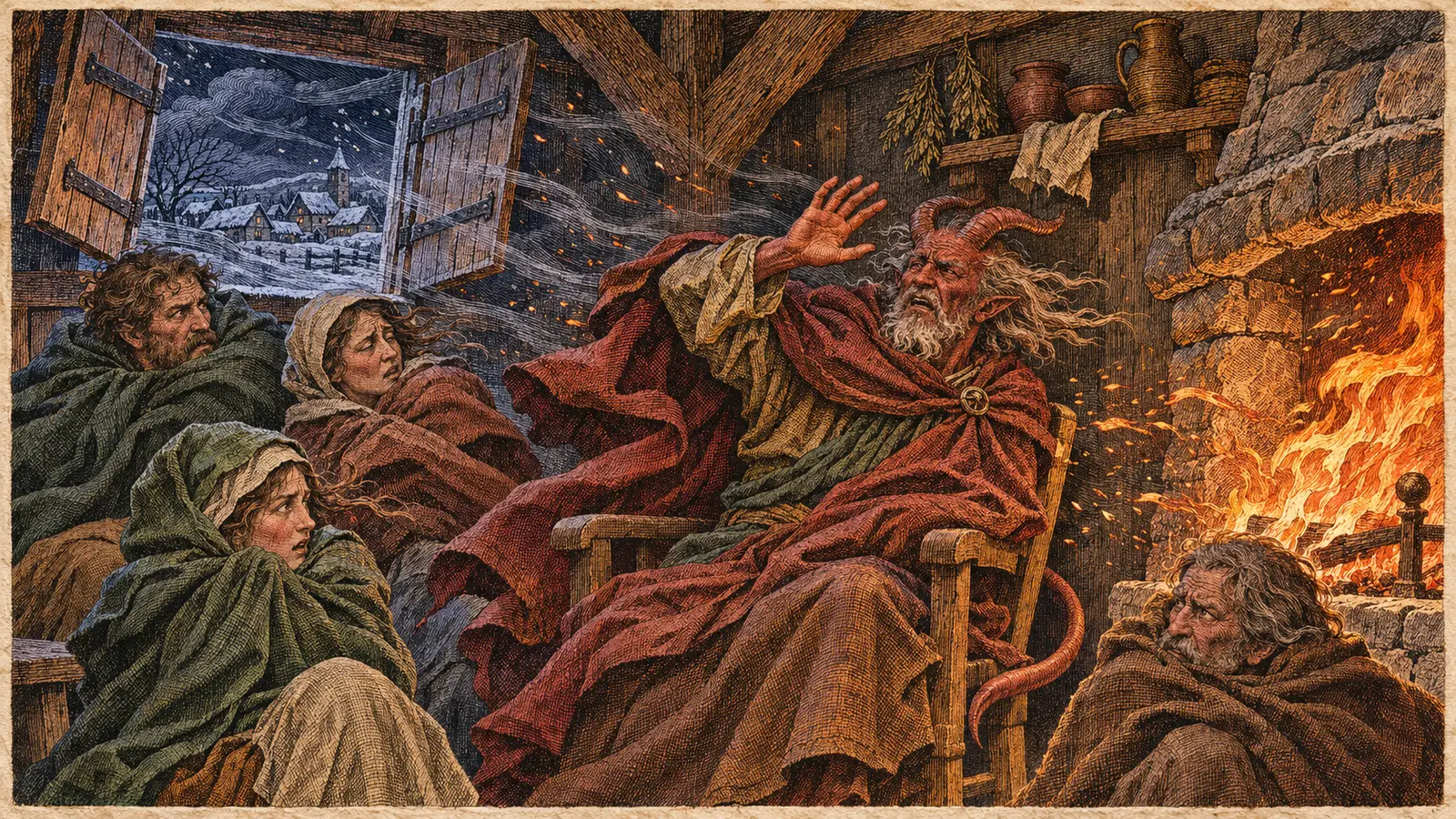
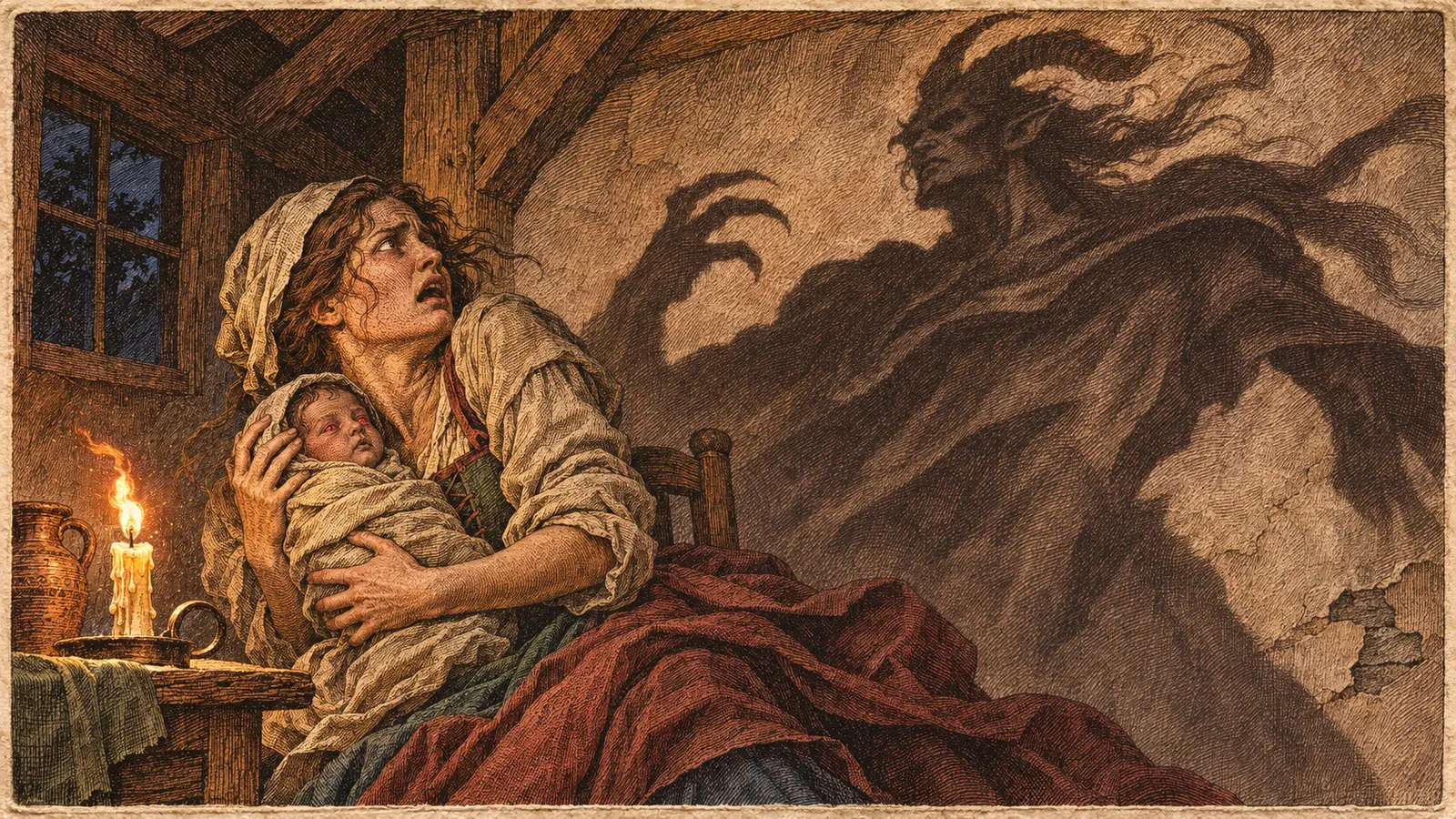
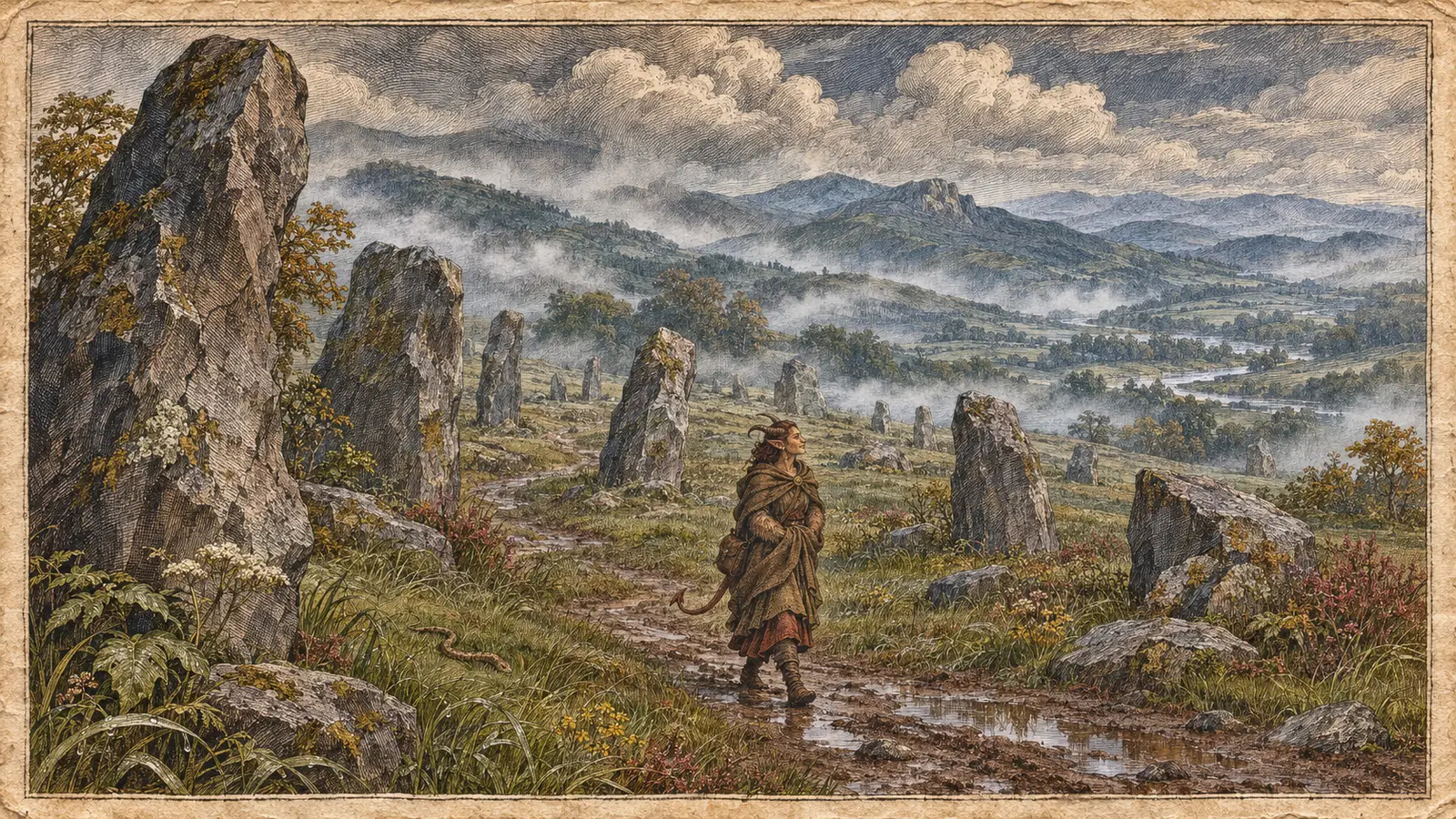
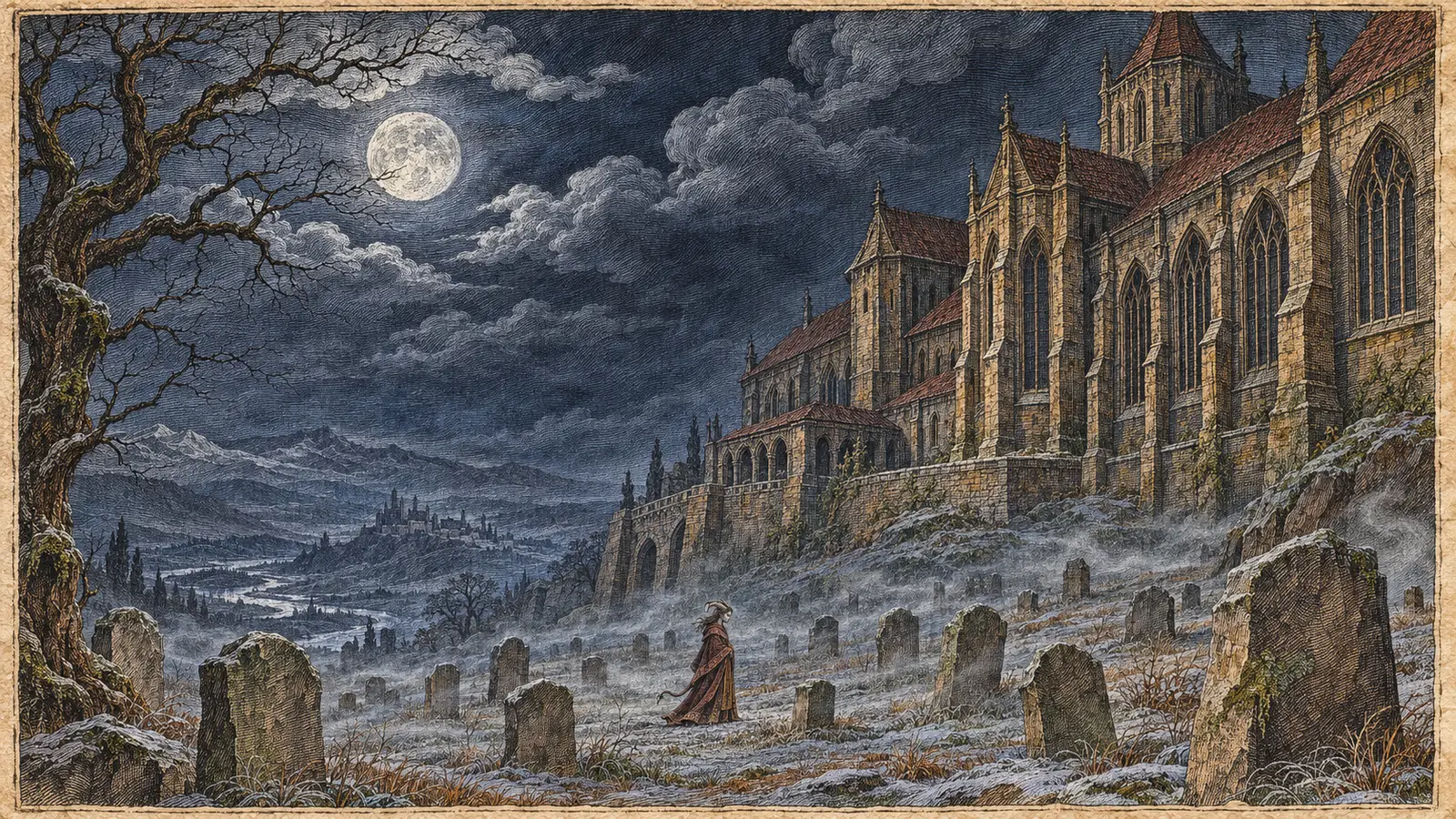
Long before anyone rolled dice for a tiefling, people were telling stories about children who carried something strange in their blood. Picture a village in medieval Europe on a long winter night. The fire has burned down to embers, the shutters creak, and someone near the hearth starts to talk, softly, about the visitors that come to sleepers in the dark.
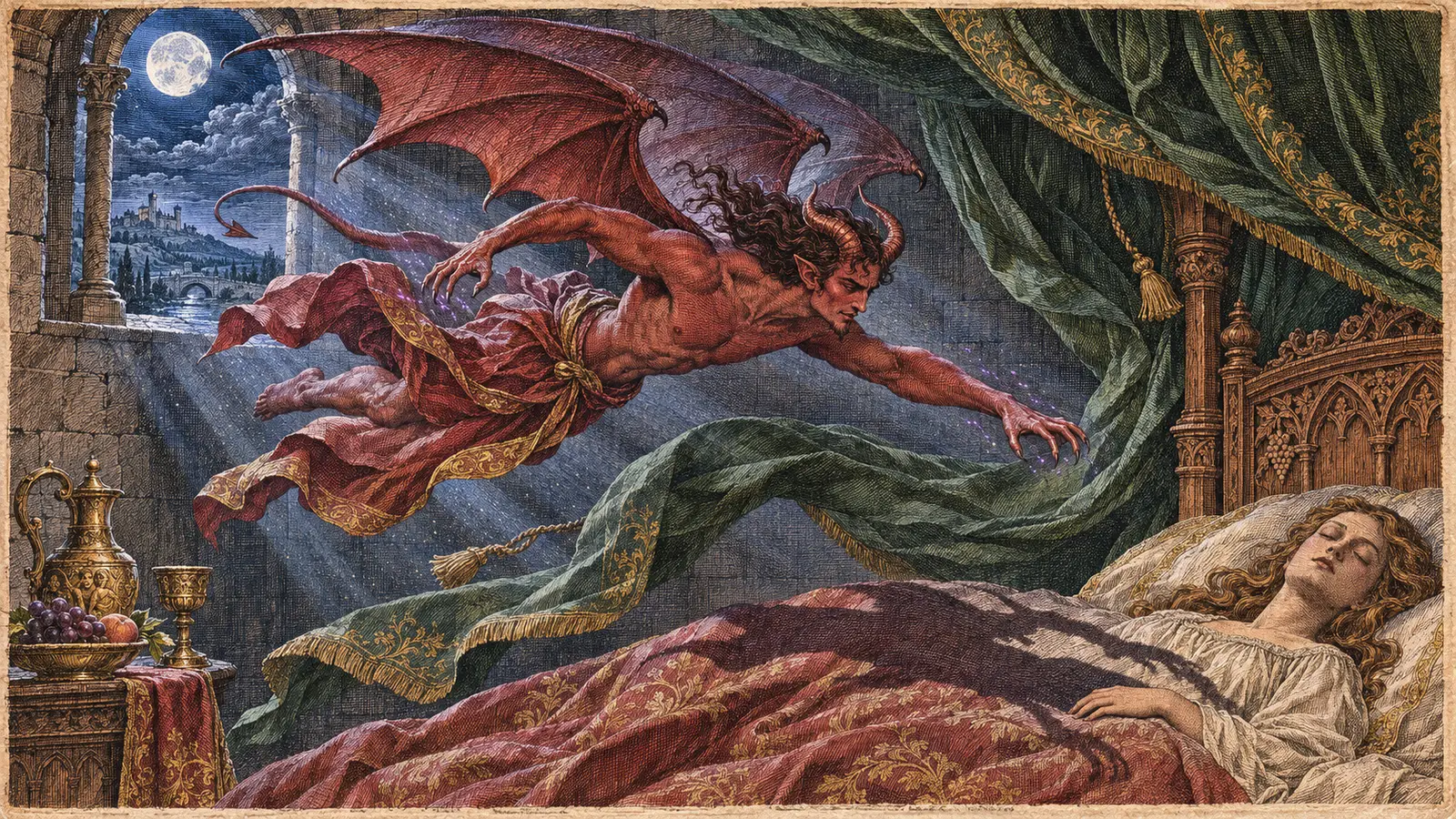
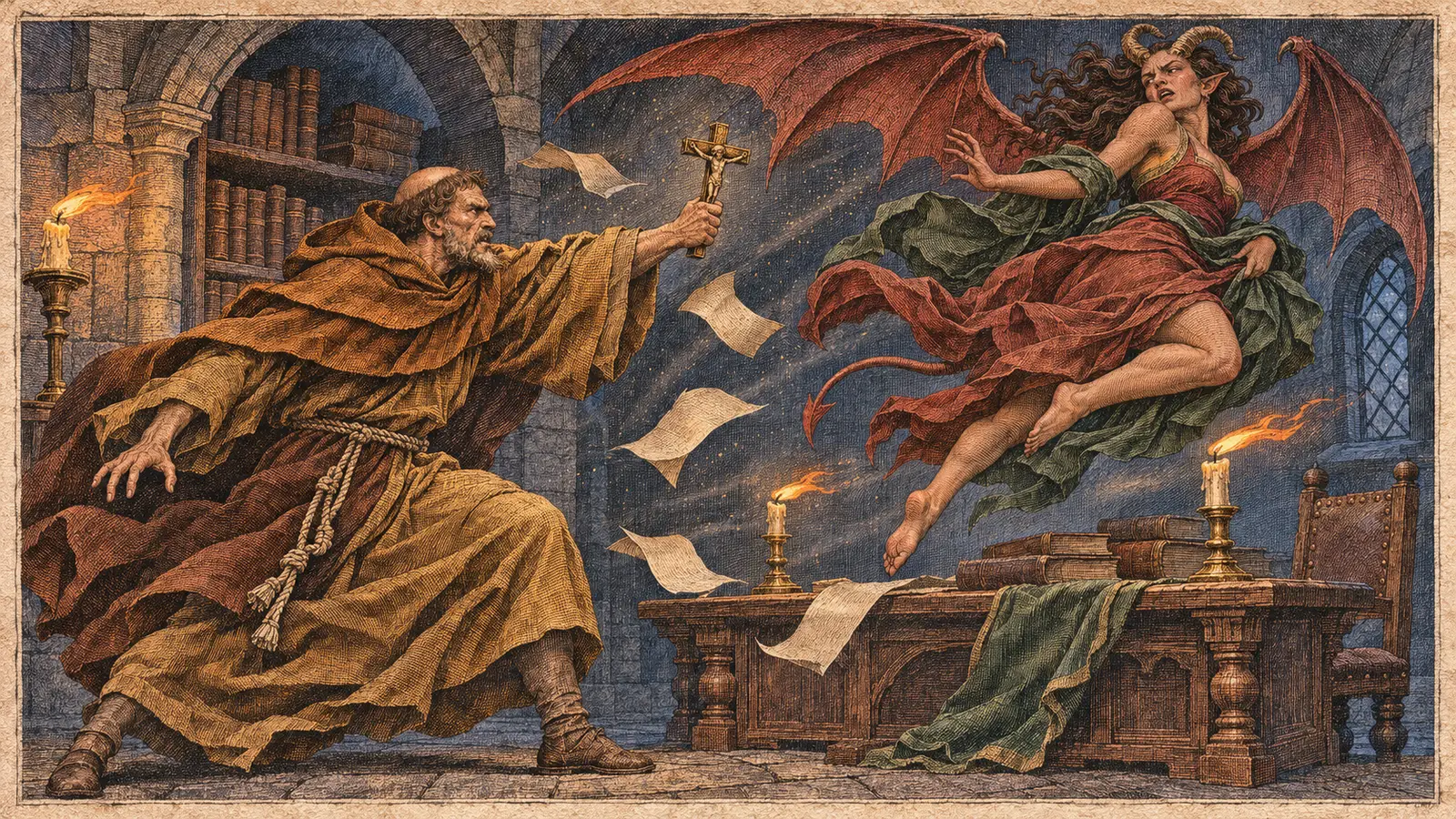
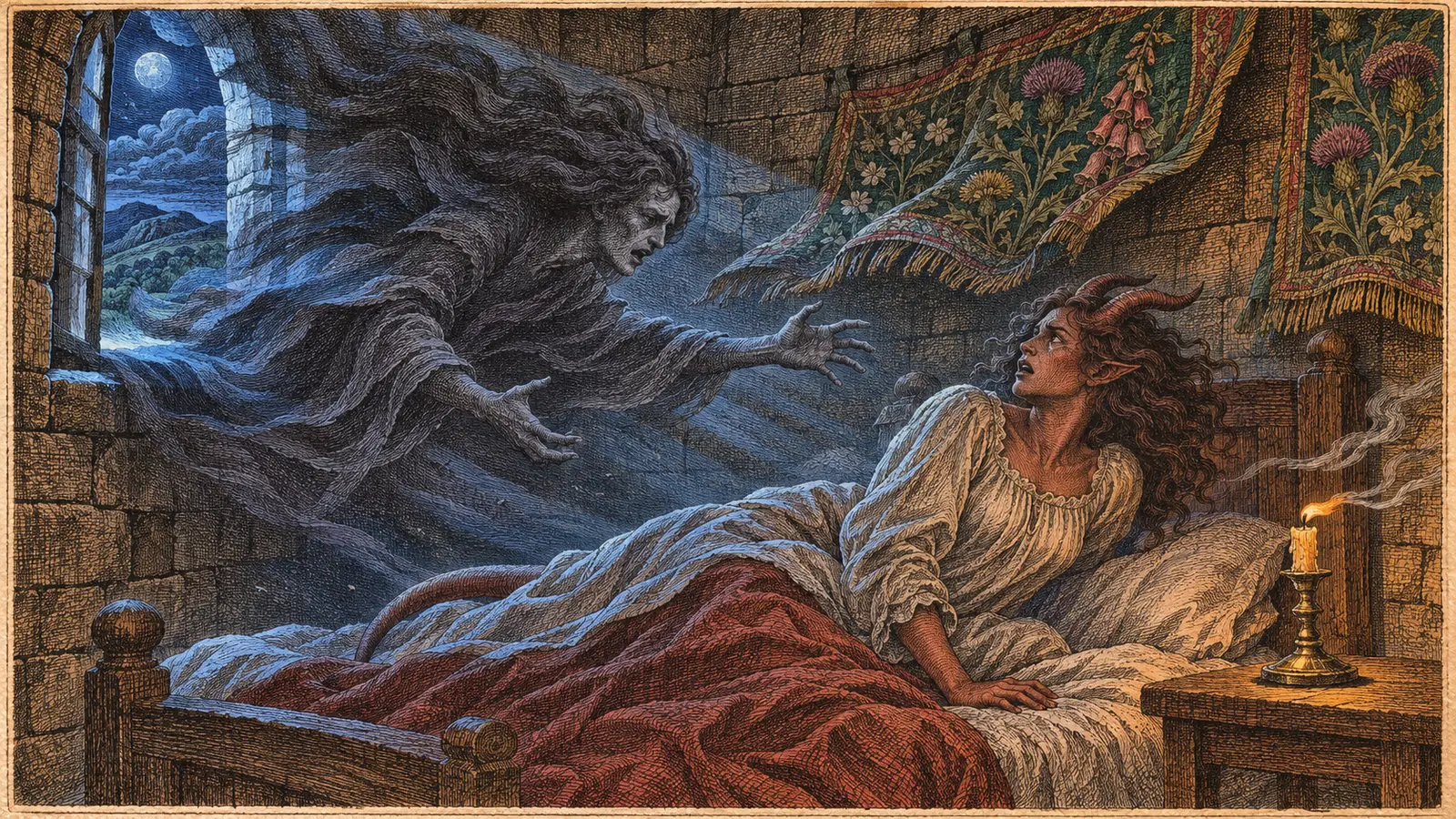
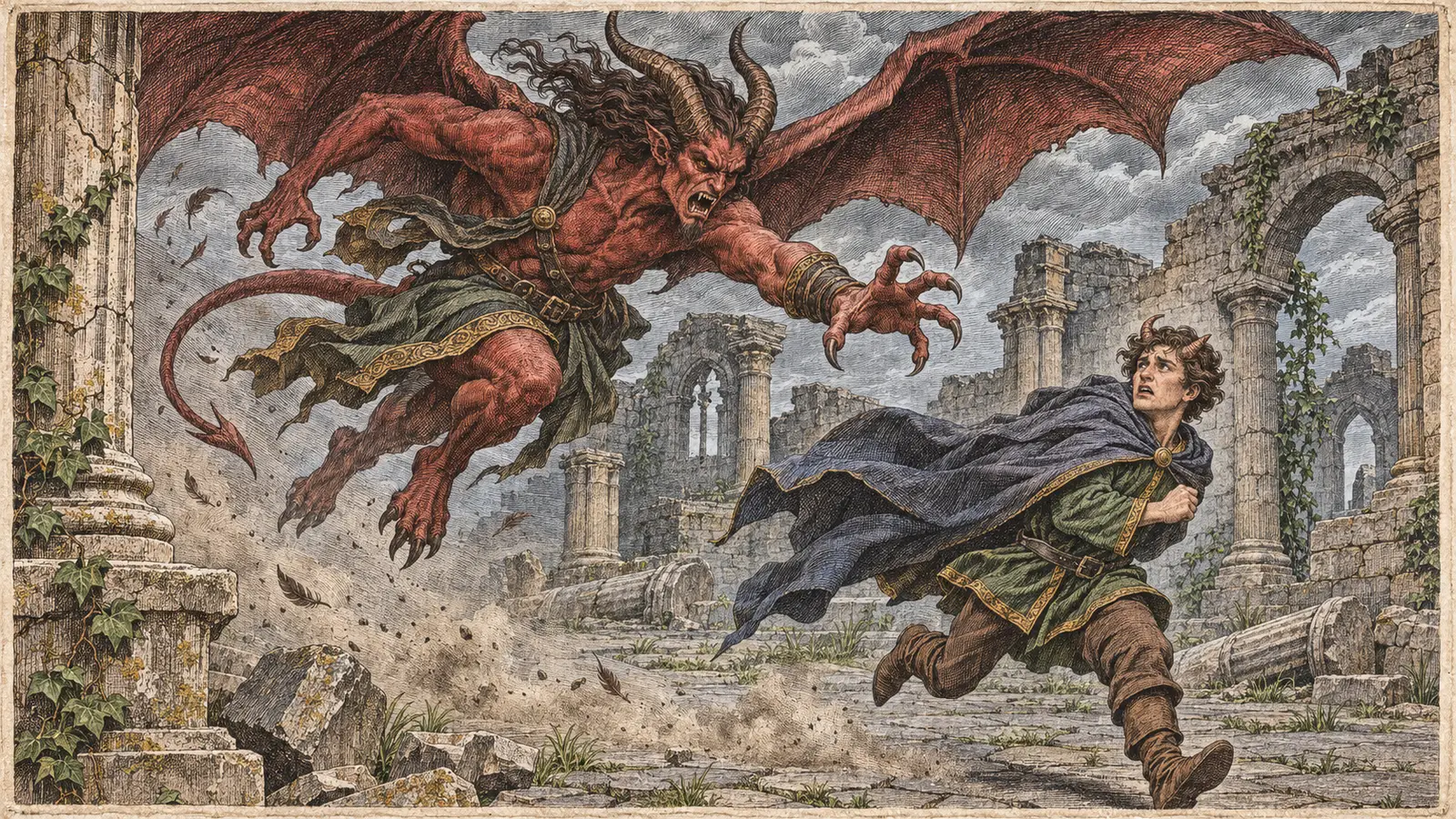
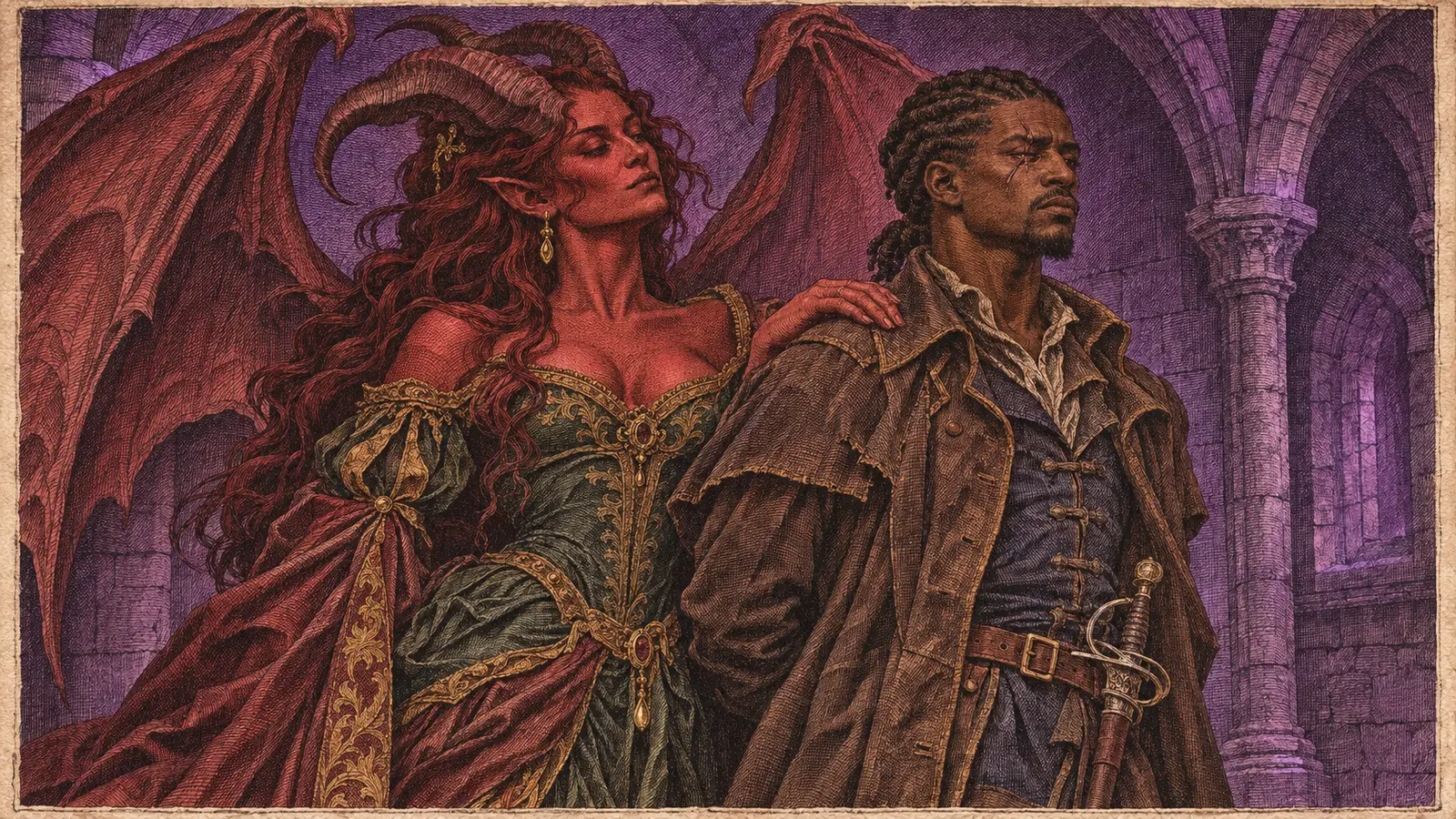
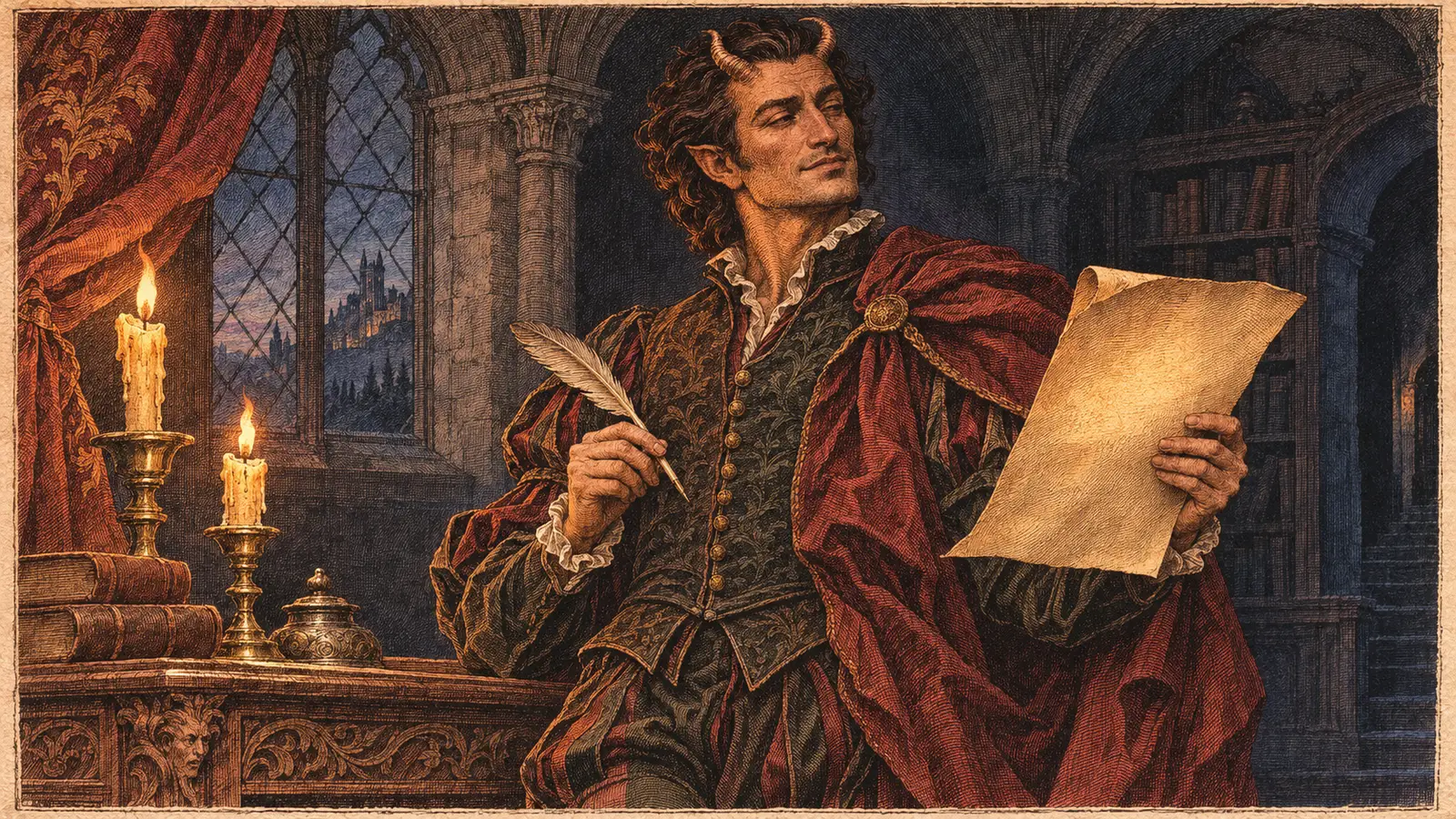
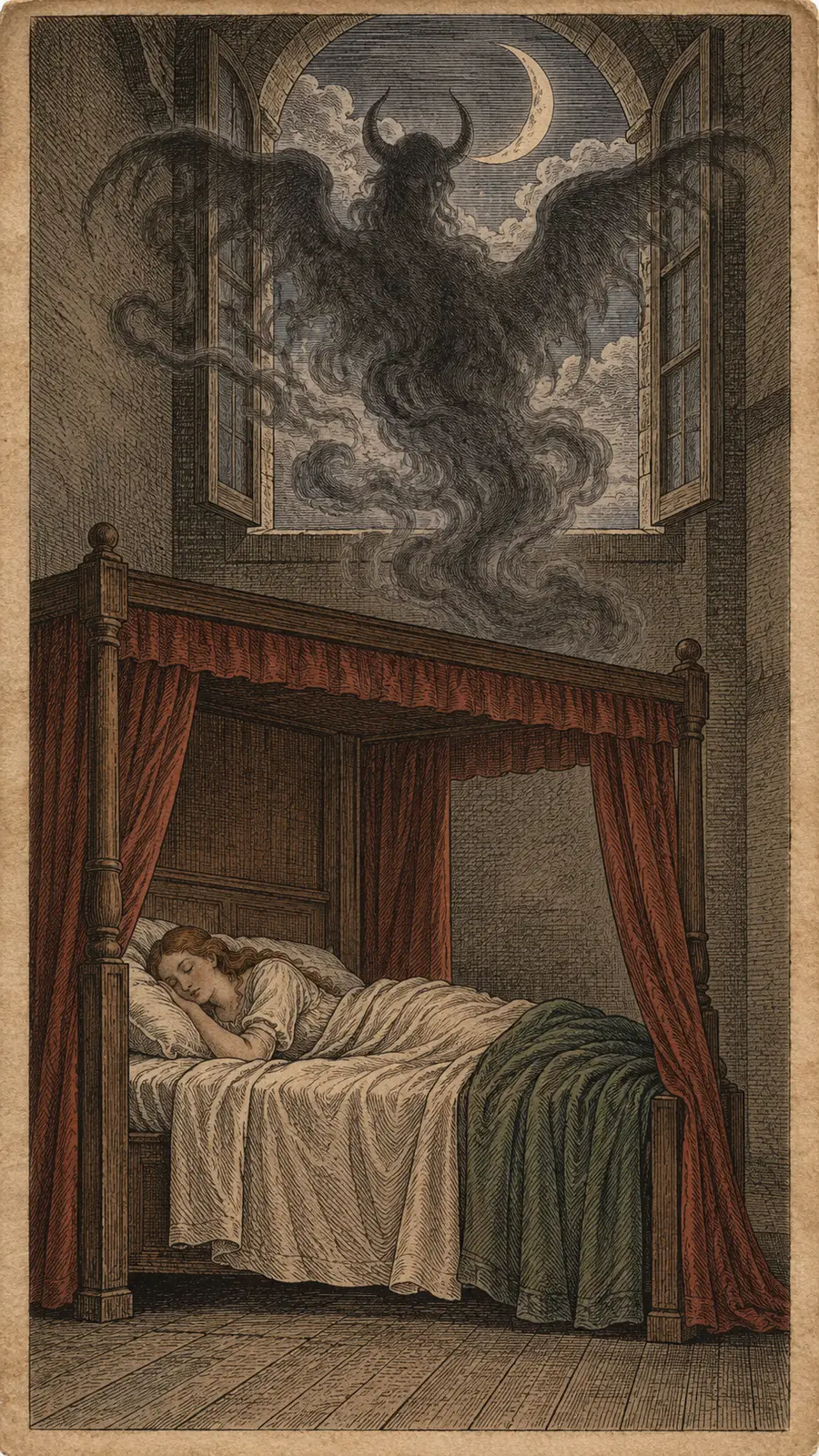
These visitors went by many names. The incubus was a male demon said to come to sleeping women at night, and the succubus was his counterpart, who came to men. Medieval Europe believed that a union between one of these spirits and a mortal could produce a child, and that this child would be half human and half something else entirely. Such a child was called a cambion. The word has been used since at least the nineteenth century to mean specifically the offspring of an incubus or succubus and a human parent, though the idea behind it is far older.
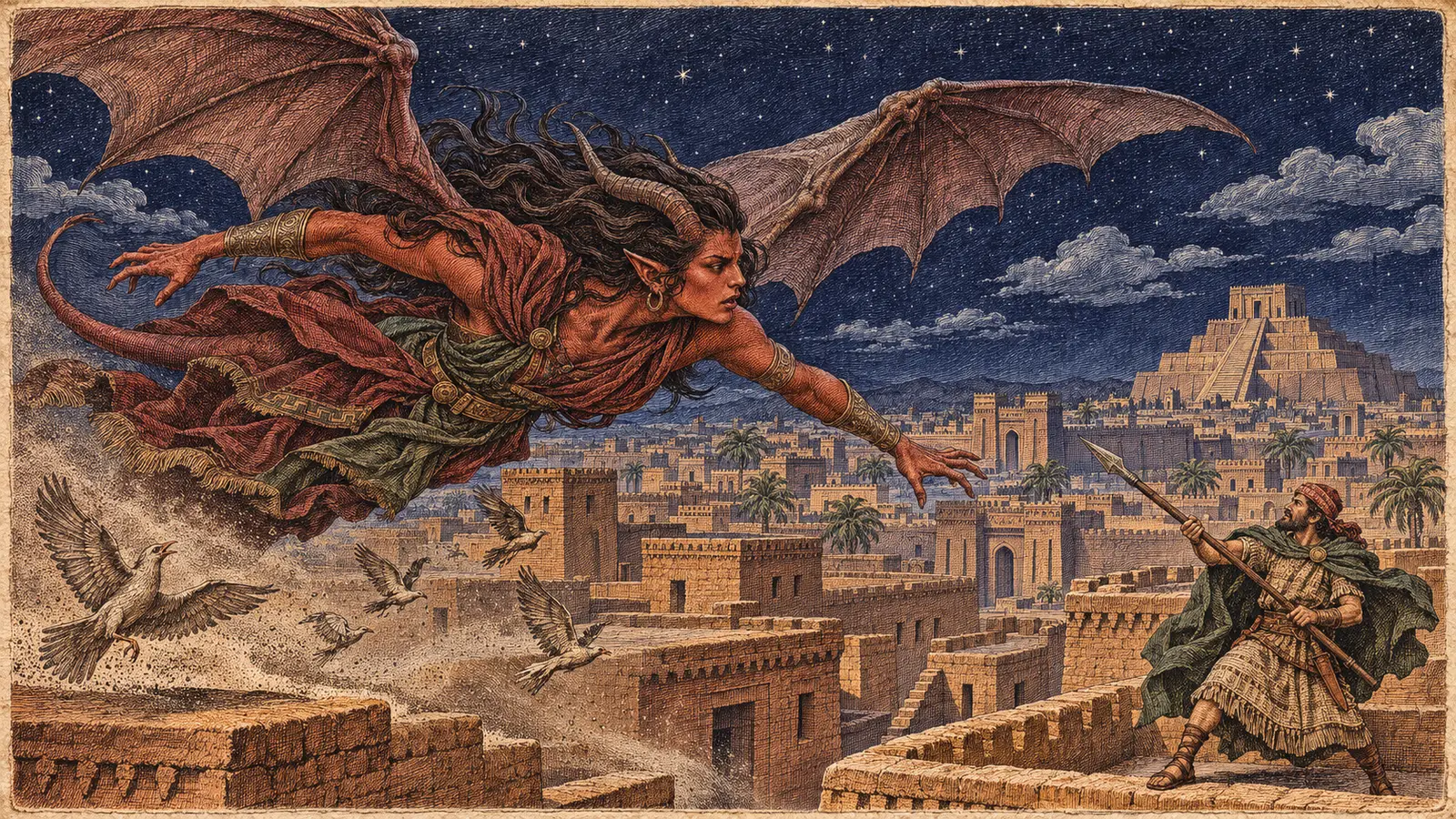
The roots go further back than medieval Europe. In ancient Mesopotamia people told of night demons who visited mortals in their sleep. The came to men. The was her male counterpart, who came to women and was said to father children on them. Scholars name these old spirits among the forerunners of the incubus and the succubus. So by the time the stories reached the cold stone villages of Europe, they had already travelled a long way, passed from teller to teller over thousands of years.
In 1486 a book appeared that would shape what Europe believed about such things for generations. The Malleus Maleficarum, written by , became the major demonology handbook of its century. Its explanation of demonic children was strange and rather ingenious. Kramer held that demons could not reproduce on their own. To explain how a demonic child could exist at all, he proposed that a succubus gathered seed from a man and an incubus then carried that borrowed seed to a woman. A child born this way was thought to be malformed, or unusually open to supernatural influence, as if a door had been left ajar inside them.
It's worth holding on to that image for a moment, because it fits the tieflings closely. Here was a child who was human in body and birth but carried something from elsewhere, something nobody had asked for and nobody could quite take back. The child didn't choose it. The parents may not have chosen it either. It simply arrived, borrowed and carried and passed along, and the child lived with what it left behind.
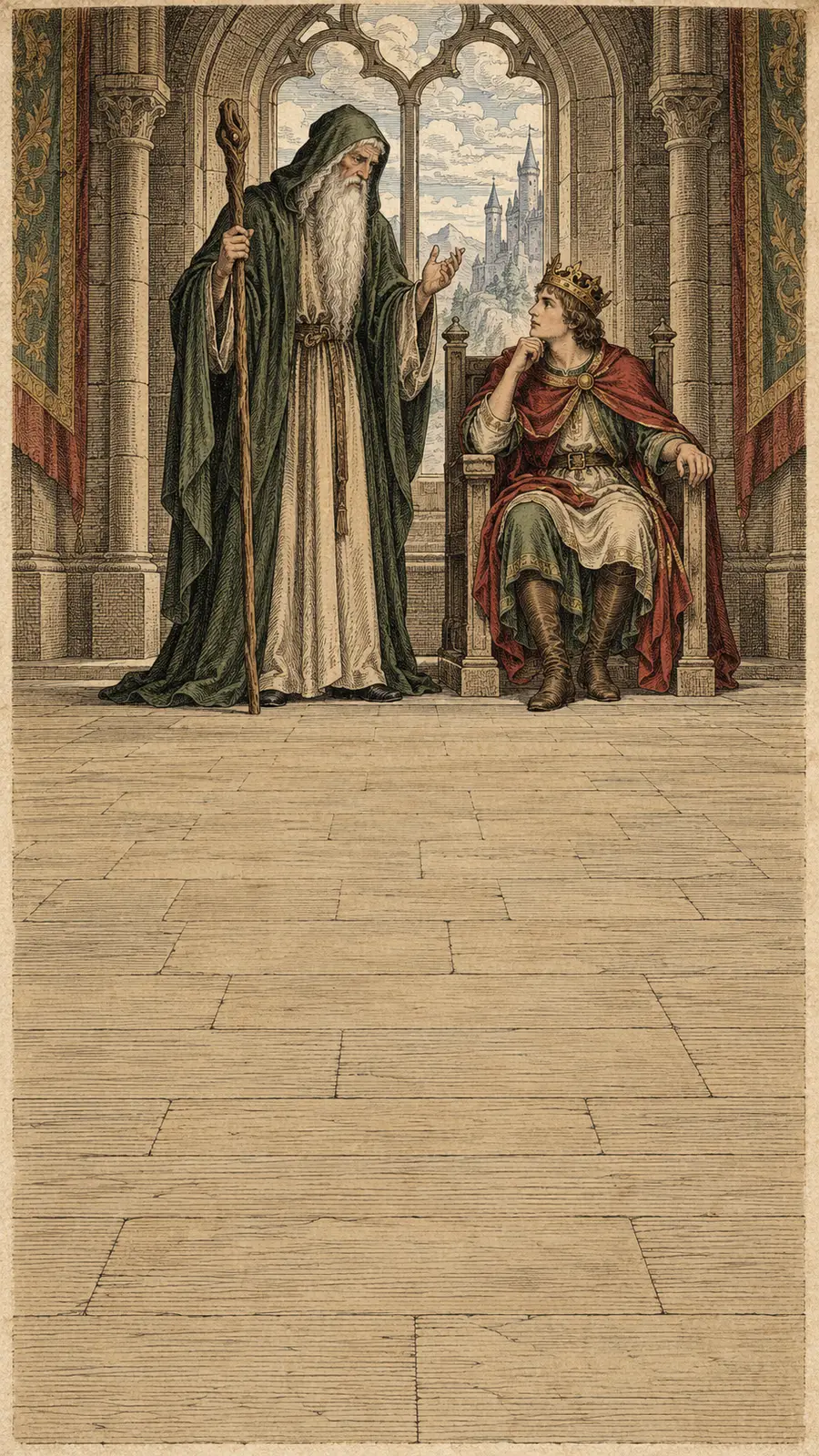
Not every story about a demon's child ended in darkness. The most famous cambion of all is . Around 1137 wrote his Historia Regum Britanniae, the History of the Kings of Britain, which is the earliest account to give Merlin an origin. In Geoffrey's telling, Merlin's mother is visited at night by a spirit described as an incubus, and Merlin is the child of that visit. It was the first popular tale of demonic parentage in Western Christian literature.
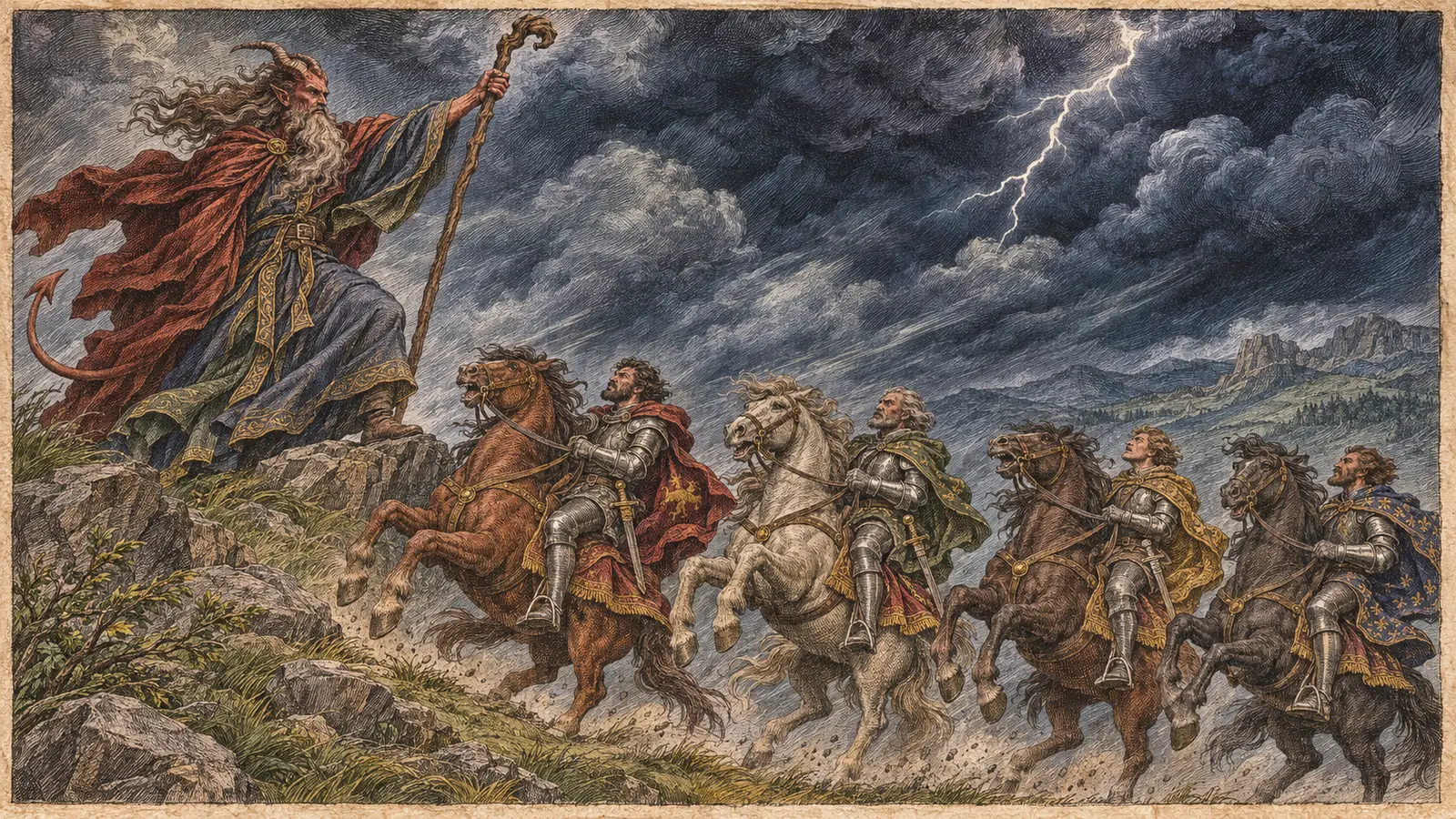
What Merlin became matters more than how he began. He didn't grow into a monster. He became a prophet, a counsellor and a wise figure at the heart of the Arthurian legends. So the oldest and best-known story of a fiend's child is already a story about someone whose ancestry pointed one way and whose life went another. It's a gentle precedent for tieflings, and the question it raises would come back again and again: does blood decide what a person becomes, or only where they start?
These old stories were in the air when Dungeons and Dragons began to fill its bestiaries, and the game took notice of them. Its first children of fiends, though, weren't people. They were monsters.
In 1982 a module called Lost Caverns of Tsojcanth introduced the alu-demon, a female demon born of a succubus and a mortal human. Some of you may remember that module from our evening with Acererak, where its caverns came up in passing. The next year, in 1983, the first edition Monster Manual II gathered both the alu-demon and a new creature, the cambion, under its long entry on demons.
These first-edition cambions were classed as semi-demons, and they came in two kinds. There was the baron or marquis cambion, a figure of some rank, and there was the major cambion. In that edition the line between cambion and alu-demon ran through the parents. A cambion was the child of a human mother and a demon father. An alu-demon was the child of a succubus and a human. In later editions the words shifted a little: cambion came to mean a male half-fiend, while alu-fiend or alu-demon meant his female counterpart.
Whatever their names, these creatures were first-generation half-fiends. One parent was a demon, plain and direct. They lived in the monster books, they were met in dungeons and fought, and nobody imagined sitting down to play one.
The next step needed a different kind of world, one where fiends walked the streets, where a person might buy bread from a stranger with a demon somewhere in their family tree, and where the planes themselves were a neighbourhood. That world was taking shape in the early 1990s at TSR, and its creator was David Cook, known to everyone as Zeb.
Cook had been lead designer of the second edition of Advanced Dungeons and Dragons, and now he was building a campaign setting about the planes. He wanted a race of humans with fiendish blood, and he wanted a name for them that sounded Germanic. He asked his fellow designer , and Baur gave him one.
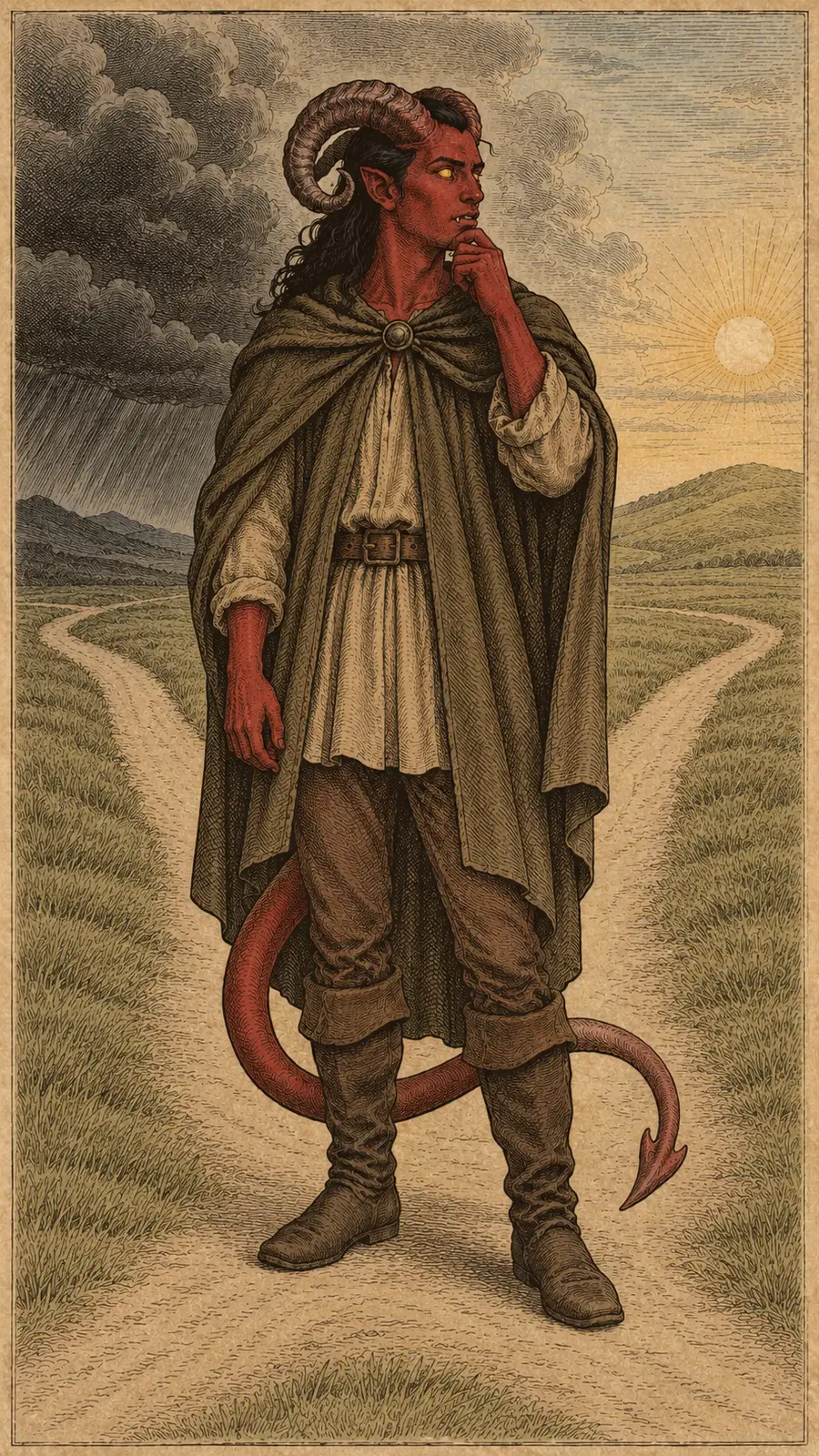
The word Baur coined was tiefling. It joins the German "tief," meaning deep or low, to the old suffix "ling," which means offspring or one who belongs to something. Put together, it means something like "low one" or "child of the depths." The name points straight at where these people come from, the Lower Planes, the deep and evil realms beneath the rest of the multiverse. That was how the second and third editions understood them: descendants of the depths.
It's a quiet name, when you think about it, with none of the cruelty of "demon-spawn" in it. It sounds almost tender, like "duckling" or "fledgling," a small word for a small creature that came from somewhere far below. And with that name the tieflings were ready to walk out into the light, or at least into the strange half-light of a city built on the inside of a ring.
Chapter II
A deep and low name: the first tieflings of 1994
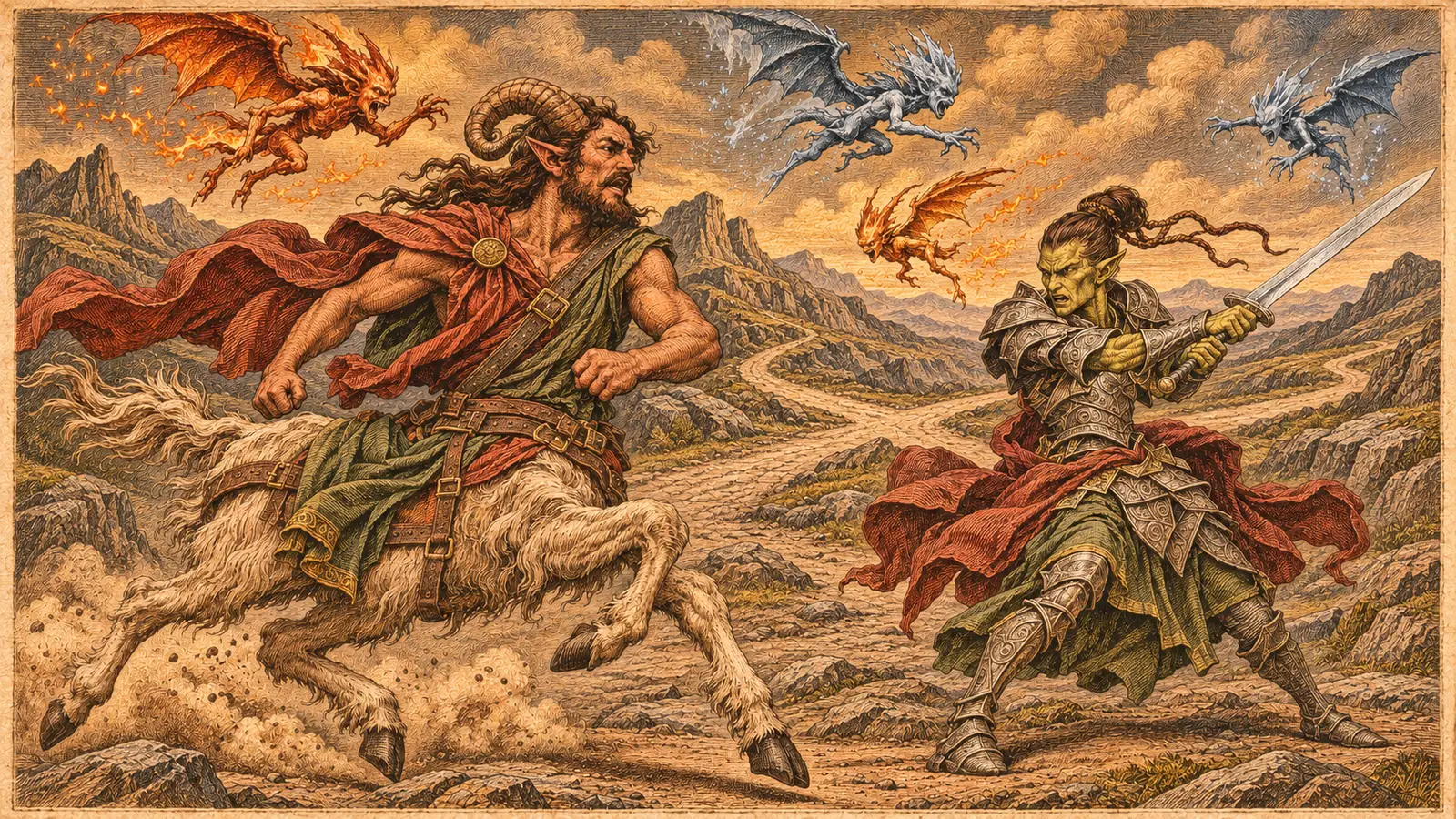
We come now to 1994, when the tiefling stepped onto the page for the first time. It came in the Planescape Campaign Setting, a boxed set for the second edition of Advanced Dungeons and Dragons, designed by Zeb Cook and published by TSR. Inside the box was a short player's guide to the planes, and in that guide the tiefling appeared as a race that players could choose.
The same year it got a full entry of its own in the Monstrous Compendium Planescape Appendix, written by Allen . That book replaced an older appendix of outer-planar monsters and was larger and full of colour. It gathered creatures from many out-of-print sources: the devils known as baatezu, the demons known as tanar'ri, the mercenary yugoloths, the little elemental mephits, the githzerai and githyanki, the goat-legged bariaur and many more. Among all these strange and dangerous beings sat the tiefling, offered as a creature you might meet and also as something you might become.
Cook explained his thinking years later. He said he had created a couple of new races for the setting and needed one that played on the idea of the fallen angel or the reformed devil. He described that figure as "a type of anti-hero who has always been popular in fantasy," and he felt Planescape needed one. So from the very start the tiefling wasn't meant as a villain. It was meant as an antihero, someone with a dark mark who might walk in any direction at all.
The look of these first tieflings came from the artist Tony , who was the sole artist for the Planescape line and one of the very first people to draw a tiefling. He made an early tiefling drawing in the autumn of 1993, before the box was even on the shelves. His vision of the planes was rusted, organic and heavy with ink, drawing on the Japanese fantasy art of and on the early twentieth-century illustrator Arthur . If you've ever seen his Planescape art, you'll remember the long, angular figures, the strange hats and buckles, and the sense of a world where everything was a little crooked and a little alive. He was the first freelance artist in TSR's history to illustrate an entire line for several years running, and the tieflings of that era wear his fingerprints.
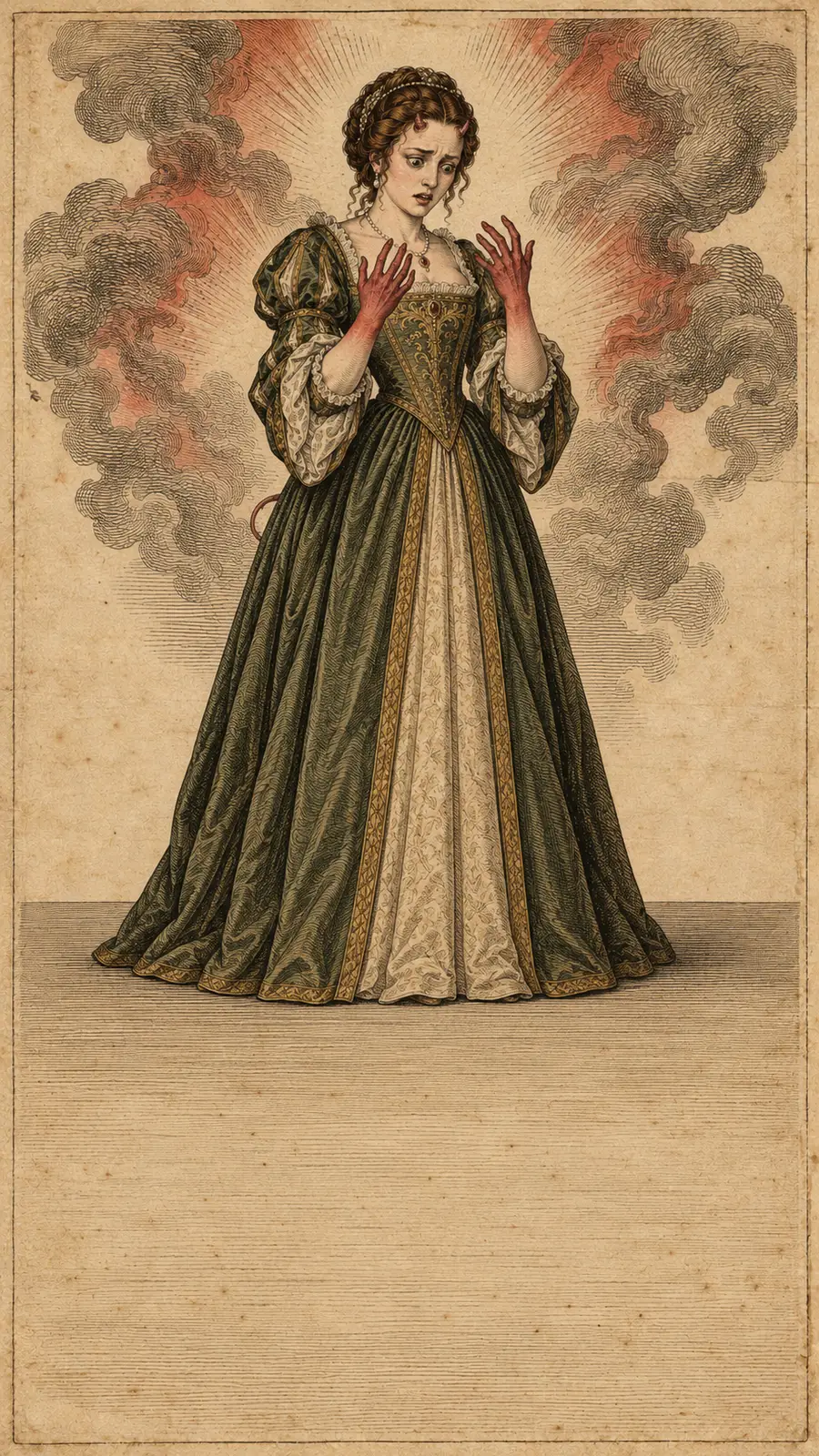
So what was a tiefling, in that first telling? The answer was deliberately unclear. A tiefling was a human mixed with "something else." That something was most likely a fiend, or some other being from the evil Lower Planes, but the books took care not to say exactly. Any drop of fiendish blood, however distant, however many generations back, might surface in a child as a tiefling.
This is where the tiefling parted company with the cambions and alu-fiends that came before. A being one generation removed from a fiend was a half-fiend, and the cambion and the alu-fiend belonged to that close and fearsome kind. A tiefling stood further away. The fiend in its family tree might be a great-grandparent or something much older, a figure lost in family legend, or not remembered at all. The blood had thinned and wandered and settled, and then one day it came up again in a child.
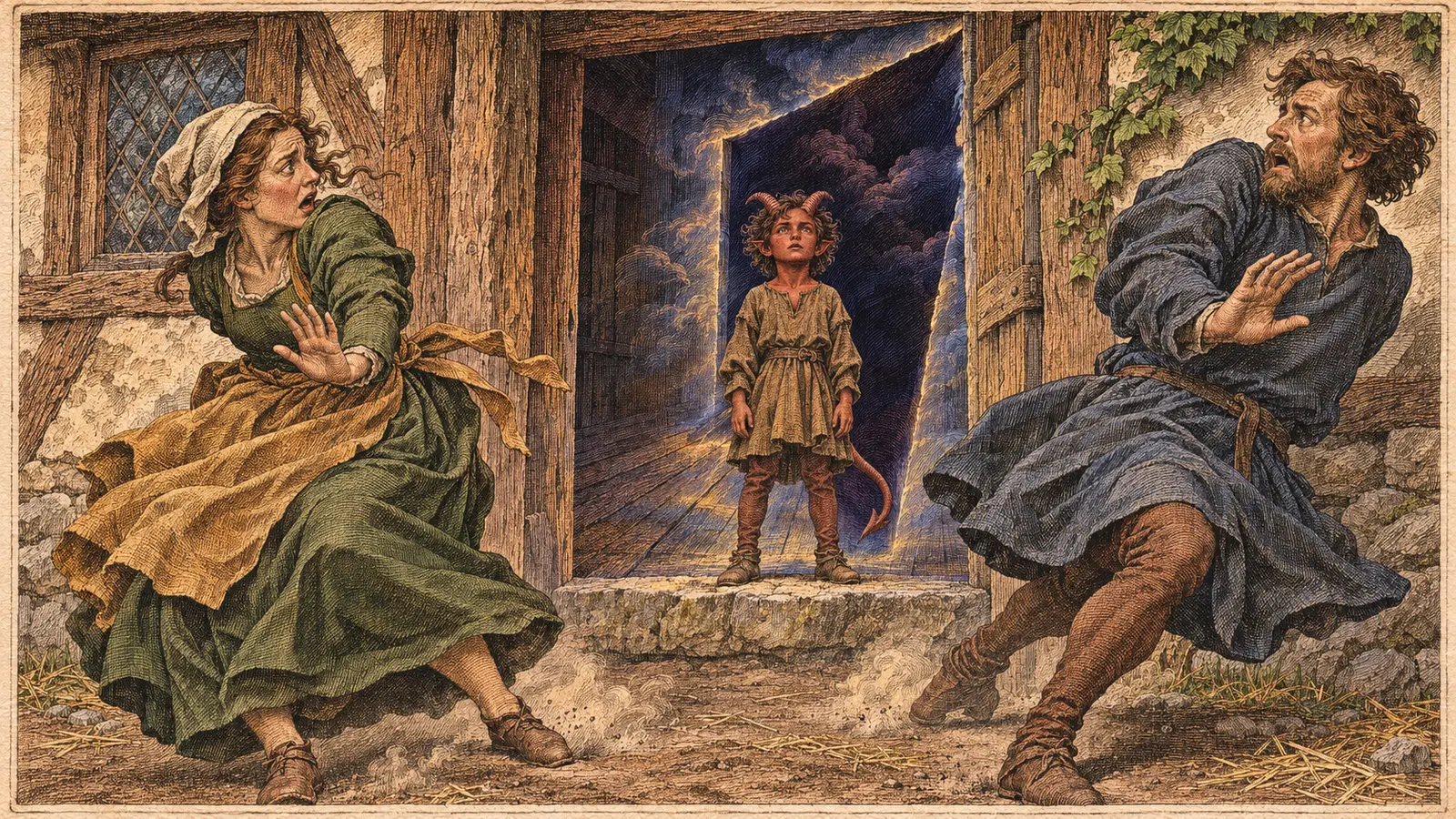
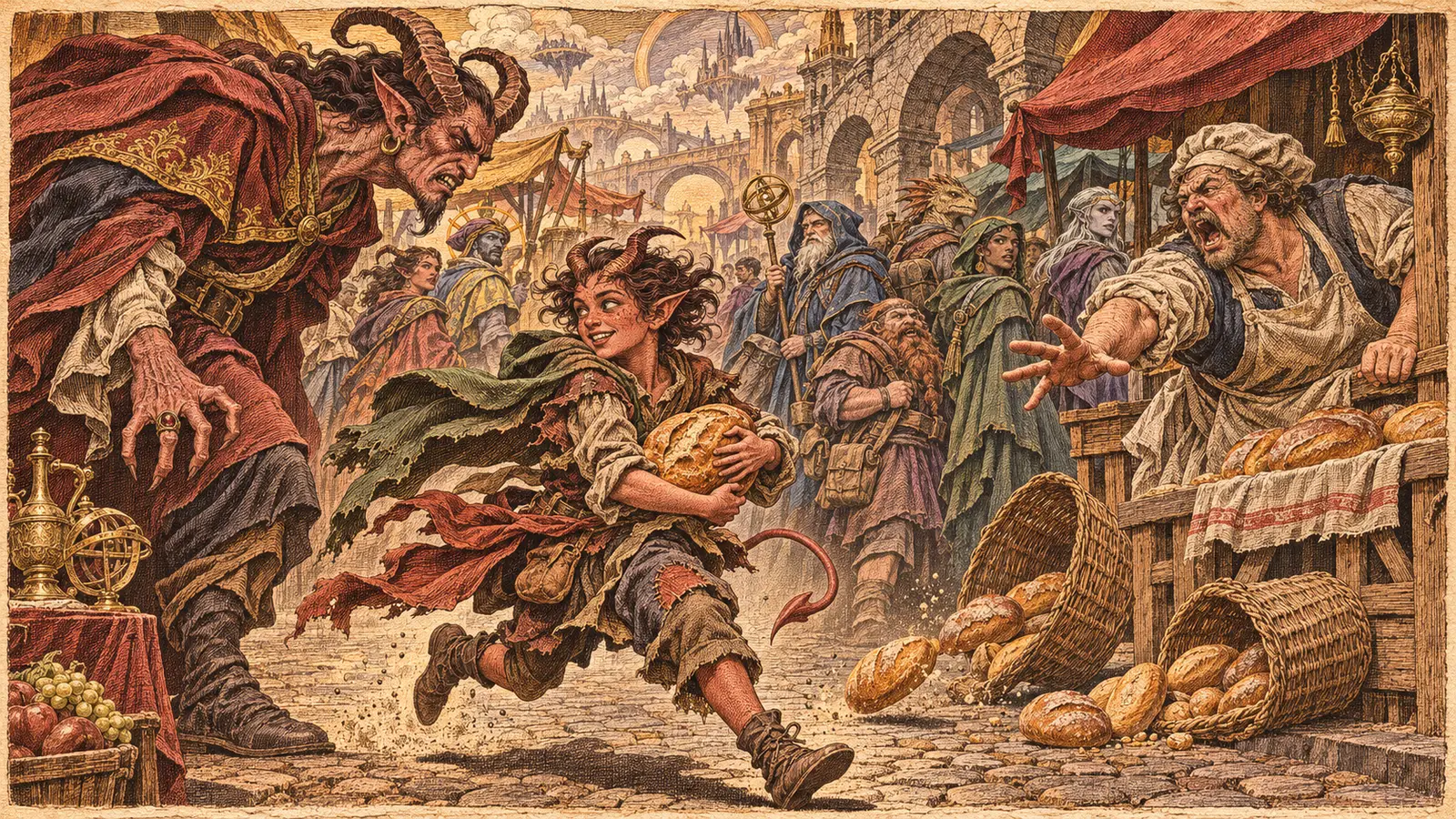
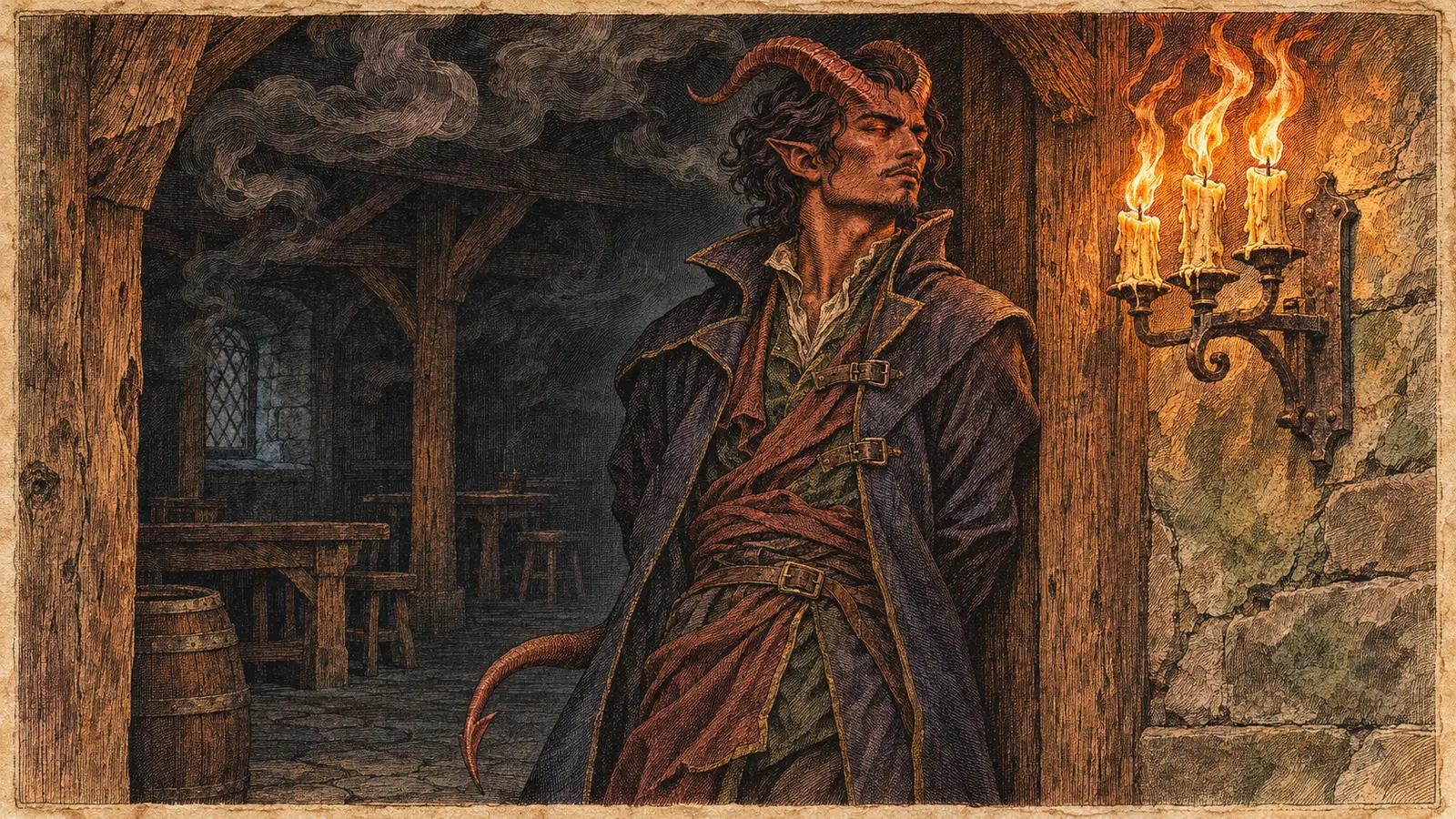
Because the source was so varied, so were the children. A tiefling looked broadly human, but something always gave it away. Some had small horns. Others had pointed ears, pointed teeth or red eyes. Some had patches of scales, or a cloven hoof where a foot should be. Some carried a faint whiff of brimstone wherever they went. And some had nothing more than what the book called "a wicked gleam in their eye that never leaves." No two tieflings looked alike. A few could pass for human altogether, betrayed only by an aura that many people found unsettling without being able to say why.
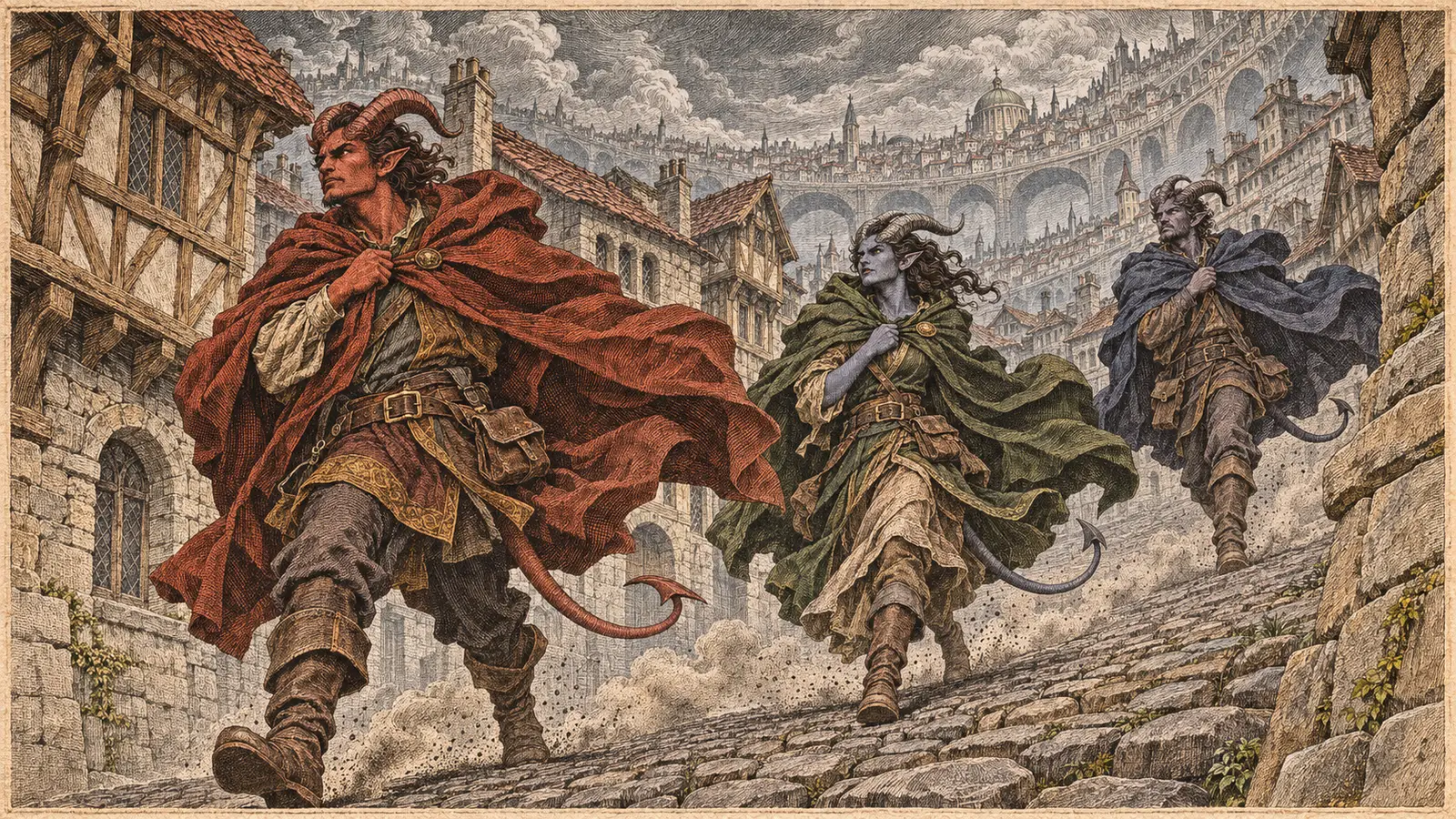
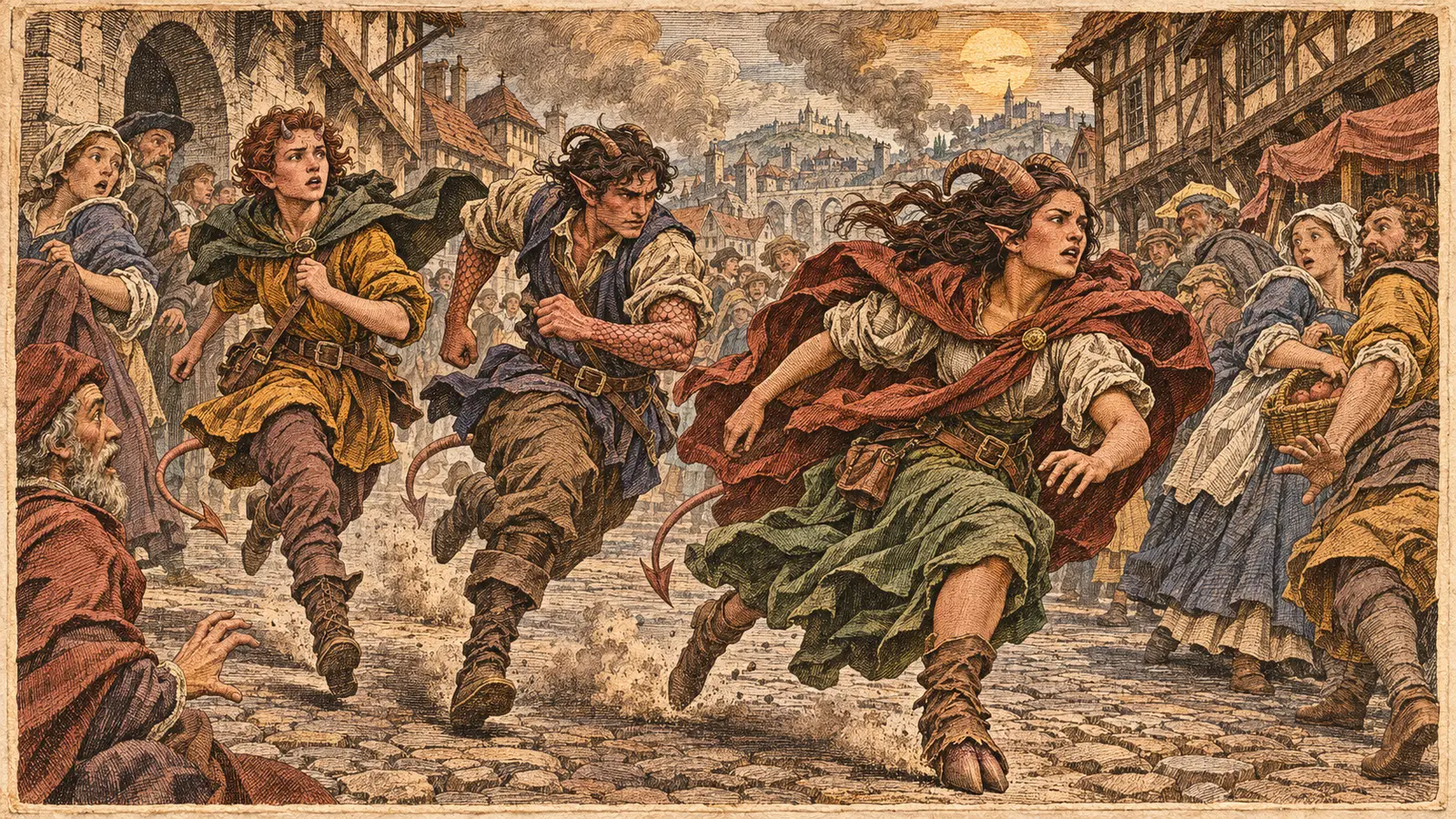
The entry put it beautifully. Tieflings were "the offspring of the planes, as varied as the places they call home." Imagine walking through a crowded planar market and passing three tieflings in a single street. One has stubby horns hidden under a hood. One walks with a slight hitch because of the hoof inside her boot. The third looks entirely ordinary until he glances your way, and then for a moment you feel something cold behind his smile. All three are tieflings, and they have almost nothing in common except the thing they don't talk about.
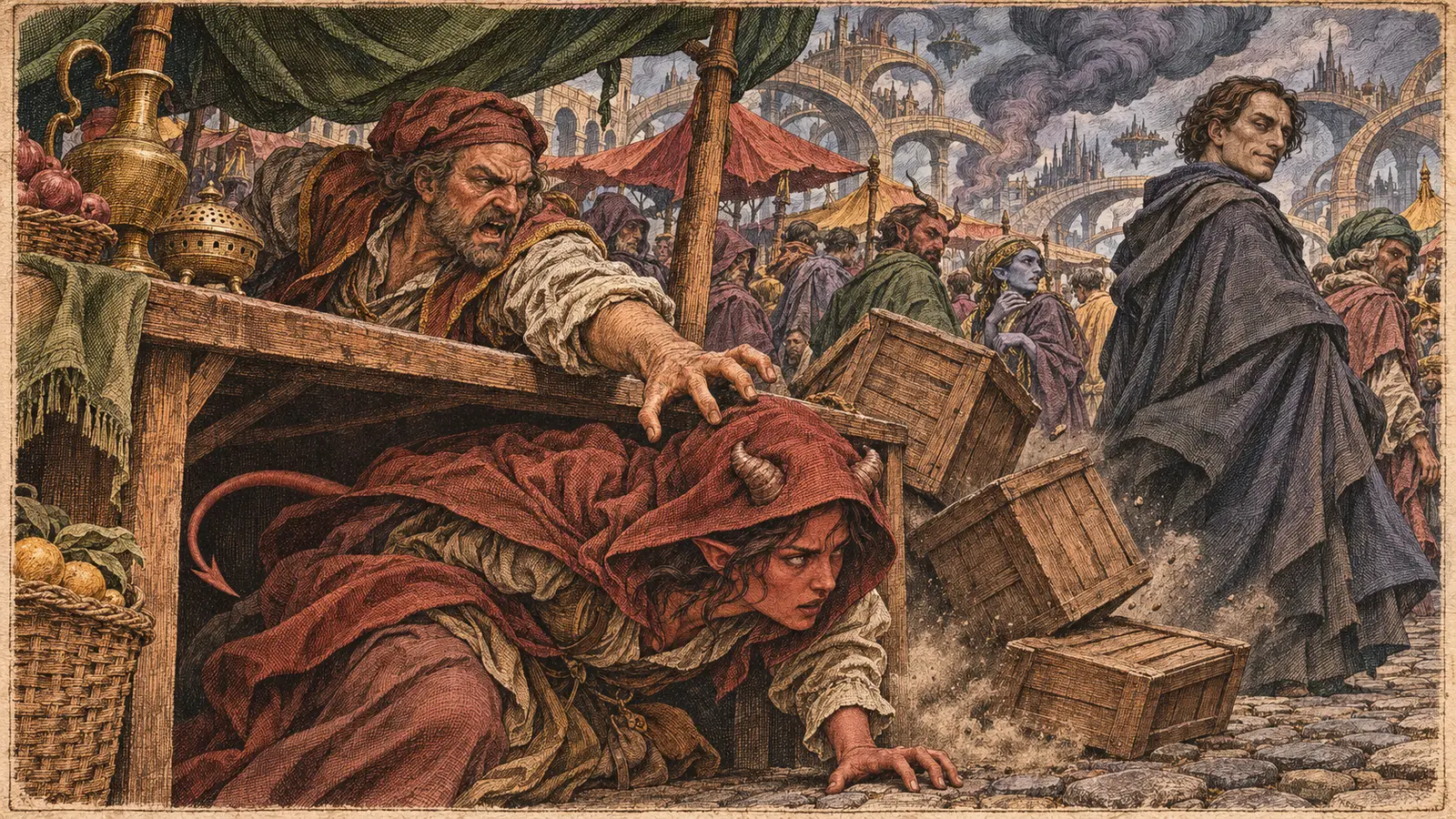
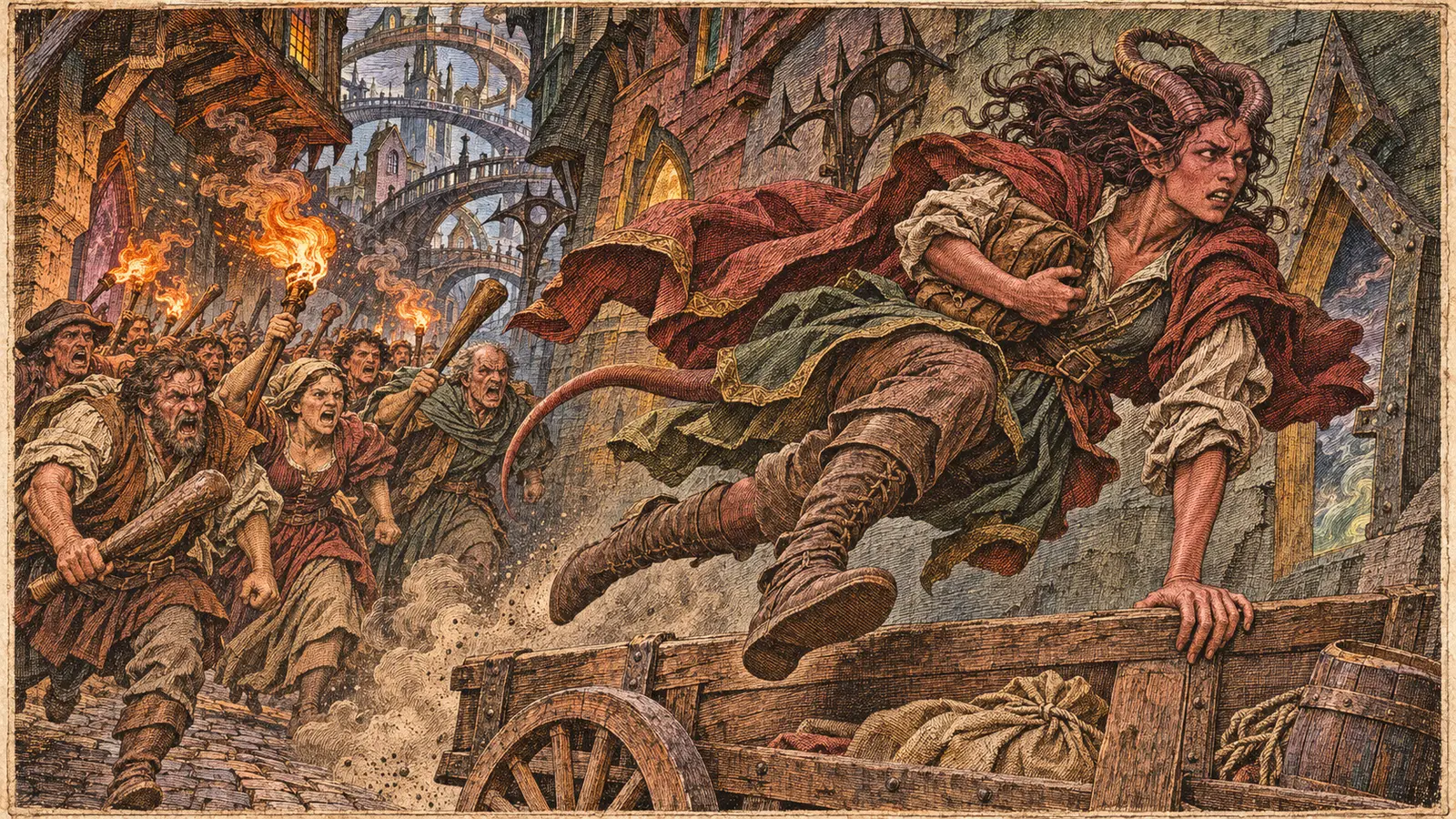
Their temperament had a shape too. Tieflings were known for a quick temper and, in the book's phrase, "a chip on their shoulder." They survived by hiding from searching eyes. They had no true society of their own, no homeland, no shared customs and no tiefling quarter where they gathered. They were the outcasts of the planes, driven out of the Lower Planes for being too human and mistrusted on the Upper Planes for being too fiendish. Many of them drifted to , the great city at the centre of everything, and just as many tried to make homes for themselves on other planes.
They didn't trust others. The entry asks, with a kind of rueful sympathy, "what orphan does?" That question says a great deal about how the designers saw them. A tiefling was an orphan of the cosmos, belonging to no plane and claimed by no family that would admit to it.
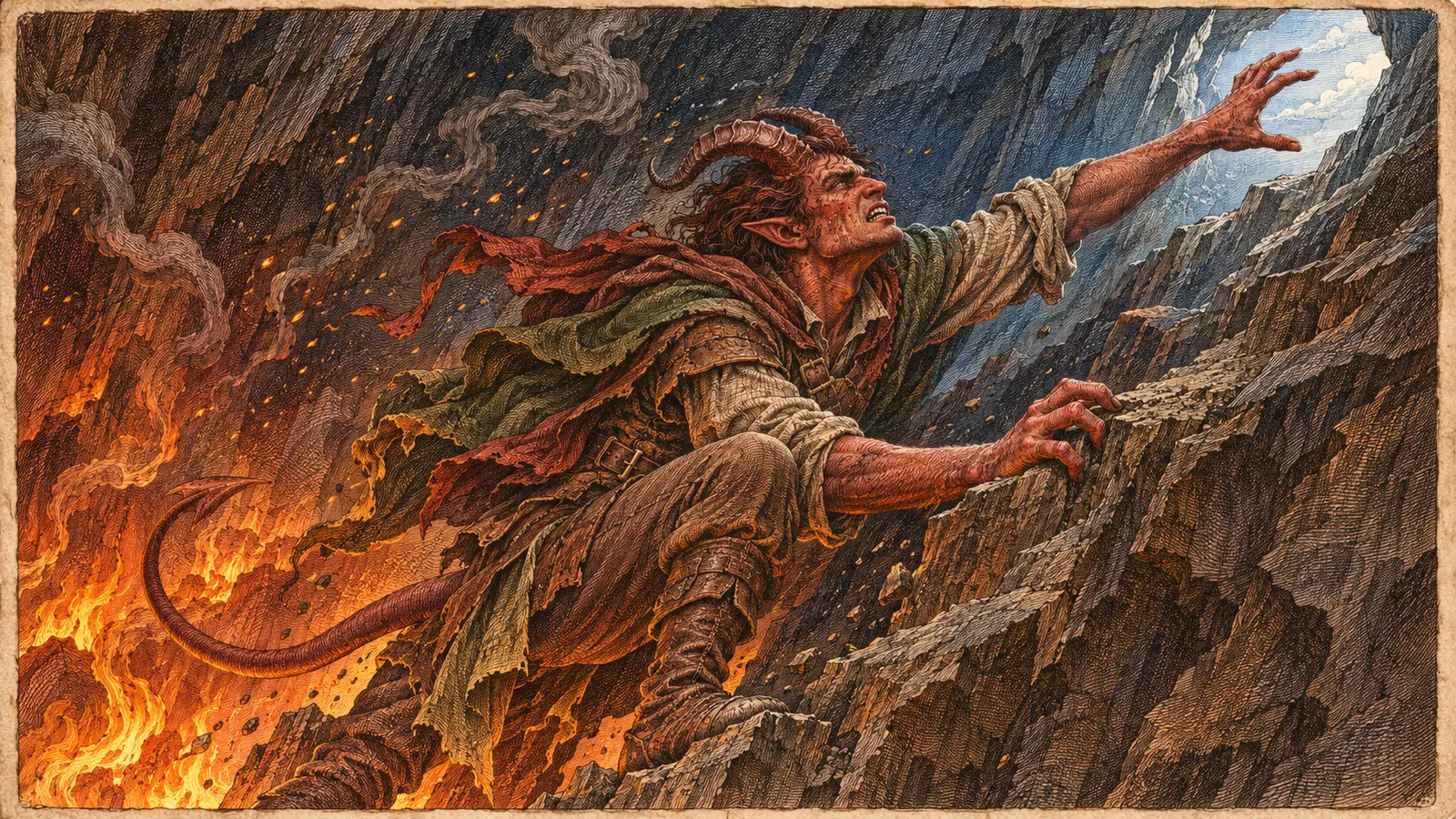
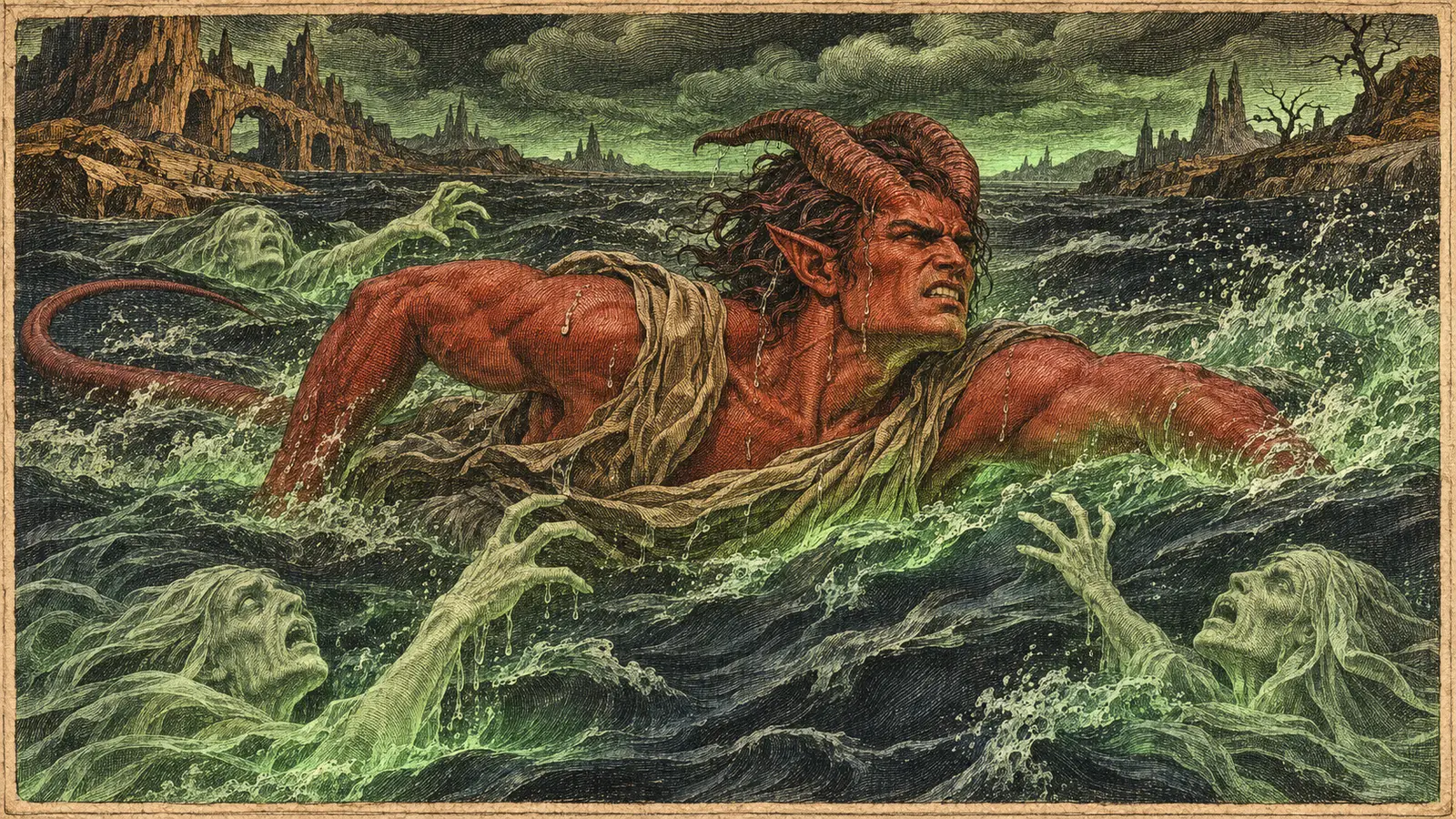
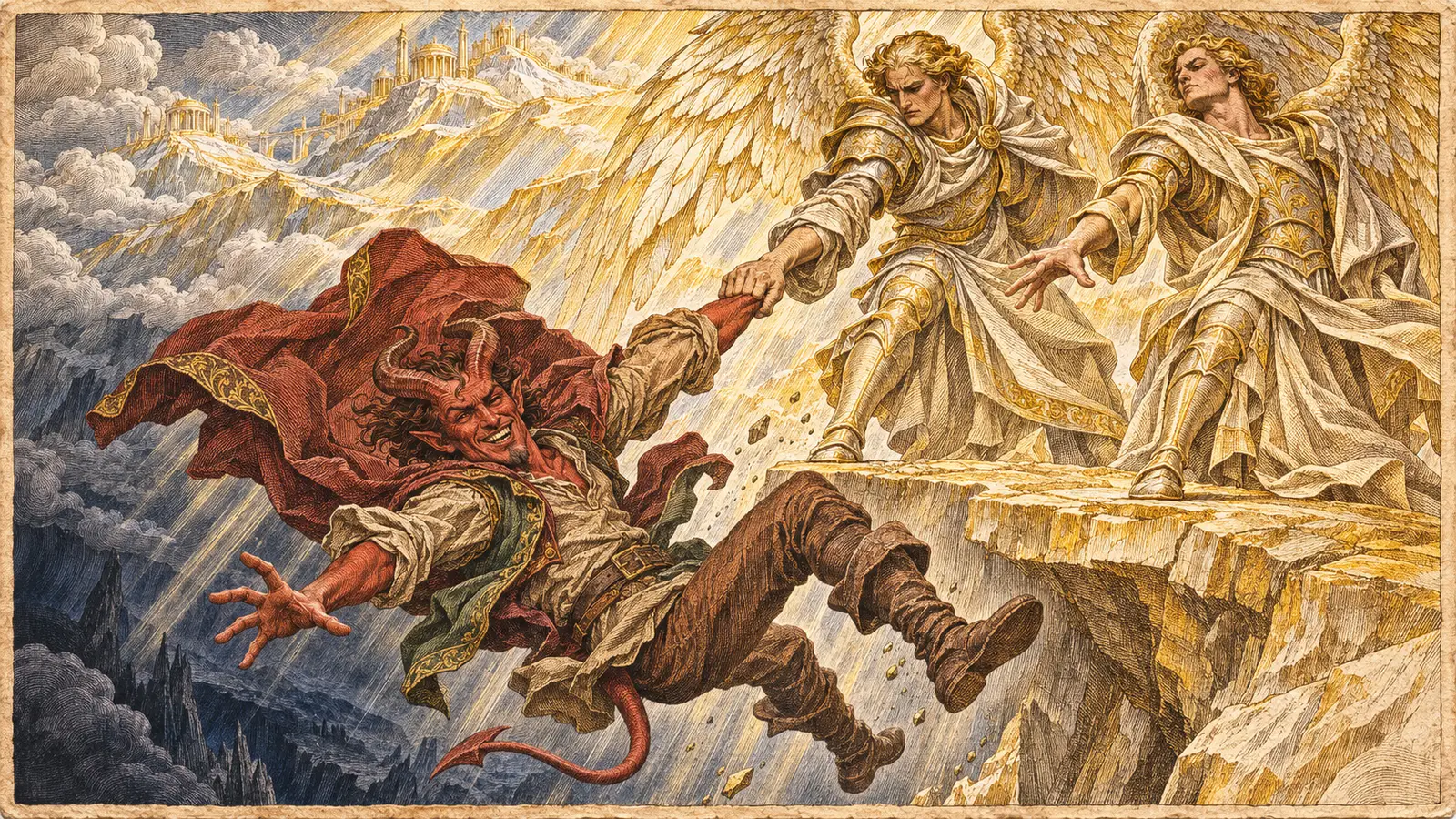
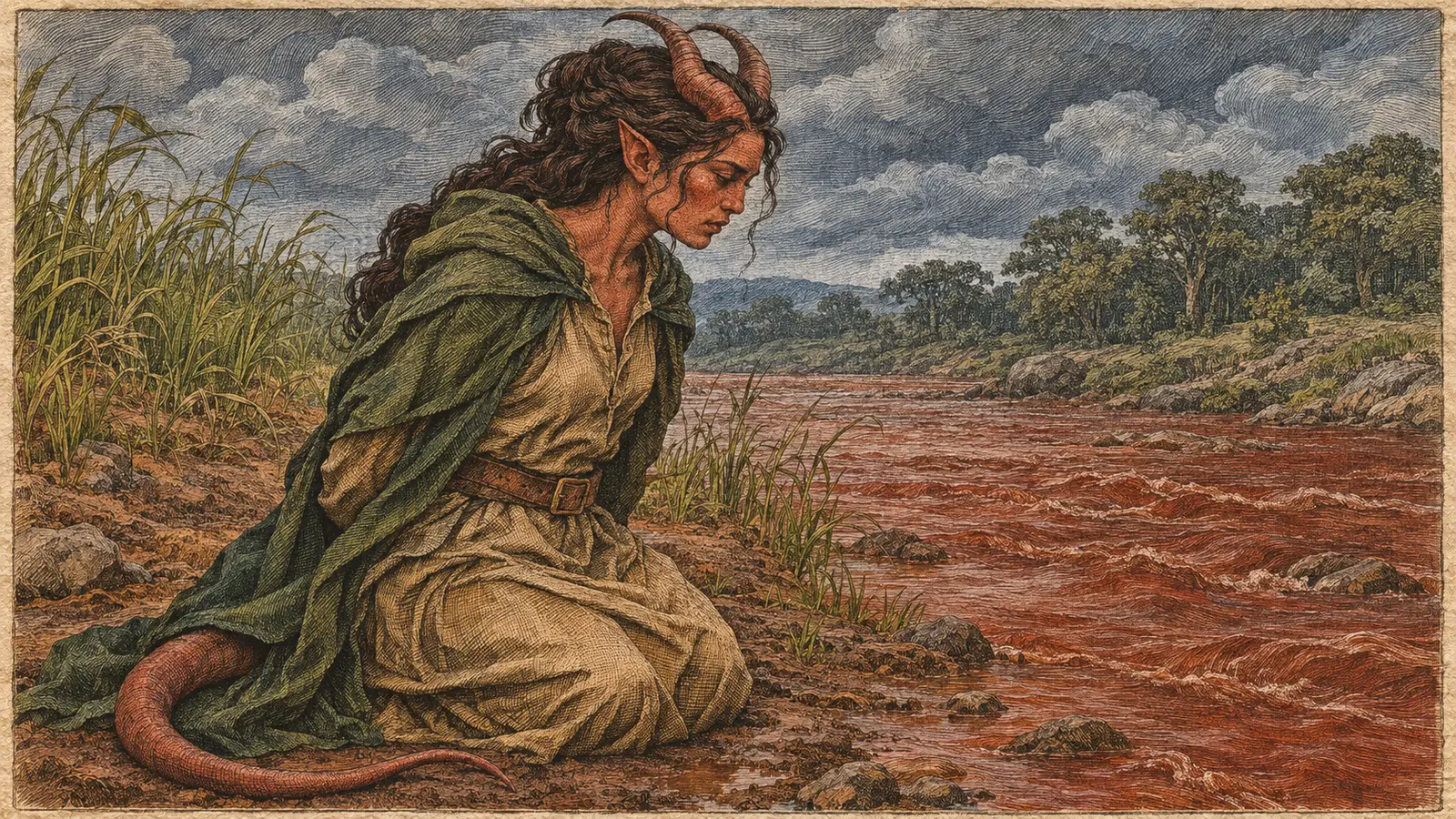
Yet their self-confidence, the book says, was "nothing short of astounding." Two small legends make the point. One tiefling is said to have swum the River , the dark river that winds through the Lower Planes and steals memory from anyone who touches it, simply because no one had told him he couldn't. Another climbed all the way to the fifth heaven of Mount Celestia, the holy mountain of law and goodness. He went up and up, past layer after layer of radiant paradise, until at last the archons who guard that mountain noticed him lurking in the shadows and cast him down into the Abyss.
You can almost see him there, a small figure with a crooked grin, perched on a ledge of shining stone far higher than anyone of his blood had ever gone, looking out over the gold and white before the guardians arrived. He didn't get to stay, but he did get there.
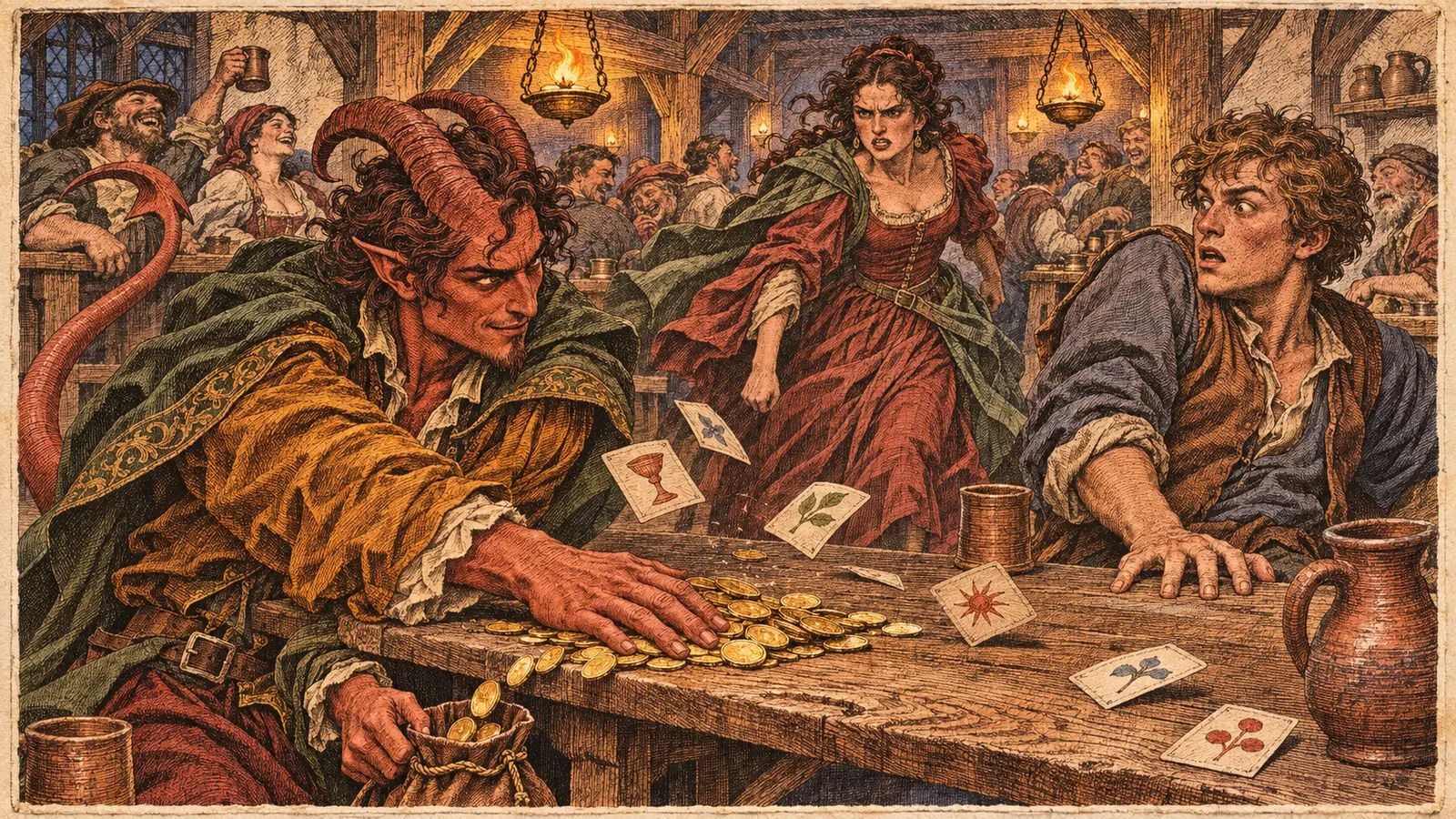
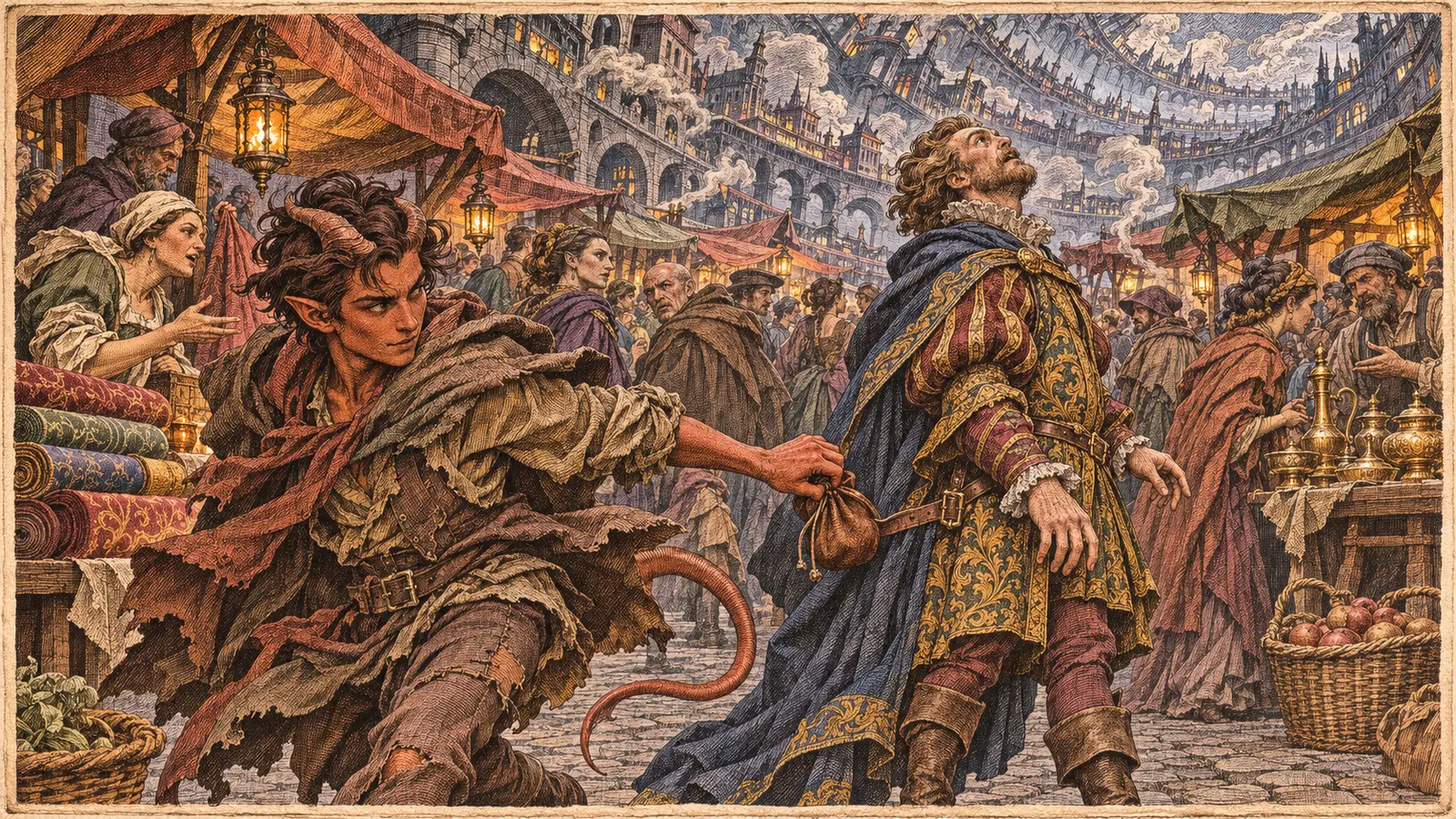
The early tieflings also had a reputation that followed them through every tavern on the planes. They were said to be great but deceitful lovers, and their fickleness in love was legendary. They were known as tricksters, liars and frauds. A tiefling gambler, the book explains, seldom found a seasoned planar willing to be fleeced, so tiefling gamblers turned to the clueless and the young. Whether every tiefling deserved this reputation is another matter, and the book seems to know it.
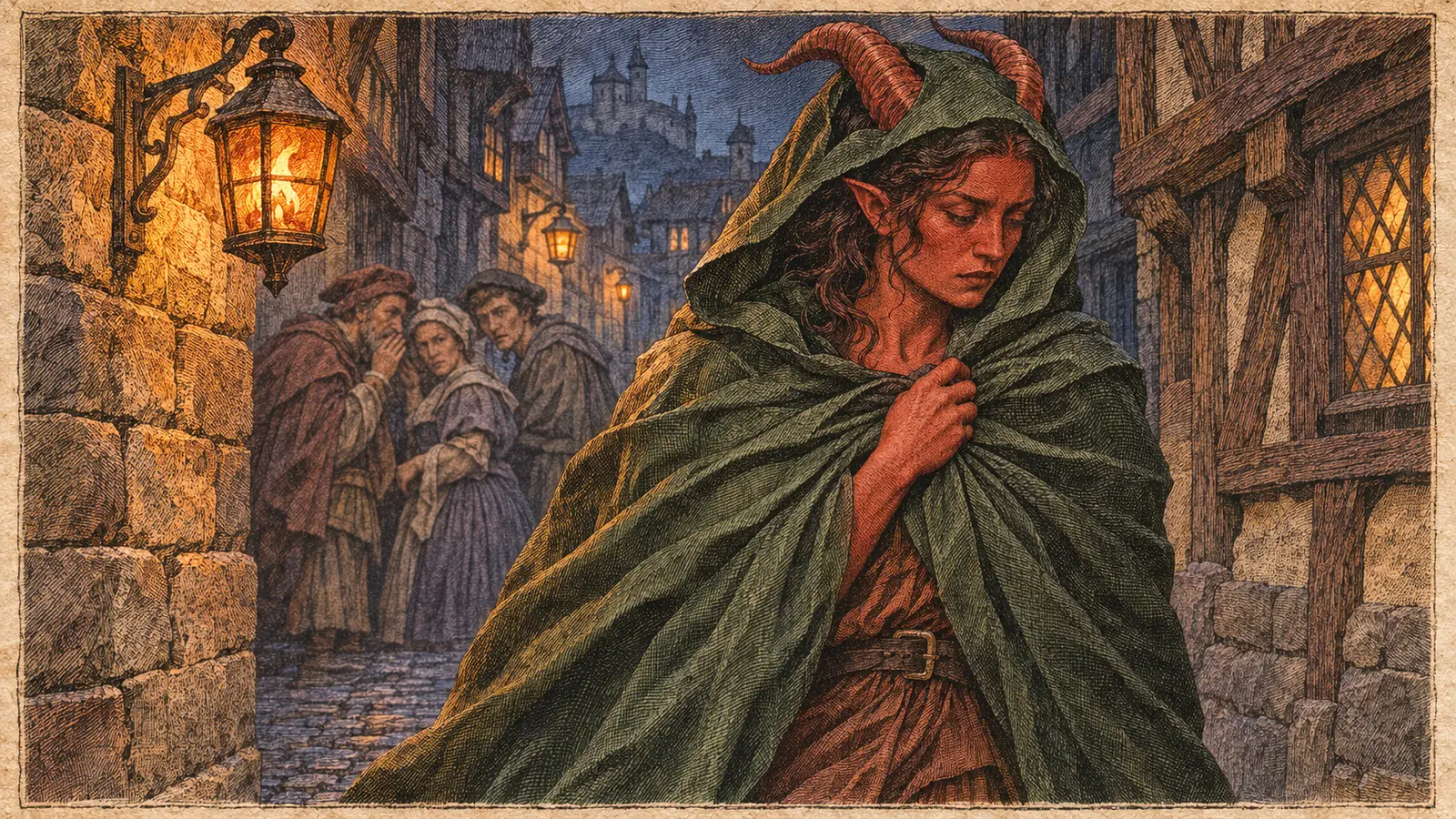
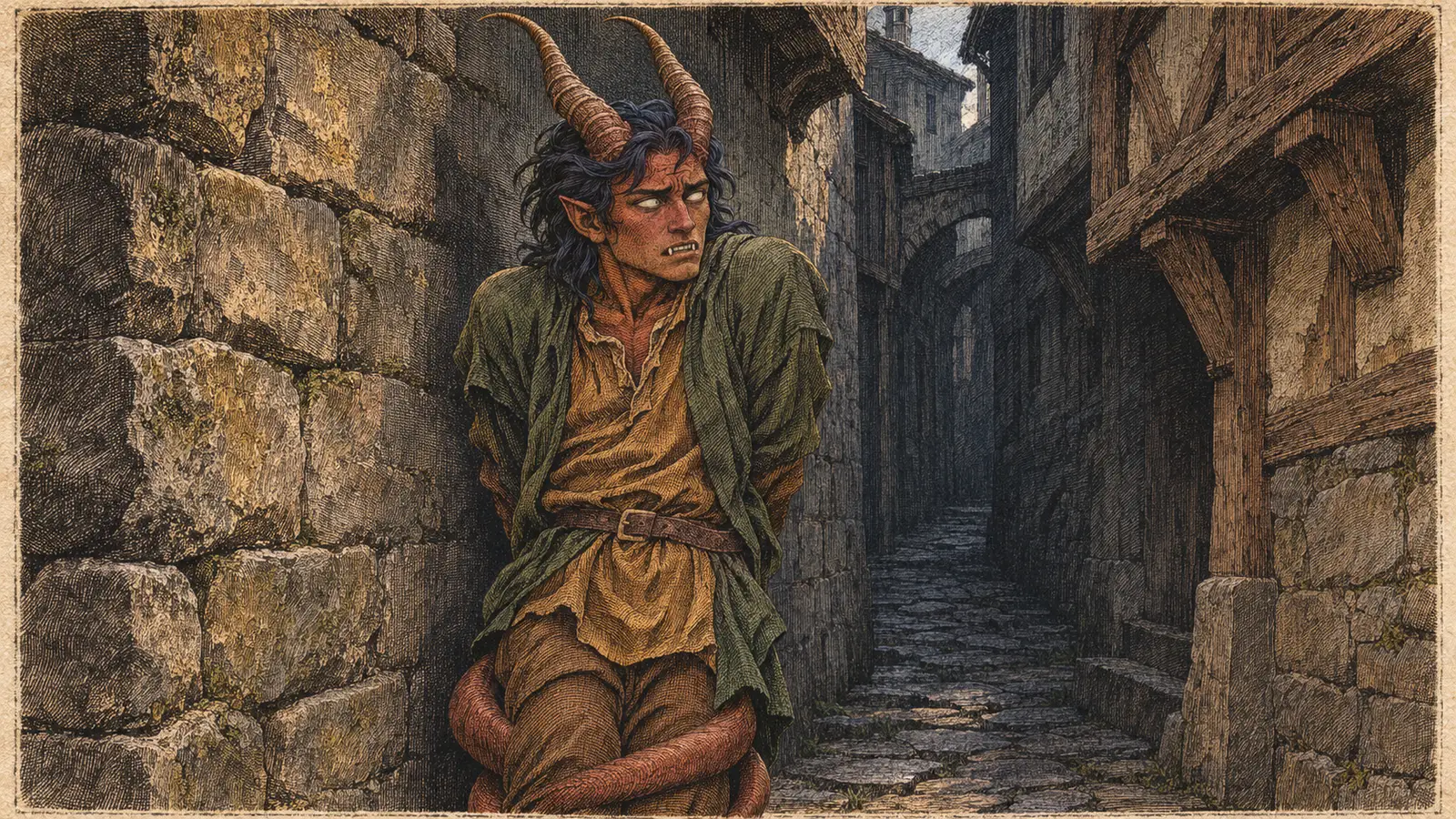
Sigil had sayings about them, passed along the way old sayings are. "If there's blame, find a tiefling." "Don't ever make a bet with a tiefling." And the most wearily funny of all: "If a tiefling didn't do it, he was just pressed for time." You can hear the weight of prejudice in those phrases, the way a whole people becomes the easy answer whenever something goes missing. Humans and others often persecuted tieflings. That persecution made them defensive, but unlike many oppressed peoples they didn't band together. Each tiefling stood alone, or found its own small circle, and moved on.
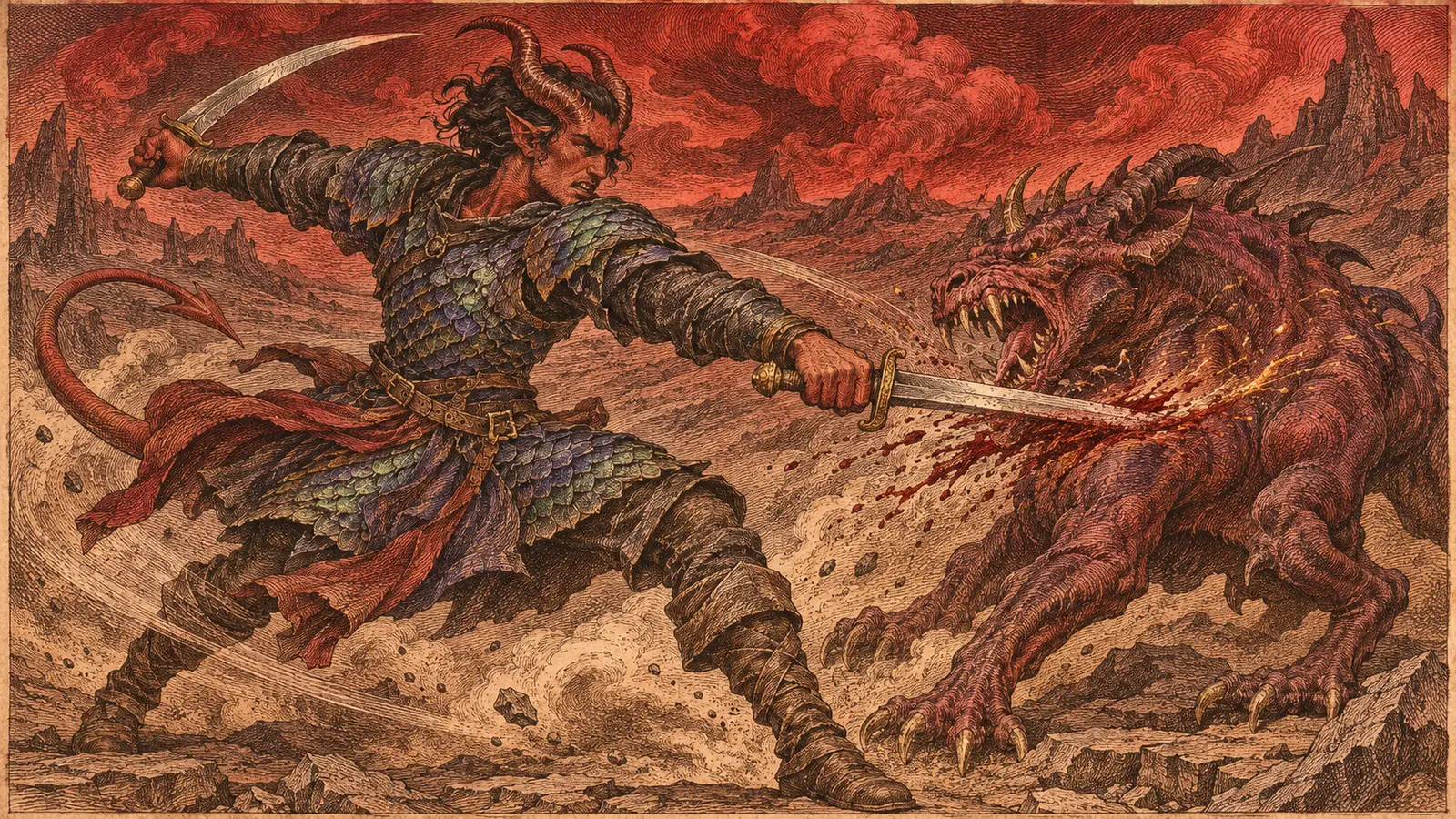
In battle the first tieflings were described as determined, stubborn and wily warriors, occasionally given to berserk fury. They could also be talented mages. Almost half of them were ambidextrous, so many fought with a weapon in each hand, and few tiefling warriors bothered with a shield. They favoured scale armour, well crafted and made from the hides of vermin from the Lower Planes. Picture a tiefling sellsword in a coat of dark, iridescent scales that once belonged to some scuttling thing from the Abyss, two blades at the hip and an expression that suggests you shouldn't ask.
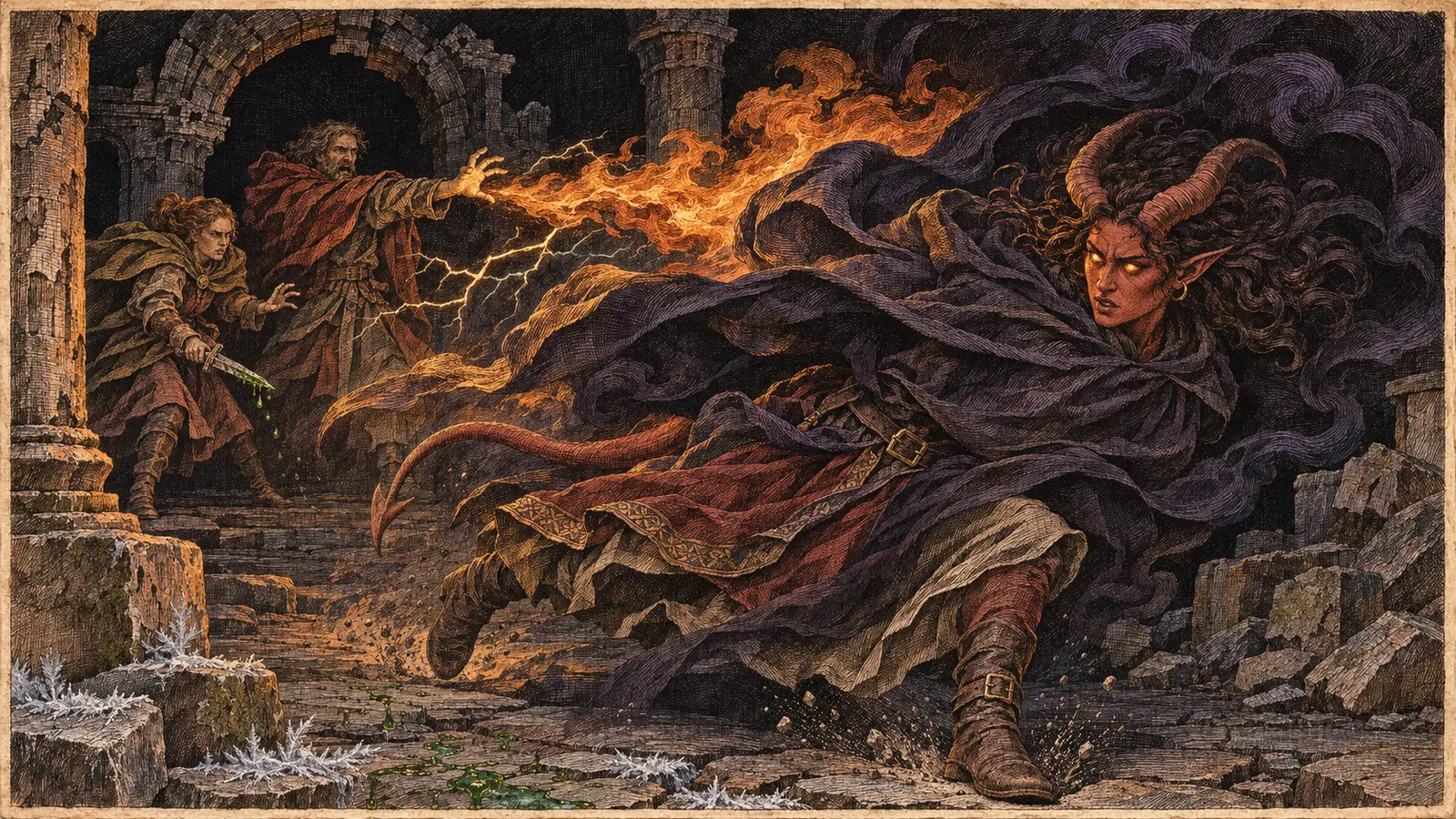
Their gifts were modest but distinctive. A tiefling's eyes could see in the dark, picking up the heat of living things, as far as sixty feet away. Once a day a tiefling could call up a patch of magical darkness and wrap itself in shadow. Cold did them only half the harm it did to others, and they shrugged off fire, lightning and poison better than most. Every one of these gifts carries a small echo of the Lower Planes: the shadow, the chill, the venom and the flame.
The early rules nudged their minds and manners too. Tieflings were a little sharper of intellect and a little more forceful in presence than ordinary humans, and a little weaker in body and in wisdom. They could take up the life of a fighter, ranger, wizard, priest, thief or bard, and they could blend some of those paths together. There was room for nearly any kind of hero in the first tiefling, and nearly any kind of rogue.
So that was the tiefling as it first appeared: varied, proud, mistrusted and rootless, a creature of many shapes held together by a shared outsiderness. To understand where it lived and how it got by, we need to walk into the city that made it.
Chapter III
The City of Doors: tieflings in Sigil and the Outlands
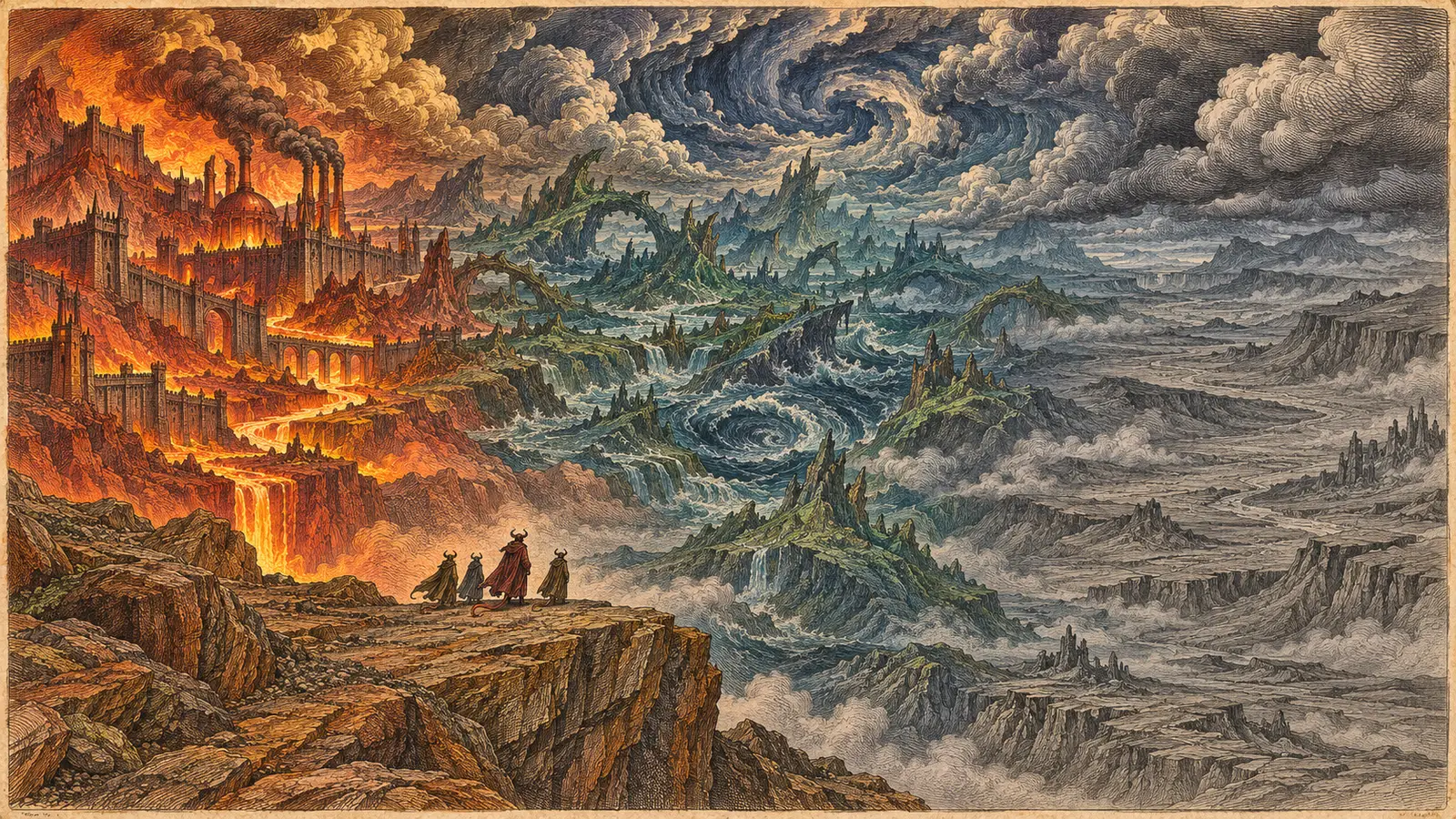
To find , you first have to picture the whole of the multiverse as Planescape imagined it. That picture came from Jeff Grubb's Manual of the Planes, published in 1987, and it's known as the Great Wheel.
Imagine an enormous wheel turning slowly in the dark. Around its rim lie the Outer Planes, each the home of a moral idea made real. There is Mount Celestia, the shining mountain of law and good, and the Abyss, endless and chaotic and evil. Between and around them lie many more: , Arcadia, , the Beastlands, , , , , the Gray Waste of , Limbo, , , , and , which is the name planars give to the Nine Hells. Each plane has its own light and weather and its own rules about what is real.
At the hub of the wheel lies the Outlands, a plane of balance between all the others. It's a wide country of plains and hills, and from its very centre rises the Spire, a needle of rock so tall it never ends. Above the Spire, floating impossibly, hangs Sigil.
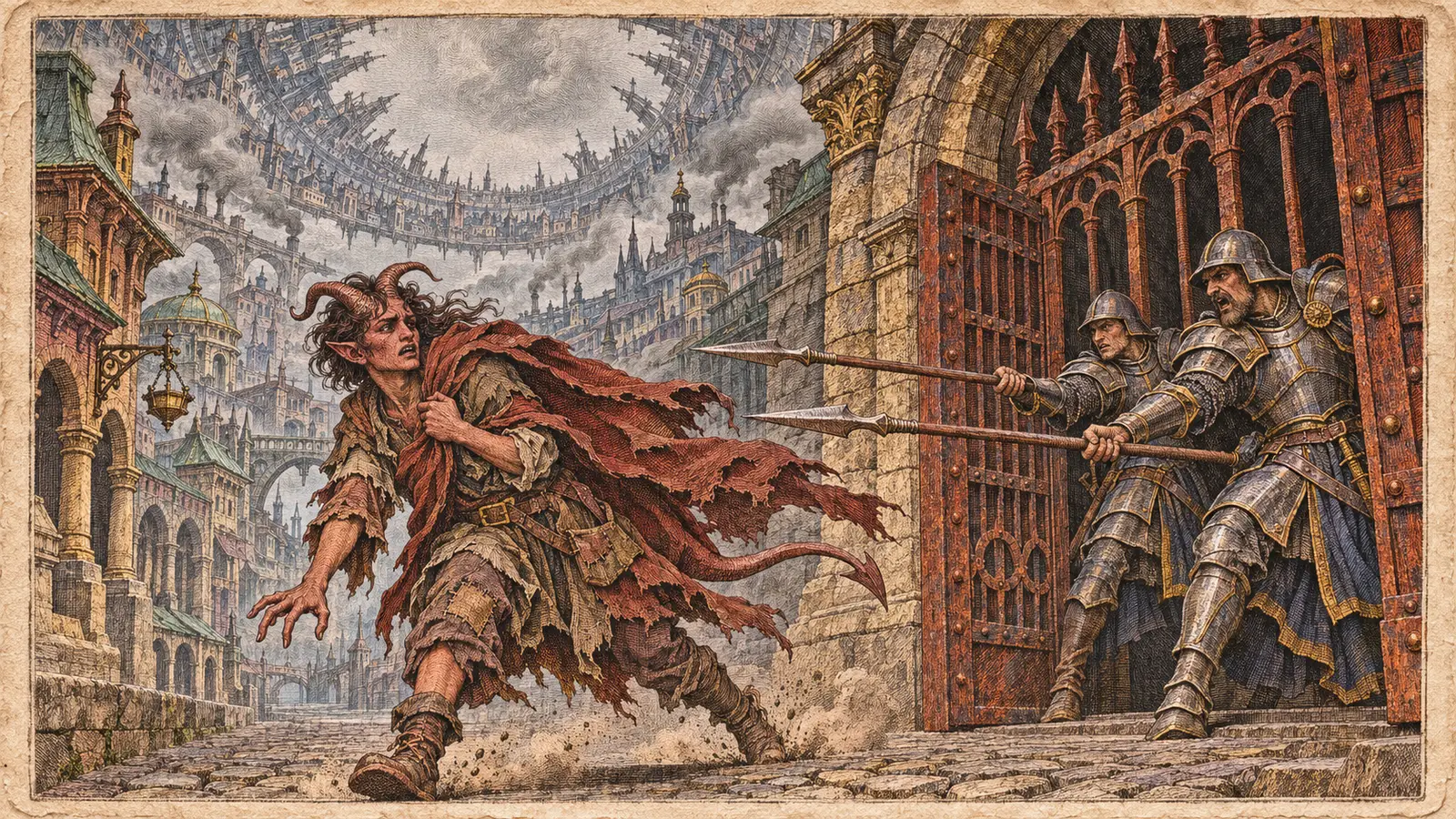
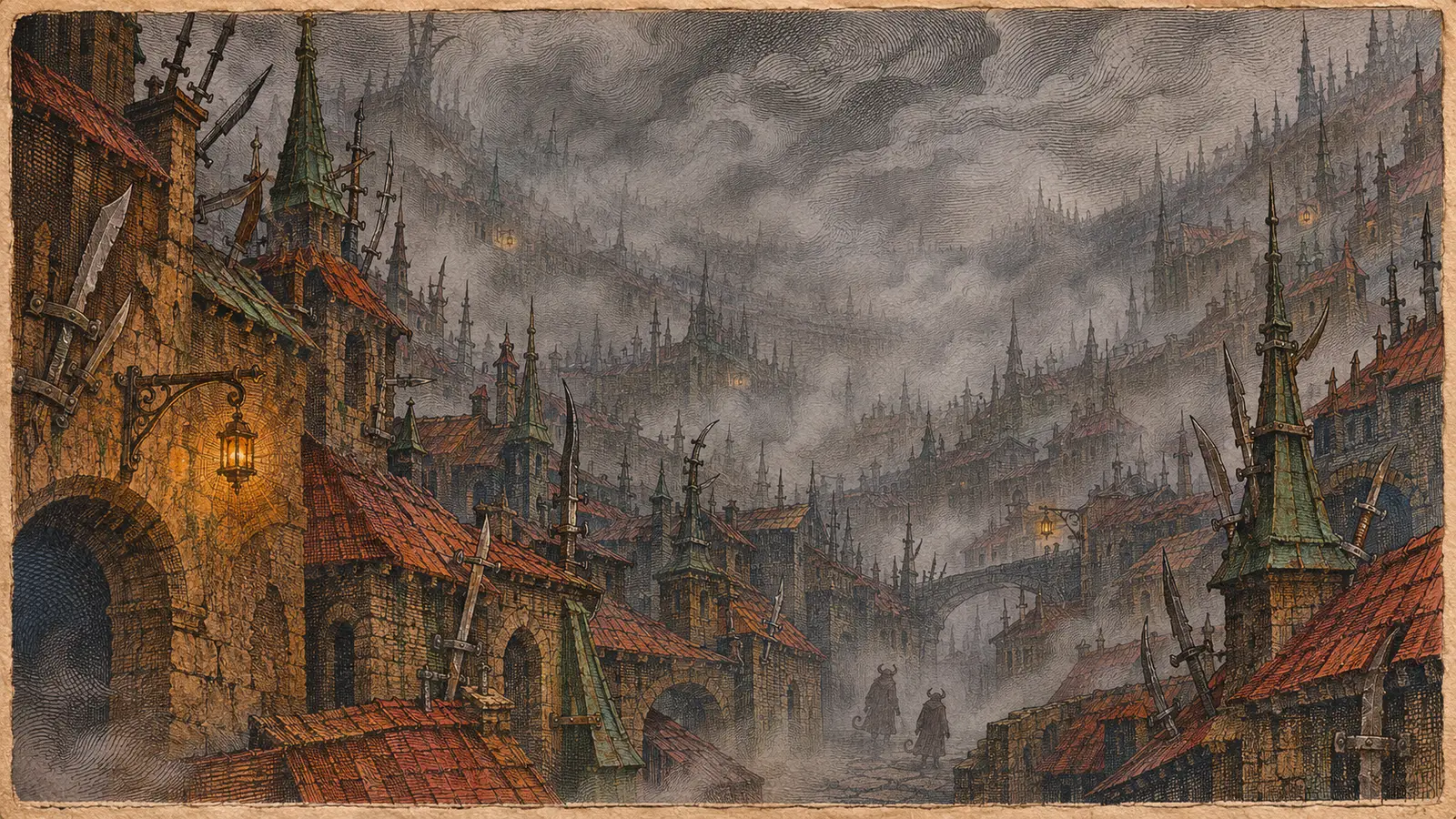
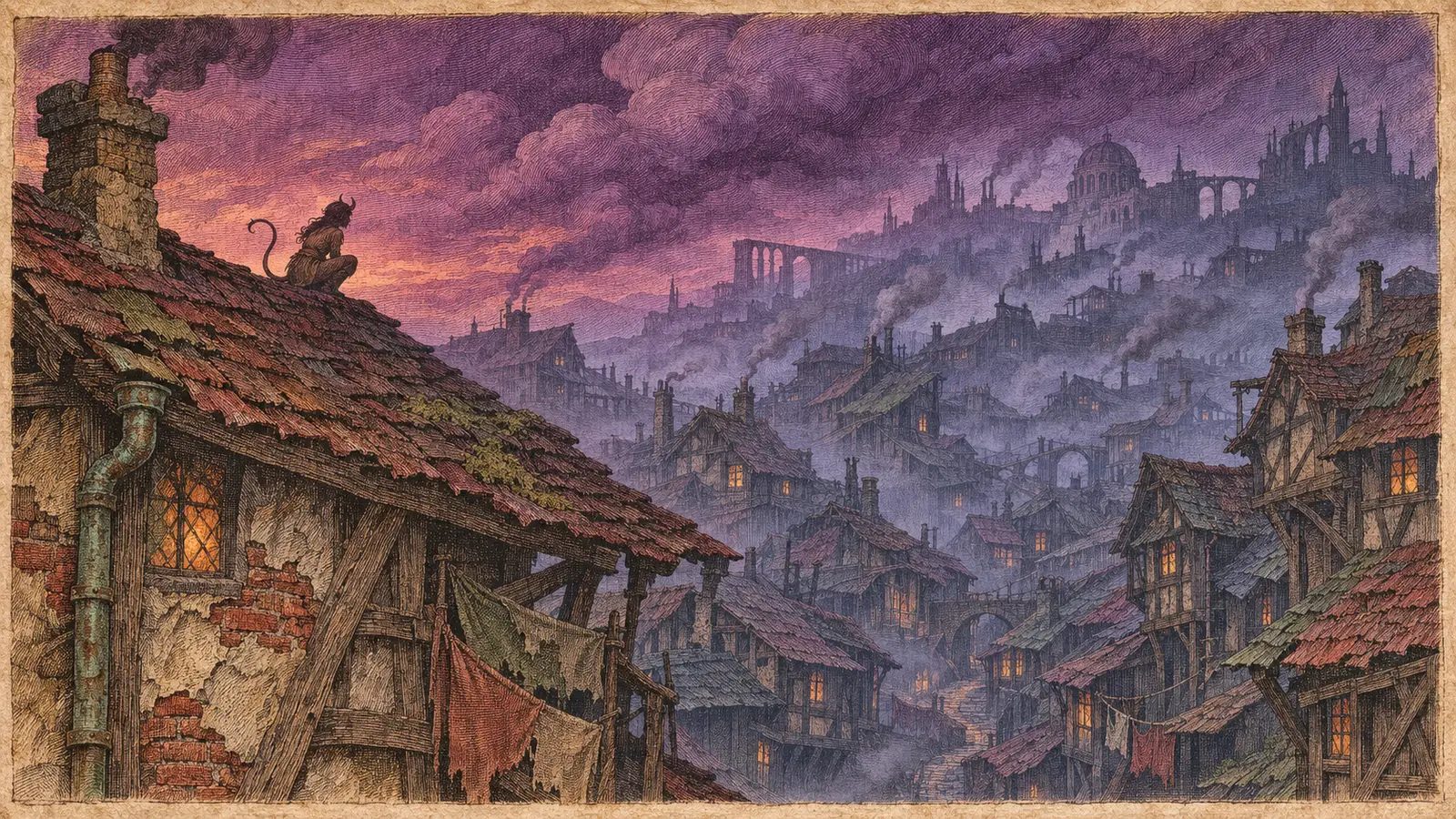
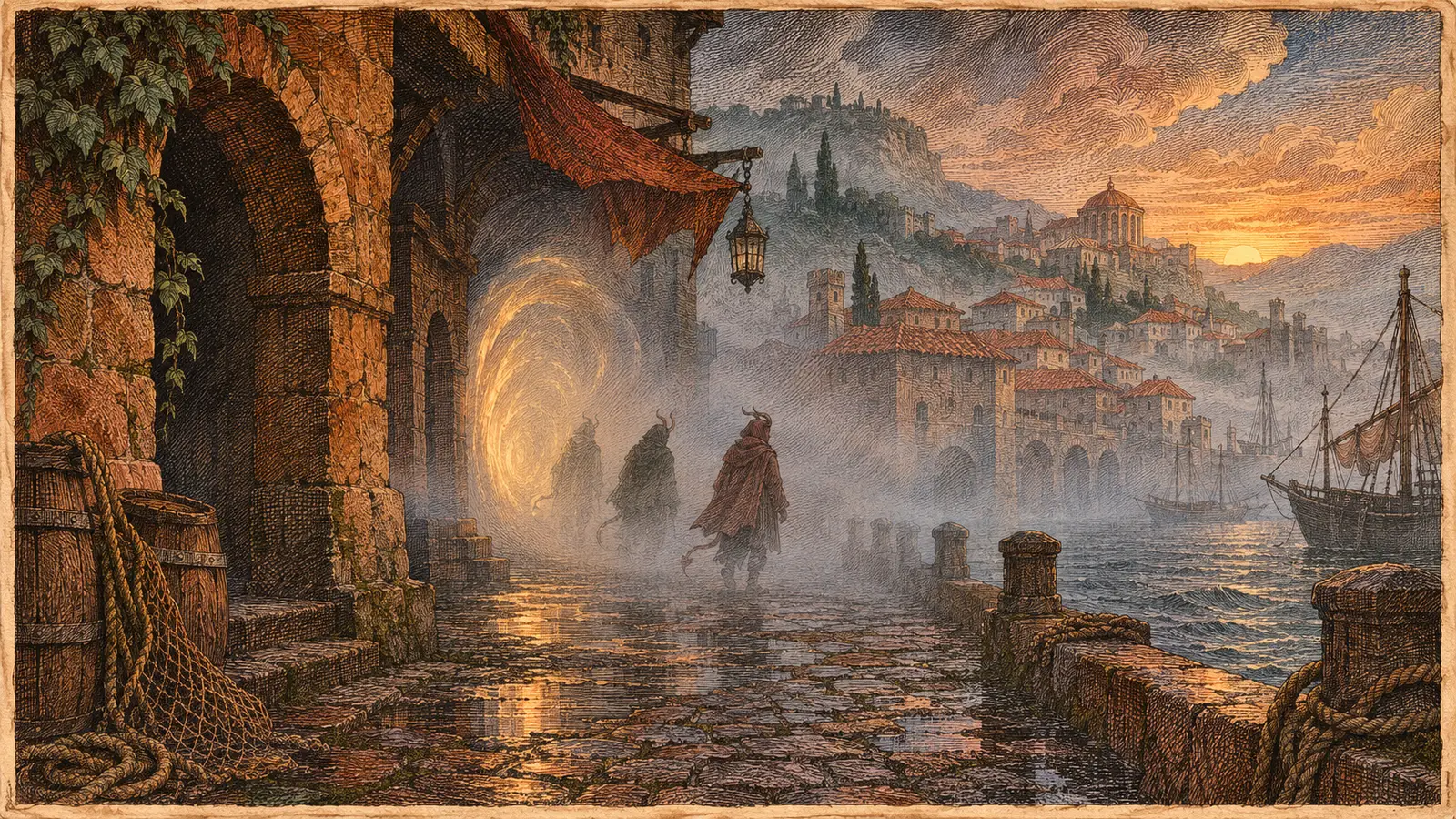
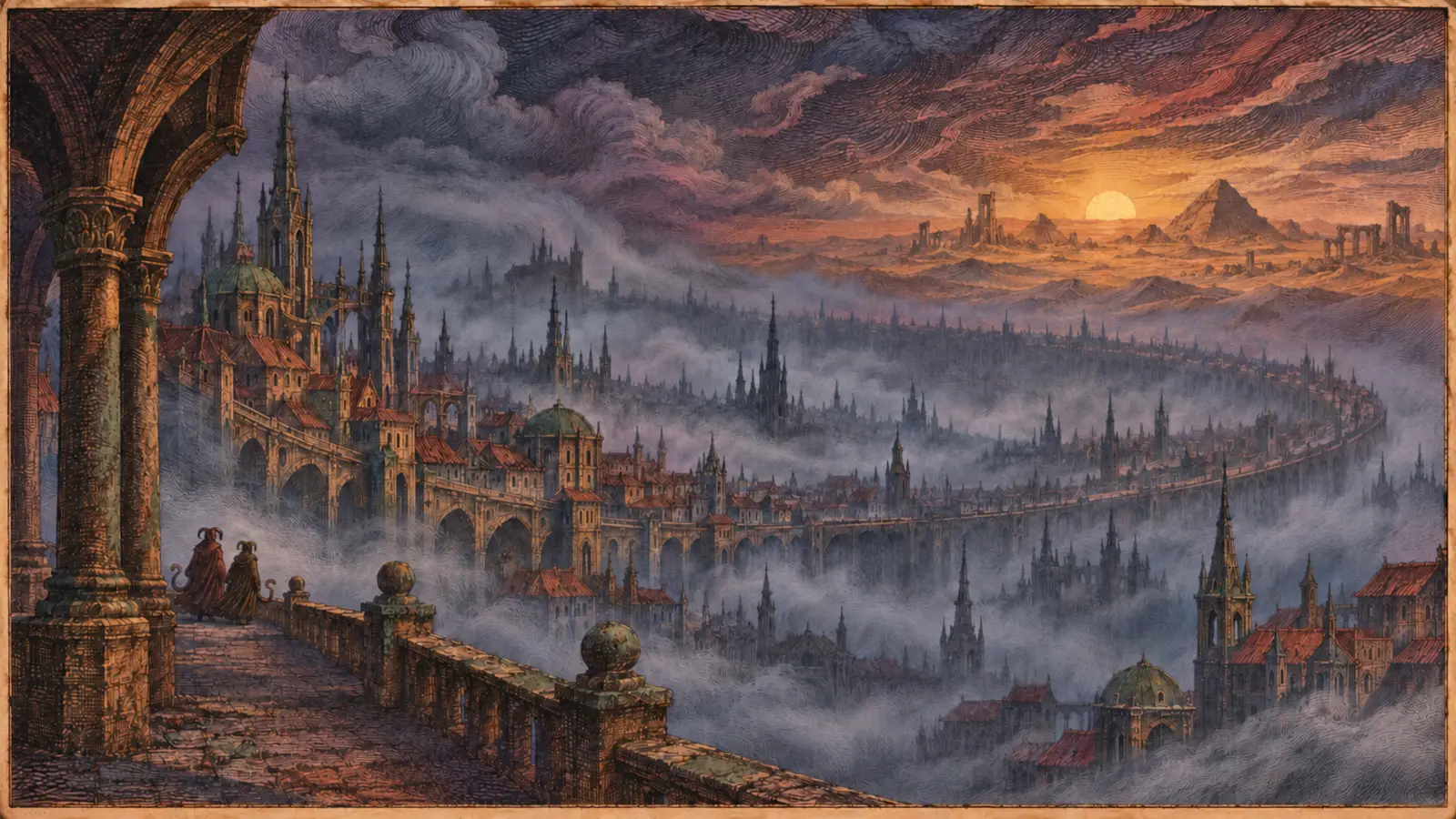
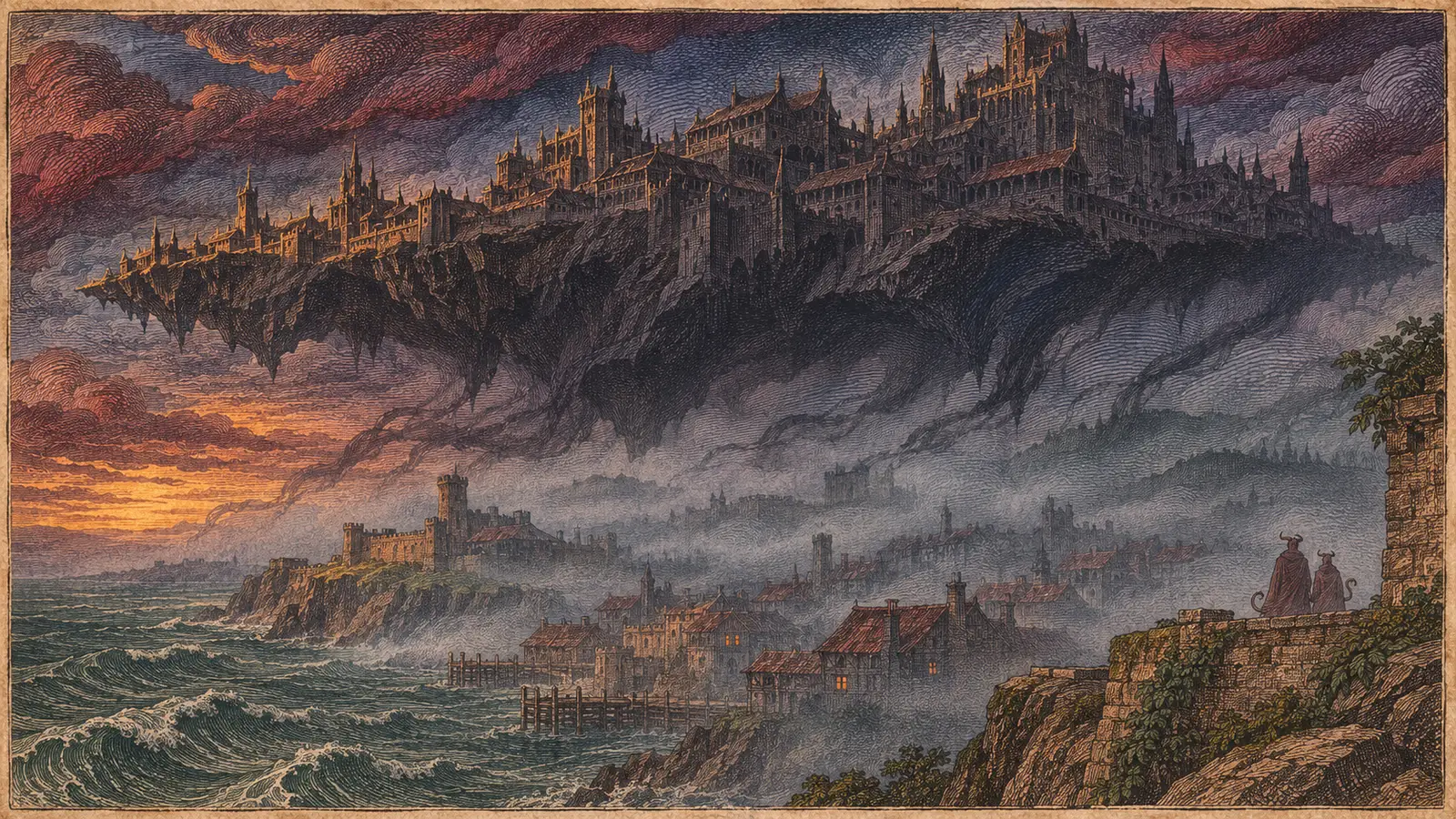
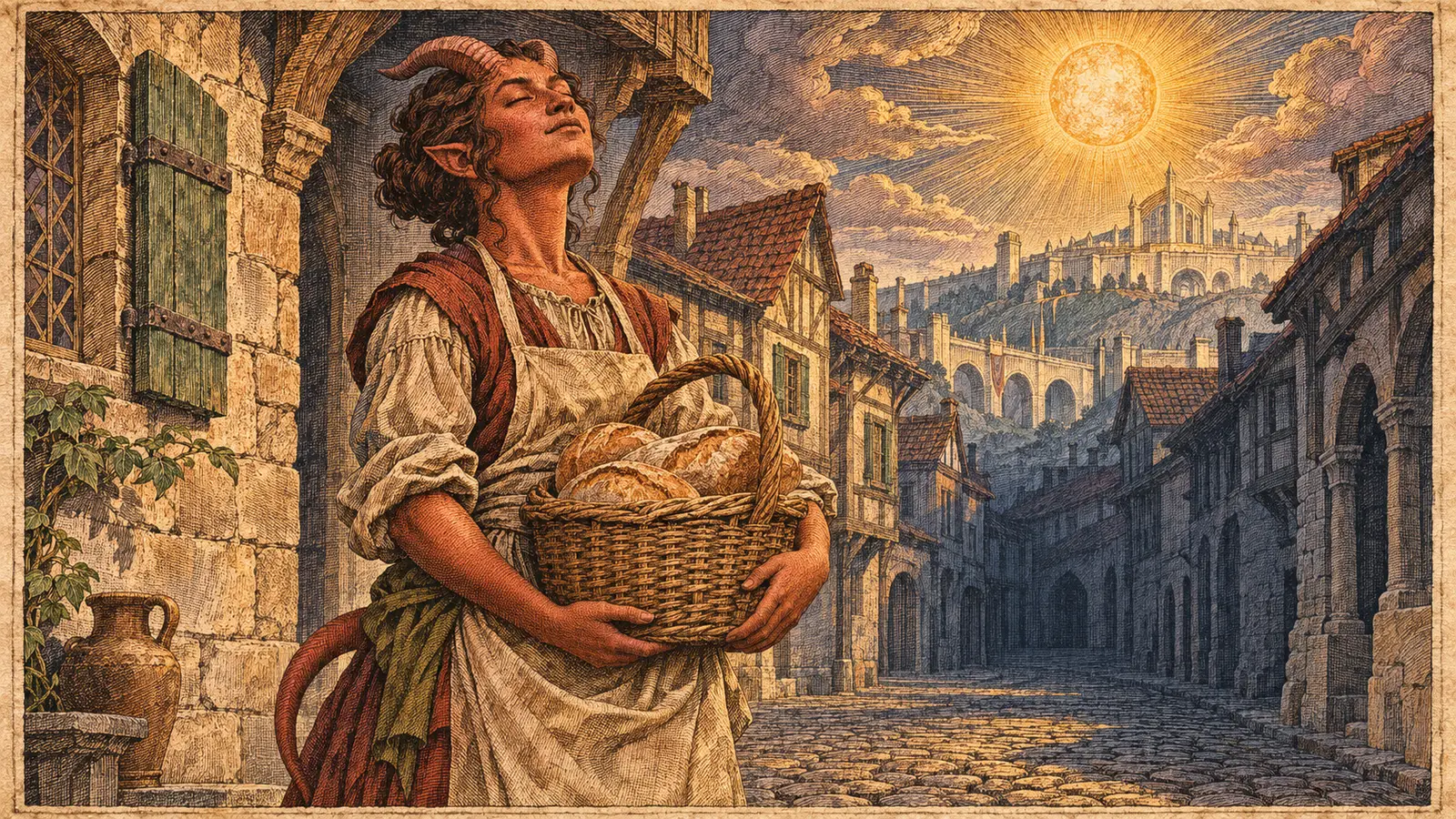
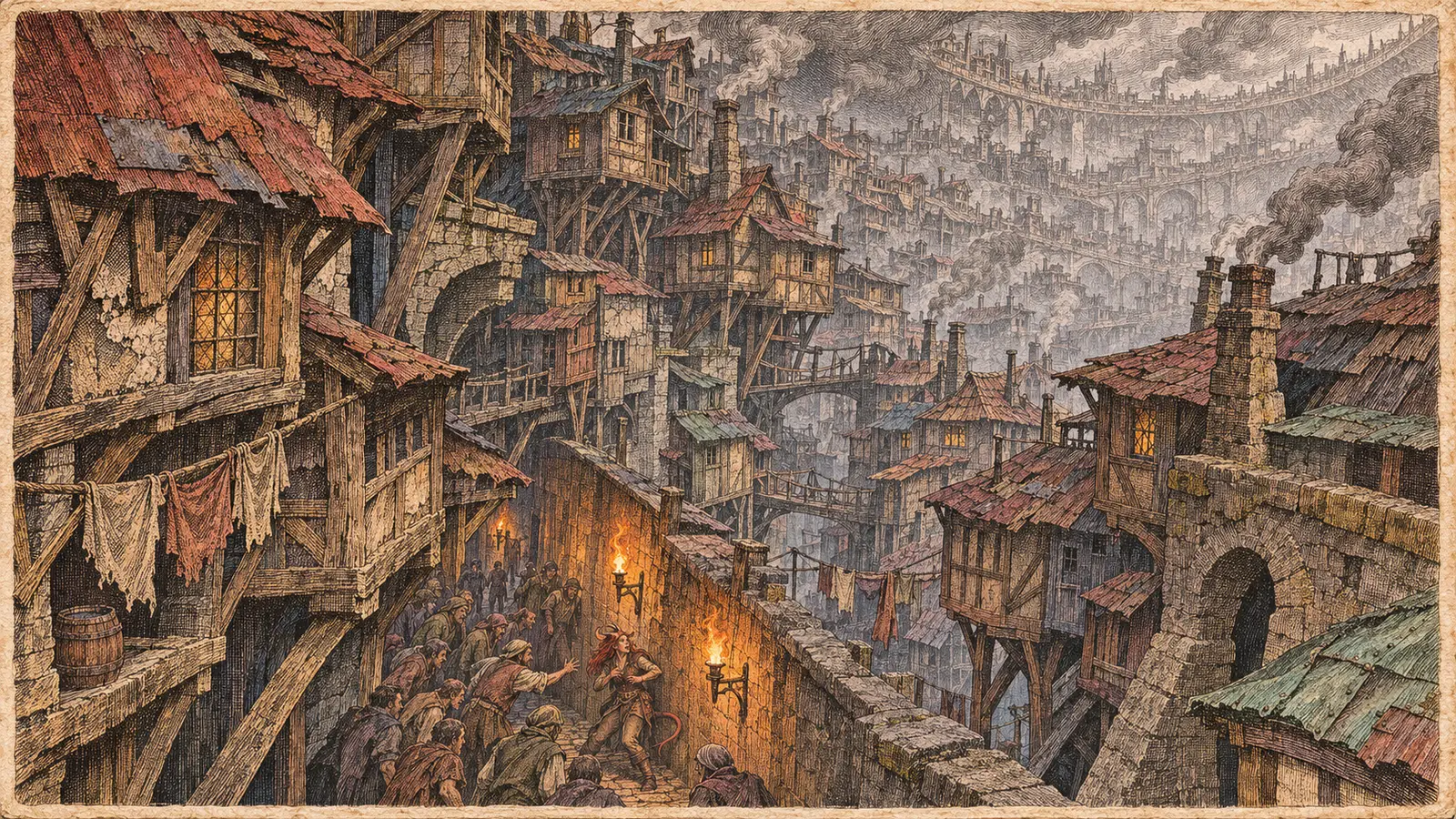
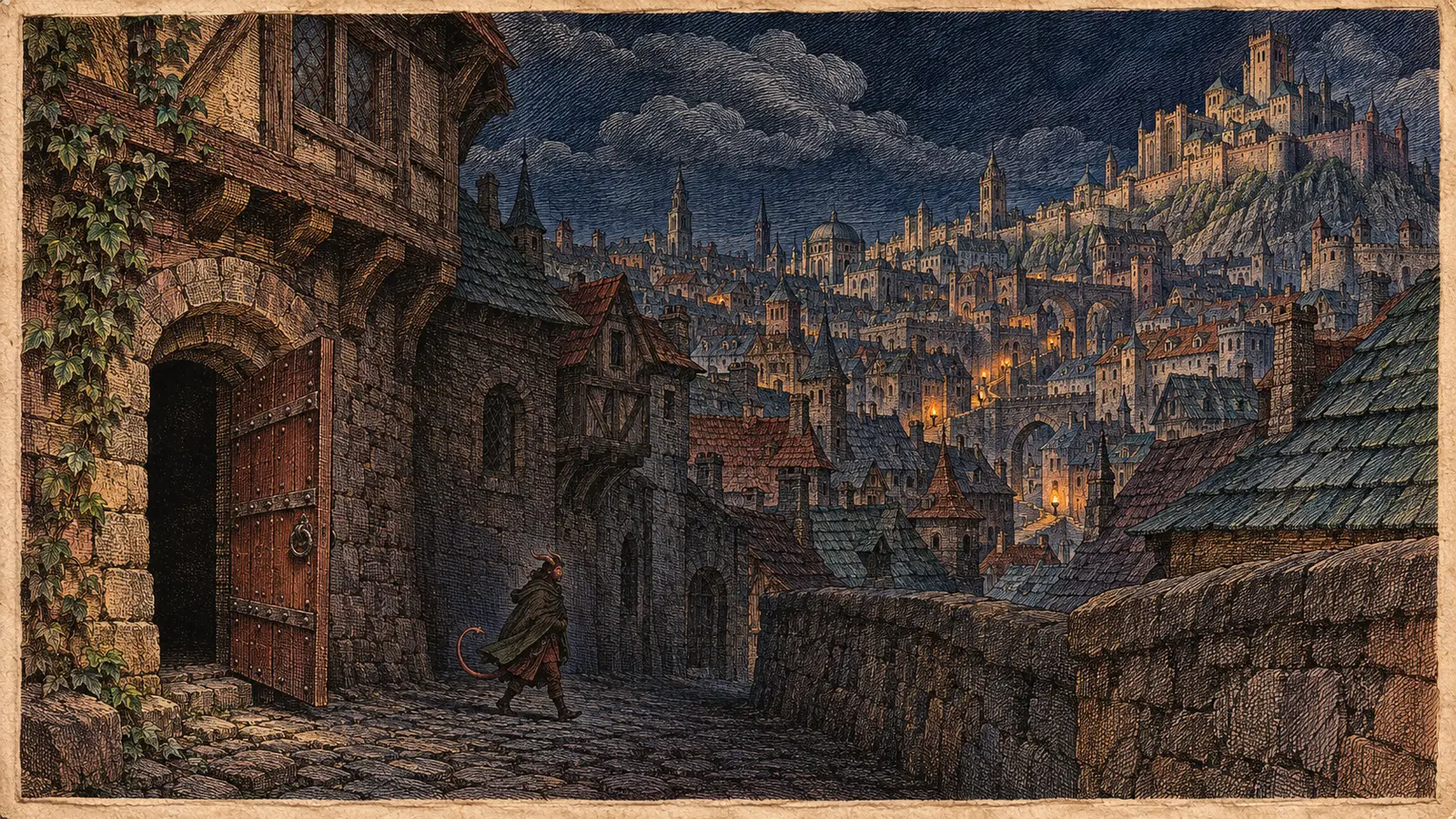
Sigil is shaped like a ring, a torus, and its streets and buildings cover the inside surface of that ring. If you stood in one of its streets and looked up, you would see more city overhead, curving away through the haze, rooftops and chimneys hanging above you like a second sky. There is no sun. The light comes from nowhere in particular and dims and brightens through the day. Smoke drifts, and the air smells of coal and rain and things from a hundred different worlds.
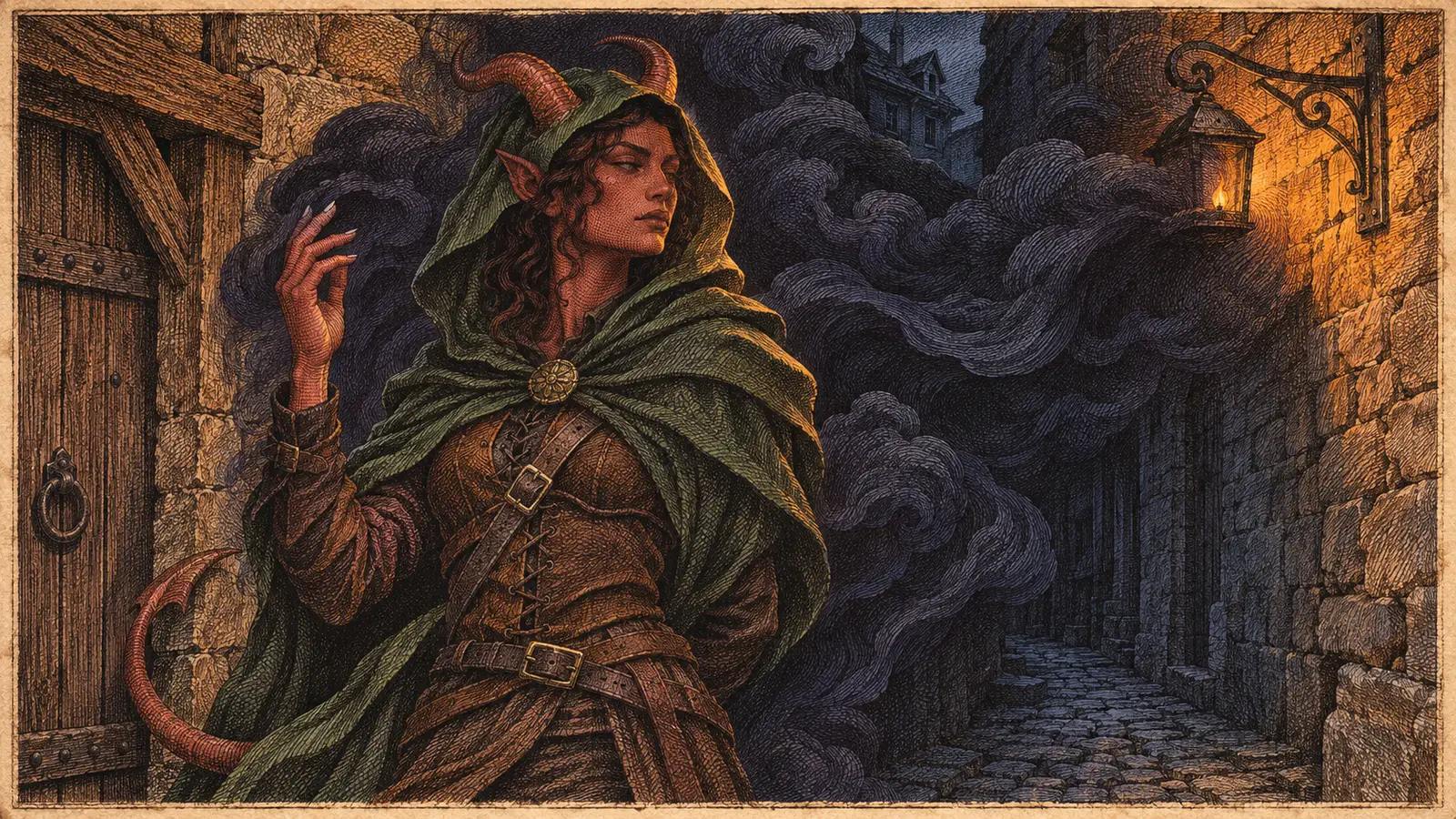
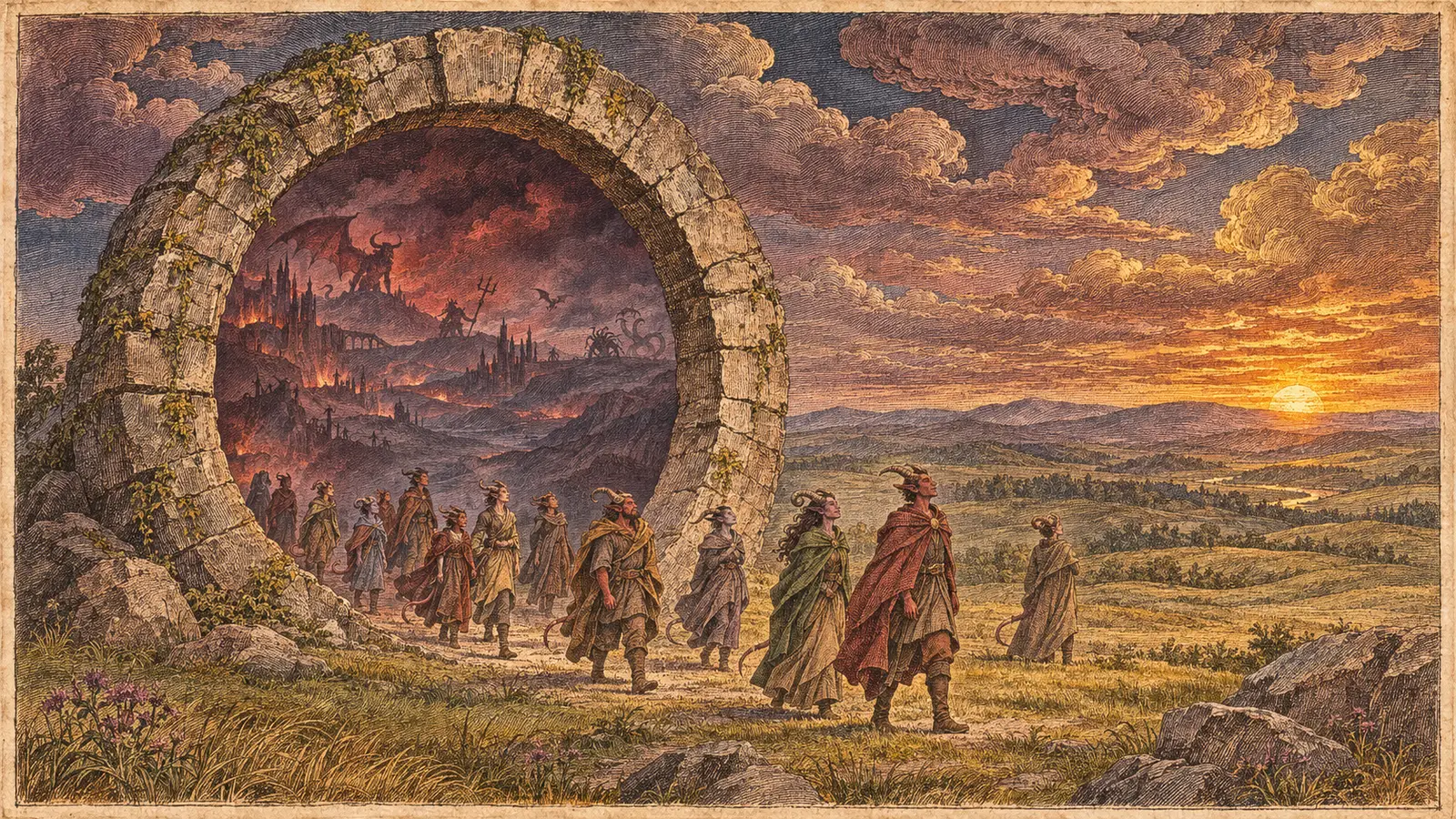
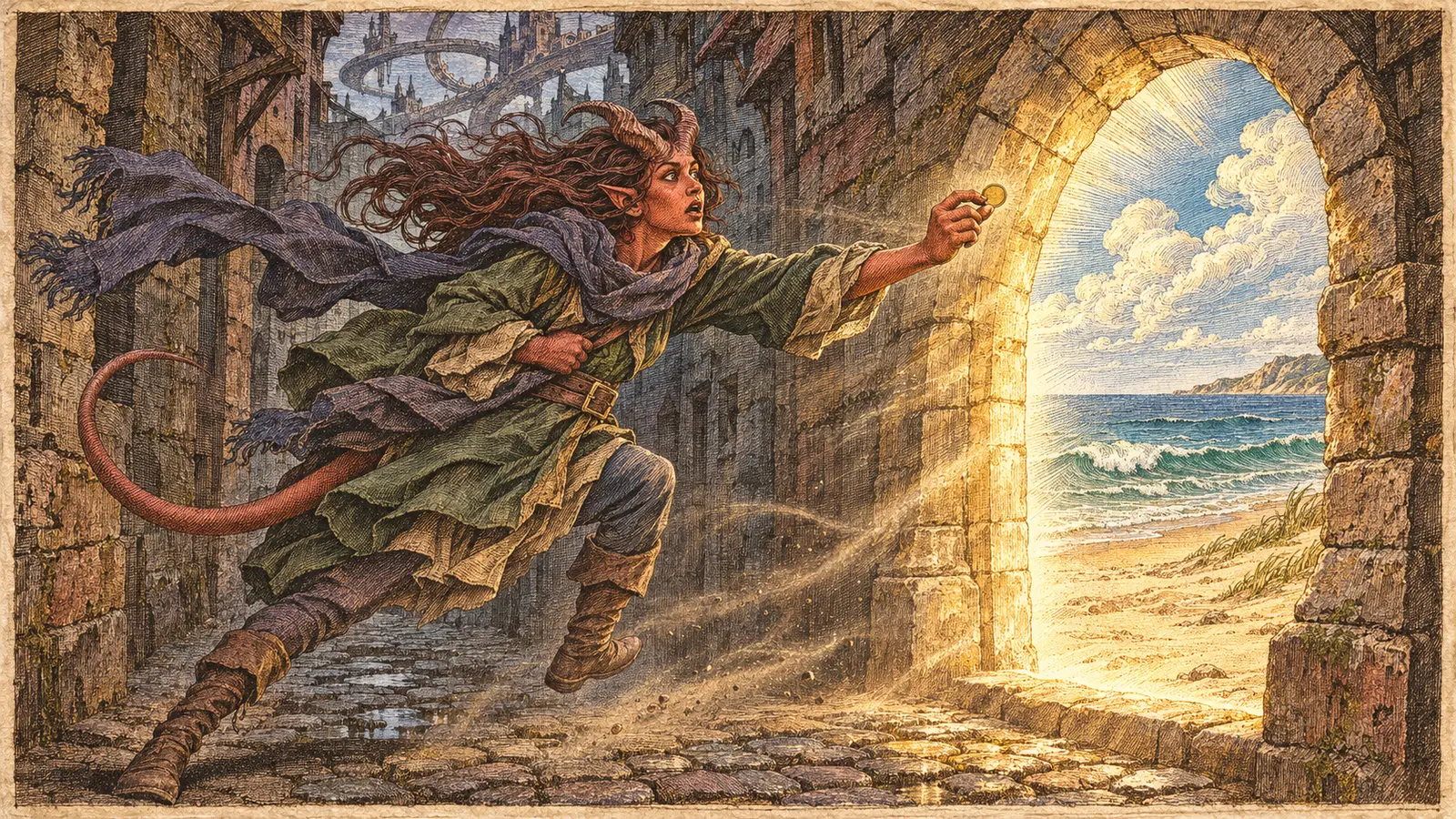
Sigil is called the City of Doors because it is full of portals. Any doorway, any arch, any frame in the city might be a gate to somewhere else, another plane, another world, another city entirely. Each portal opens only for the right key, and a key might be an object, a gesture or even a thought. A tiefling walking home might pass under an old stone arch a hundred times without incident. Then one day she happens to be humming a certain tune and holding a certain coin, and the arch fills with light and opens onto a beach in Elysium. People who live in Sigil learn to be careful about what they carry and what they think while walking through doorways.
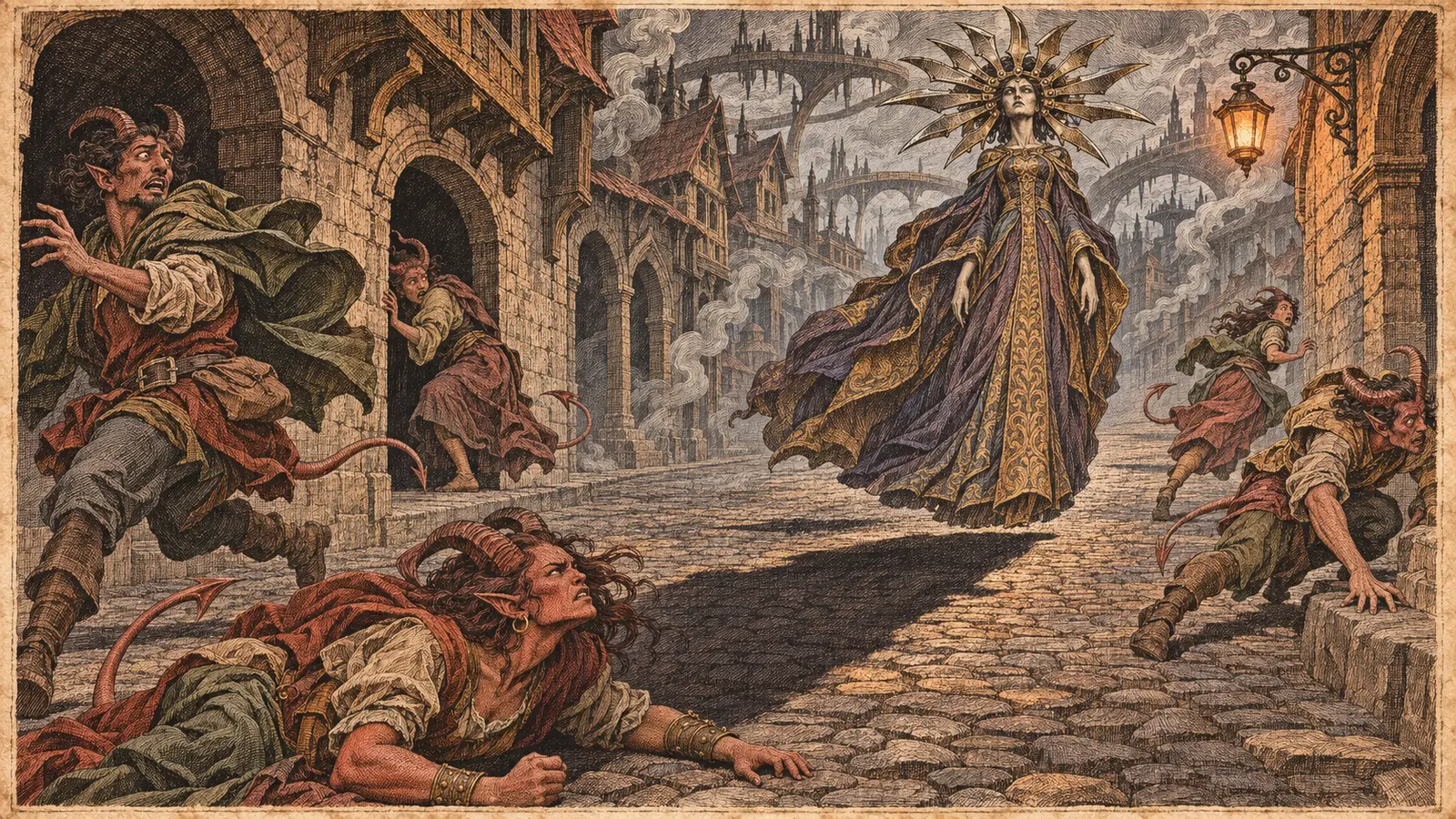
The city is ruled by the Lady of Pain. She is silent, and she almost never shows herself. When she does appear, in times of turmoil, she drifts through the streets surrounded by a halo of blades, and her shadow can flay anyone who defies her. She bars the gods themselves from entering Sigil, and no deity can set foot inside the ring. Nobody knows what she is or where she came from, and nobody who values their skin asks too loudly. The locals call the city "the Cage," from the word birdcage, and it is not a fond name. It tells you how the people of Sigil feel about living under her quiet, absolute rule.
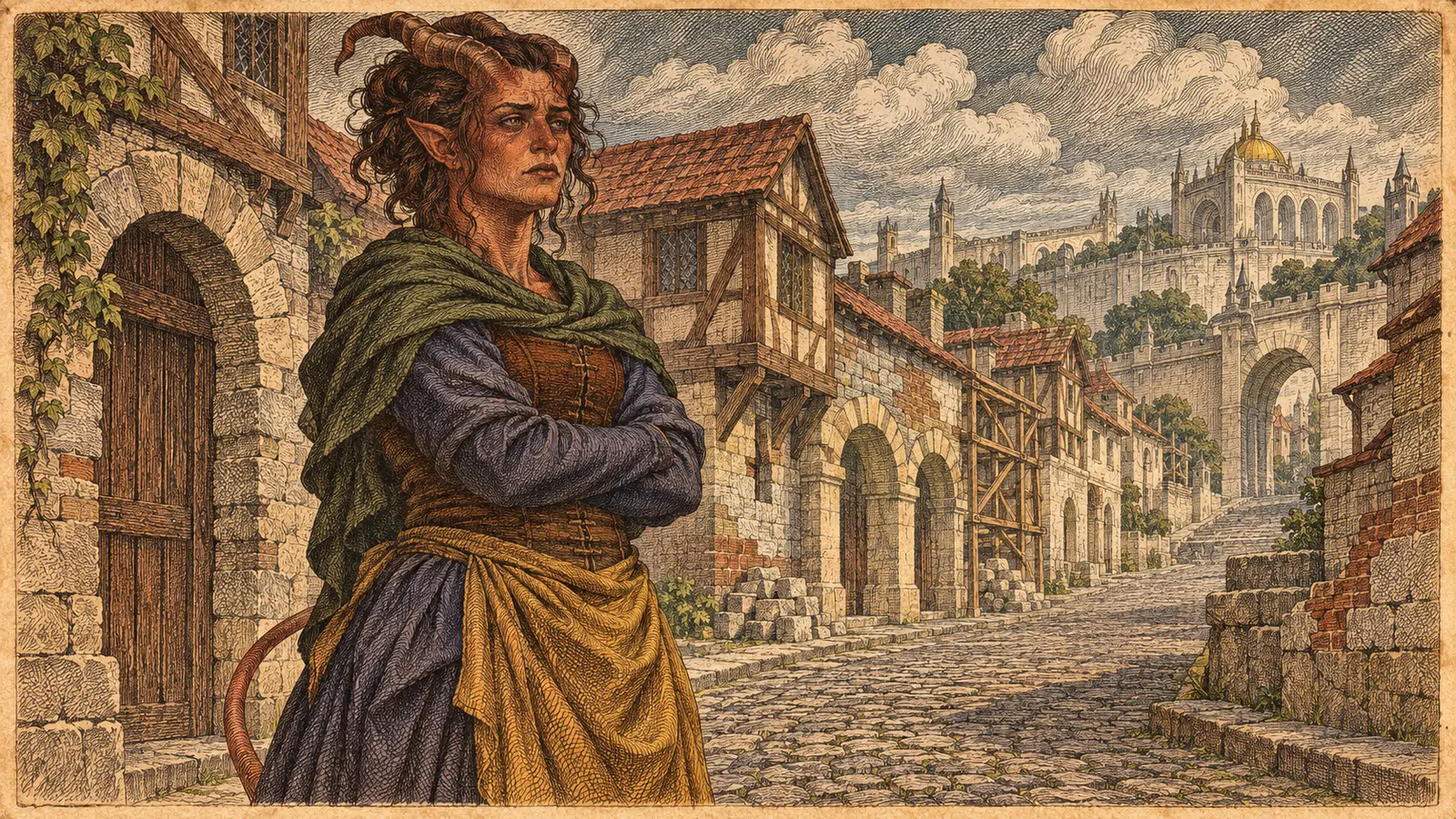
The city is divided into wards. There is the Lady's Ward, where the wealthy and powerful live. There is the Lower Ward, full of foundries and smoke, the Market Ward, where nearly anything from anywhere can be bought, the Clerk's Ward of offices and records, and the Guildhall Ward of craftsfolk and trade. And there is the Hive, the sprawling slum where the poorest and most desperate of Sigil's people live, crammed into crooked tenements and alleys that twist back on themselves. The , the faction devoted to chaos, keep their headquarters there. It's in the Hive that many tieflings grow up, because the Hive takes in those nobody else will have.
Sigil has its own way of speaking, a planar cant loosely based on the thieves' cant of seventeenth-century England. A fool is a "berk." A resourceful or daring person is a "cutter," and that's a compliment. Someone held in high respect is a "blood." People who don't understand the planes, usually visitors from the Prime Material worlds, are called "the Clueless," or simply "primes." A tiefling who grew up in the Hive would speak this cant from the cradle, and would size up any stranger in a heartbeat, berk or cutter, Clueless or blood.
Beyond Sigil, out on the Outlands, stand the gate-towns. There are sixteen of them, set in a great ring around the Spire, and each one holds a permanent portal to one of the Outer Planes. Over time each town has come to resemble the plane it opens onto. The towns that lead to the Lower Planes are some of the likeliest places in the whole multiverse to find tieflings. Ribcage is the gate-town to Baator, a hard, orderly, frightening place. is the gate-town to the Abyss, wild and ugly and always on the edge of falling through. is the gate-town to Carceri, the prison plane, and it's full of exiles, schemers and traitors. In towns like these a tiefling might be one face among many, unremarkable in a way they could never be on a sunlit Prime world.
The great power in Sigil during this era, after the Lady herself, was the factions. By her decree there were fifteen of them, and each was more than a guild or a party. Each was a philosophy, a whole way of seeing the multiverse, and each claimed that its view was the true shape of reality. The Fraternity of Order believed the multiverse ran on laws that could be learned and used. The Harmonium, nicknamed the Hardheads, believed in peace through unity and enforced it with clubs. The Mercykillers believed in justice without mercy. The Society of Sensation believed in experiencing everything. The Fated believed that what you could take was yours. The Transcendent Order trusted instinct over thought. The Sign of One believed each person imagined the world into being. The Believers of the Source believed every soul was climbing toward divinity. The denied the gods. The Dustmen believed everyone was already dead. The Bleak Cabal believed nothing meant anything at all. The Doomguard believed in entropy and decay. The Free League believed in nobody telling anybody what to do. The Revolutionary League, the Anarchists, wanted to tear the whole system down. And the Xaositects, the Chaosmen, believed in chaos and spoke in a jumble that only other Xaositects could follow.
A tiefling might find a home in any of these, but the Revolutionary League was especially welcoming. It was secretive, or "peery" in the cant, and it suited loners and people used to living outside the rules. Tieflings and half-elves joined it in large numbers. You can see why. A people who had always been on the outside of every order had good reason to dream about a world where the order was swept away.
Some tieflings of Sigil had names, and a few of them became small legends in their own right.
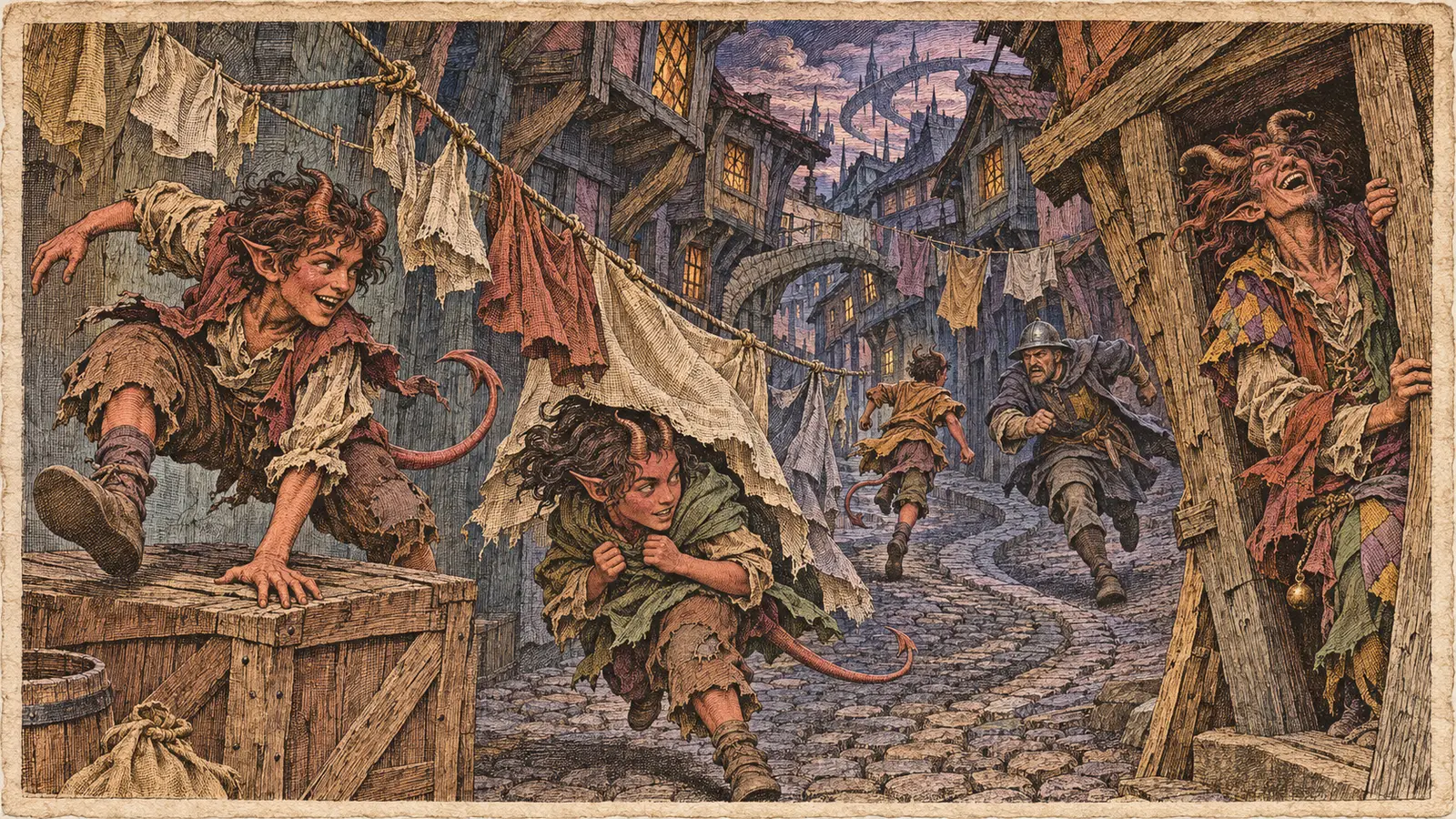
The most famous was Kylie the Tout. A tout in Sigil is a guide, someone you hire to find your way through the maze of wards and portals without being robbed, lost or eaten. Kylie was the most famous tout in the Cage. She was a tiefling who ran a whole network of touts and runners across the city and out into the gate-towns of the Outlands. Her guides cost more than most, but they were trustworthy and well connected, and in Sigil that was worth paying for. Anyone who wanted to work for her had to be well trained, fleet of foot and sharp of mind, and the custom was that you didn't go to Kylie looking for work. You waited for her to notice you. Picture her at a corner table in some smoky tavern, listening to her runners' reports, making a small sign with one hand that sends a young tout off into the crowd with a nervous traveller in tow.
There was also Ruskin, a sweet-seeming old tiefling who traded in portal keys, information and rare ingredients. She did business in Sigil's markets, and her price was rarely gold. She traded for favours, and powerful ones, the kind of favour that might be called in years later at an inconvenient time. To a traveller she looked like a kindly grandmother behind a counter of curiosities. Those who knew her better were more careful.
And there was , a tiefling waitress in Sigil, described simply as someone "who sees a lot." It's a small entry, but it hints at the many tieflings of the city who weren't warlords or wizards or villains. They carried trays and listened and remembered. In a city of secrets, a waitress who sees a lot may be one of the most powerful people in the room.
Kylie and Alluvius both appeared in Uncaged: Faces of Sigil, a book of the city's notable people published in 1996. Together with the many tieflings who filled the margins of other Planescape books, they give a picture of the tiefling as Sigil's own child: part of the furniture, never quite trusted, and almost always clever.
The Planescape era ran for several years, and in 1998 it closed with a great upheaval called Faction War. In that story the factions' long rule over Sigil came to an end. The Lady of Pain swept away the order the factions had kept, and the city changed. It was also the end of TSR's Planescape line. But the tieflings didn't vanish with the factions. If anything, the end of that era scattered them outward, into new books, new worlds and, before long, into video games that carried them far beyond the dice-rolling tables of the 1990s.
Before we follow them there, though, we need to go back a couple of years, to a handbook that gave tiefling players the strange gift of rolling dice for their own inheritance.
Chapter IV
Rolling the dice of inheritance: The Planewalker's Handbook, Torment and the road to Faerûn
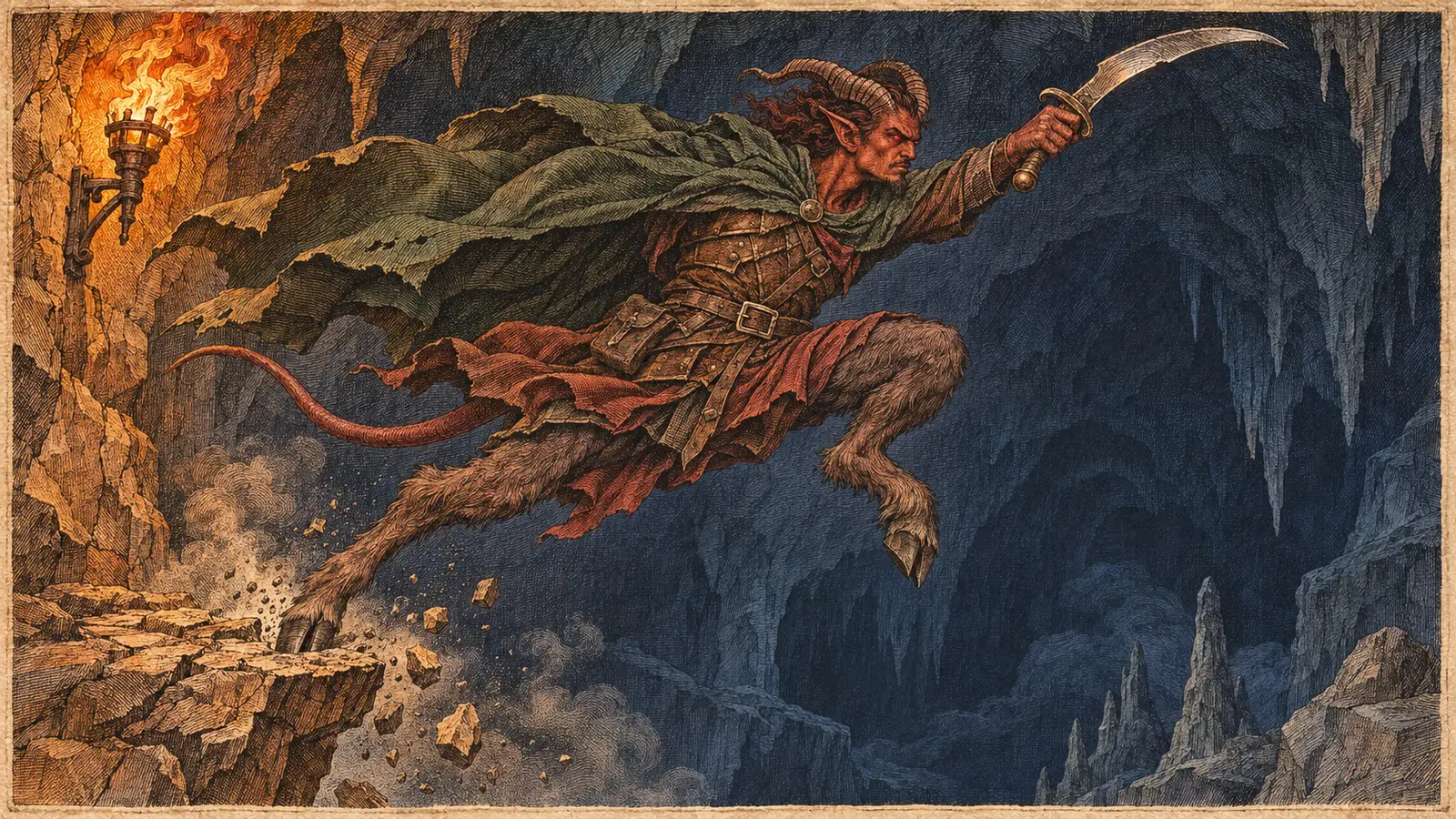
In 1996 TSR published The Planewalker's Handbook, written by Monte Cook. It was meant to be the player's own survival manual for the planes, the book you kept beside you while your character tried not to get killed in . It explained how to build and customise a planar character, how to deal with the various planar races, and how to make sense of the factions. It offered new archetypes, new skills, new equipment and a kit for each kind of character, and it spent real care on how to roleplay each race. The tiefling was one of them.
The handbook also widened the tiefling's family. By now Planescape's player races had grown into a little gathering of the strange: humans, tieflings, aasimar, genasi, rogue modrons, githzerai and bariaur. The aasimar, who had first appeared in the second Planescape monster appendix, became playable here for the first time. They were the tiefling's mirror image, humans with a trace of celestial blood, of angels and holy beings, instead of fiendish. The genasi, humans touched by the elemental planes of fire, water, earth and air, also became playable, and so did the rogue modron, a clockwork being from the plane of perfect order that had somehow broken free of its programming.
So the tiefling now had siblings, in a sense. There was the aasimar, its bright opposite, and the genasi, its elemental cousin, all of them human or nearly human, all of them carrying a little of somewhere else. Later editions would give this family a name, planetouched, and we'll get there soon.
The handbook's most memorable gift to tieflings was a pair of random tables. Because tieflings could descend from so many different kinds of fiend, the handbook let each player discover what their particular character had inherited. A player could give up the standard tiefling gifts, the darkness, the resistance to cold and the protection against fire, lightning and poison, and instead roll dice. They rolled five times on a table of abilities, and between one and four times on a table of appearances.
The appearance table opens with small horns on the forehead, then small horns on the temples, then a single horn in the middle of the forehead, then a long, thin face. Further down came goat legs and red eyes, among many others. The ability table might give a tiefling half harm from cold, or from lightning, or from acid. It might let them see in the dark twice as far as usual, out to a hundred and twenty feet. It might grant other protections and odd gifts.
Think about what that meant at the table. A player would sit down, roll the dice and find out, one roll at a time, who their character's ancestors had been. Maybe she'd roll the single horn and the long face and resistance to acid, and imagine some ancient slime-dripping thing from the Abyss in her family tree. Maybe he'd roll goat legs and red eyes and wonder about a satyr-like fiend of the Gray Waste. Every tiefling was a small mystery, solved partly by chance and partly by the story the player built around it.
The handbook also spelled out how many kinds of fiend a tiefling might descend from. The fiendish forebear might be a devil of . It might be a demon of the Abyss, a tanar'ri. It might be a yugoloth, one of the mercenary fiends who fight for whoever pays. It might be a gehreleth, a strange and bloated fiend of the Lower Planes, or a hordeling, one of the shapeless rabble of the Gray Waste, or a night hag, the dream-stalking crone who trades in souls. And some tieflings weren't descended from any particular fiend at all. They had simply been changed by the long influence of the Lower Planes on their families, the way a stone is shaped by the river it lies in.
That last idea is lovely and slightly eerie. It suggests that a family who lived long enough in a gate-town like or , generation after generation, breathing that air and drinking that water, might one day have a child with small horns and no fiend to blame. In the second edition a tiefling was less a fiend's grandchild than a human who had been marked by the depths.
A few more details rounded out the picture. Tieflings couldn't follow the path of the paladin, the holy warrior, or the druid, the guardian of nature, because those callings sat uneasily with the blood of the Lower Planes. And they lived somewhat longer than humans, often well past a hundred years. A tiefling could watch the ordinary people around them grow old and still have years left to walk the planes.
Three years later the tiefling reached a far larger audience than any boxed set could. On the tenth of December, 1999, Black Isle Studios and Interplay released Planescape: Torment, a computer game set in Sigil and the planes around it. Its lead designer and writer was Chris , and the game's script ran to something like eight hundred thousand words, an enormous amount of writing for any game of its time. Avellone has said he didn't know Planescape well when he started, but once he understood the setting, he and his team became excited by how far it was from ordinary fantasy.
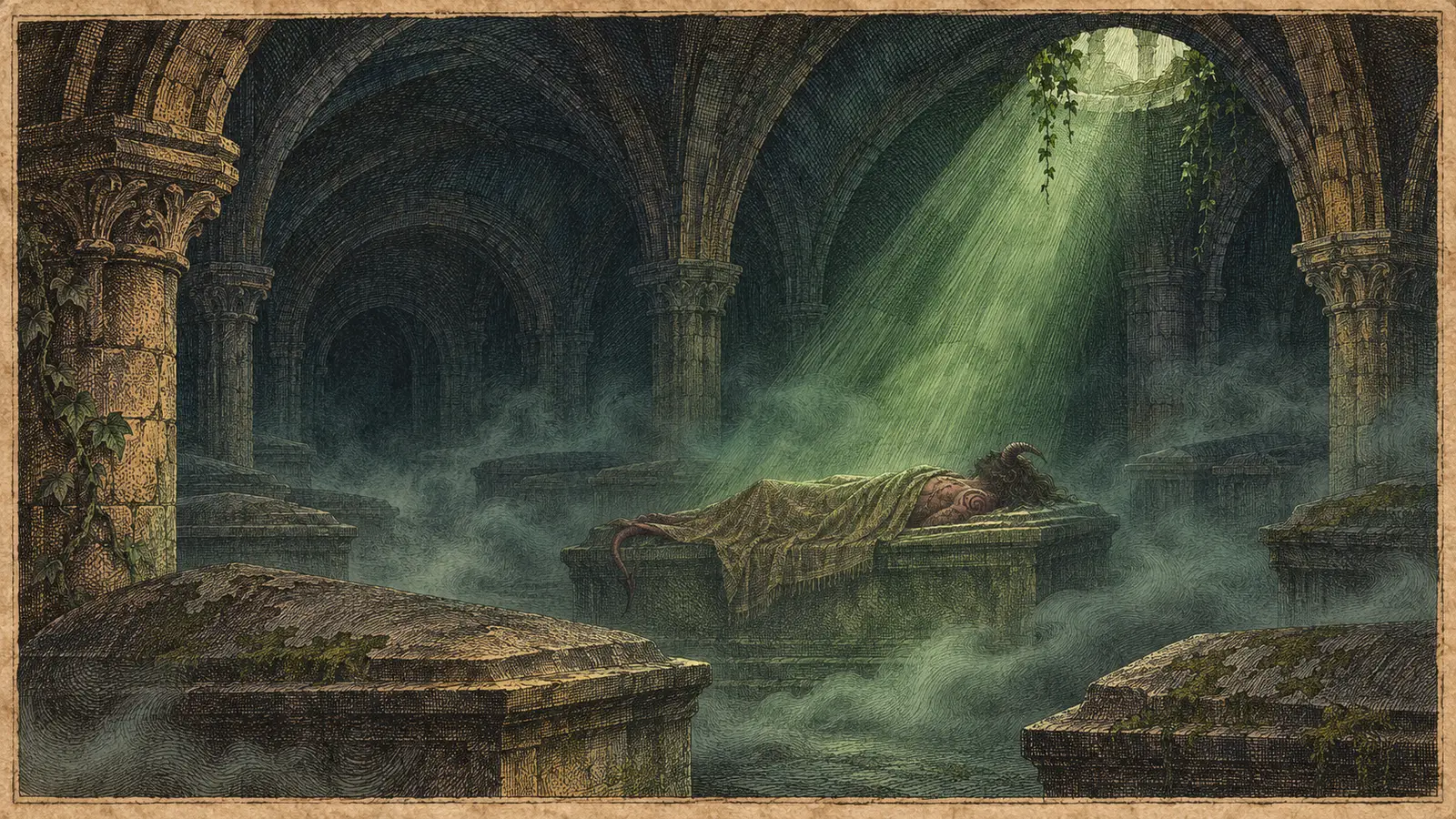
The hero of Torment is the Nameless One, a scarred and tattooed immortal who wakes on a slab in a mortuary with no memory of who he is. And the very first person to find him, before he even woke, was a tiefling.
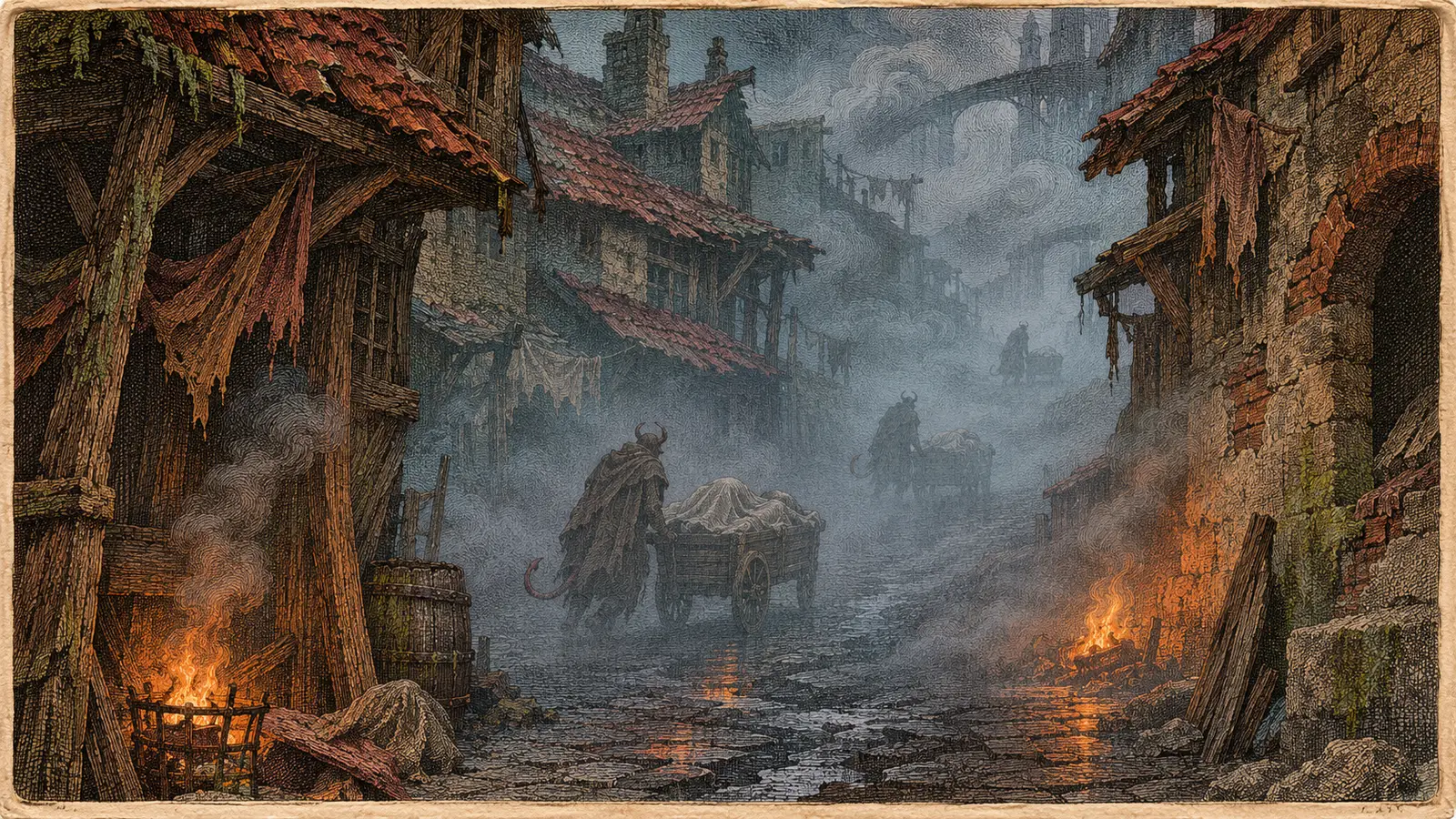
Her name is -of-the-Shadows, and some call her a "fiendling." She's a young tiefling who grew up in the Hive, the slum of Sigil. Her stepfather is , a bone-collector and the leader of the collectors, people who gather the dead from Sigil's streets and sell them to the Dustmen's mortuary. Pharod most likely found Annah as an orphan on Sigil's streets, and he raised her to be a capable rogue, someone who could handle the jobs his ordinary underlings couldn't manage.
Annah looks mostly human. She has milk-white skin, red hair and green eyes, and a tattoo of a wyrm, a serpentine dragon, on her right thigh. The one thing that gives her away is her tail, which twitches when she's restless or annoyed, which is often. She's brash and sharp-tongued, impatient with fools, and she speaks in thick Hive slang. In the game she was voiced by the singer Sheena Easton, who gave her a Scottish brogue, so her cant comes out in a voice full of rolling, quick-tempered music.
Her story is woven into the Nameless One's. It was Annah who found his body and brought it to the Mortuary, though at first she doesn't say so. The player first meets her loitering just south of the Mortuary, in the Hive. Later, the search for Pharod leads through Ragpicker's Square, the Trash Warrens and the Buried Village, a sunken and forgotten place beneath the Hive where Pharod has been hiding. When the Nameless One finally finds him, Pharod tells Annah to guide this strange immortal back to the place where she found him. She agrees, grudgingly, and joins the party.
As a companion she's a fighter and a thief, quick with her punch-daggers and quicker with her mouth. She can teach the Nameless One the ways of a thief if he wants to learn them. And between the two of them grows a tentative, prickly romance, the kind where neither side quite admits anything.
Avellone has said that Annah and another companion, Fall-from-Grace, were inspired by Betty and Veronica from the Archie comics, with Annah as Betty. Fall-from-Grace is a succubus who runs a brothel devoted to intellectual pleasures, so she's a fiend herself rather than a tiefling. It's a gently funny pairing to set side by side: the tiefling girl from the slums, all elbows and suspicion, and the serene, cultured succubus. In a strange way the two of them show the whole spectrum of fiendish heritage, from the full fiend who chose grace to the human child with a fiend's tail who chose stubbornness.
Annah was loved. In its awards for the year 2000, Eurogamer named her its best female supporting character and described her as a "streetwise young tiefling woman with a twitching tail and a sharp tongue." For a great many people, Annah was the first tiefling they ever met, and for some she has remained the truest picture of what a tiefling is: an orphan of the city, wary and quick and secretly loyal.
The very next year a tiefling crossed into another world. In 2000 BioWare and Interplay released Baldur's Gate II: Shadows of Amn, set in the Forgotten Realms, on the world of . At that time the Forgotten Realms books didn't yet treat tieflings as a race people could play. But planewalkers travel, and some of Sigil's tieflings had found their way to the city of , in the land of Amn.
One of them was , a tiefling bard of the kind called a Blade, who fights with a pair of short swords named Chaos and Entropy. He came from Sigil, which he speaks of as the domain of the Lady of Pain, and he belonged to the Doomguard, the faction that believes all things must decay to make way for the new. He talks theatrically, as though every sentence were a line in a play, which in a way it is.
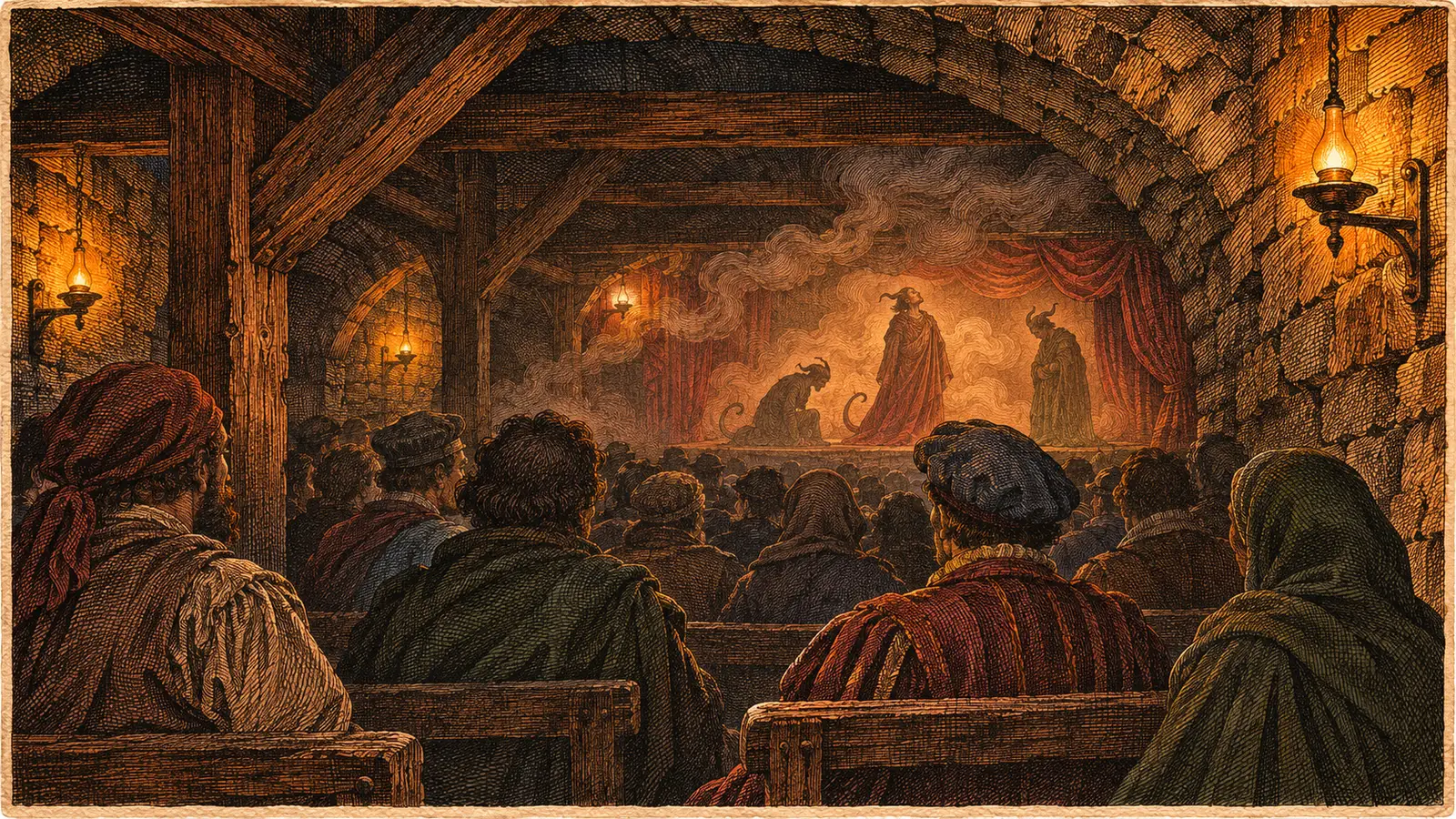
He travelled with a troupe of planewalking actors led by another tiefling bard, . The troupe had come to Toril and tried to stage their plays in the theatre beneath the Five Flagons inn, in Athkatla's Bridge District. You can imagine the crowd: dockworkers and merchants and the occasional curious noble, sitting on benches in a lamplit cellar while a cast of horned and strange-eyed actors performed tragedies that had been written on other planes.
The troupe wanted to go home. In the Year of the Gauntlet, as the Realms count their years, Haer'Dalis tried to steal a portal gem from a mage named , so the actors could leave Toril by way of the Astral Plane. He was caught, and Mekrath imprisoned him in his lair in the sewers beneath Athkatla. When the player's party frees him, it isn't the end of his troubles. Bounty hunters seize the whole troupe and carry them off to a planar prison. The party follows through a portal to rescue them, and once the actors are free, Haer'Dalis offers to join the heroes for good.
It's a small story in a very large game, but it carries something important. Here was the tiefling of Sigil, with its faction philosophy and its planar cant and its long view of the multiverse, standing in a cellar theatre on a Prime world. The tieflings had arrived in the Forgotten Realms through the side door of a video game, before the Realms' own books made them a standard race. When the books did catch up, they would give the tieflings of Toril roots of their own, in ancient lands of god-kings and wizards.
Chapter V
The planetouched: third edition and the tieflings of Faerûn
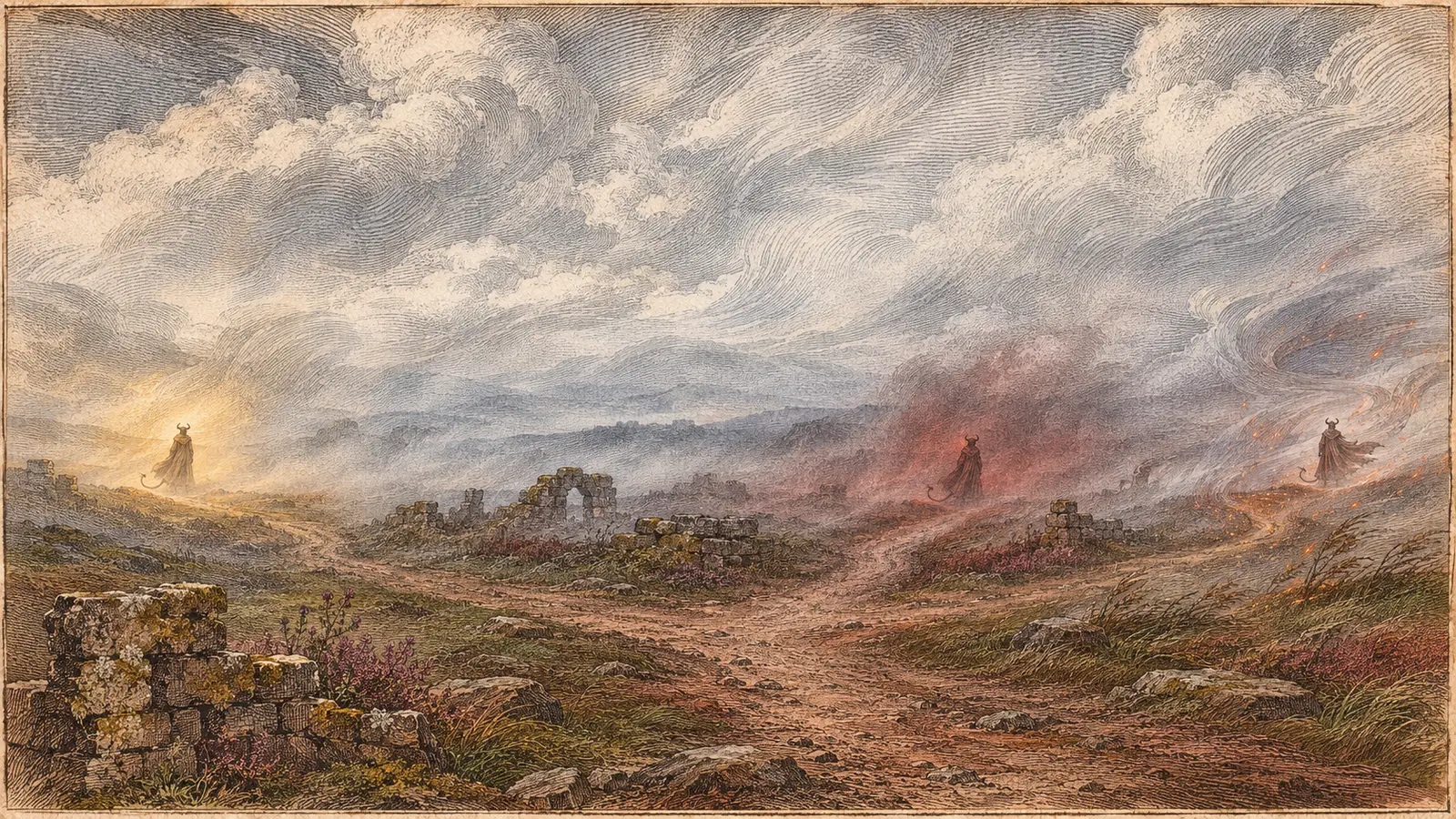
In 2000 Dungeons and Dragons began its third edition, and with it the tiefling changed in a quiet but lasting way. The new Monster Manual, written by Monte Cook, Jonathan Tweet and Skip Williams, didn't give the tiefling an entry of its own. Instead it gathered the tiefling and the aasimar together under a single heading: planetouched.
The planetouched, in third edition, were mortals with extraplanar blood somewhere in their family line. They were usually humans, but sometimes other humanoids. The ancestor might be a celestial, a fiend or an elemental. The aasimar carried celestial blood and tended toward goodness. The tiefling carried fiendish blood and was the aasimar's planar opposite. The genasi carried the blood of the elements. Three kinds of strangeness ran through three kinds of family, and all of them were human or close to it.
This changed what the word "tiefling" meant. In Planescape it had been a piece of planar slang, something 's people called the fiend-touched among them. In third edition it became the game's own name for the fiendish branch of the planetouched, a term that could be used in any world, any campaign, any setting at all.
Over the course of the edition, the books drew a firm line between tieflings and half-fiends. A half-fiend has a fiend as a parent. A tiefling's fiend lies further back, so the blood is diluted and inherited. That distinction held for the rest of the edition, and it echoed the old difference between the first-edition cambions and the Planescape tieflings who came after them.
The tieflings of third edition still came in many shapes. One might have hooves, another a reptilian tail, another horns, another strange eyes. And they were still distrusted and feared, a people whose evil lineage made others step back from them in the street. The same shared entry returned in the revised Monster Manual of 2003, and by then the tiefling's creature type was counted as a native outsider, a being of other planes who was nonetheless at home on the world where it was born.
The rules painted a portrait in numbers. Third-edition tieflings were nimble and clever, quicker of hand and sharper of mind than ordinary humans, but they unsettled people. Their presence was counted as a weakness, a measure of how uneasy others felt around them. That's the reverse of what later editions would do, and it's worth noticing. In third edition the tiefling was a figure others recoiled from. They could see in the dark. They could still call up magical darkness once a day. They had a knack for deception and for hiding, and their bodies shrugged off a little of the cold, the lightning and the fire. Put all that together and you get a character built for the shadows: sneaky, clever and untrusted. Because of these gifts, a tiefling counted as a little more powerful than an ordinary starting character, and a player who chose one advanced a touch more slowly to balance it.
Supplements gave the tiefling more room. In 2004 Unearthed Arcana offered a tiefling paragon, a short path of three levels for a tiefling who leaned fully into their heritage. That same year the Planar Handbook, by Bruce R. Cordell and Gwendolyn F. M. Kestrel, brought the planes up to date and printed the tiefling once again as a race for players, carrying them back to Sigil and the Great Wheel where they had first been born.
But the richest new lore of the third edition came from , the world of the Forgotten Realms.
In 2001 the Forgotten Realms Campaign Setting made the tiefling a player race in the Realms at last. Two years later, in 2003, Races of Faerûn, by Eric L. Boyd, James Jacobs and Matt Forbeck, with Sean K Reynolds, gave each of 's peoples its history, languages, dress, culture and relations with others. Its chapter on the planetouched covered the aasimar, the genasi and the tiefling, along with two stranger kin, the fey'ri and the tanarukk, whom we'll meet properly later in the evening.
In Faerûn, the book explained, tieflings were rare. Only a few thousand lived across the whole of the continent, fewer even than aasimar, and wherever they went they met suspicion, prejudice and fear. Most of them lived in three lands of the far east: , and . And most of the tiefling bloodlines of Faerûn could be traced to two of those lands, Mulhorand and Thay.
Mulhorand is an ancient land ruled for thousands of years by gods who walked among their people, a place of great temples and old dynasties along a river. Its tieflings descended from the servants or manifestations of two of its evil gods: Set, the god of the desert and of treachery, and , the crocodile god of the river. In Mulhorandi tradition these tieflings were called the hosts of the evil gods, just as the aasimar were the hosts of the good gods. Picture a temple courtyard by the great river at dusk, where a tiefling with faintly scaled skin and narrow yellow eyes walks among the priests of Sebek, honoured as a vessel of something old and dangerous. Because the gods themselves were part of daily life in Mulhorand, tieflings there received more respect than anywhere else in the Realms. They weren't loved, exactly, but they had a place.
Thay was a different matter. Those of you who spent an evening with us following Szass Tam will remember Thay, the land of the Red Wizards, ruled by a council of zulkirs and steeped in summoning and necromancy. The Red Wizards summoned fiends as a matter of course, and in a land where fiends were called up so often, dalliances between mortals and fiends of every kind became possible, and they happened. Thay's tieflings come from those unions. Thay is also unusual in another, sadder way: it holds an unusually large number of tiefling slaves. Many fiendish bloodlines run through families, and some of them have been lost for generations, their origins forgotten until a child is born with a tail.
Then there is Unther, Mulhorand's old neighbour and rival, another land once ruled by living gods. People commonly believe that Unther has as many tieflings as Mulhorand, but that isn't so. Unther's mad god-king, , fathered no children at all, because he feared any child might grow into a rival for his throne. , Unther's god of the underworld, is thought to have fathered at least one child before he was slain in the Orcgate Wars, more than two thousand years ago. And some of Unther's mages may have produced a few devil-blooded tieflings in their own experiments. But on the whole, Unther's reputation for tieflings is larger than its tieflings.
These three lands give the tieflings of Faerûn a geography and a history, which is something the Planescape tieflings never had. A Planescape tiefling came from everywhere and nowhere. A Faerûnian tiefling might come from a particular river temple, or a particular wizard's tower, or a particular line of slaves, with a story behind their horns that could be traced, at least in part.
Video games kept carrying the tieflings onward. In August 2002 Black Isle Studios and Interplay released Icewind Dale II, built on the new third-edition rules, and players could choose a tiefling or an aasimar as a subrace for their adventurers, each with its own strengths and drawbacks. A party of snowbound heroes in the far north might now include a horned and cold-resistant wanderer from Thay or Mulhorand.
In 2006 Obsidian Entertainment released Neverwinter Nights 2, which offered both planetouched kinds as subraces. It also introduced one of the era's best-remembered tieflings, a rogue companion named . The player first meets her when she's being attacked by soldiers, set upon for nothing more than her tiefling heritage, and rescues her. It's a small scene, but it gathers up the whole history of the tiefling into a single moment: a quick, clever young woman cornered in the road by armed men who see only her horns, and a stranger who steps in.
Third edition, then, gave the tiefling a name in the game's own vocabulary, a family among the planetouched and a real home in the Forgotten Realms. Through all of it, though, the tiefling remained what it had been in Planescape: varied in form, each one marked differently, with no shared people and no shared past. The next edition would change that completely, by giving the tieflings a single origin, a single look and an empire.
Chapter VI
The Hell-Chained Empire: Bael Turath and the fourth edition
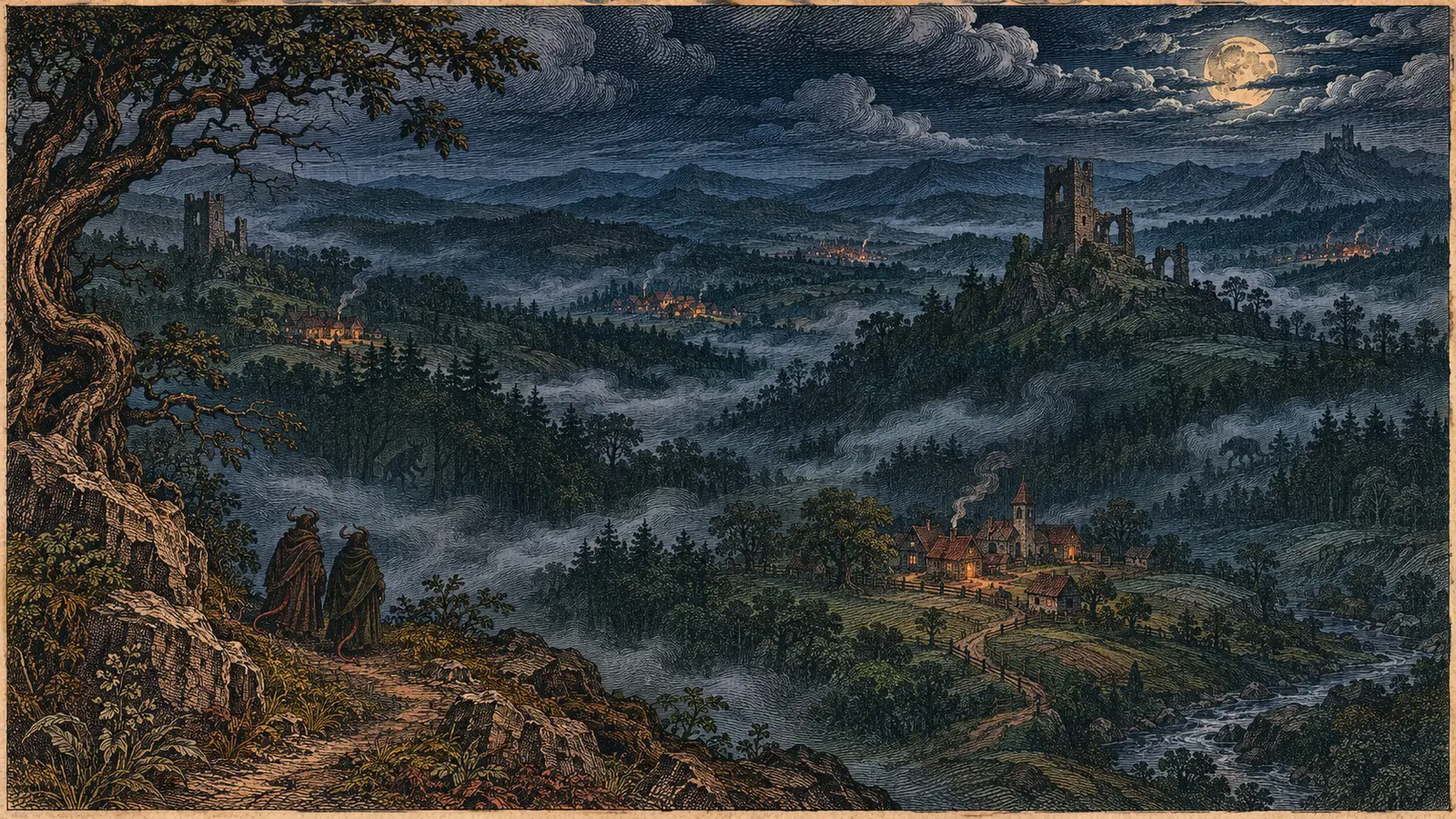
In 2008 Dungeons and Dragons entered its fourth edition, and for the first time the tiefling stood among the core races in the main Player's Handbook. Wizards of the Coast had previewed the decision the year before in Wizards Presents: Races and Classes, a preview book that explained the new races and the thinking behind them. The tiefling was no longer a planar oddity or a setting-specific option. It was one of the races every new player would see when they opened the book.
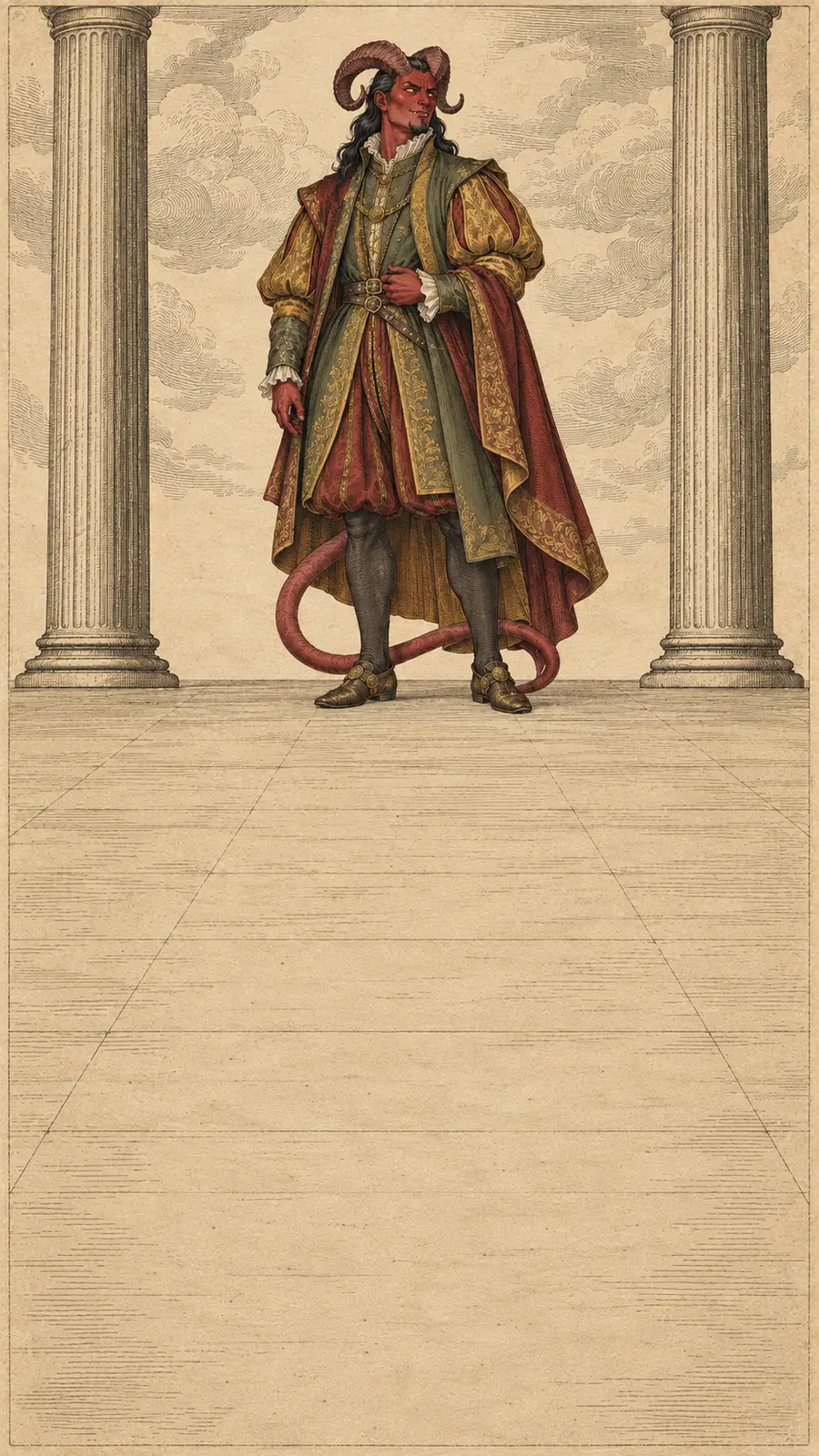
With that new prominence came a new face. The artist William O'Connor designed the fourth-edition tiefling. He observed that earlier editions had very few pictures of tieflings, and that since the race was becoming a core race, the team "wanted to radically update their appearance to make them look more intimidating and 'cool'." The changes were striking. Hooves gave way to ordinary feet. The horns became much larger, thick and sweeping. And every tiefling now shared one standard set of features. The old variety, the random scales and single horns and goat legs, was replaced by a single unmistakable silhouette: great horns, a long tail and solid-coloured eyes.
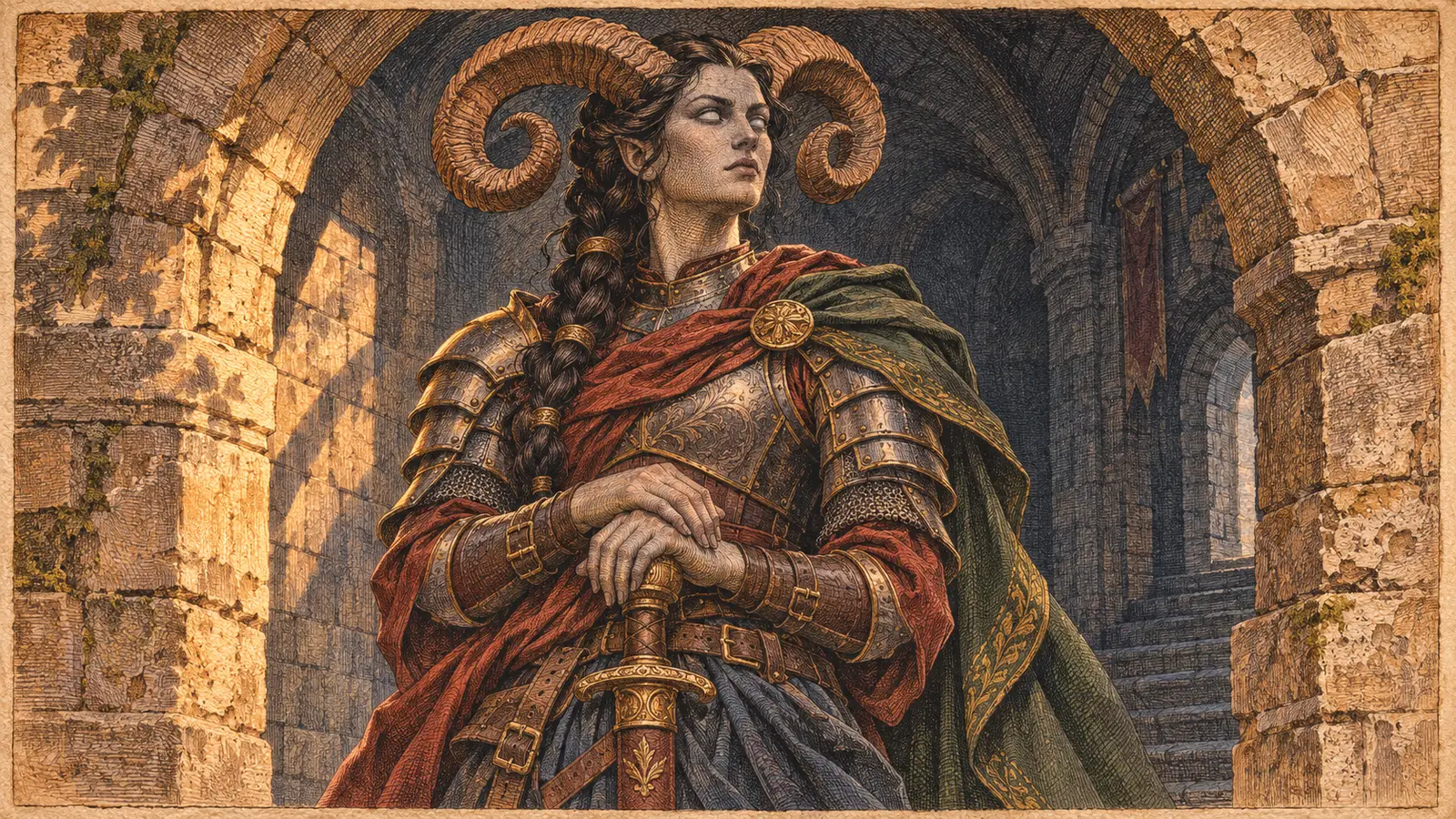
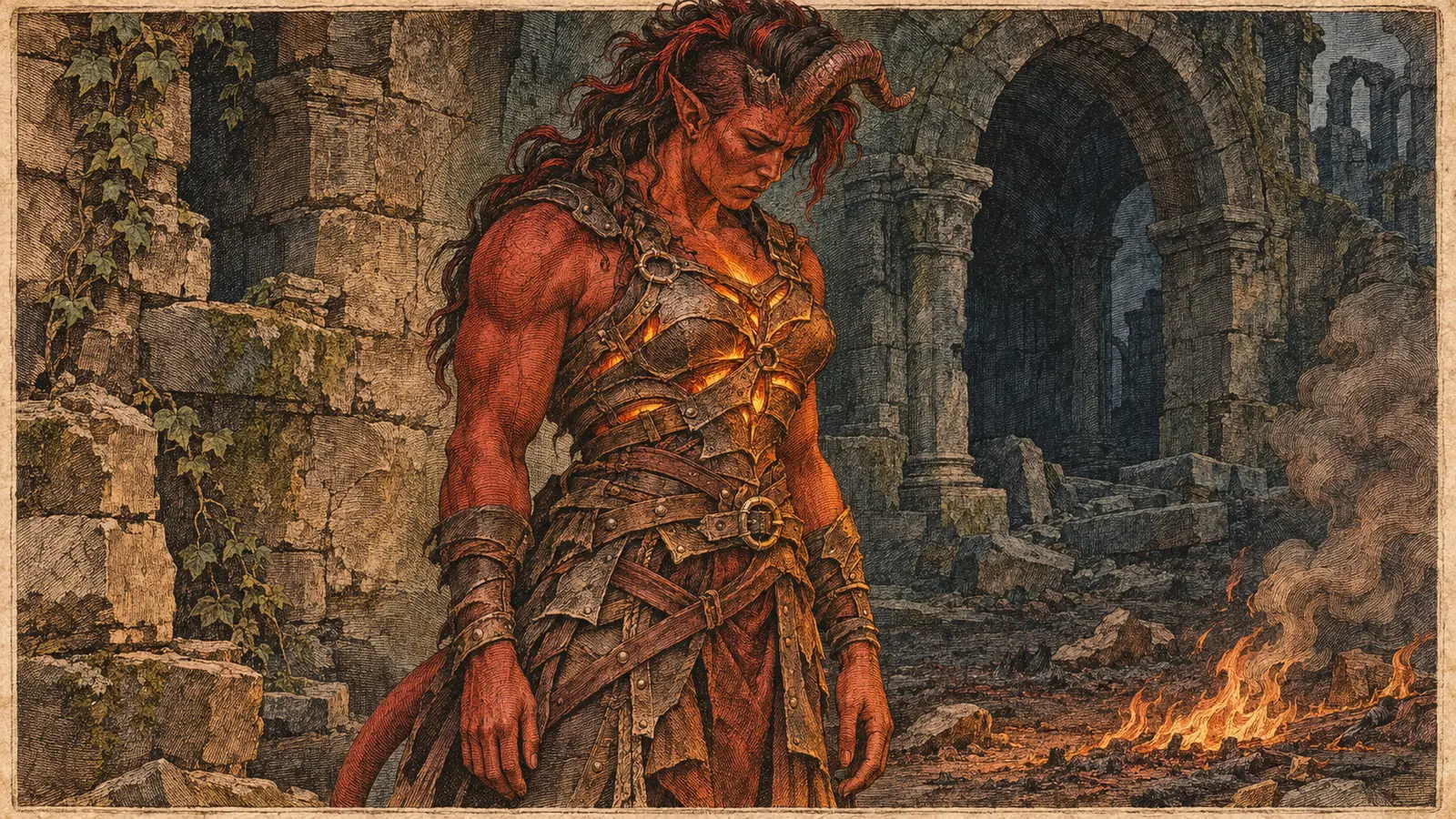
Here is what a fourth-edition tiefling looked like. Large, thick horns crown the head, curling or sweeping in many styles. A tail trails behind, four to five feet long, which can't grip anything but swings and twitches with the tiefling's moods. The teeth are sharply pointed. The eyes are solid orbs of a single colour, red or black or white, silver or gold, without any visible pupil. The skin ranges from ordinary human tones to deep reds. You couldn't mistake a fourth-edition tiefling for a human in a crowd, and you weren't meant to.
A single look called for a single story, and fourth edition gave the tieflings one. It's one of the most memorable pieces of lore the race has ever had, and it begins with an empire.
The default world of fourth edition was a place sometimes called the Points of Light setting, after its picture of the present: small, lonely settlements of light scattered through a darkened world, with wilderness and ruins and monsters in between. The region where many adventures began was the Vale, and the wider world later took the name , after the last great empire to fall there. But long before Nerath, there was .
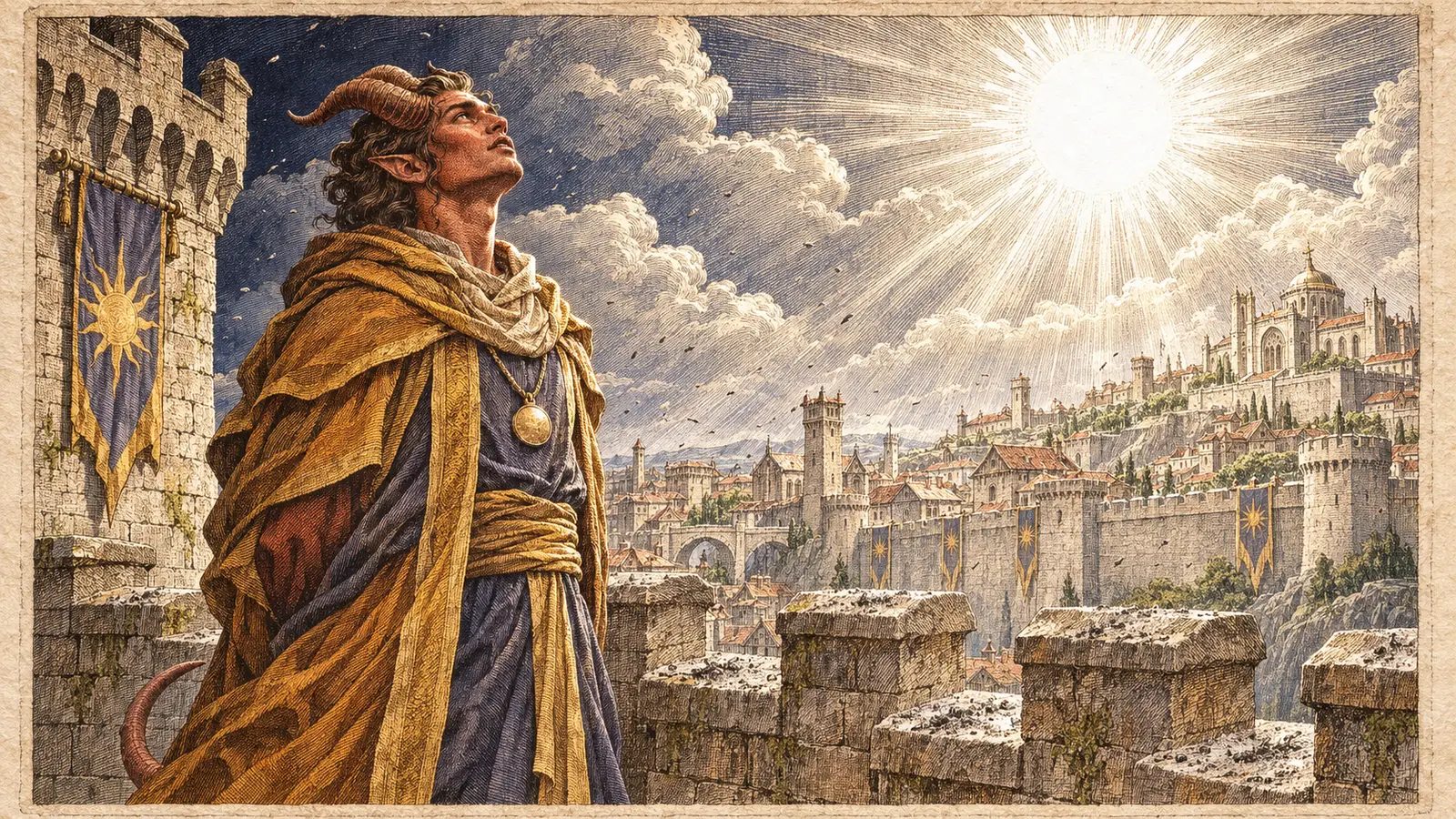
Bael Turath was an ancient human empire, one of the greatest nations in all of human history. Picture it at its height: wide roads, great cities of dark stone, palaces and academies and courts where the nobility gathered in robes of crimson and black. It was rich and old and proud, and at the top of it sat a noble class obsessed with keeping its power and gaining more.
Word of the nobles' scheming travelled a long way. It reached the Nine Hells, which in fourth edition lay out in the Astral Sea. And the devils of the Hells listened, the way devils do, and saw an opportunity.
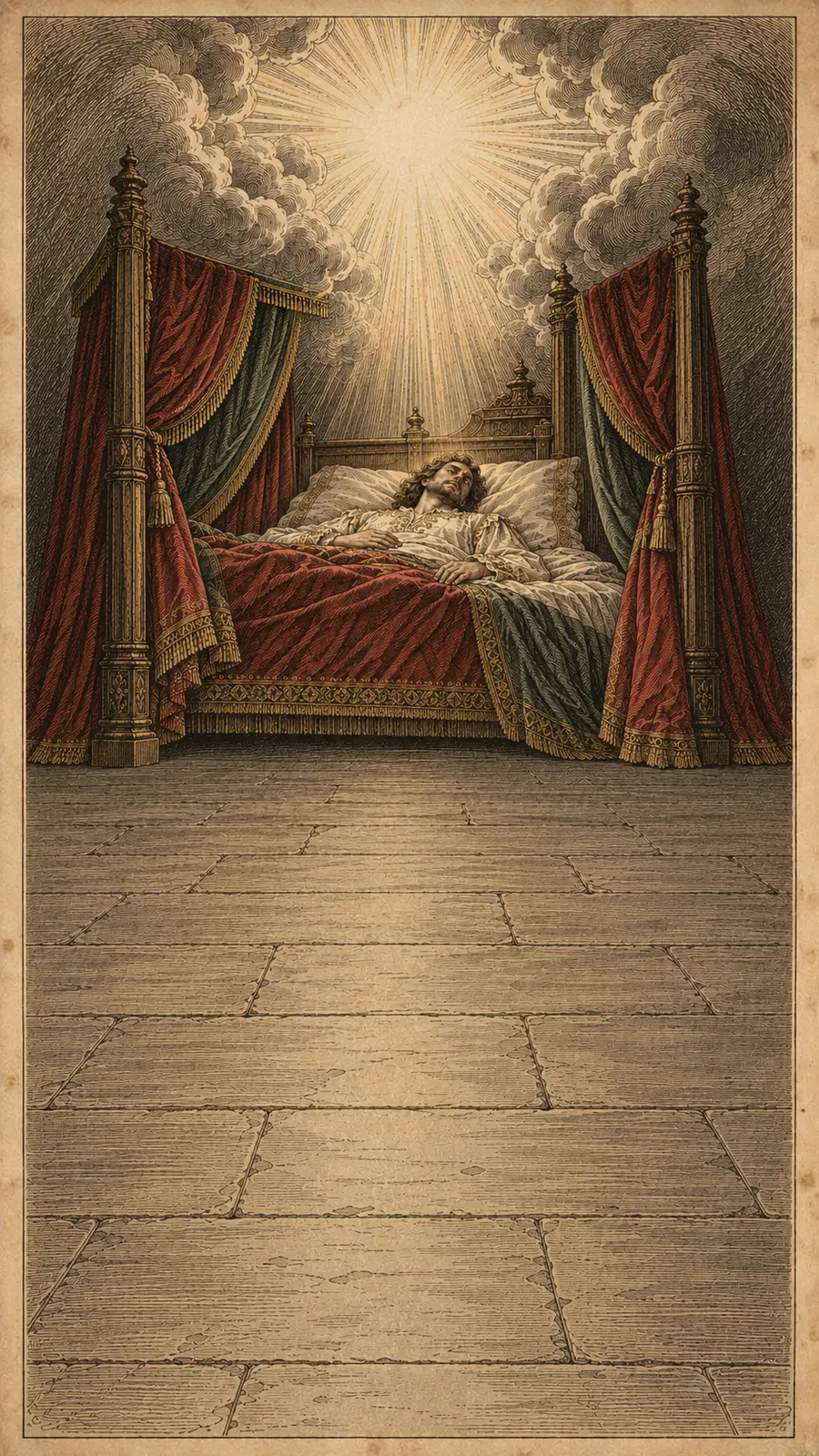
They began to send visions to the nobles of Bael Turath, in their sleep. Imagine a lord of that empire lying in a great curtained bed, and in his dreams a voice and a light that show him how his rule might last forever. The visions described a ritual, grisly and long, lasting about a month. If the nobles performed it, their rule would never end. The old books never describe this ritual in detail. They say only that it was terrible, and leave the rest in shadow, which is perhaps the kindest way to leave it.
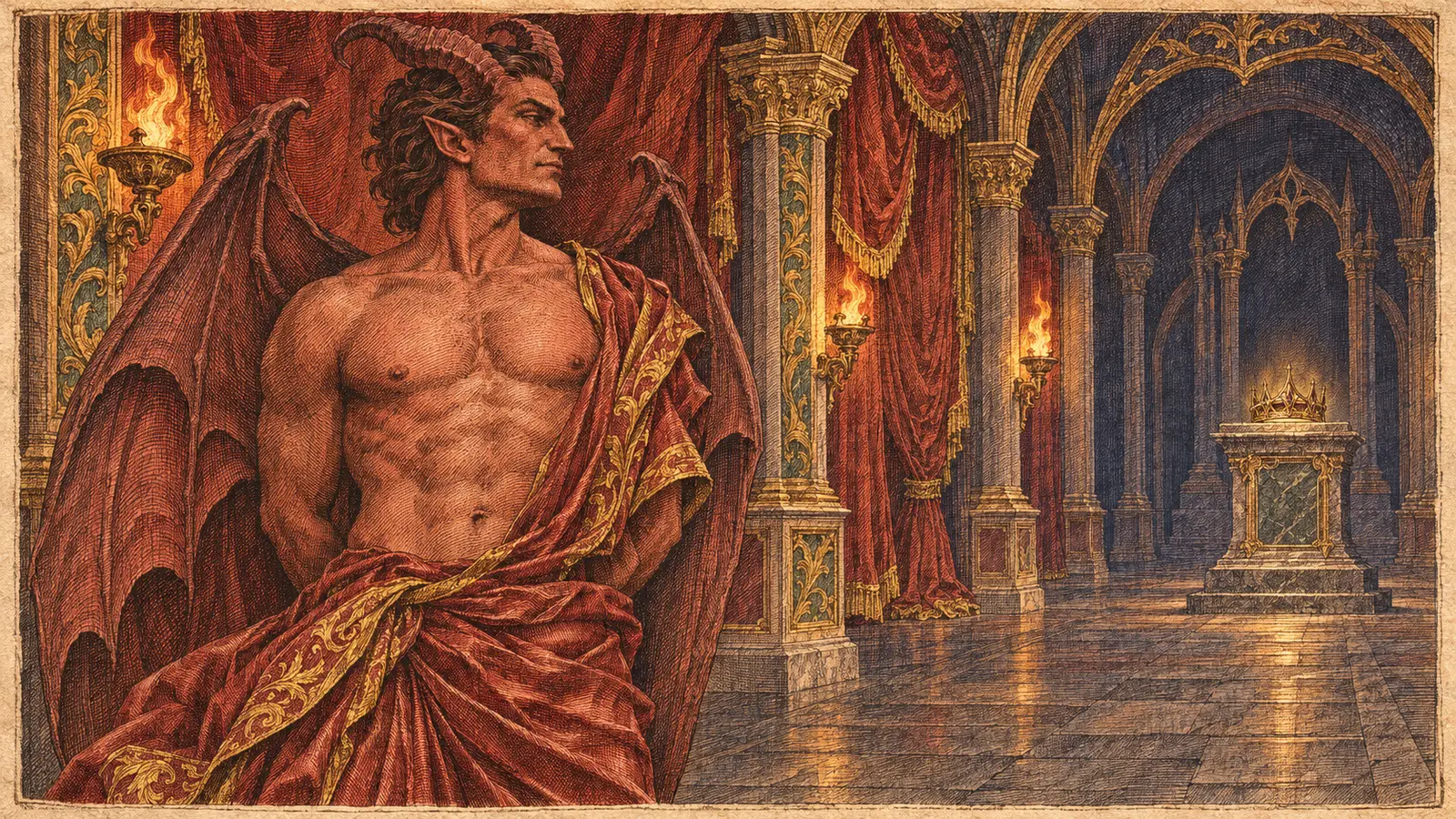
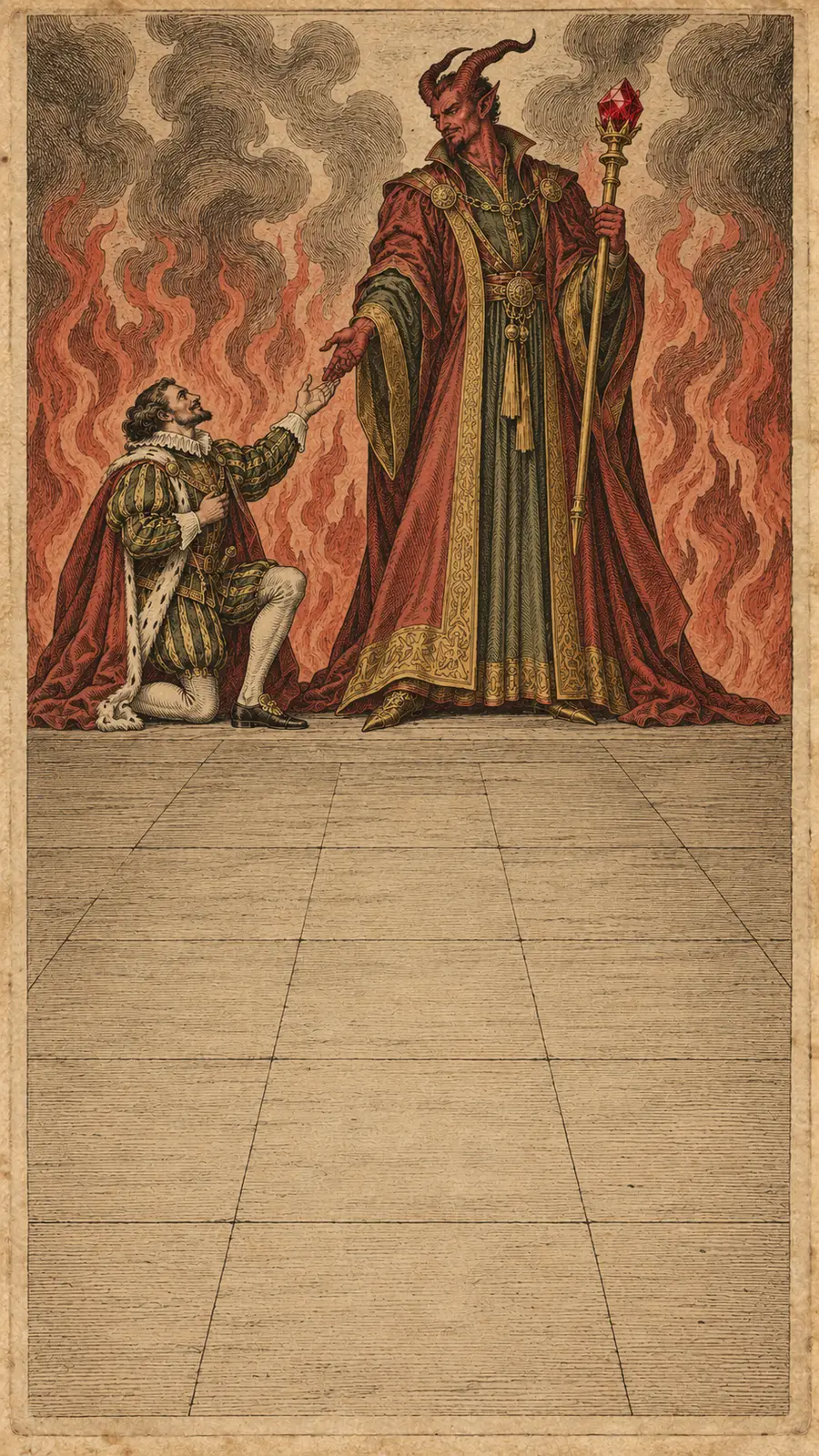
The nobles of Bael Turath didn't refuse. They made their pacts gladly. In later tellings the bargain was struck with himself, the lord of the Nine Hells. The pacts granted power to the nobles and to all their descendants forever. And with that power came a mark. The nobles' bodies changed. Horns rose from their brows. Tails grew behind them, tails that could not grip. Their teeth sharpened, and their skin turned red. The aristocracy of Bael Turath, once wholly human, became the first tieflings.
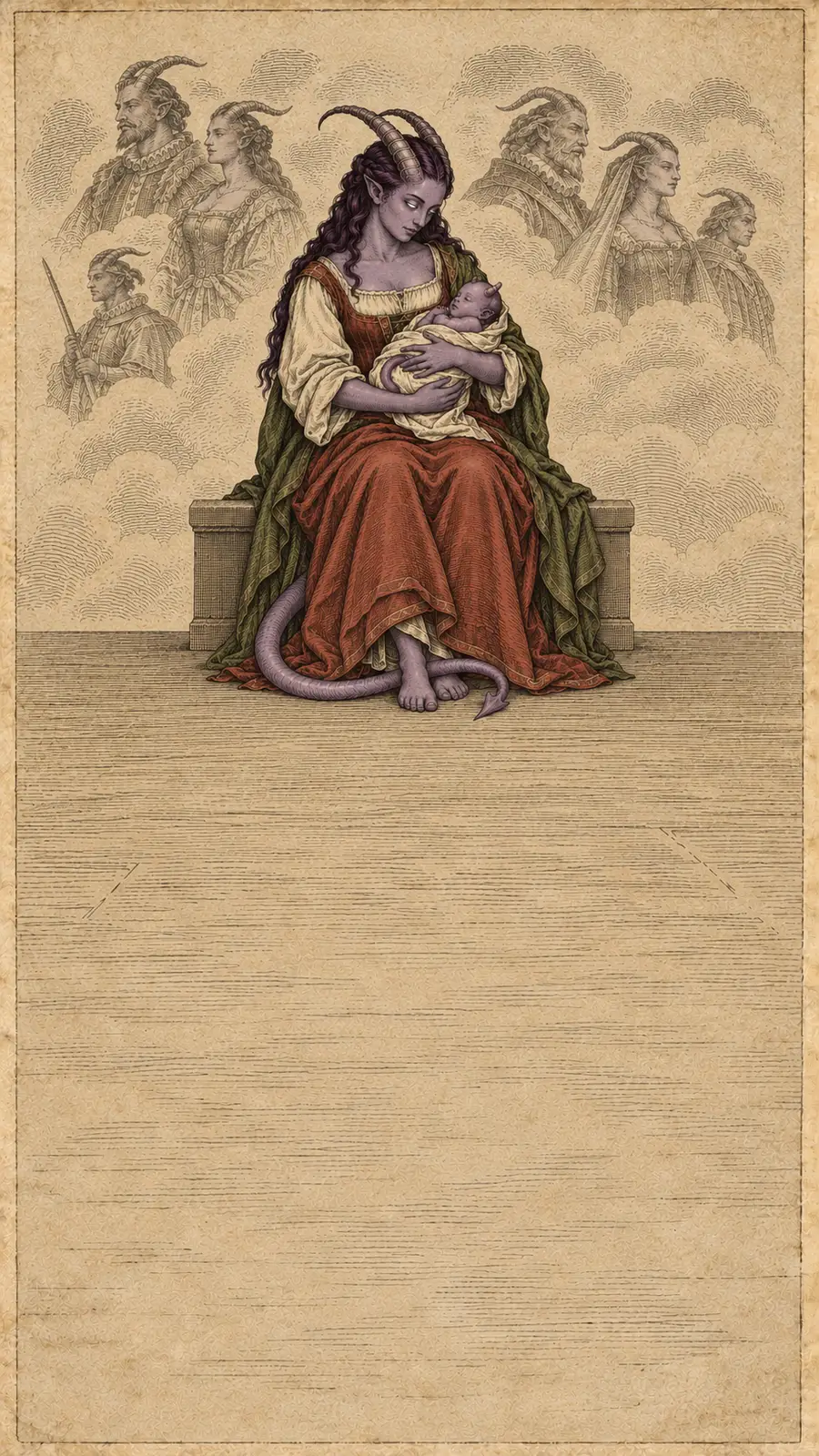
The change didn't fade. Tieflings, from that day on, bred true. The children of those nobles were born with horns and tails, and so were their children, and so on down the generations, nearly a thousand years to the setting's present day. The bargain was signed once, by people long dead, and every tiefling born since then has carried its terms in their body.
This was a very different idea from the Planescape tiefling. That tiefling had been an accident of blood, a random gift from some distant, unknown fiend. The fourth-edition tiefling was the heir to a choice, a political choice made by an ambitious aristocracy, which had become their descendants' inheritance whether they wanted it or not.
Bael Turath, empowered by its infernal pacts, grew. Its nobles had power now, and devil-magic at their command. They pushed outward, and as their empire expanded it ran into another.
To the south, in arid lands, lay , an empire of dragonborn, the proud draconic people who followed , the platinum dragon and god of justice. Arkhosia was as old and as great in its way as Bael Turath, and it would not bend.
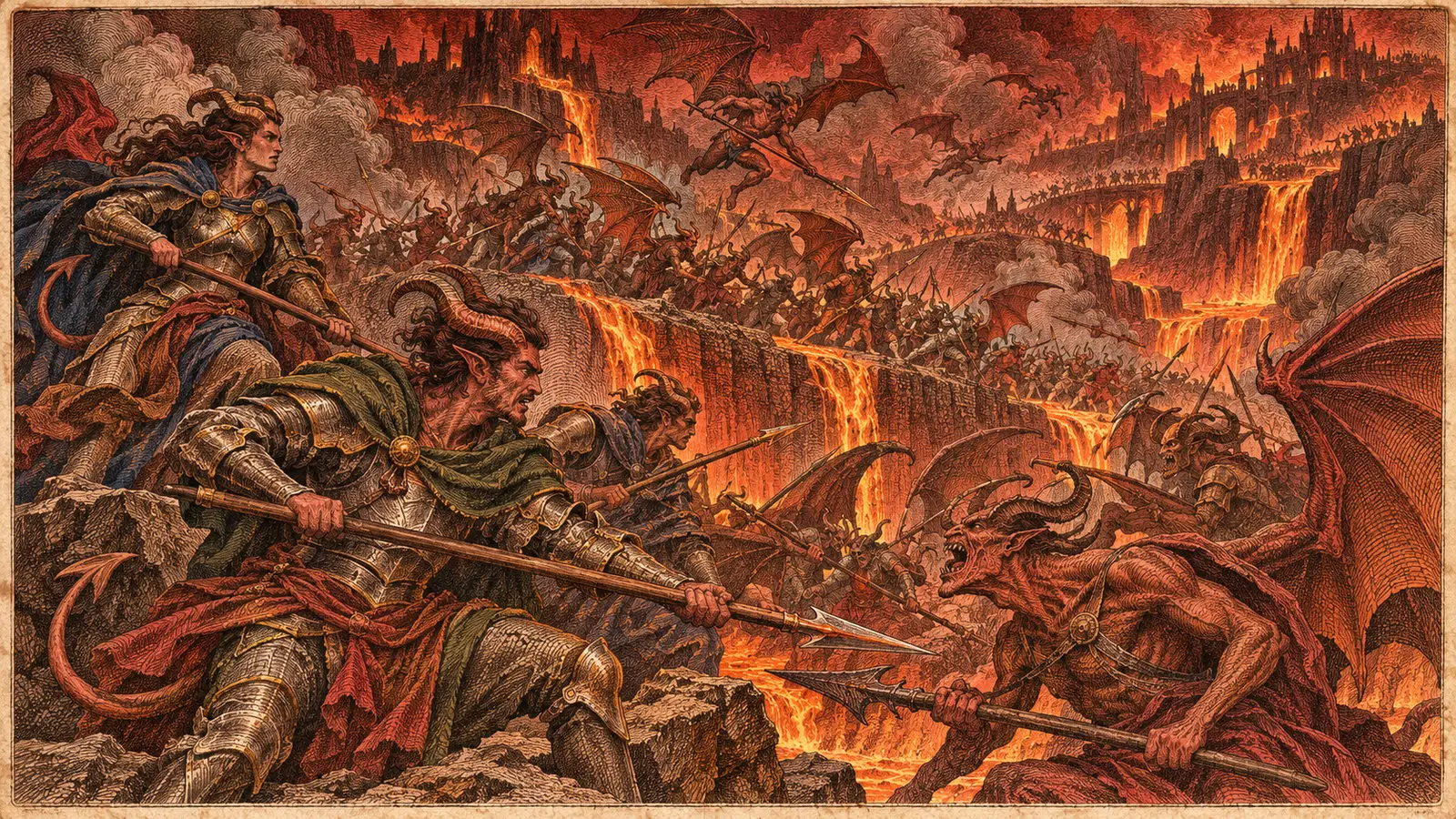
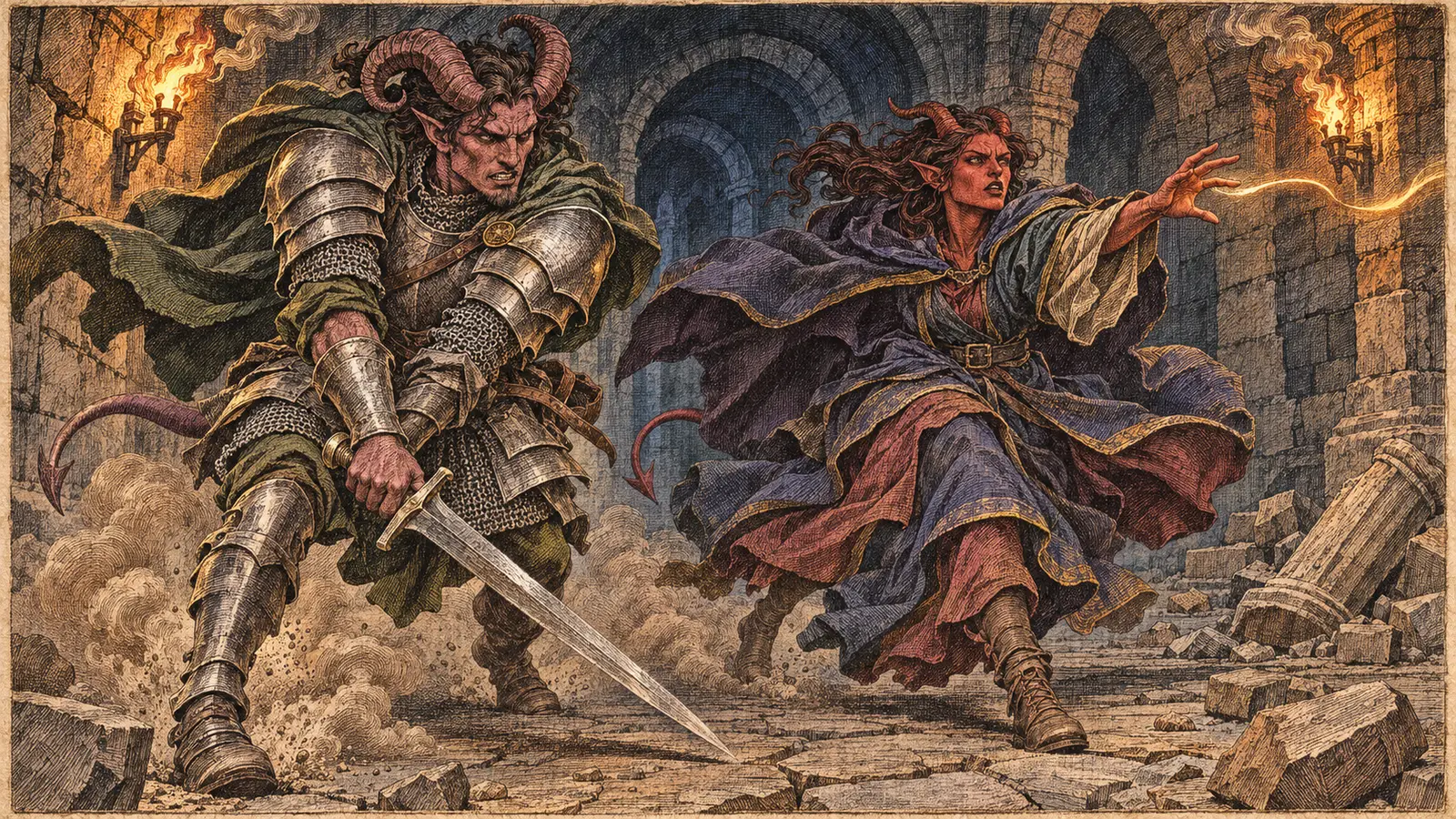
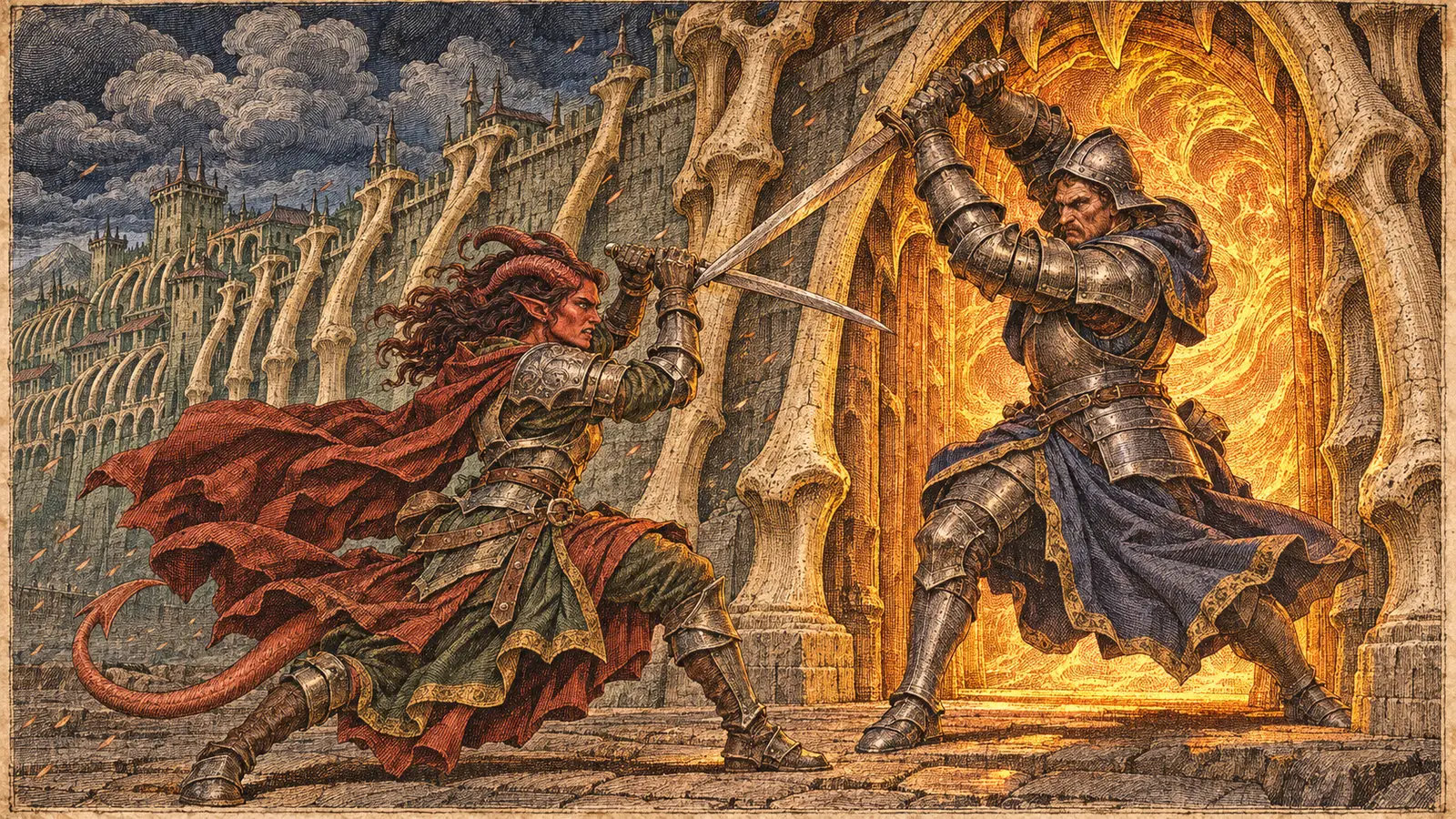
The war between the two empires lasted for centuries. It devastated the world. Picture armies of dragonborn breathing fire and lightning across the fields, and tiefling legions answering with infernal sorcery; cities burning on both sides of the border; generations who were born, lived and died never knowing anything but the war. It went on so long that the reasons for it must have blurred, and only the hatred stayed sharp.
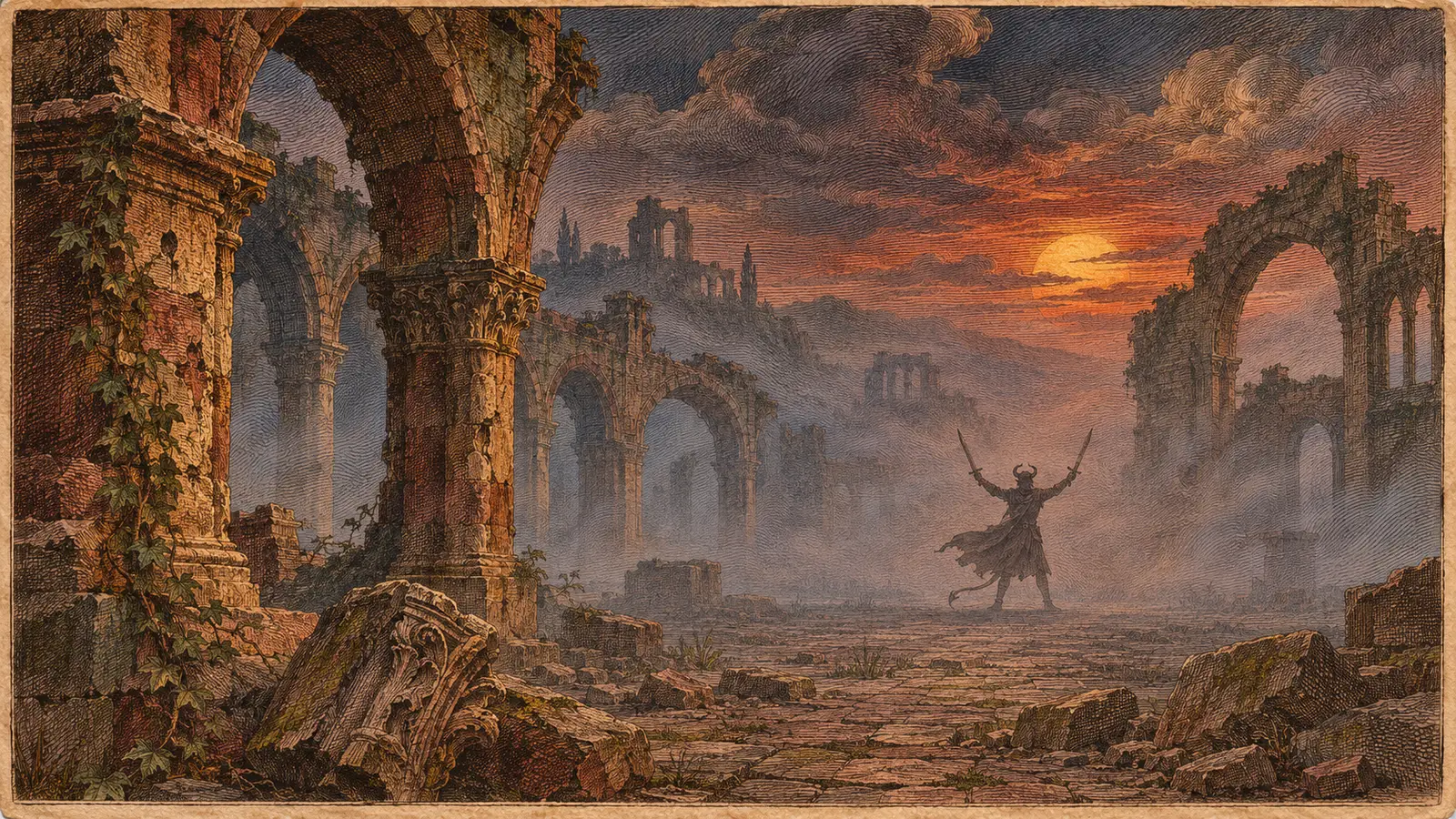
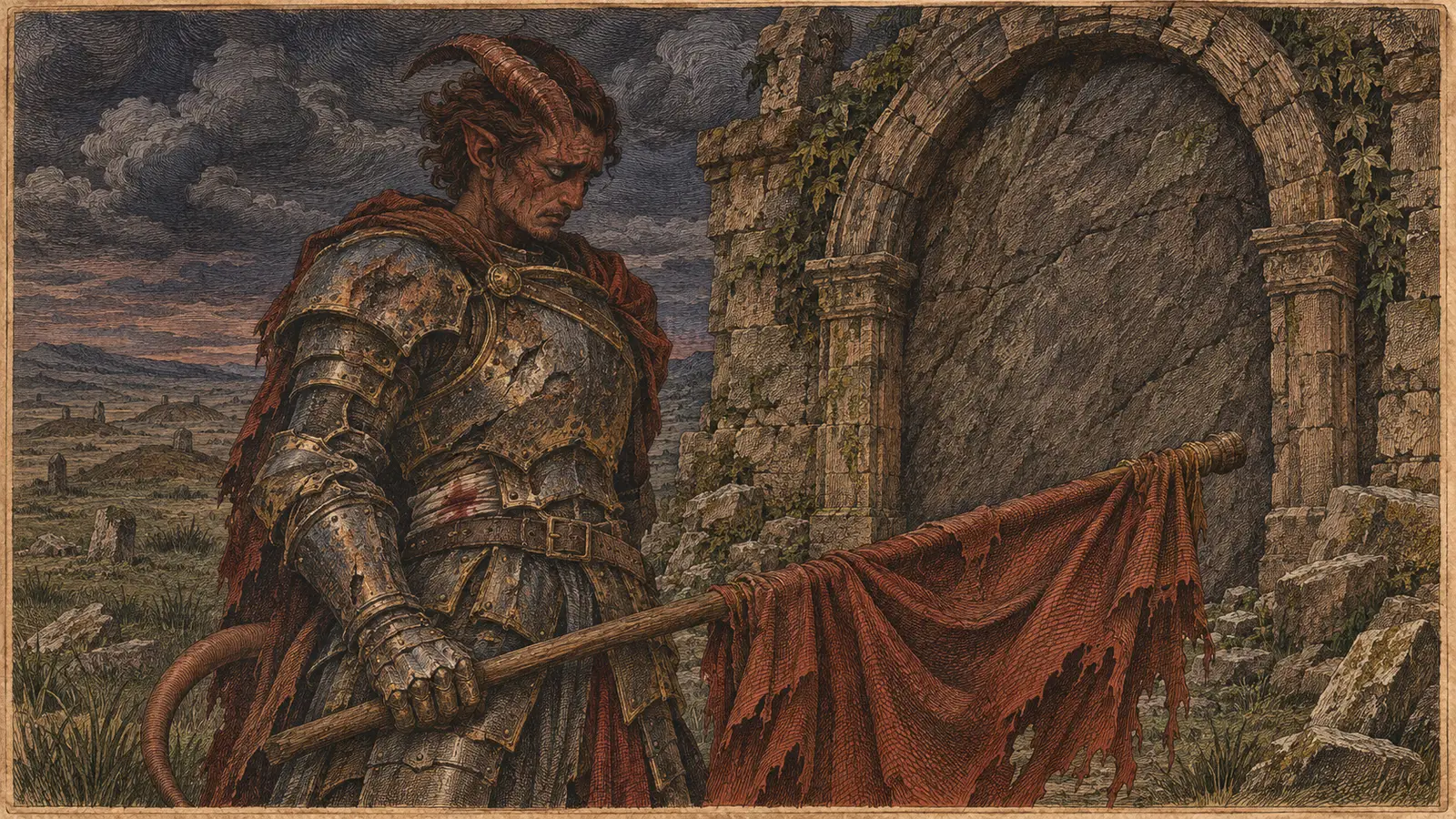
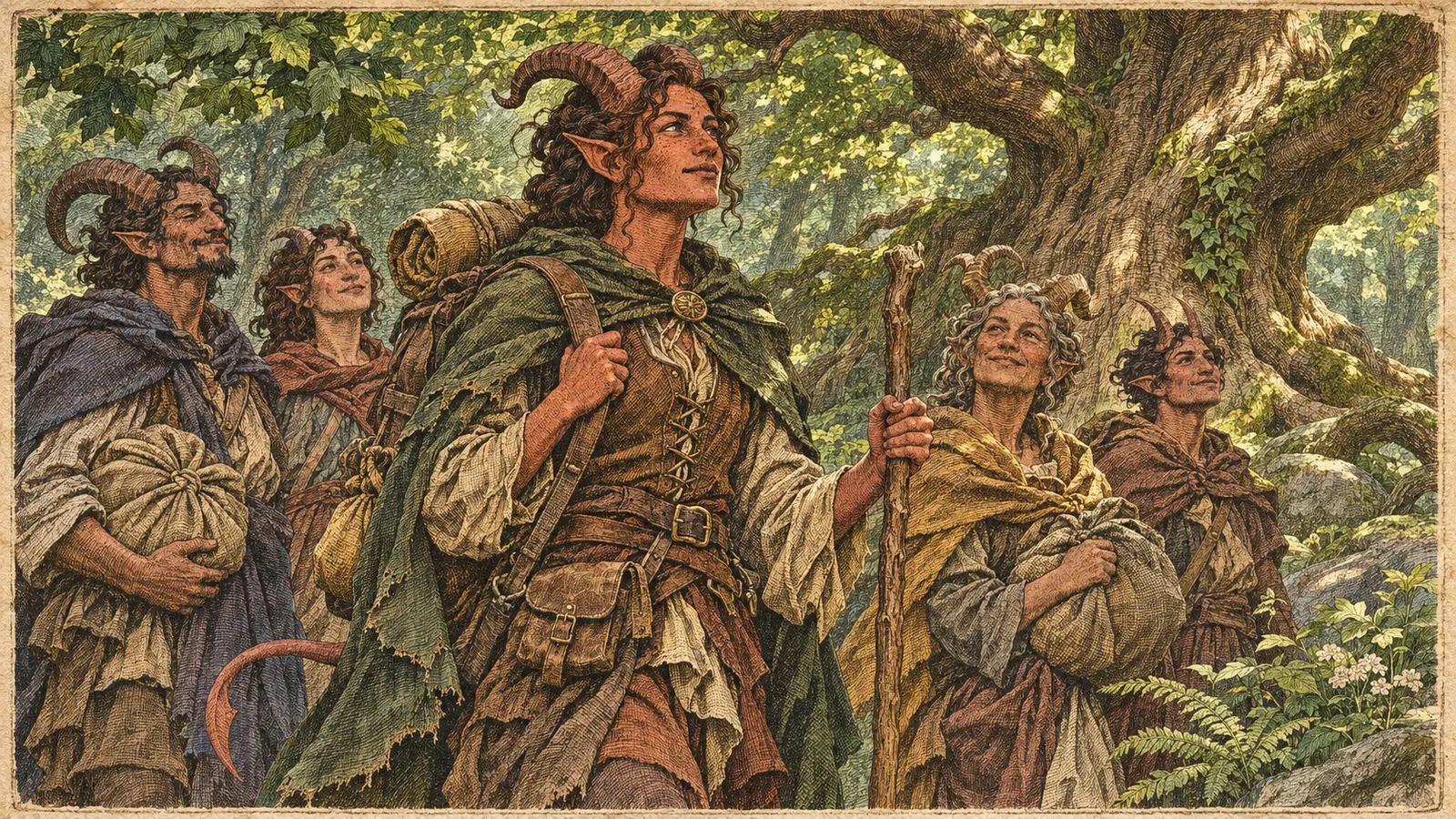
In the end Bael Turath won. It destroyed Arkhosia. But the victory ruined the victor. The grand capital of Bael Turath was thrown down too, and by the war's end neither side had the will or the resources to carry on. What remained of both empires was scattered, displaced peoples and haunted ruins. The dragonborn had no empire left. The tieflings had no empire left. Both peoples became wanderers.
That's why, in fourth edition, the tieflings and the dragonborn are both introduced as peoples without a homeland. And between them lies an old enmity, inherited from a war that ended long before anyone now alive was born. A tiefling and a dragonborn meeting on a road in the Nentir Vale might feel a flicker of ancestral mistrust neither could fully explain.
Much later, a new human empire rose: Nerath. For a time it brought order and peace to much of the world. Then, about a century before the setting's present, Nerath fell in its turn, overrun by orcs, goblins and demons. Its fall left the world as fourth edition found it, a darkened land with scattered points of light. And in those points of light, among the human villages and the dwarven holds and the elven forests, there were tieflings, descendants of a ruined empire of devil-pacts, living quietly in a world that had mostly forgotten what Bael Turath once was.
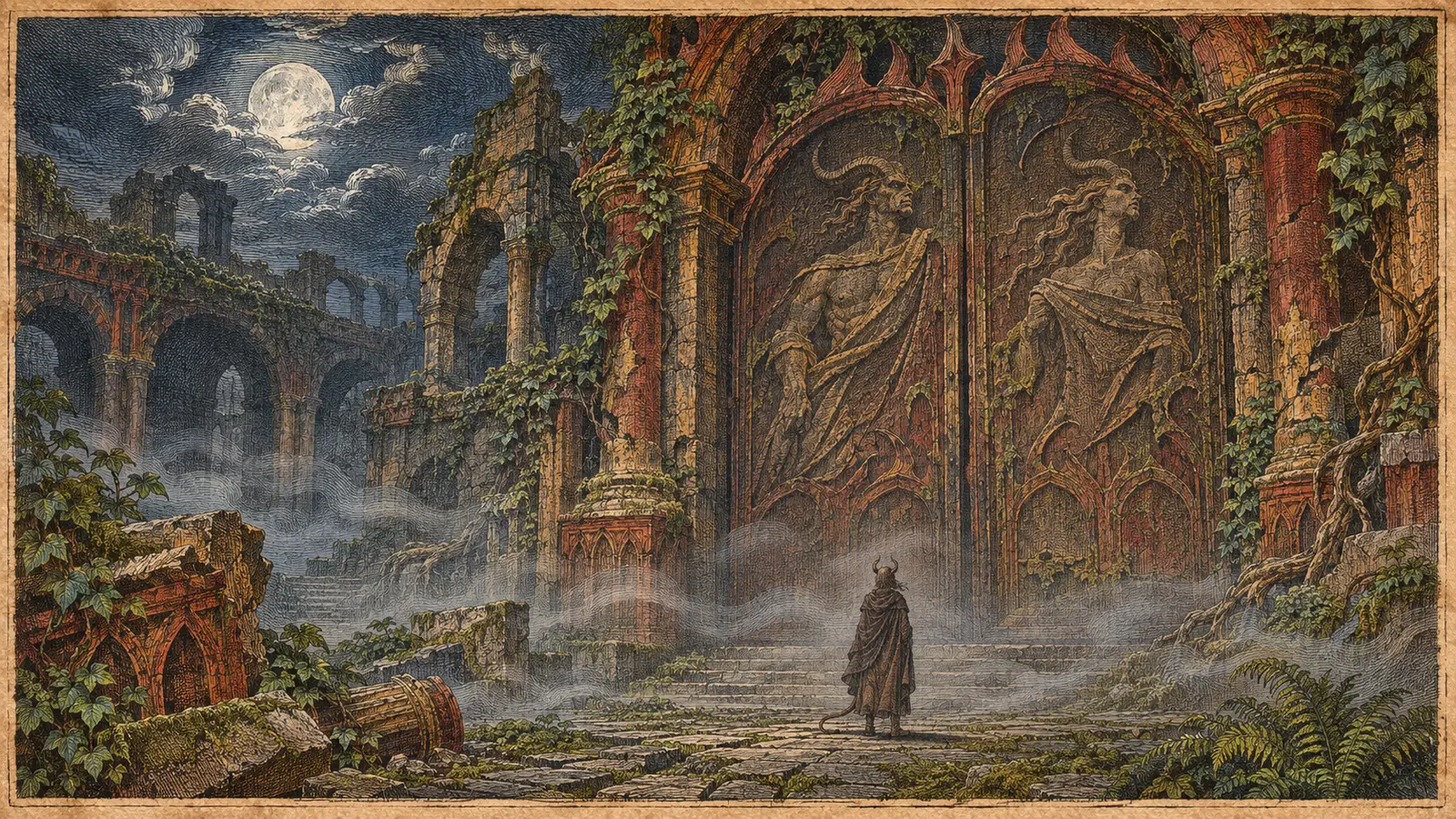
If you walk through the ruins of that old empire in a fourth-edition campaign, you might find great carved gates with horned figures on them, broken courts where the infernal nobility once sat, and the long shadow of something that made a bargain and paid for it. You might be walking with a tiefling companion who looks at the carvings and says nothing for a while.
The fourth edition gave its tieflings powers to match their history. One was called Bloodhunt. When a foe was already badly wounded, bloodied as the game put it, the tiefling struck at it with sharper purpose, pressing hardest where an enemy was weakest. Another was called Infernal Wrath. When an enemy struck a tiefling, the tiefling could answer with a burst of fire, a flash of the old empire's hellfire turned back on whoever had hurt them. The rules let that answering flame grow stronger as the tiefling grew in power. There's a temperament in these powers: patient, watchful, unforgiving of a blow.
Tieflings appeared on the other side of the table too. The fourth-edition Monster Manual offered tiefling foes. The Heretic stood back from the fight, throwing a ranged fire called balefire and keeping a dagger close for anyone who came too near. The Tiefling Darkblade fought with a poisoned short sword whose venom kept working after the blade was withdrawn. And there was the Tiefling Hellstalker, whose name tells you most of what you need to know. These were cultists, heretics and assassins, the dark mirror of the tiefling heroes, the ones who had taken their empire's bargain to heart.
The supplements gave the race still more room. In 2010 came Player's Handbook Races: Tieflings, a softcover book devoted to the race and its options. That same year, Heroes of the Forgotten Kingdoms offered tieflings once more as a race players could choose.
Now we need to turn to the Forgotten Realms, because something was happening there that would bring the Realms' tieflings into line with this new, single look. It's a story within the story, and the Realms themselves tell it as part of their history.
In the fourth-edition era the Realms passed through a great catastrophe. In the year the Realms count as 1385, the goddess of magic, , was murdered by the gods and Shar. Her death unleashed the Spellplague, a storm of wild blue fire and broken magic that reshaped the world of . Whole regions were torn away and exchanged with , a sister world that had been separated from Toril long ago. Among the lands that arrived from Abeir was , a nation of dragonborn. And in the midst of all this upheaval, Asmodeus, lord of the Nine Hells, rose to full godhood.
The way he did it involved the tieflings. Decades earlier, in the year 1358 by the Realms' reckoning, a coven of tiefling warlocks called the Toril Thirteen had performed a ritual. Its effect was vast. It marked nearly every tiefling bloodline in the world with the blood of Asmodeus. Whether a family's fiendish ancestor had been a demon or a devil, a hag or a rakshasa or something else entirely, that ancestry was overwritten. From then on, every line could be traced to Asmodeus.
Why would anyone do such a thing? The warlocks of the Toril Thirteen acted to appease Asmodeus's vanity, and to spare their loved ones from "the yoke of the Raging Fiend." They believed they were protecting the people they cared about from something worse. Asmodeus had his own reasons. He meant to become the racial god of the world's tieflings, gathering through them enough worshippers to reach divine power.
The ritual's full effect waited until the Spellplague. When Asmodeus became a god, the work of the Toril Thirteen took hold across the world, and for decades afterward the tieflings of Toril looked much alike. Most had reddish skin, horns and tails. The varied tieflings of the Planescape years and the third edition, the ones with scales or hooves or a single horn, gave way in to the uniform Asmodean kind.
In this way the Realms explained the change in their own terms. The new single look of the tieflings wasn't simply a fresh coat of paint. It became a piece of history, a pact made by thirteen warlocks and a god's ascension during a world-shaking catastrophe. It's a retcon told as legend, and like the best of them it leaves the world a little stranger and a little sadder for having happened.
Novels in this era gave tieflings some of their most vivid voices. In November 2011 Erin M. Evans published Brimstone Angels, the first of six books that came to be called the Brimstone Angels Saga, set largely in and around the city of Neverwinter. The saga continued through Lesser Evils, The Adversary, Fire in the Blood, Ashes of the Tyrant and The Devil You Know, the last of them published in 2016.
Its heroes are and , tiefling twins who were abandoned by their mother at birth. They were found and raised in an isolated village by , a dragonborn who became their adoptive father. Think back for a moment to Bael Turath and Arkhosia, the centuries of war between tiefling and dragonborn, and then picture a dragonborn soldier patiently teaching two small horned girls to hold a weapon properly, and you'll see why this family is such a gentle echo of that ancient enmity. Whatever their ancestors did to each other, Mehen is simply their father.
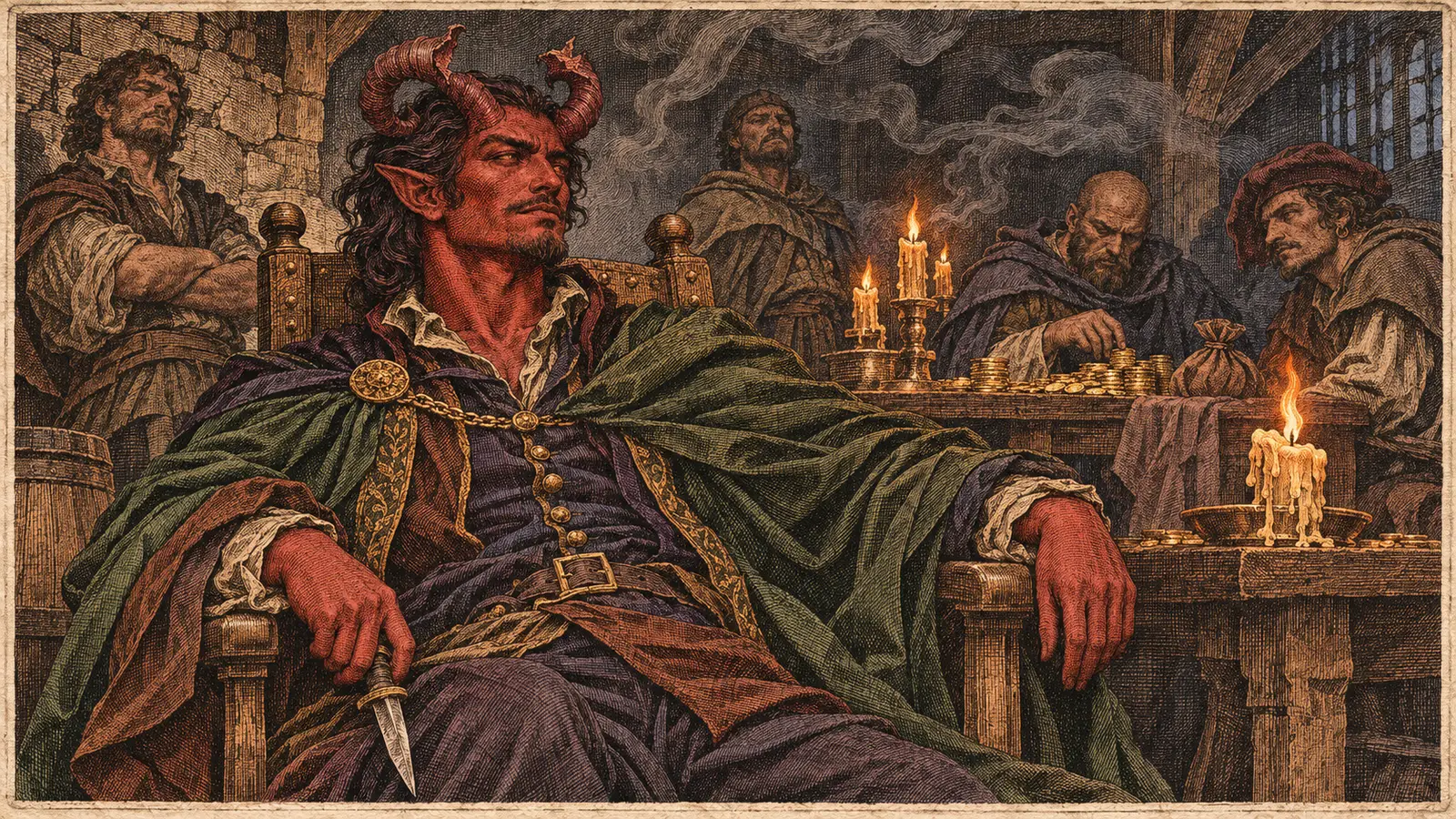
The story turns when a summoning ritual goes wrong. Farideh finds herself bound in a warlock's pact with , a cambion devil, handsome and cruel, who grants her infernal power and expects something in return. The sisters are driven out of their village and become bounty hunters, eventually drawn into an infernal plot much larger than themselves. Across the saga the books return again and again to temptation, power and the price of infernal bargains, which are the oldest tiefling themes of all, told this time through two young women trying to stay themselves.
R. A. Salvatore's Neverwinter Saga, beginning with Gauntlgrym in 2010 and Neverwinter in 2011, brought a very different tiefling to the same region. is a tiefling lord who serves the , the shadow-touched empire that had returned to the Realms, in their designs on Neverwinter. He commands the assassin Artemis , who at that time is going by the name Barrabus the Gray, and he carries 's Claw, an old Netherese sword given to him by the Netherese lord Draygo Quick. In Charon's Claw, published in 2012, the drow ranger , the elf warrior Dahlia and Entreri himself join forces against him. Alegni is the tiefling as a figure of imperial power: horned, armoured and certain, the kind of lord Bael Turath's old nobility might have recognised.
So fourth edition gave the tieflings a face, an empire and, in the Realms, a god. It also gave them a single bloodline, and the next edition would build on that bloodline before opening it up again, one lord of Hell at a time.
Chapter VII
The blood of Asmodeus and the Lords of the Nine
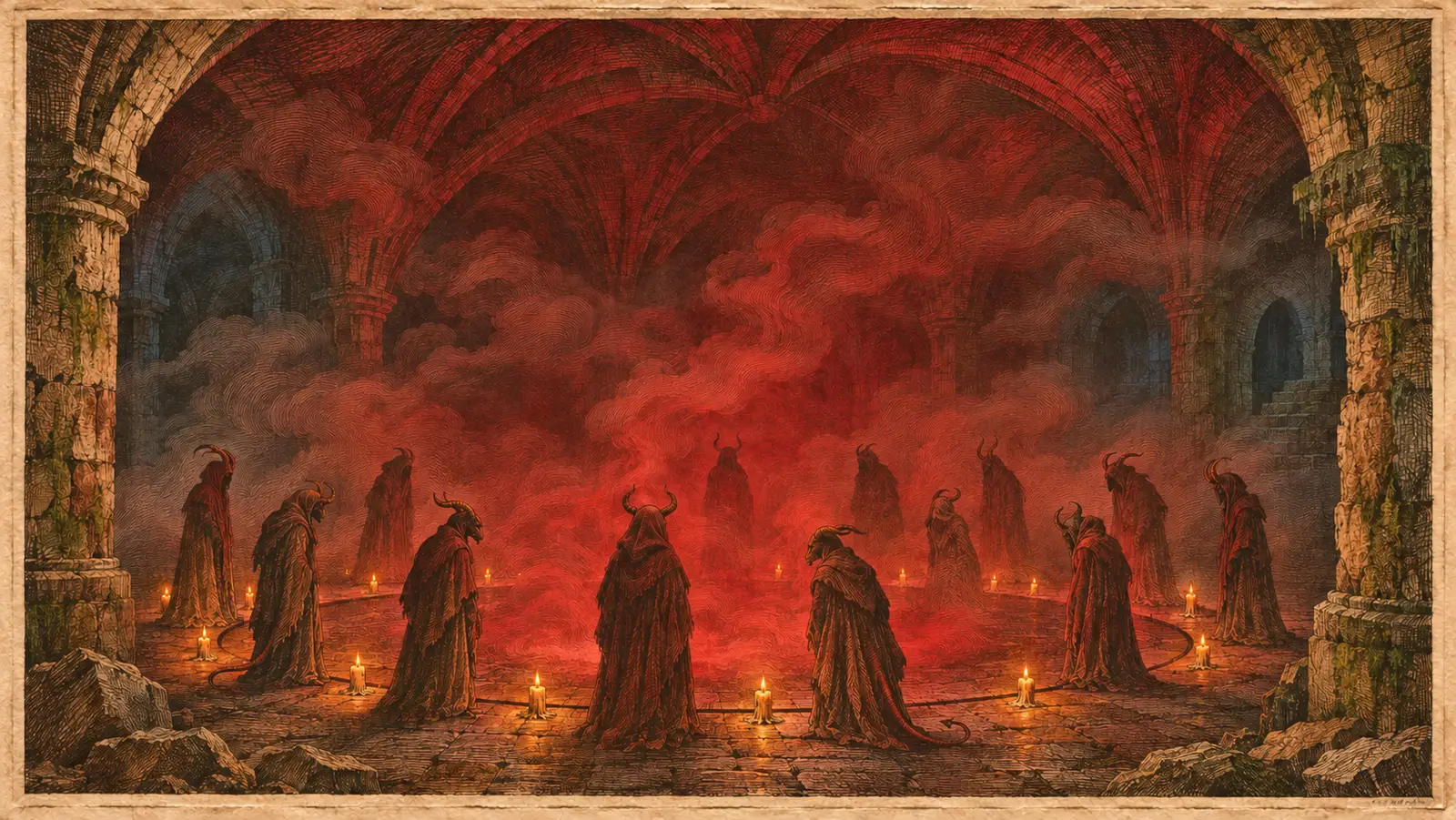
In 2014 the fifth edition of Dungeons and Dragons arrived with a new Player's Handbook, and the tiefling was in it. This time it sat among a group the book called the uncommon races, alongside the dragonborn, the gnome, the half-elf and the half-orc. These weren't the most common peoples of a typical world, but they weren't exotic either, and a player could reach for any of them on their first night at the table.
Fifth edition kept the shape of the fourth-edition tiefling. Part of the reason was that the Forgotten Realms had become the default setting for the new edition, and the Realms already had their Asmodean tieflings, marked by the Thirteen and the god of the Nine Hells. The art did loosen a little. The fourth edition had given every tiefling much the same horns, and the 2014 book showed horns of many styles.
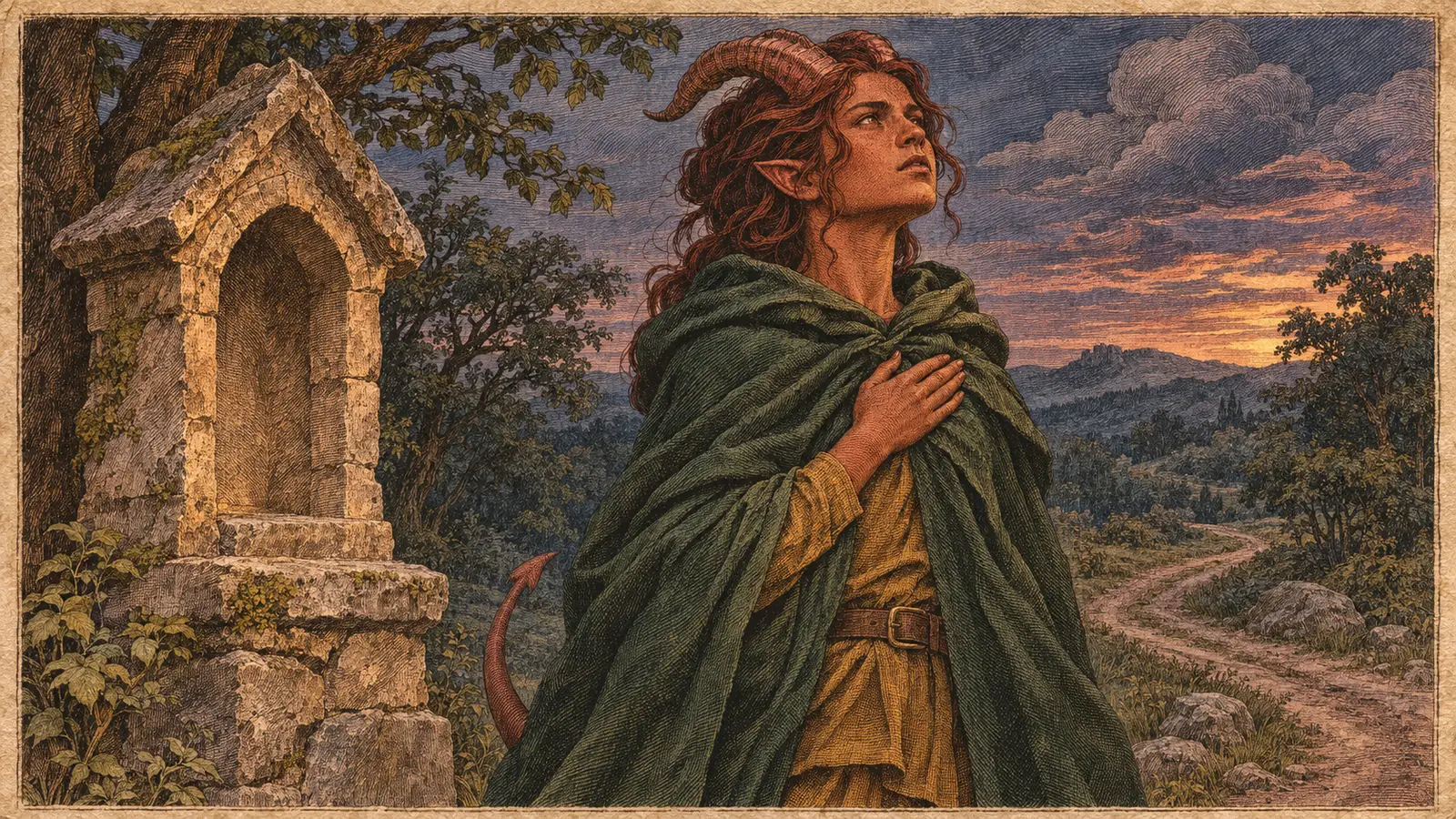
The book's opening words about the tiefling are worth hearing in full, because they set the tone for the whole edition. "To be greeted with stares and whispers, to suffer violence and insult on the street, to see mistrust and fear in every eye: this is the lot of the tiefling."
It goes on to explain why. A pact struck generations ago, the book says, "infused the essence of , overlord of the Nine Hells (and many of the other powerful devils serving under him) into their bloodline." And then comes the line that frames everything that follows: their appearance and nature "are not their fault but the result of an ancient sin, for which they and their children and their children's children will always be held accountable."
That idea, that the sin is ancient and the guilt isn't theirs, runs through the whole of fifth edition's telling. A tiefling in this edition is someone who inherited a debt they never signed for, and who lives in a world that keeps sending them the bill.
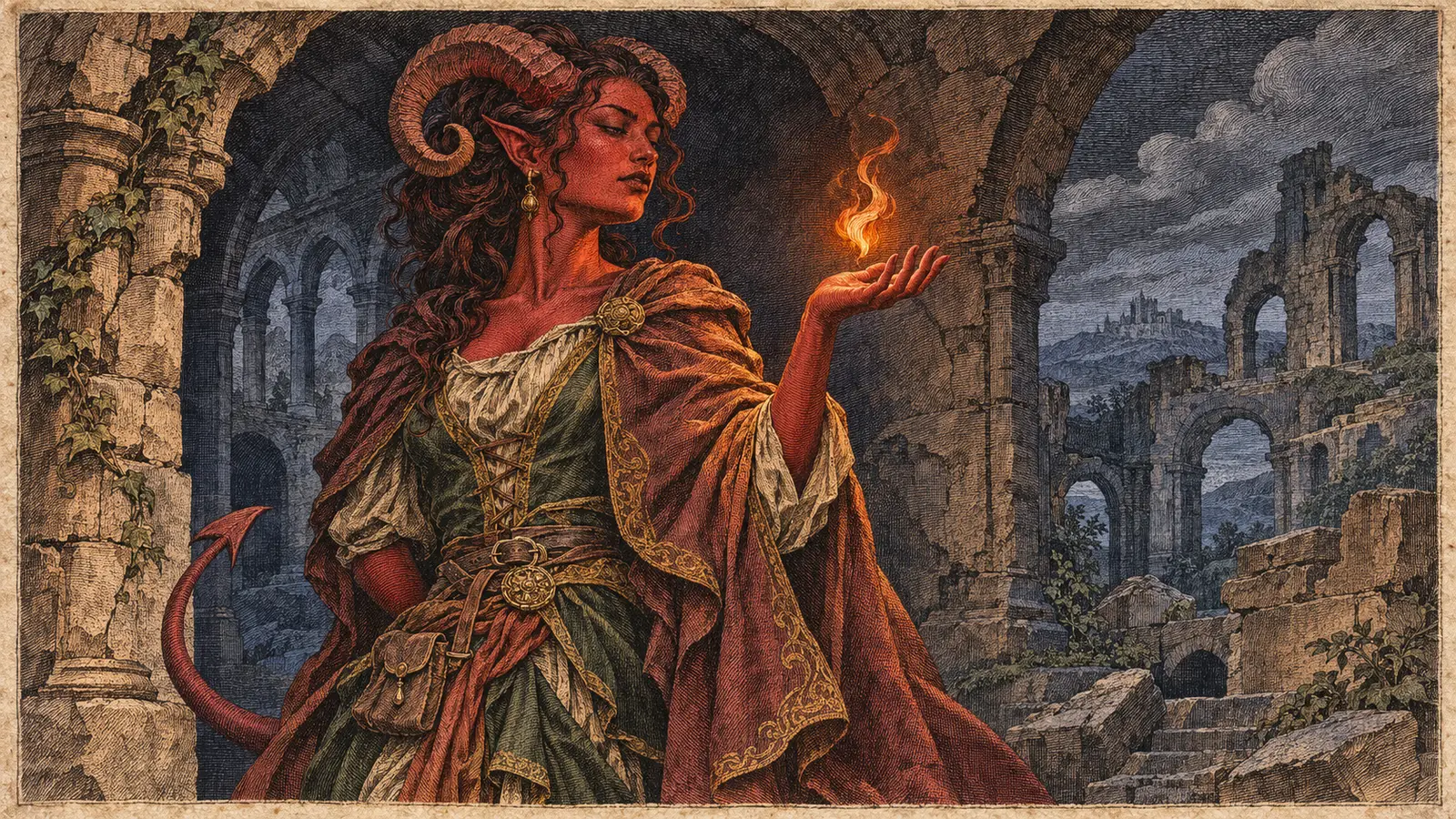
The book describes their look under the heading "Infernal Bloodline." Tieflings come from human bloodlines and still look broadly human, but their infernal heritage has left a clear mark. Their horns are large and come in many shapes. Some curl like a ram's. Some stand straight and tall like a gazelle's. Some spiral upward like an antelope's. Their tails are thick and four to five feet long, and when a tiefling is upset or nervous the tail lashes, or coils around their legs. It's a small and very human detail, a tail that gives away what the face is trying to hide. Their canine teeth are sharply pointed. Their eyes are a single solid colour, black or red or white, silver or gold, with no white and no visible pupil. Their skin can be any human tone, and also shades of red. Their hair falls from behind the horns, and it's usually dark: black or brown, dark red, blue or purple.
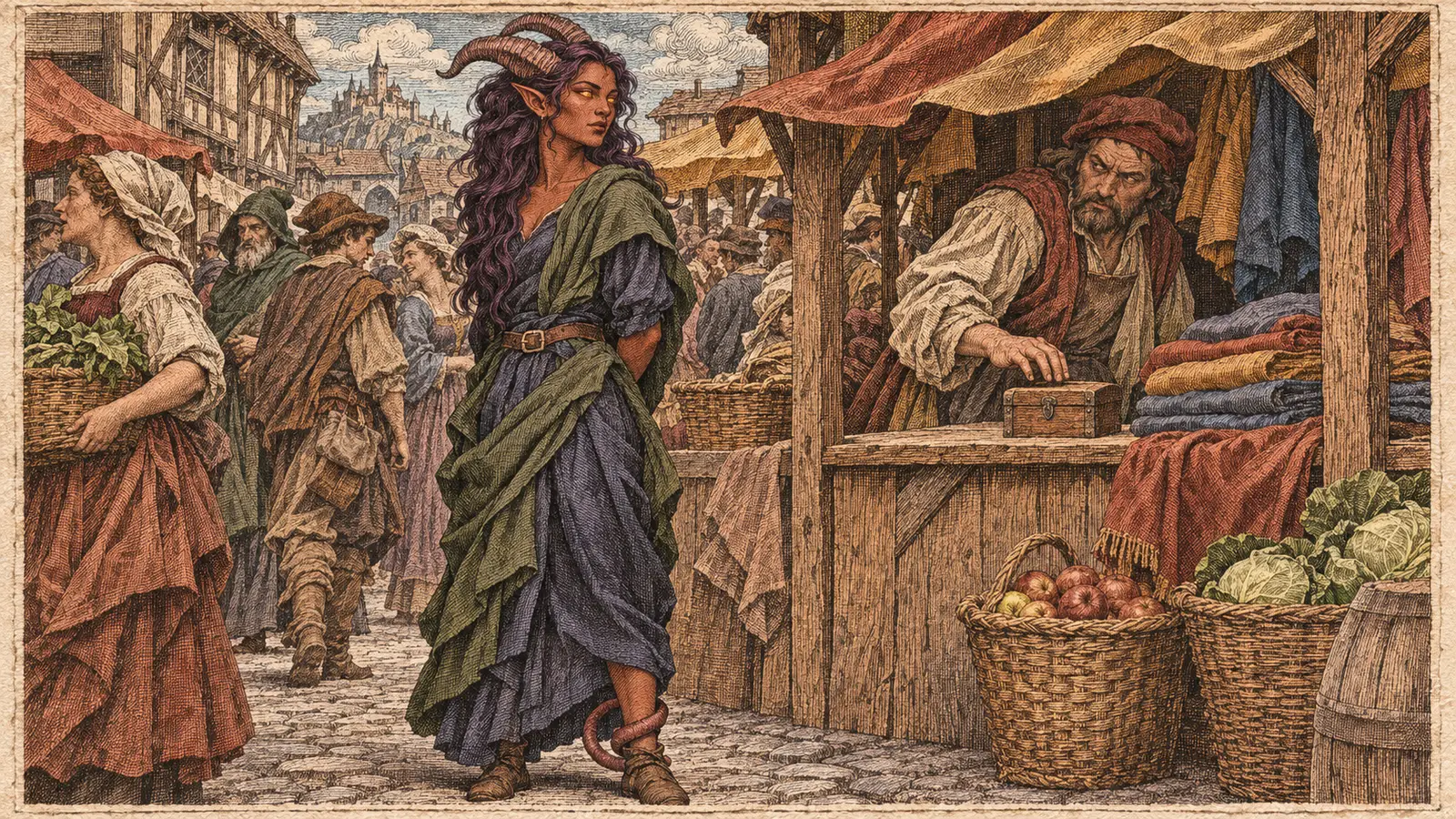
Picture a young tiefling in a busy market, then. Long dark purple hair spills from behind horns that curve back like a gazelle's. Her gold eyes take in the stalls and the crowd without any visible pupil to show where she's looking. A merchant glances up and moves his hand, without quite deciding to, a little closer to his coin box. Her tail curls once around her ankle and then goes still.
The book describes that moment too, under the heading "Self-Reliant and Suspicious." Tieflings live in small minorities, mostly in human cities and towns. They're often found in the roughest quarters, where they grow up to become swindlers, thieves or crime lords. Because they have no homeland, they know they must make their own way in the world and be strong enough to survive. Shopkeepers watch their goods closely when a tiefling comes in. The town watch may follow a tiefling around for a while. Demagogues blame tieflings for any strange happening in town.
Under the heading "Mutual Mistrust," the book adds that people tend to assume the infernal heritage has marked a tiefling's personality and morals as well as their looks. In fact the bloodline doesn't affect their personality to any great degree. What does leave a mark is the years of mistrust. Tieflings answer it in different ways. Some live up to the wicked stereotype. Others are virtuous. Many learn, after a youth spent facing suspicion, to overcome prejudice through charm or intimidation. Tieflings aren't necessarily inclined toward evil, the book says, though many end up there. Whatever their morals, their independent nature inclines many of them toward chaos.
The names of fifth-edition tieflings tell their own quiet story. The book gives three kinds. Some tieflings carry infernal names, drawn from the Infernal language and passed down through the generations. The masculine examples include and Amnon, and Damakos, Ekemon, Iados, Kairon, Leucis, Melech, Mordai, Morthos, Pelaios, Skamos and Therai. The feminine examples include Akta and Anakis, and Criella, Damaia, Ea, , Lerissa, , Nemeia, Orianna, Phelaia and Rieta. These names have a dark, old music to them, as if they were once spoken in the courts of .
Other tieflings simply carry names from the culture they grew up in. A tiefling raised in a human town might be called Tom or Mara like any other child on the street.
And then there are the virtue names. Some younger tieflings, trying to find their place in the world, choose a name for themselves. It might be a virtue they hope to live up to, or simply a concept that speaks to them. The book's examples are some of the most evocative words in the whole volume: Art, Carrion, Chant, Creed, Despair, Excellence, Fear, Glory, Hope, Ideal, Music, Nowhere, Open, Poetry, Quest, Random, Reverence, Sorrow, Temerity, Torment and Weary. For some, the book says, the chosen name is a noble quest. For others it's a grim destiny.
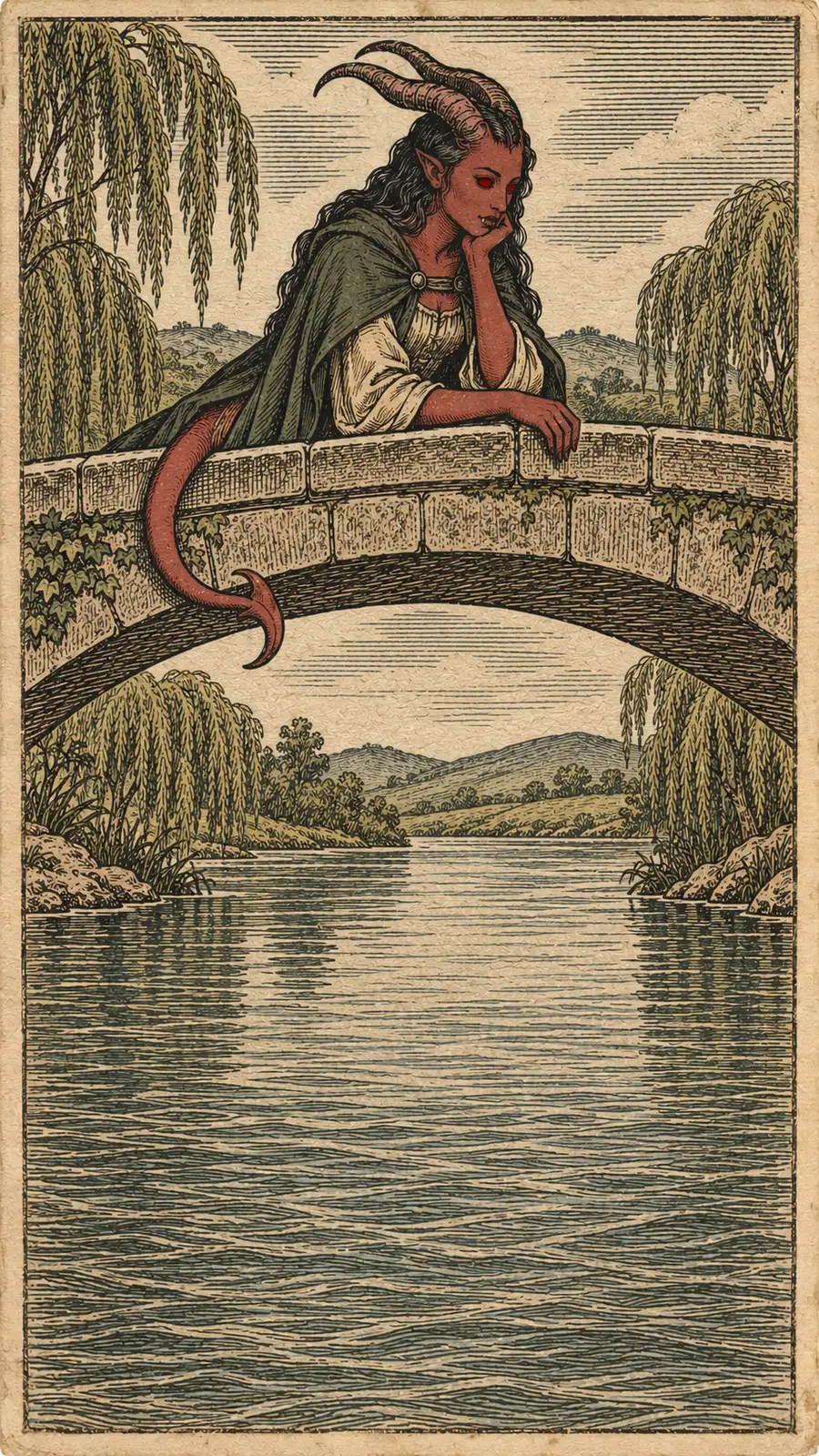
Imagine a young tiefling standing on a bridge over a slow river, deciding what to be called. She might choose Hope and spend her life trying to deserve it. He might choose Weary, because it's the truest word he knows. Someone else might choose Nowhere, because that's where they feel they come from, and then make the name into a kind of home. It's one of the gentlest ideas in the tiefling's whole history: the power to name yourself, when your blood has already said so much about you without asking.
Fifth-edition tieflings could see in the dark. They had what the book called Hellish Resistance, which meant fire did them less harm. They spoke Common and Infernal, the language of the Nine Hells. And they carried an Infernal Legacy, a trickle of magic that grew as they did. From the start they knew thaumaturgy, a small cantrip of eerie flourishes: a voice that suddenly booms, flames that flicker or flare, eyes that change colour for a moment, a door that flies open on its own. As they grew stronger they gained hellish rebuke, the power to wreathe an attacker in flame in answer to a blow, which is the old Infernal Wrath of the fourth edition in a new form. Later still, they could call up darkness, the same gift the very first tieflings had in 1994. The magic was drawn from the force of their personality, and the bloodline also gave them a little extra intellect.
A year later, in 2015, the Sword Coast Adventurer's Guide opened a small door in this picture. Its premise was simple: "not all tieflings are of the blood of Asmodeus." It offered variant tieflings for those whose ancestry ran in other directions. We'll walk through those variants properly a little later in the evening. For now it's enough to know that the door had been opened, and three years later a much larger book walked through it.
In May 2018 Wizards of the Coast published Mordenkainen's Tome of Foes. Its first chapter is called "The Blood War," after the endless war between the devils of the Nine Hells and the demons of the Abyss. That chapter describes the Lords of the Nine and much other devil lore, the princes of the Abyss, and the long, grinding conflict that has burned between law and chaos since before memory. In the middle of all this, the book offers something new for tieflings: a bloodline for each of the lords of Hell.
The book is careful about what this means. These tieflings aren't the children of the archdevils. They are shaped by the influence of a particular lord and by the layer of Hell that lord rules. A tiefling of a certain bloodline carries a little of that lord's nature and that layer's character, the way a river carries the colour of the soil it runs through. The tiefling of the Player's Handbook is the line of Asmodeus, and the book adds eight more, one for each of the other lords.
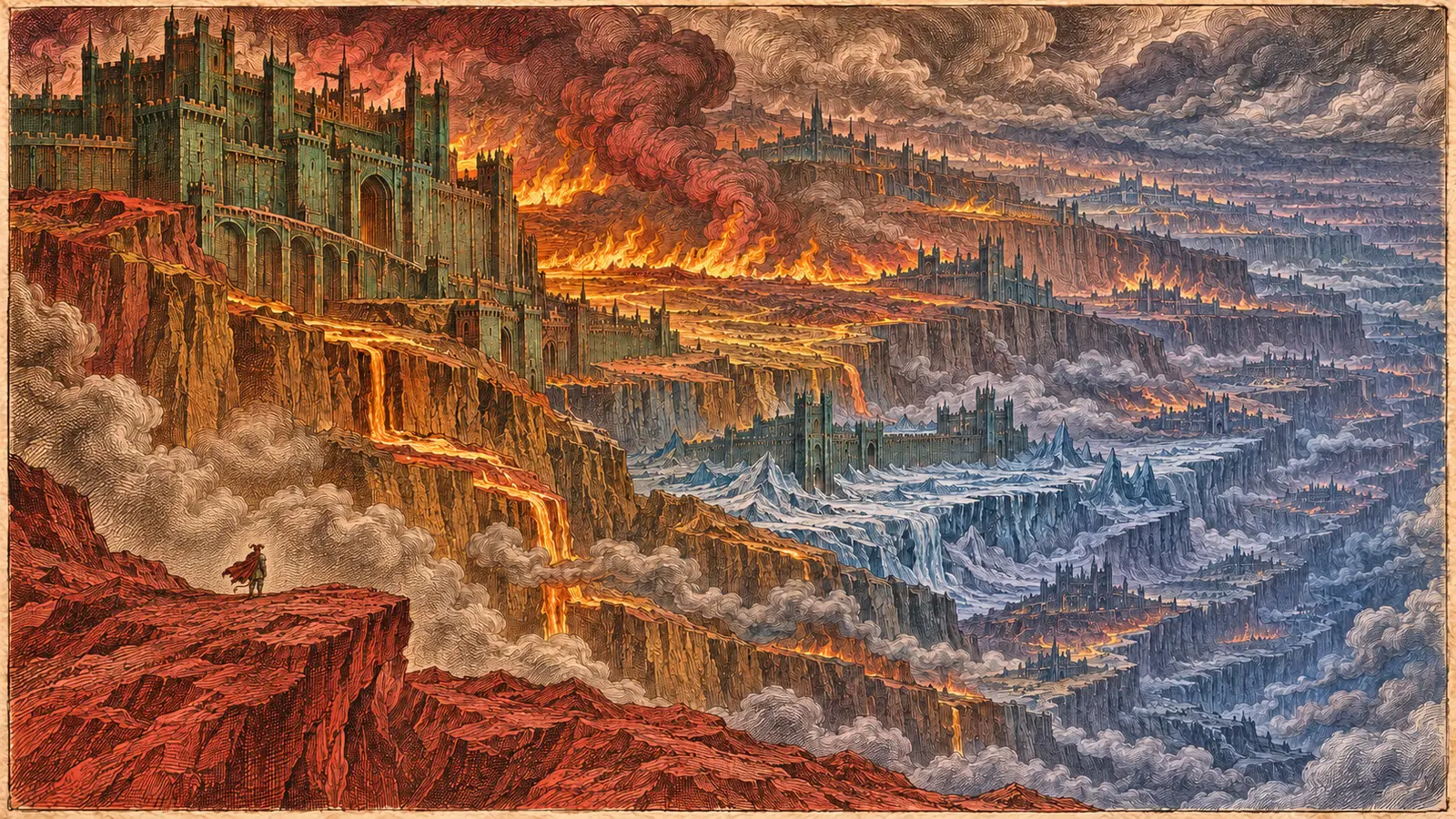
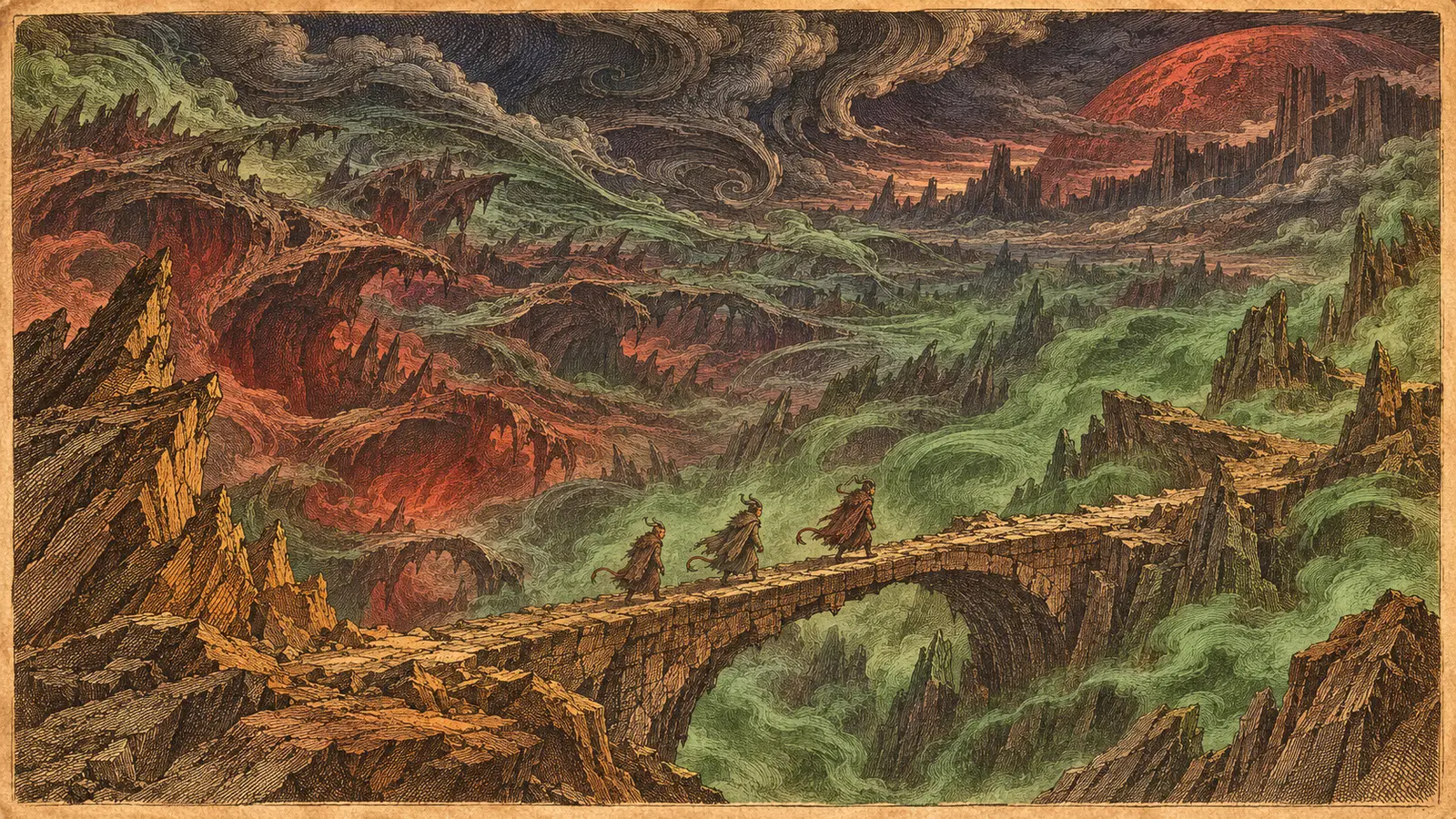
This gives us a reason, and a gentle one, to take a slow walk down through the Nine Hells, layer by layer, and meet each lord whose shadow falls across a tiefling's birth.
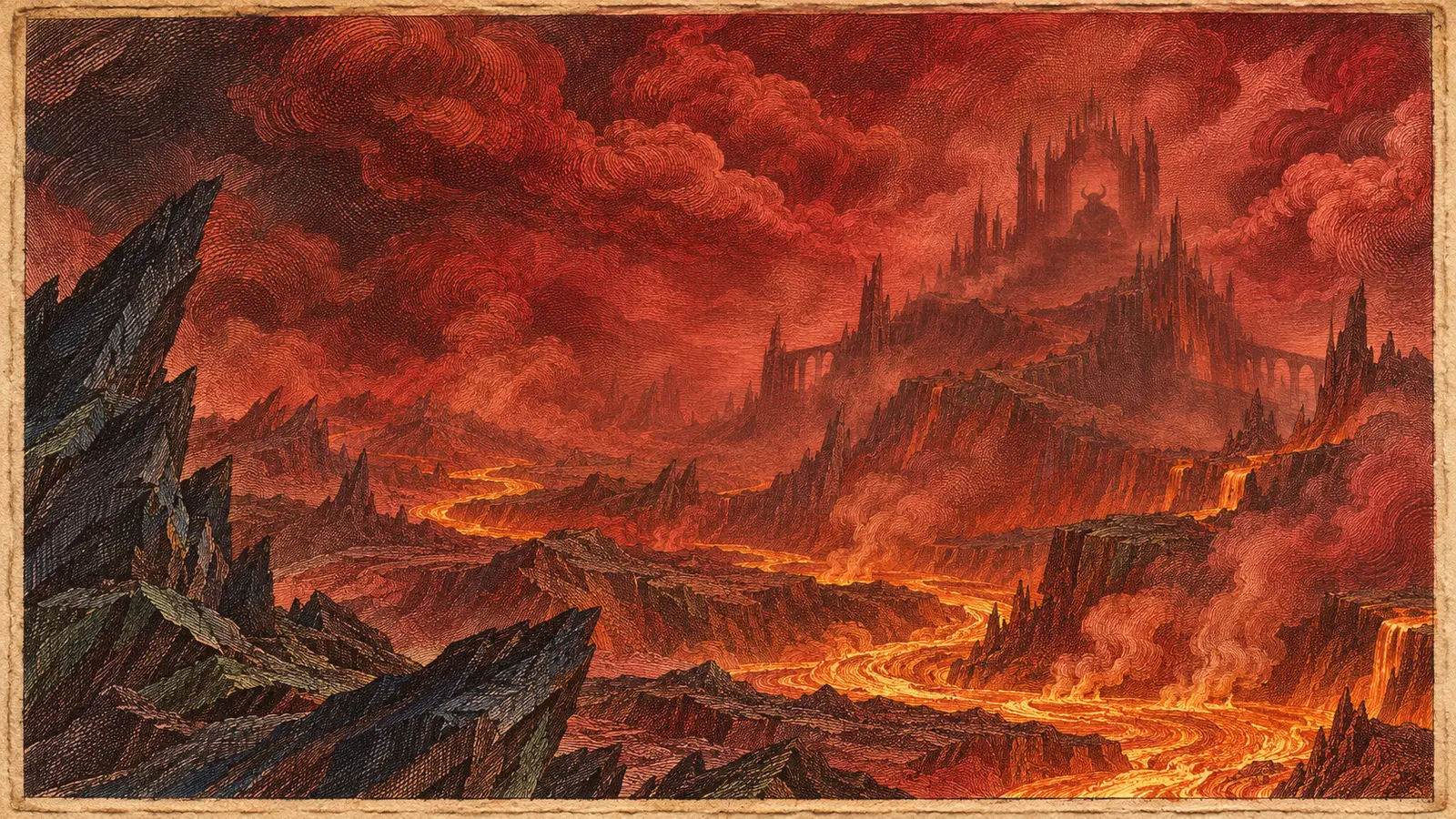
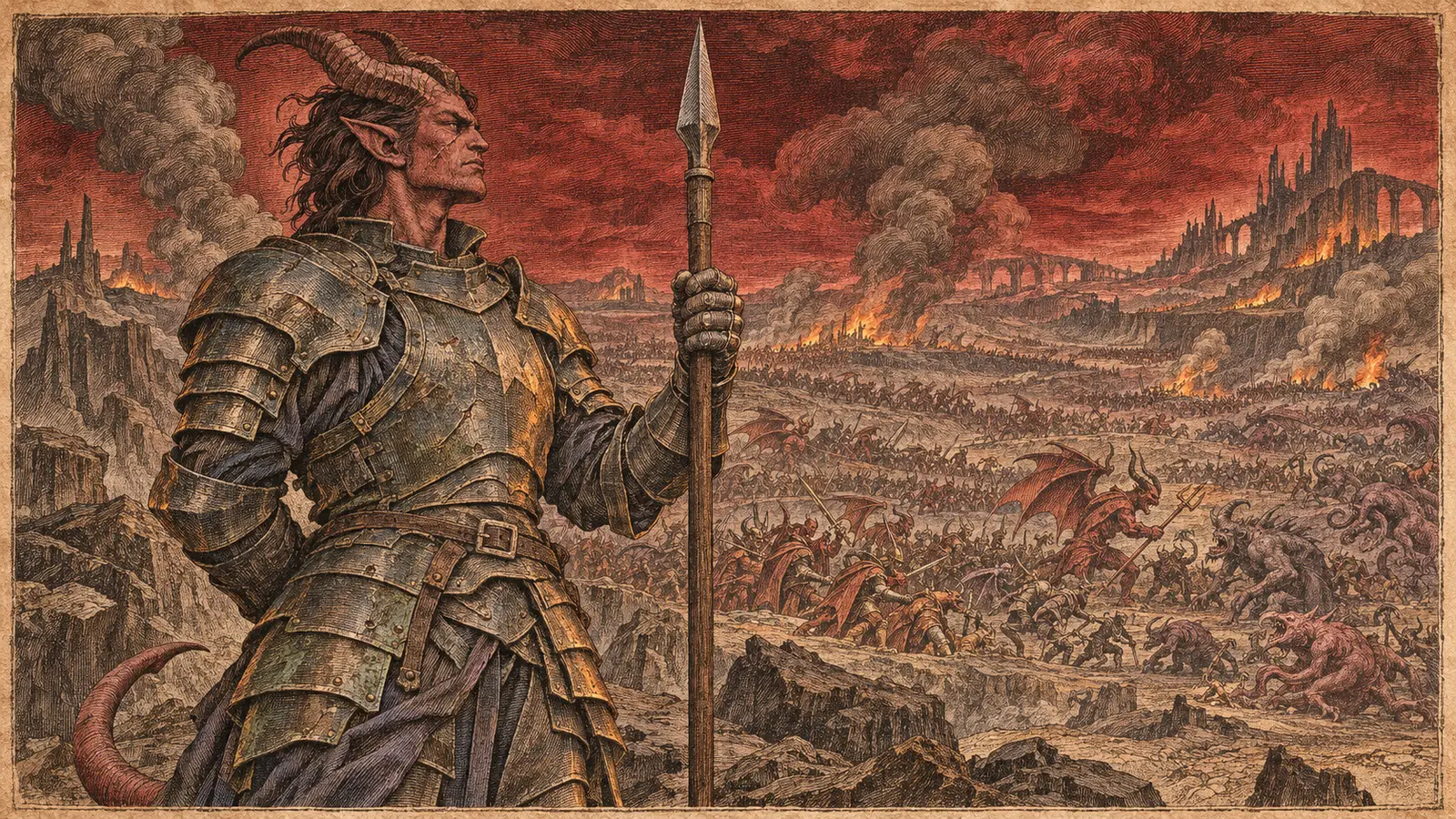
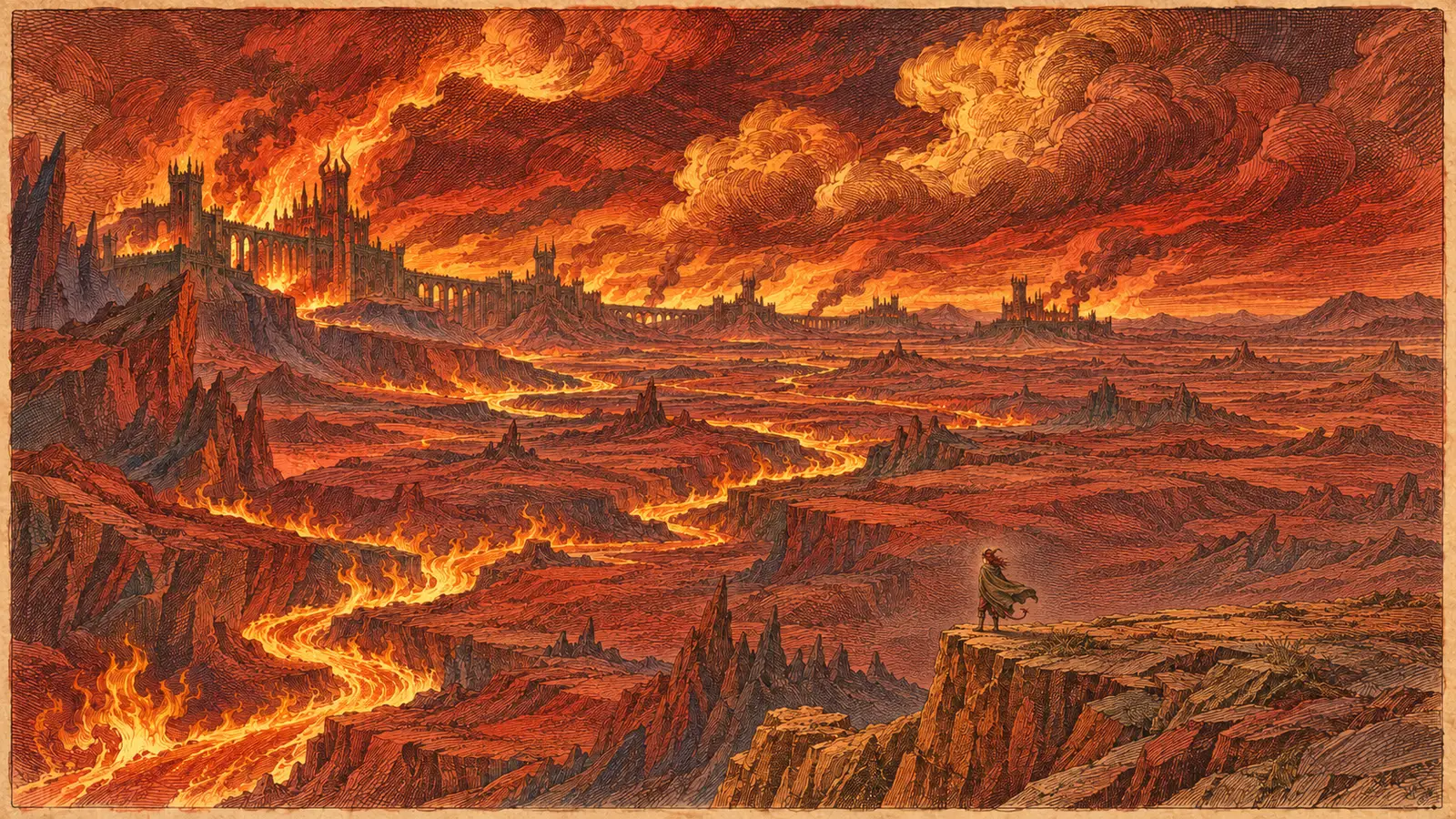
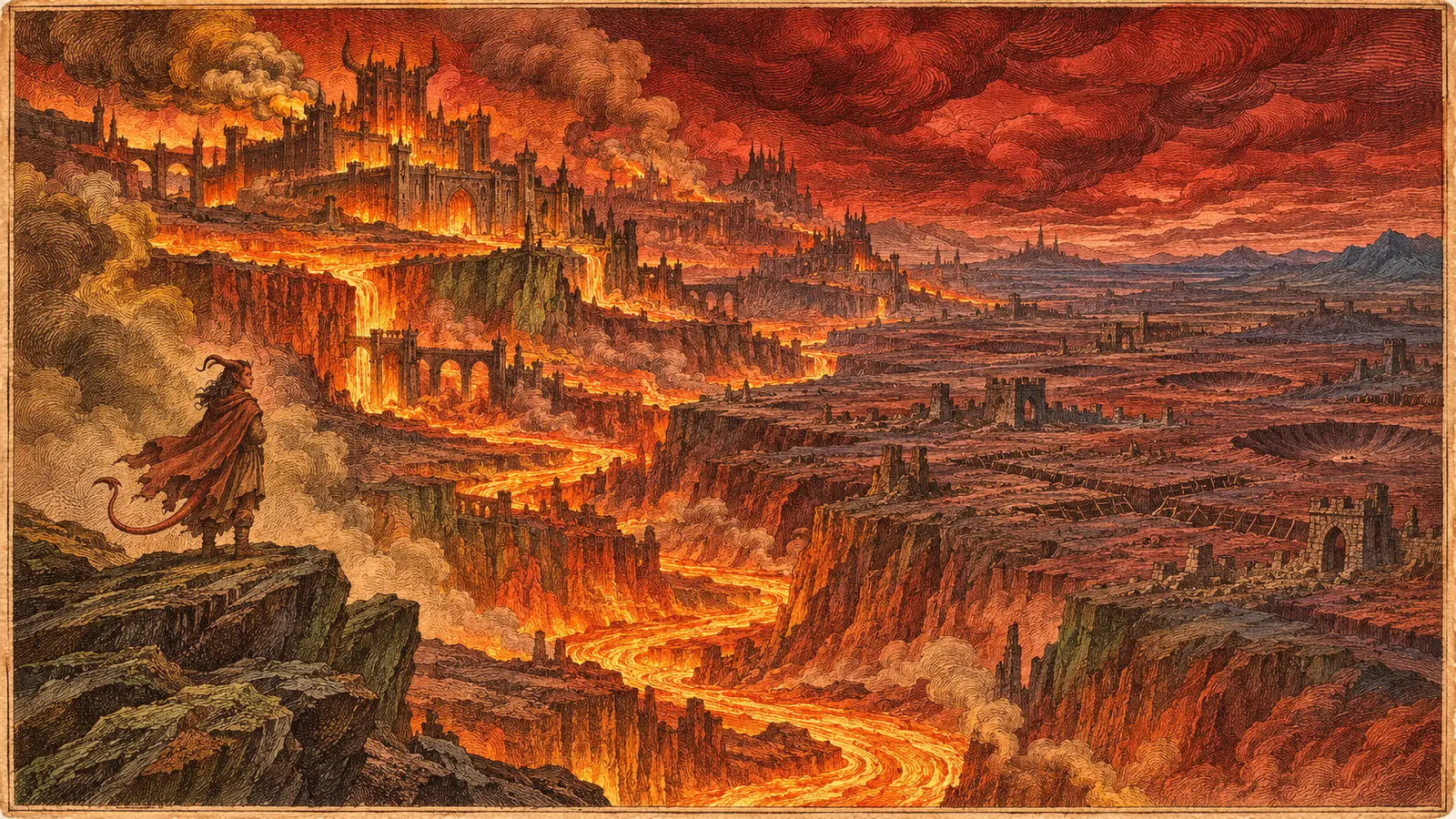
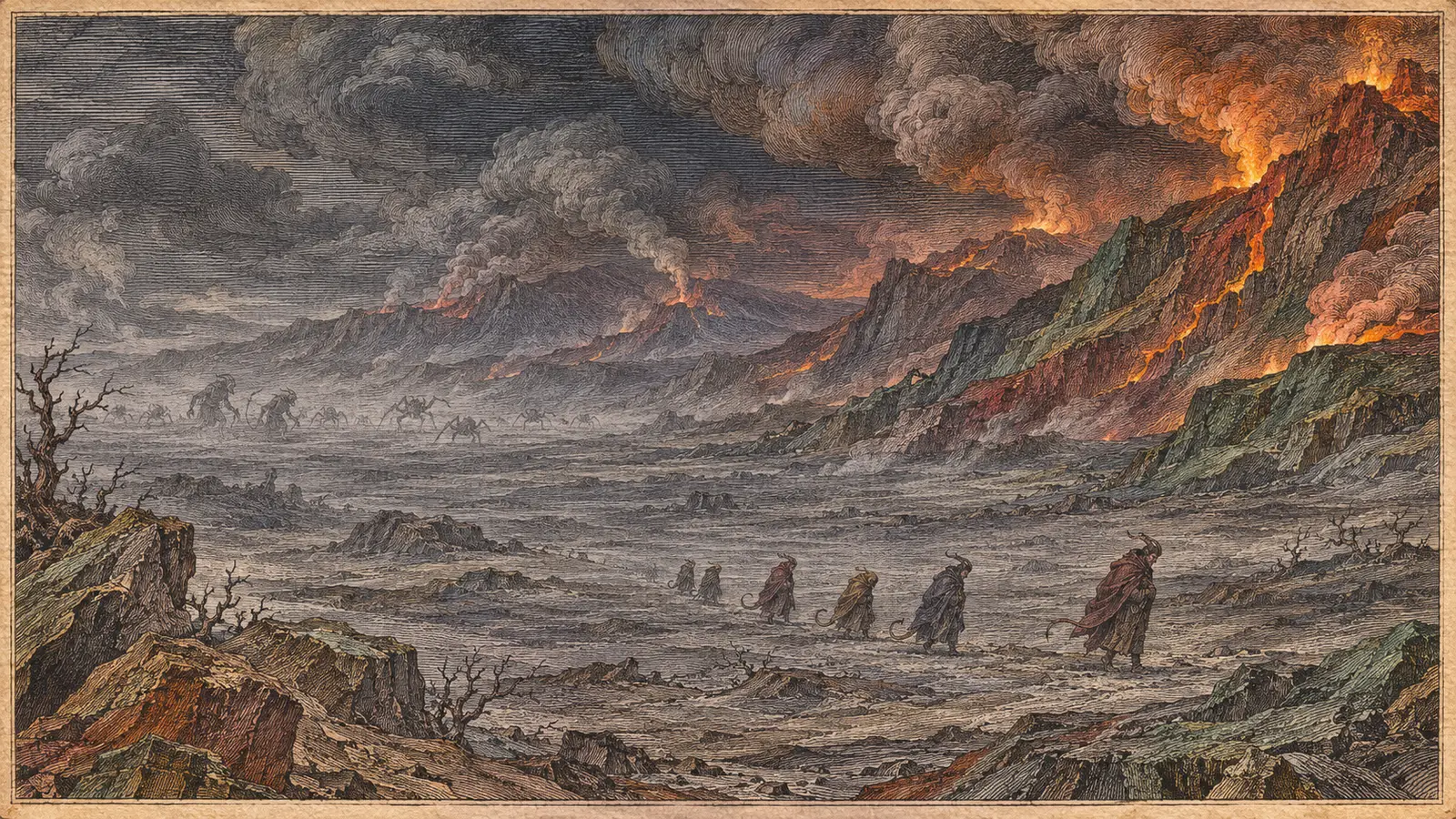
We begin at the top, in , the first layer. It's a blasted red wasteland, a battlefield under a burning sky, where the armies of the Blood War clash endlessly and the rivers run with fire. Its lord is , a fallen angel. In the fifth edition she rules Avernus, placed there by Asmodeus himself. The older lore told it differently: in earlier books, a pit fiend named Bel had displaced Zariel and ruled Avernus in her place. Fifth edition gives the layer back to her, and she rules it as a general rules a front line. Tieflings of Zariel's bloodline are stronger than most, built for battle. Their magic is war-magic: thaumaturgy, and spells that wreathe their weapons in searing, branding light, the kind of light a fallen angel might still remember. Picture a broad-shouldered tiefling in dented armour, her blade suddenly blazing as it strikes. That's Zariel's mark.
Below Avernus lies Dis, the second layer, a vast iron city of oppressive law, all walls and towers and endless iron streets glowing with heat. Its lord is , who is extremely paranoid and rarely leaves his Iron Tower. A tiefling of Dispater's line carries something of that watchfulness. They gain thaumaturgy, the ability to disguise themselves and the ability to read the surface thoughts of those around them. They're the spies and the watchers, people who always know a little more than they let on and always keep one eye on the door.
The third layer is , a swampy, decaying wasteland where greed rots everything it touches. Its lord is , who is obsessed with wealth. His tieflings have a keen intellect, and their magic is the magic of possession: a spectral hand to move things at a distance, a floating disk of force to carry loads, and a spell to seal a door or chest so that only they can open it. A tiefling of Mammon's line might be a moneylender, a merchant or a quiet collector of things that ought to be locked away.
The fourth layer is , a realm of fire, ruled by , though her father is closely bound up in her rule. Fierna's tieflings carry wisdom along with their force of personality, and their magic is the magic of charm. They can make friends of strangers, sway a person to their side and plant a reasonable-sounding suggestion that is very hard to refuse. They're the diplomats and the seducers, the ones who can talk a guard out of an arrest and a rival into an alliance.
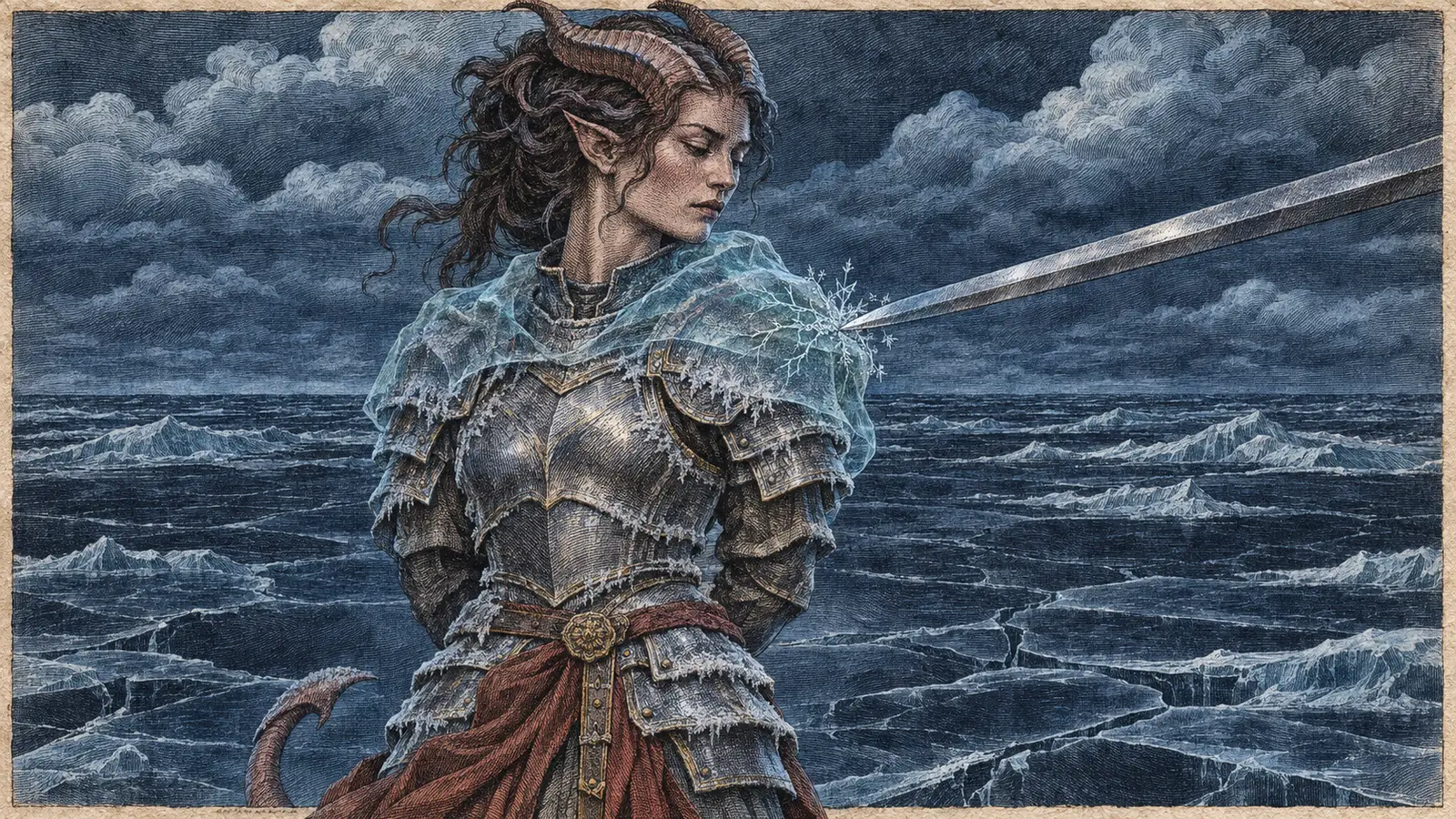
The fifth layer is , a frozen sea of ice and black water. Its lord is , and he rules it from a prison. Asmodeus trapped him in a great block of ice for crimes long past, and he reaches out by telepathy to command his servants and his realm. Levistus's tieflings are hardy and enduring, and their magic is cold: a ray of frost, a protective armour of spectral ice that bites anyone who strikes it, and a spreading darkness. Imagine a tiefling of that line, pale and calm, with frost forming on her armour as an attacker's blade touches it.
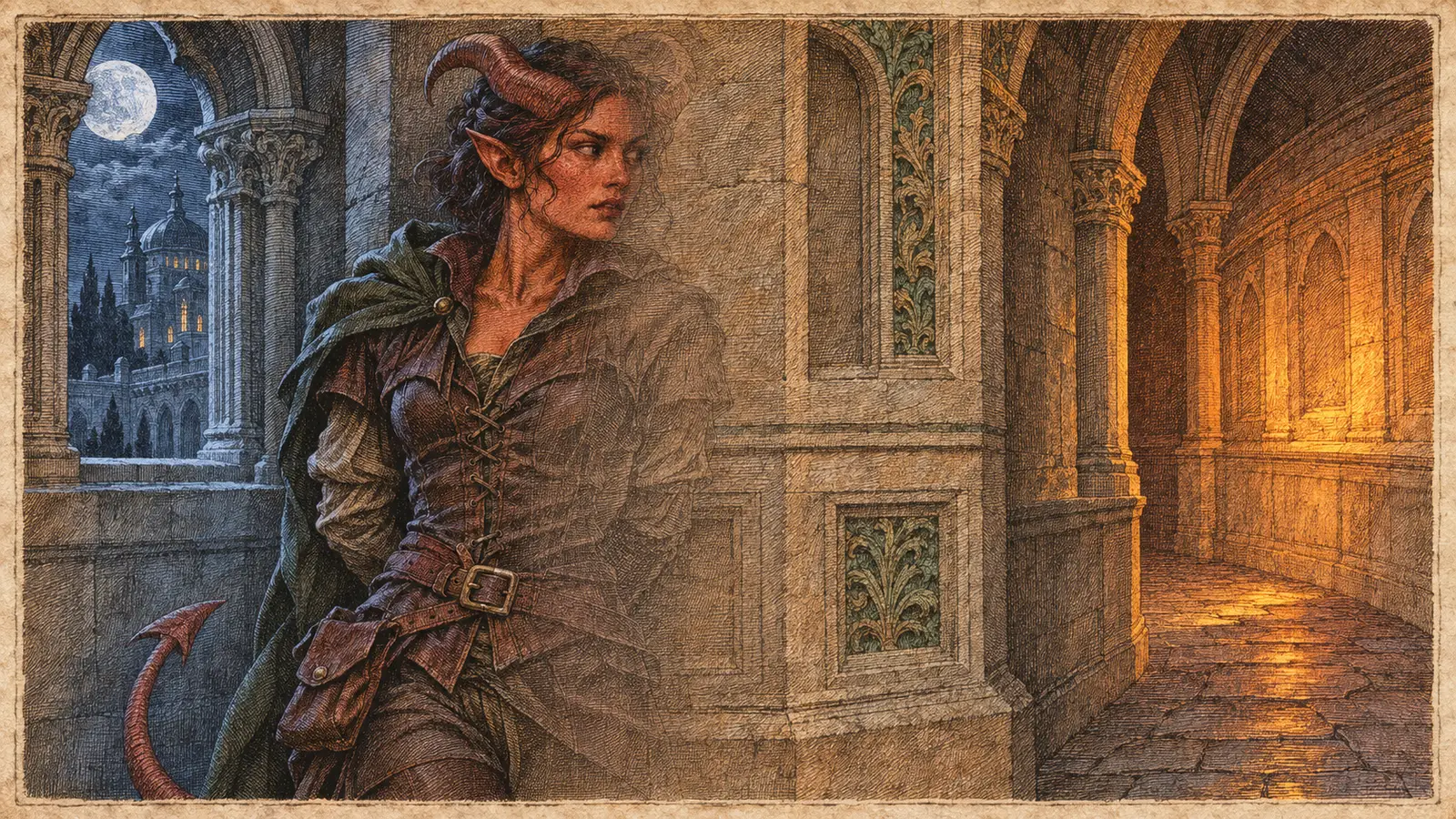
The sixth layer is , ruled by , the daughter of Asmodeus and the criminal mastermind of Hell. She has a long vendetta against Levistus over the murder of her mother, . Her tieflings are quick and nimble, and their magic is built for heists: small illusions, the ability to disguise themselves and, at last, invisibility. If you've ever pictured a horned thief slipping through a palace at night, vanishing just as the guards turn the corner, you've pictured a child of Glasya's line.
The seventh layer is , a crumbling realm of ruins, endless half-built cities and broken towers. Its lord is , called the Lord of Lies. He was once an angel named , and he fell. Asmodeus later cursed him with the body of a vast slug with tiny, useless arms, a punishment that tells you a great deal about how the Lord of the Ninth deals with rivals. Baalzebul excels at corrupting people whose small sins can be turned, slowly, into acts of damnation. His tieflings are clever, and their magic corrupts body and mind: a ray of sickness, and a crown of madness that bends a victim's will. They're the most unsettling of the bloodlines, and perhaps the most tragic, since their lord was once something shining.
The eighth layer is , a frozen realm of glaciers and howling wind. Its lord is , master of hellfire and arcane magic, a scholar of fire in a land of ice. His tieflings have keen intellects and an affinity for flame: a spectral hand, burning hands that fan fire outward, and a blade made of flame that they can summon into their grip. Picture a tiefling wizard in a cold library, warming her fingers over a small fire she called from nowhere. That's Mephistopheles's mark.
And at the bottom, in the ninth layer, lies , the deepest pit of the Hells, where Asmodeus himself rules over all. His tieflings command fire and darkness and have a sharper intellect than most. Their magic is the same Infernal Legacy that the Player's Handbook gave every tiefling: thaumaturgy, hellish rebuke and darkness. They are the eldest line, the most common and the closest to the source.
Nine lords, nine layers, nine shapes of inheritance. A player choosing a tiefling in the years after 2018 could choose which of these marks their character carried, and with it a whole web of story. A tiefling of Glasya's line might be hunted by agents of Levistus, carrying on a feud that began in Hell long before the tiefling was born. A tiefling of Zariel's line might feel the pull of Avernus in their dreams, the sound of marching and the heat of the battlefield. And one of those lines, Zariel's, was about to become the centre of one of the largest Dungeons and Dragons stories ever told.
Chapter VIII
Elturel, Avernus and the road to Baldur's Gate
We turn now to the Sword Coast of the Forgotten Realms, and to a city called . This story spans many decades of in-world history, and the tieflings stand at the end of it, carrying a burden they did nothing to earn.
It begins in the year the Realms call the Year of the Bow, which is 1354 by the Dalereckoning. An angel named came to Elturel. She was radiant and fierce and full of purpose. She told the people of the city that she had found a gate in the Fields of the Dead, the old battlefields west of the city, and that devils were pouring through it into the world. She offered to lead Elturel's cavalry through the gate to defeat them.
The cavalry were called the Hellriders. They rode out behind her, and Zariel led them on the back of her golden mastodon, Lulu. Picture the column of riders in the grey morning, their banners lifting, the great shaggy beast gleaming at the front with the angel on its back, and ahead of them the gate, red light spilling across the old graves. They rode through, into , the first layer of the Nine Hells. That charge became known as the Ride.
Very few came back. Those who did sealed the portal behind them. Zariel didn't return. She stayed in Avernus, and there, in the burning battlefield of Hell, she fell. The angel who had led the charge became the archdevil who rules the first layer, the same Zariel whose bloodline we met a little while ago.
Years passed. Elturel came under siege by a vampire lord, and the city's nights were full of terror. Then something extraordinary happened. A second sun appeared in the sky over Elturel and turned night into day. It burned the vampire lord and his spawn to ash, and the rest of the undead cowered from its light. The people called it the Companion, and an Order of the Companion grew up around it, devoted to the light that had saved them.
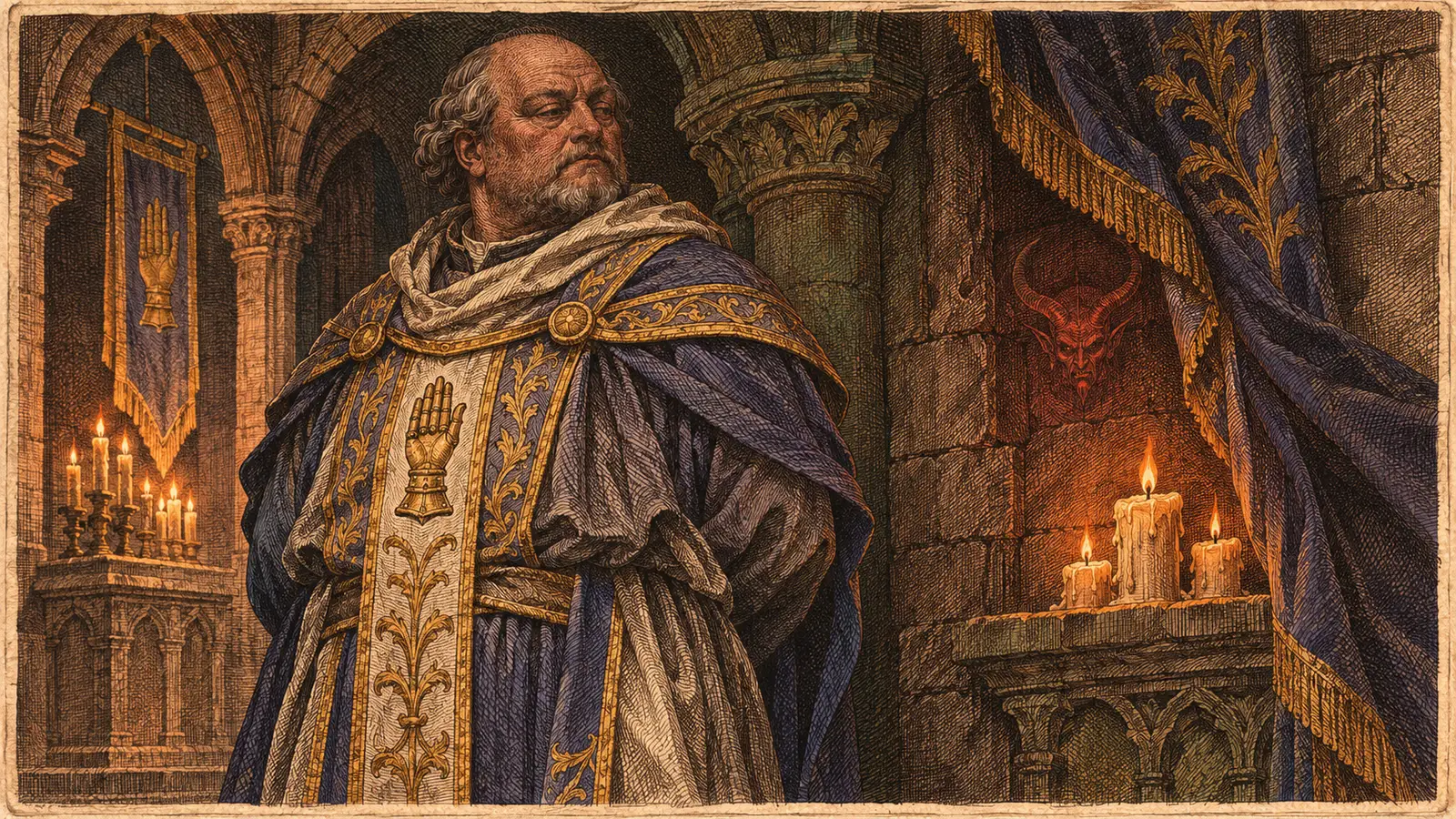
The Companion was not what it seemed. In secret it was the Solar Insidiator, a thing made by Zariel. The deal for it had been struck by High Observer , a human priest of , the god of duty and loyalty, who ruled Elturel and the wider theocracy of . He later took the title High Overseer. And he was secretly a member of the Cult of Zariel, which had threaded itself through most of Elturel's government and most of the leadership of the Order of the Companion.
Under the Companion's light, the whole city had fallen under an infernal pact. When the pact came due, the city and the souls of everyone in it would belong to Zariel, to be used as soldiers in the Blood War. Every morning the people of Elturel woke under that gentle second sun and gave thanks for it, never knowing that the light itself was the contract.
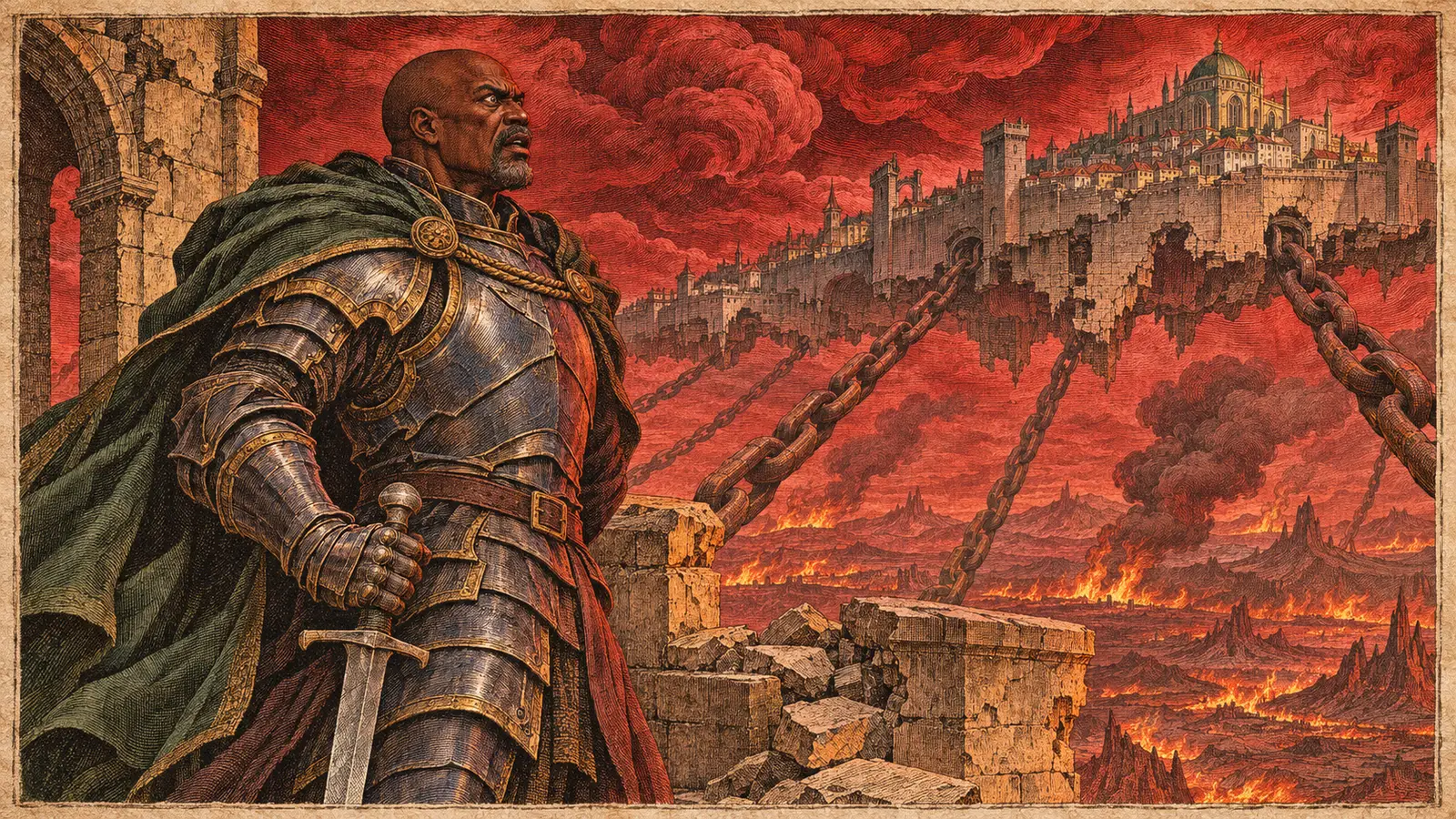
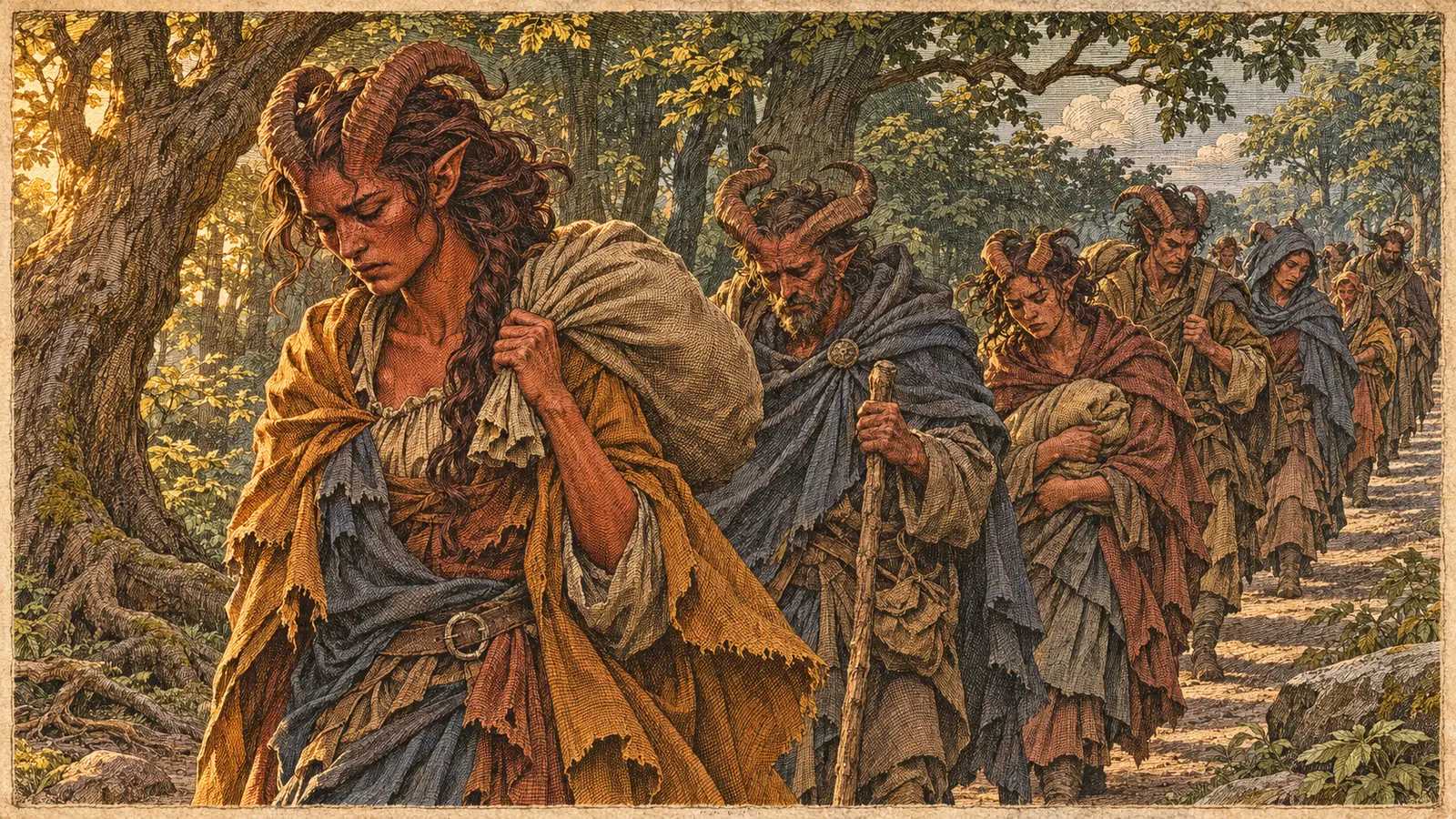
In the year 1492 by the Dalereckoning, the pact came due. The entire city of Elturel was pulled down into Avernus. One moment it stood on the bank of the river, and the next it was gone, hanging in the red sky of Hell by great chains. Grand Duke of Baldur's Gate, who happened to be in Elturel on a state visit, was dragged down with it. Those who had been outside the walls at the time fled downriver to Baldur's Gate as homeless refugees.
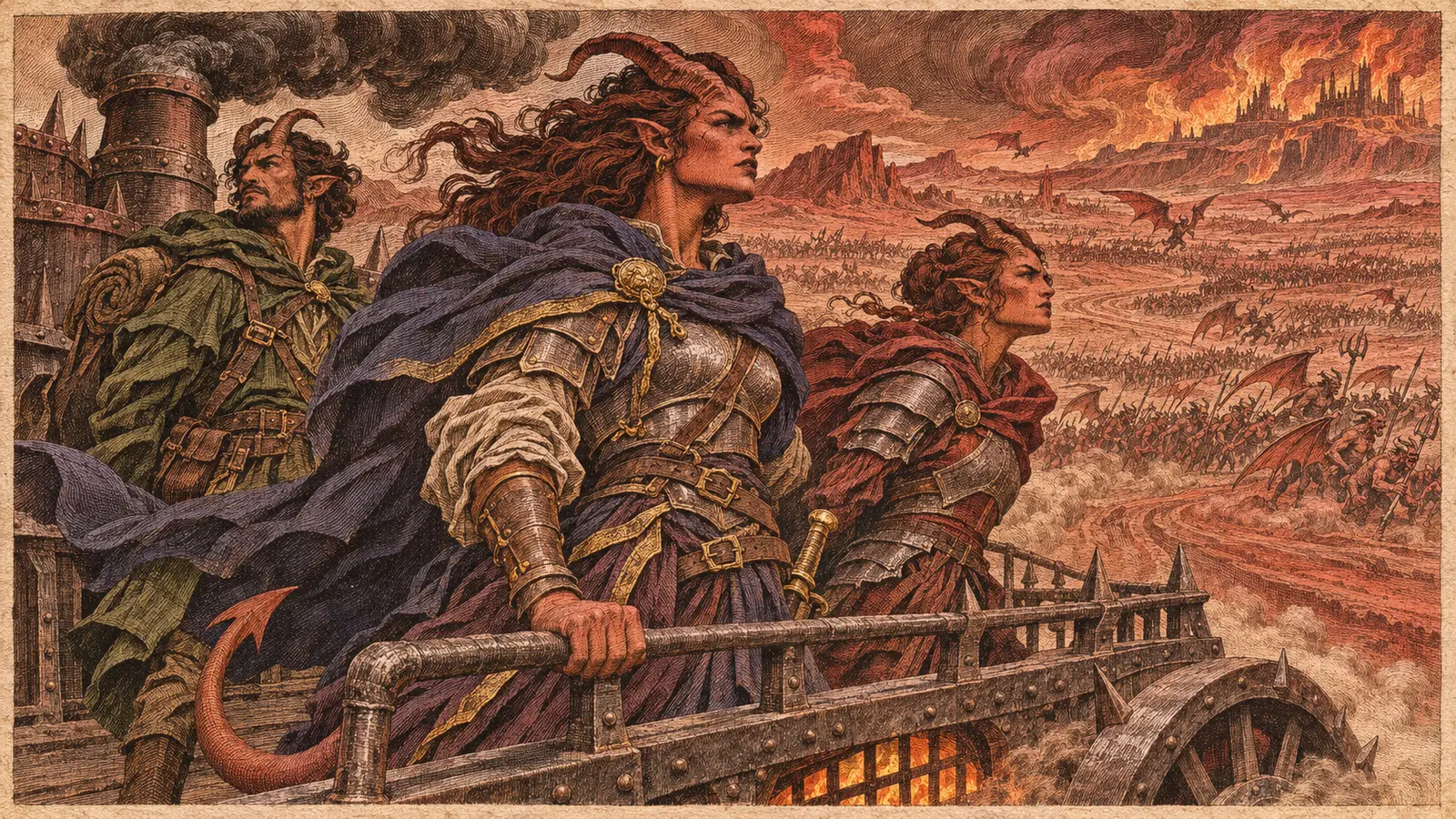
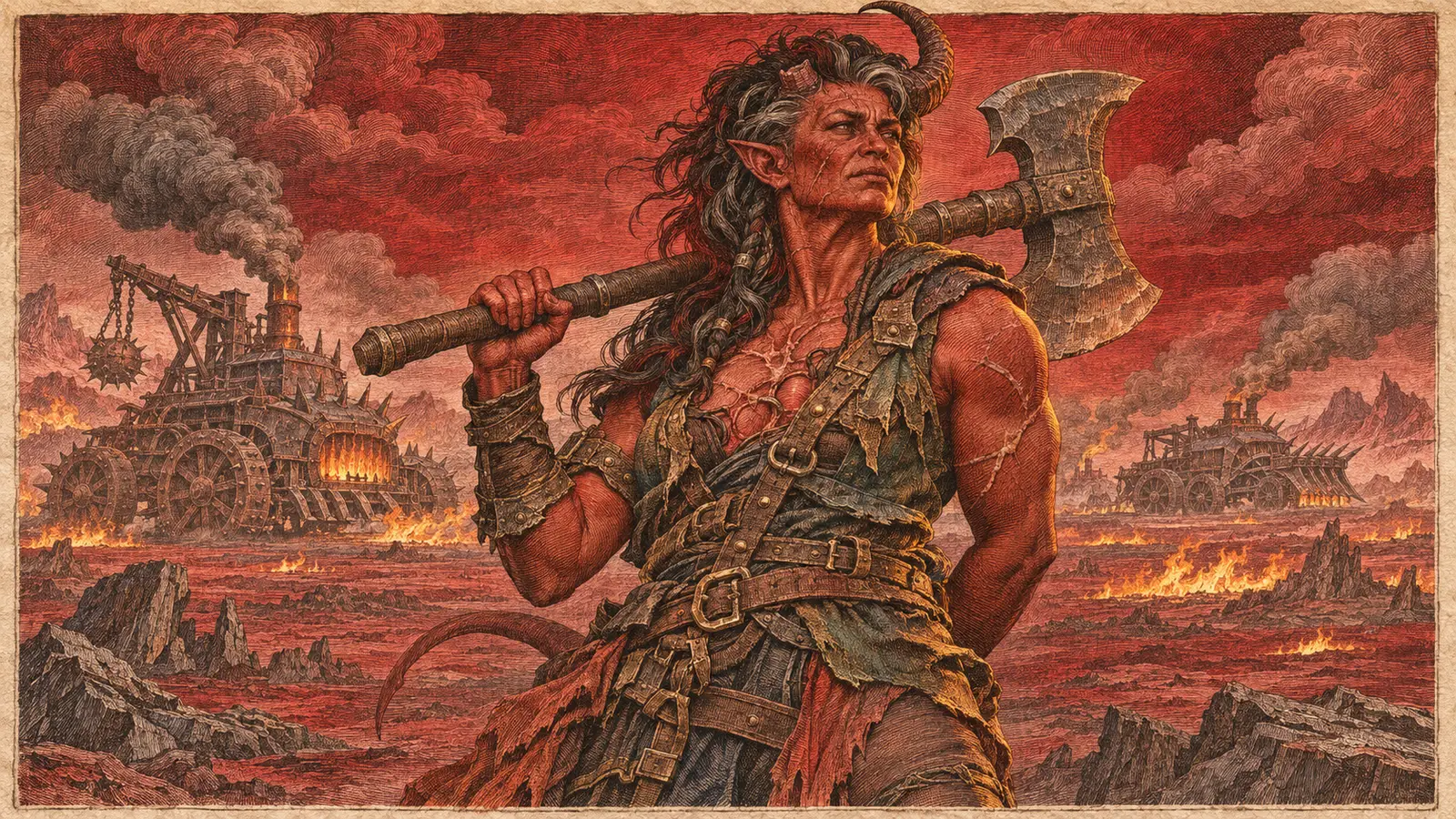
This is the opening of Baldur's Gate: Descent into Avernus, an adventure published by Wizards of the Coast in September 2019. It carries a party of heroes from their first humble steps to great power, beginning in the city of Baldur's Gate and descending at last into Avernus itself, to save Elturel and stop Zariel's plans. It also brought infernal war machines into the game: battle vehicles that heroes could customise and drive across the burning plains into the Blood War itself. Picture a party of adventurers in a rattling iron machine bristling with spikes and belching smoke, racing across a red desert past armies of devils and demons, with a ruined city hanging in chains on the horizon. The story of the Hellriders, and of Lulu the golden mastodon, runs all through it.
Elturel was eventually rescued from Hell and returned to the world. But the people who came back were changed. They had been in Avernus, had seen what lay there, and they came out of it hating anything infernal. And in their city lived tieflings.
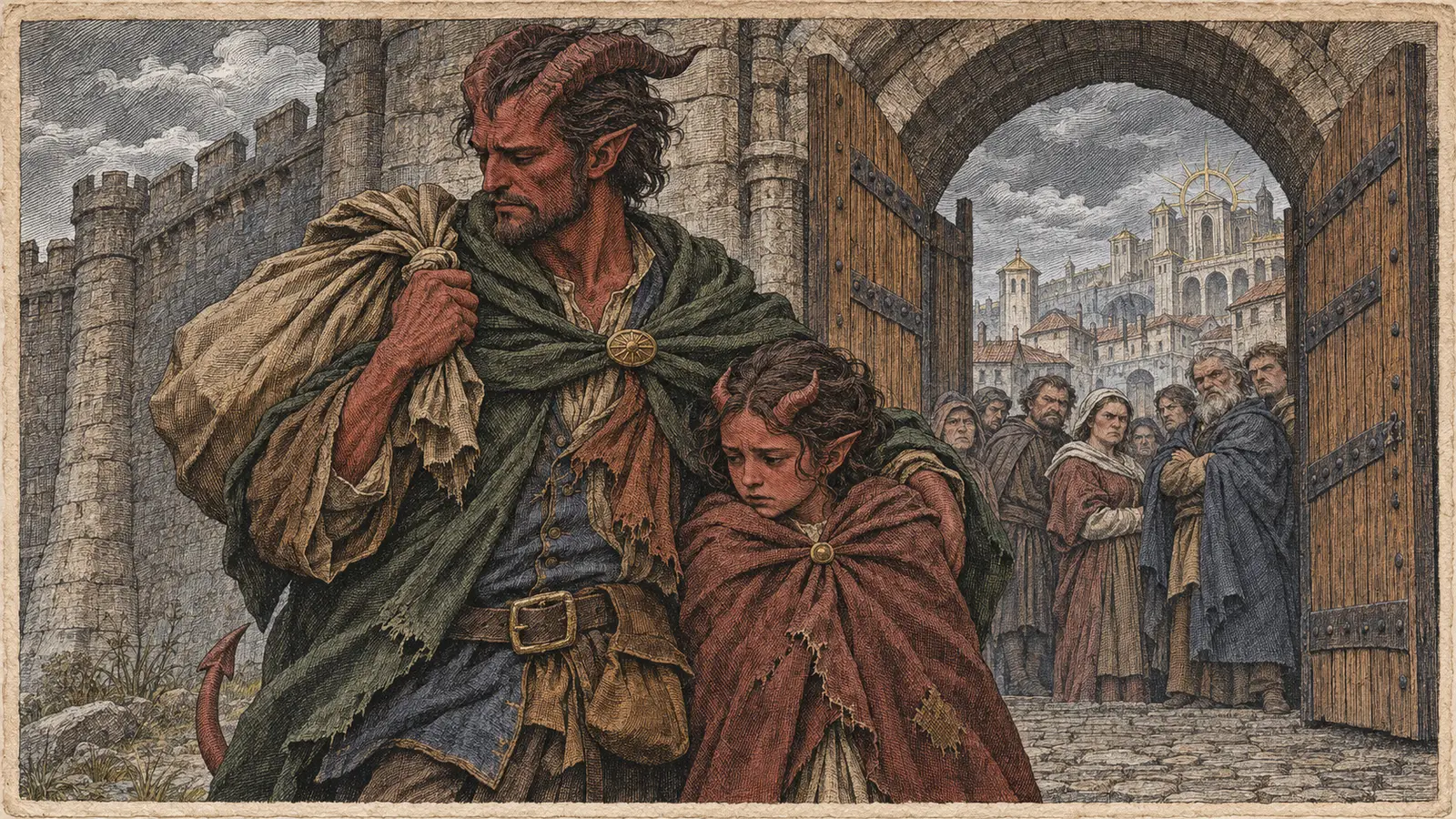
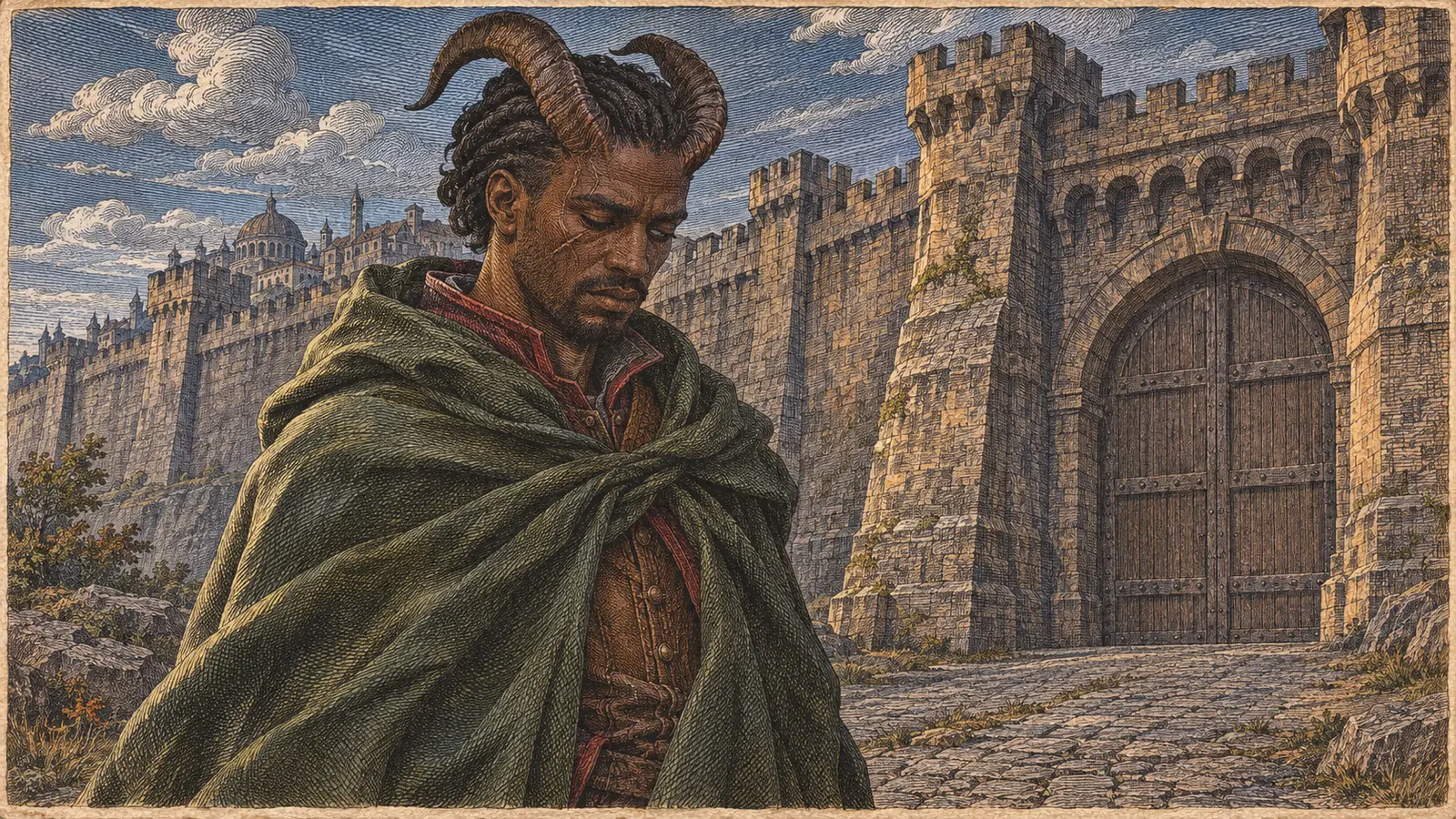
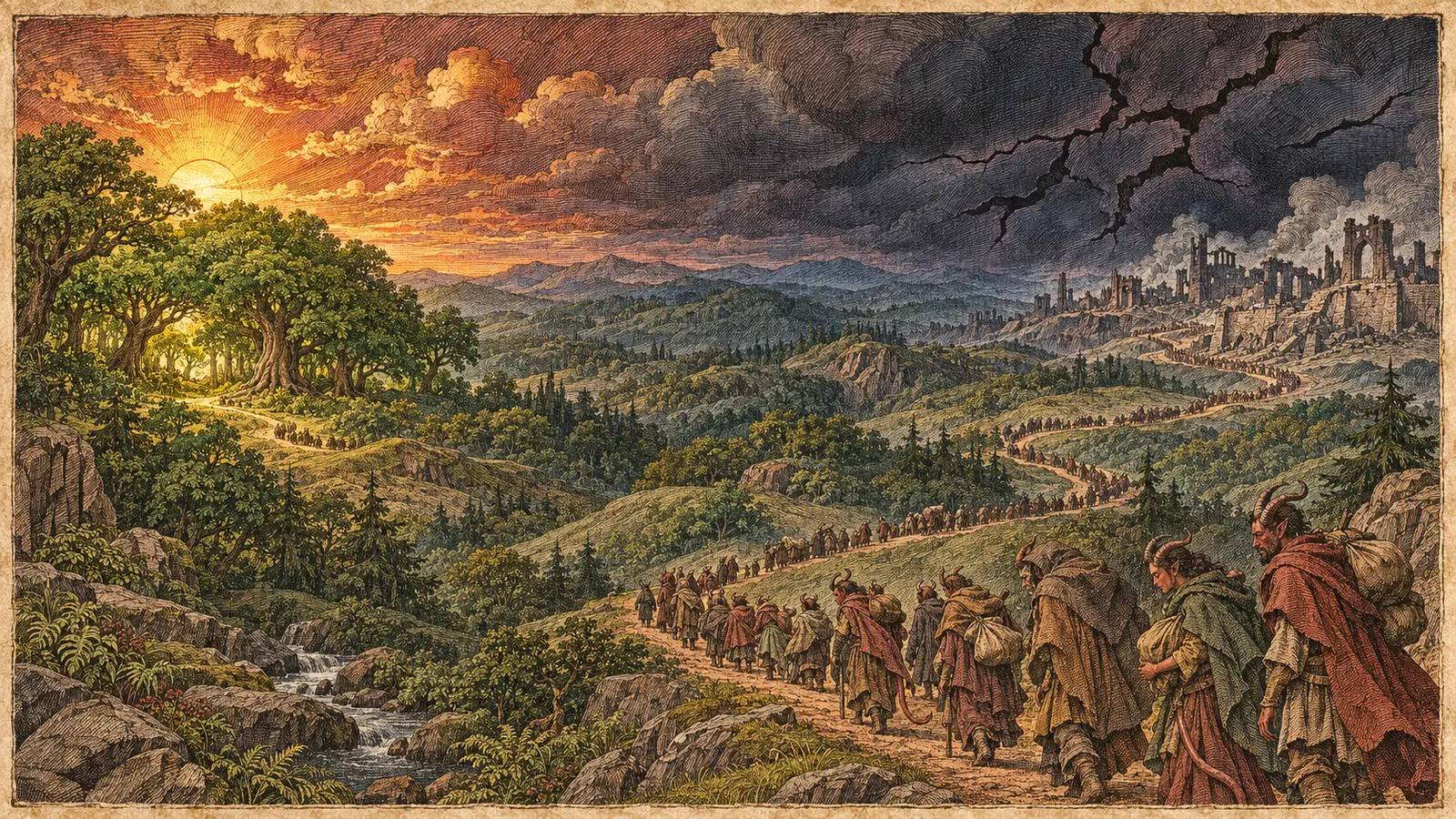
The tieflings of Elturel had done nothing to cause the disaster. The man who signed the pact was a human priest. The power that dragged the city down was a fallen angel. But the tieflings had horns and tails and the look of devils, and grief looks for someone to blame. The city's tieflings were falsely blamed for the catastrophe and exiled. The prejudice that followed drove most of the rest away too. On the road home from Elturel, Grand Duke Ravengard was captured at a place called 's Rest, and the Sword Coast grew darker still.
This is where the most famous tiefling story of recent years begins. In August 2023 Larian Studios released Baldur's Gate 3, and early in that game the player meets the tiefling refugees.
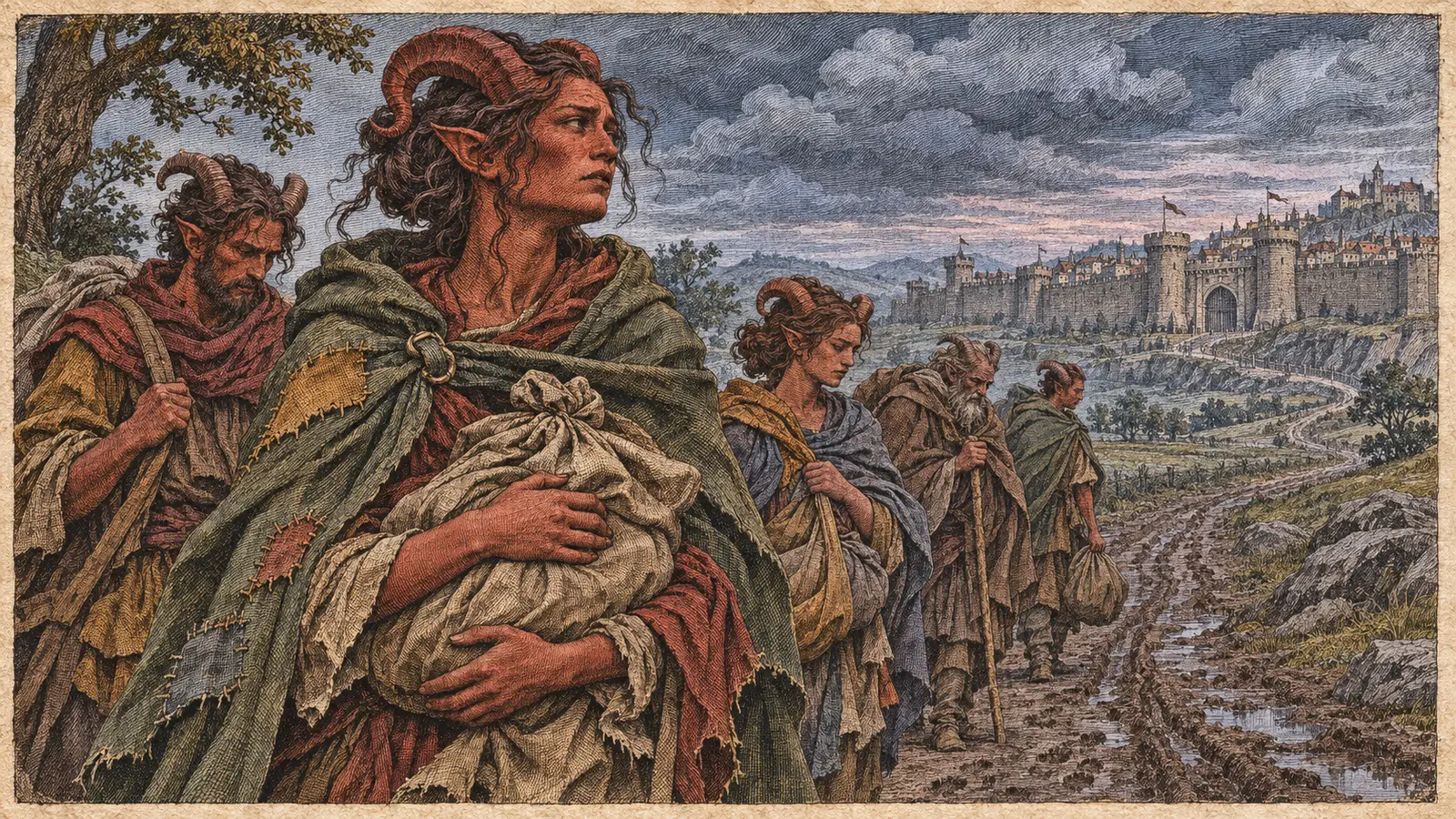
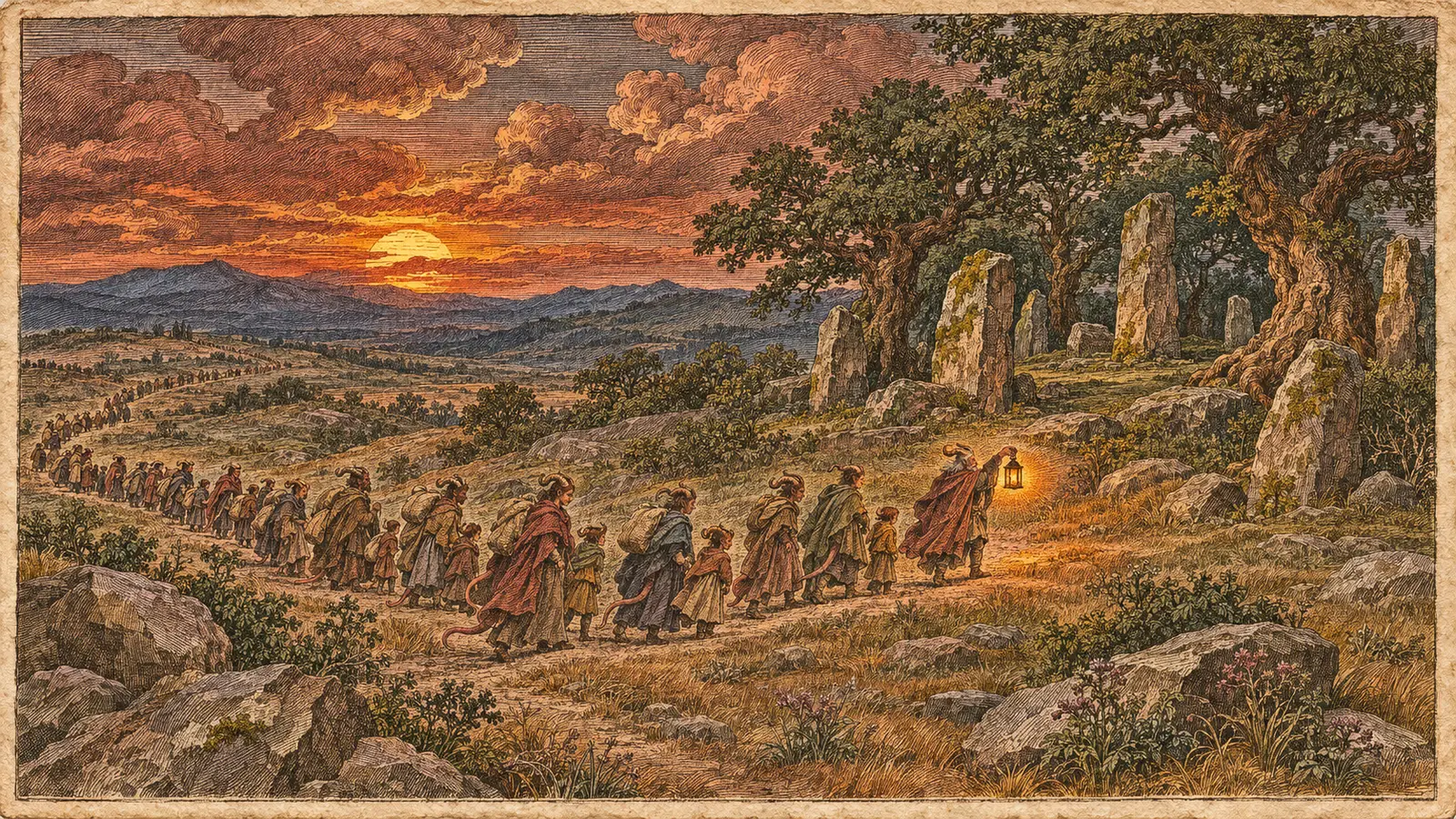
They're walking west toward Baldur's Gate, a column of exiles from Elturel carrying what they could save. In the first act of the game they're camped in the Emerald Grove, a sanctuary of druids hidden in the wilderness. Relations with the druids are strained. A druid named leads a ceremony called the Rite of Thorns, which will seal the grove against the outside world and force the refugees back onto the road. Out in the wild, goblin raiders are closing in. The refugees are caught between a door about to shut and a road full of knives.
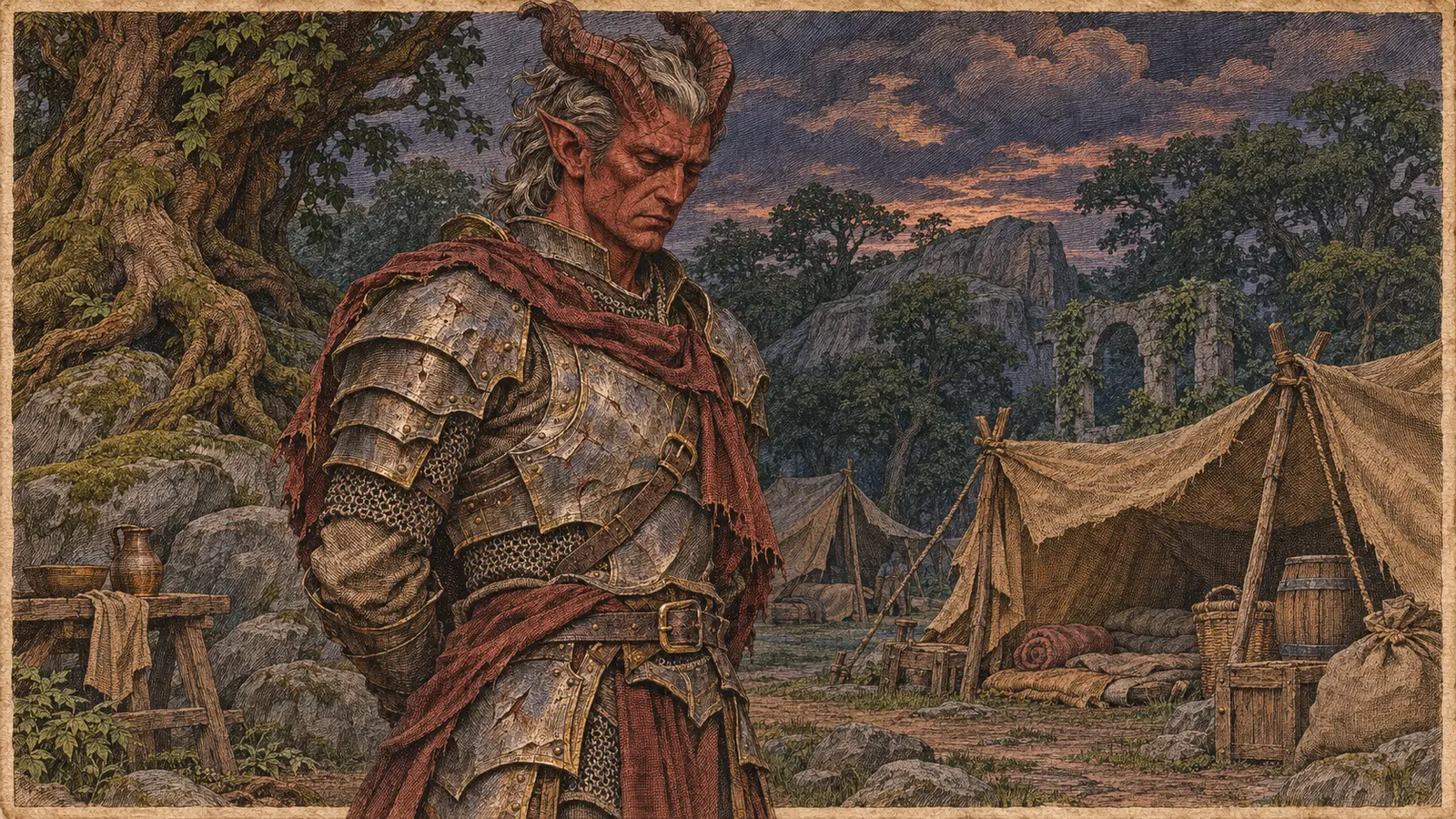
The refugees are led by , a Hellrider paladin, a commander of Elturel's order. He gave his life to fighting devils, and his own city cast him out for looking like one. He feels betrayed by all of it, and he carries that betrayal quietly, like a wound under his armour. He spends the first act trying to keep his people alive and the second and third trying to find them somewhere to live.
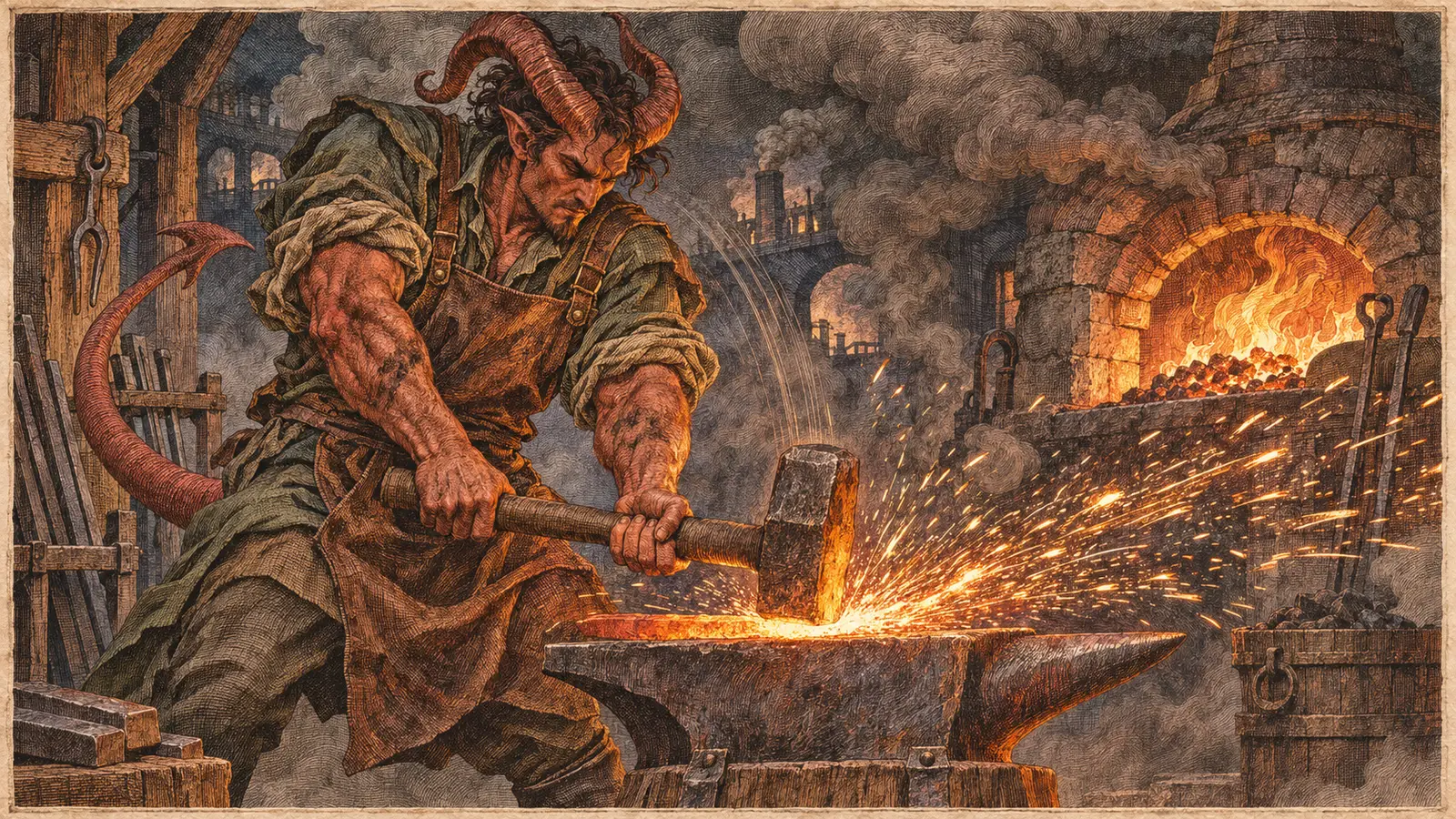
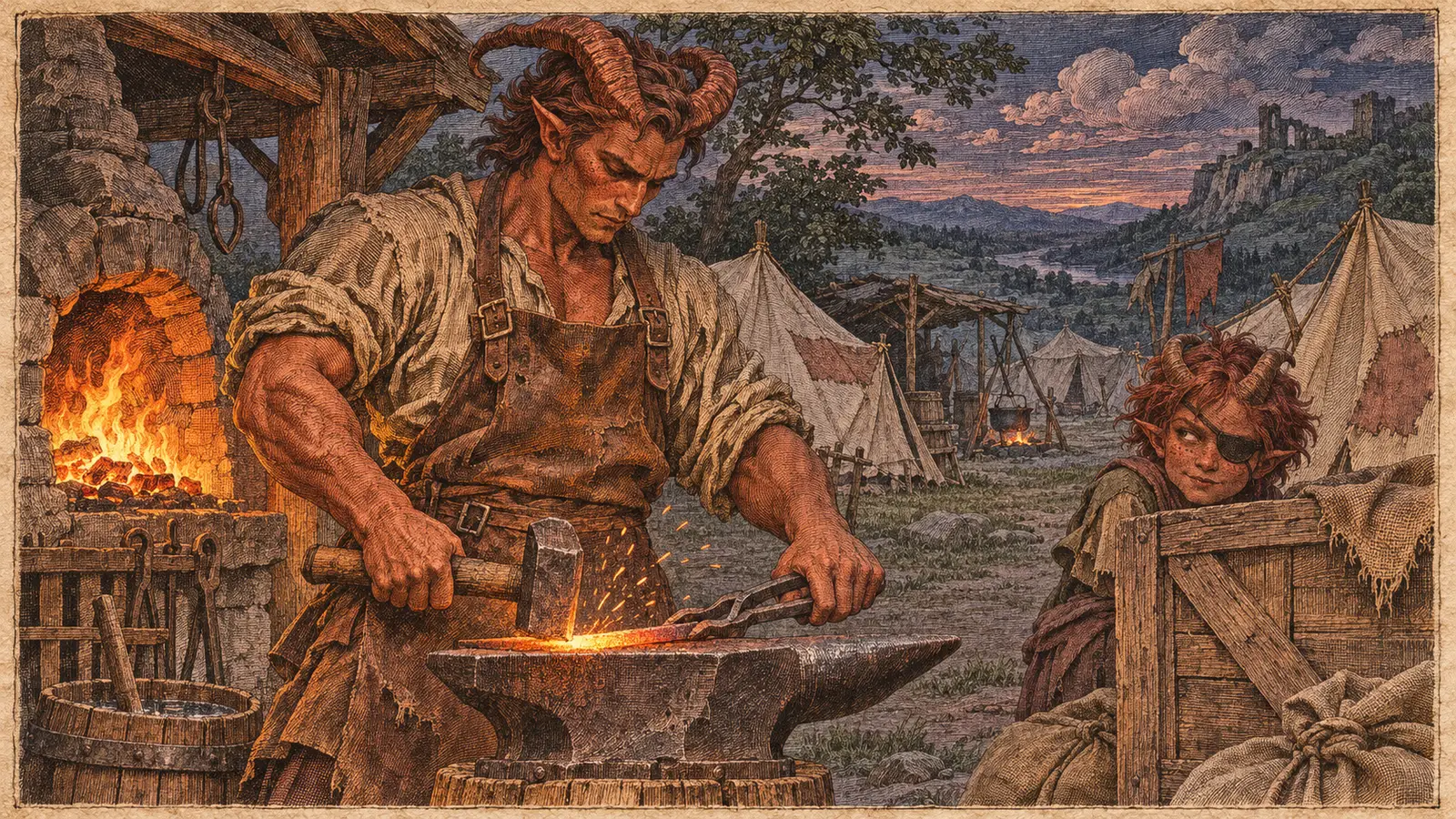
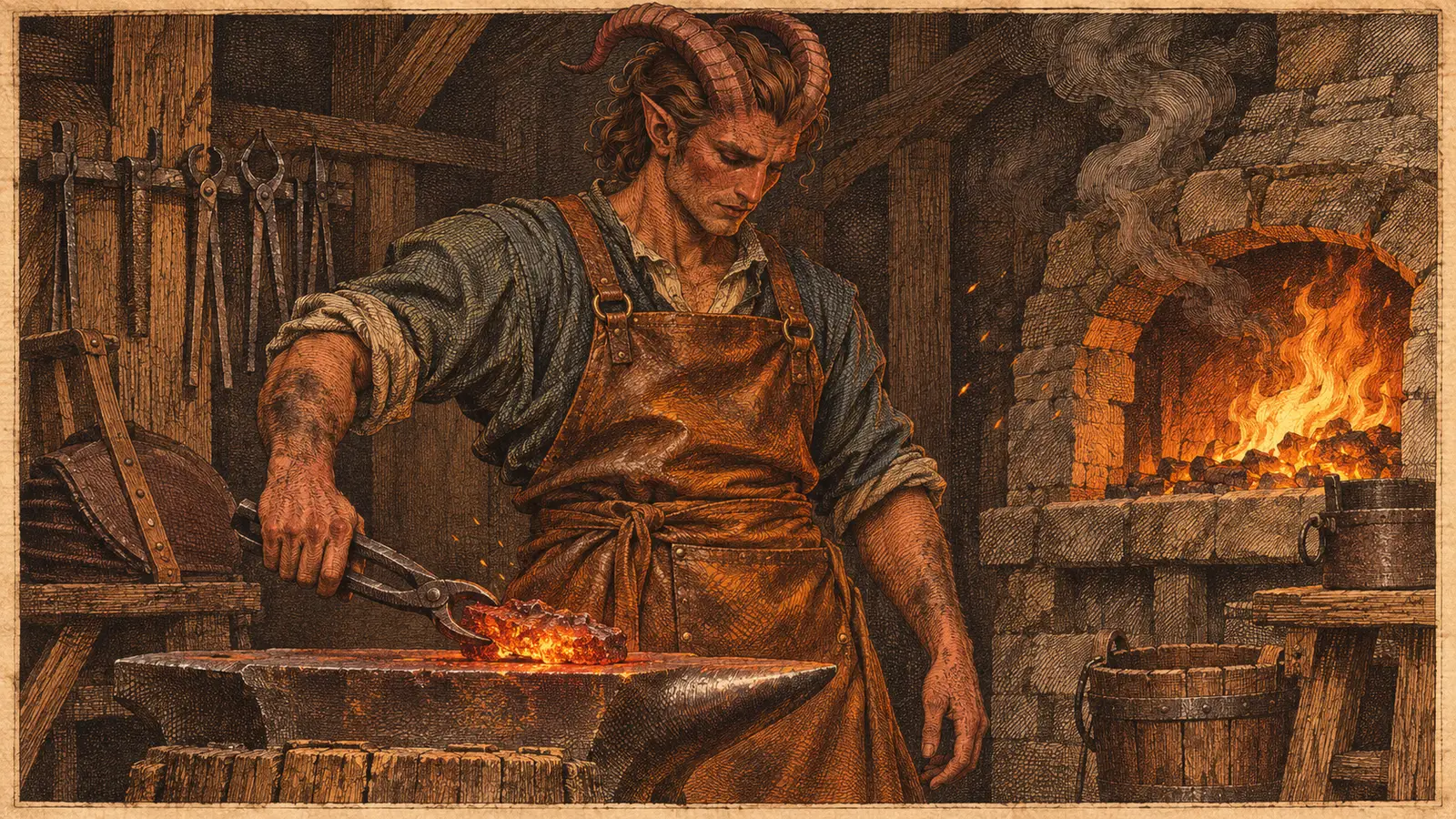
Among the refugees are people whose stories stay with players long after they've left the grove. Mol leads a gang of refugee children who hide in the grove, quick and sly and fiercely protective of each other. is a tiefling blacksmith who works at his anvil in the camp and who, as we'll see, will matter a great deal to one of the game's companions. Arabella and Rolan are among them too.
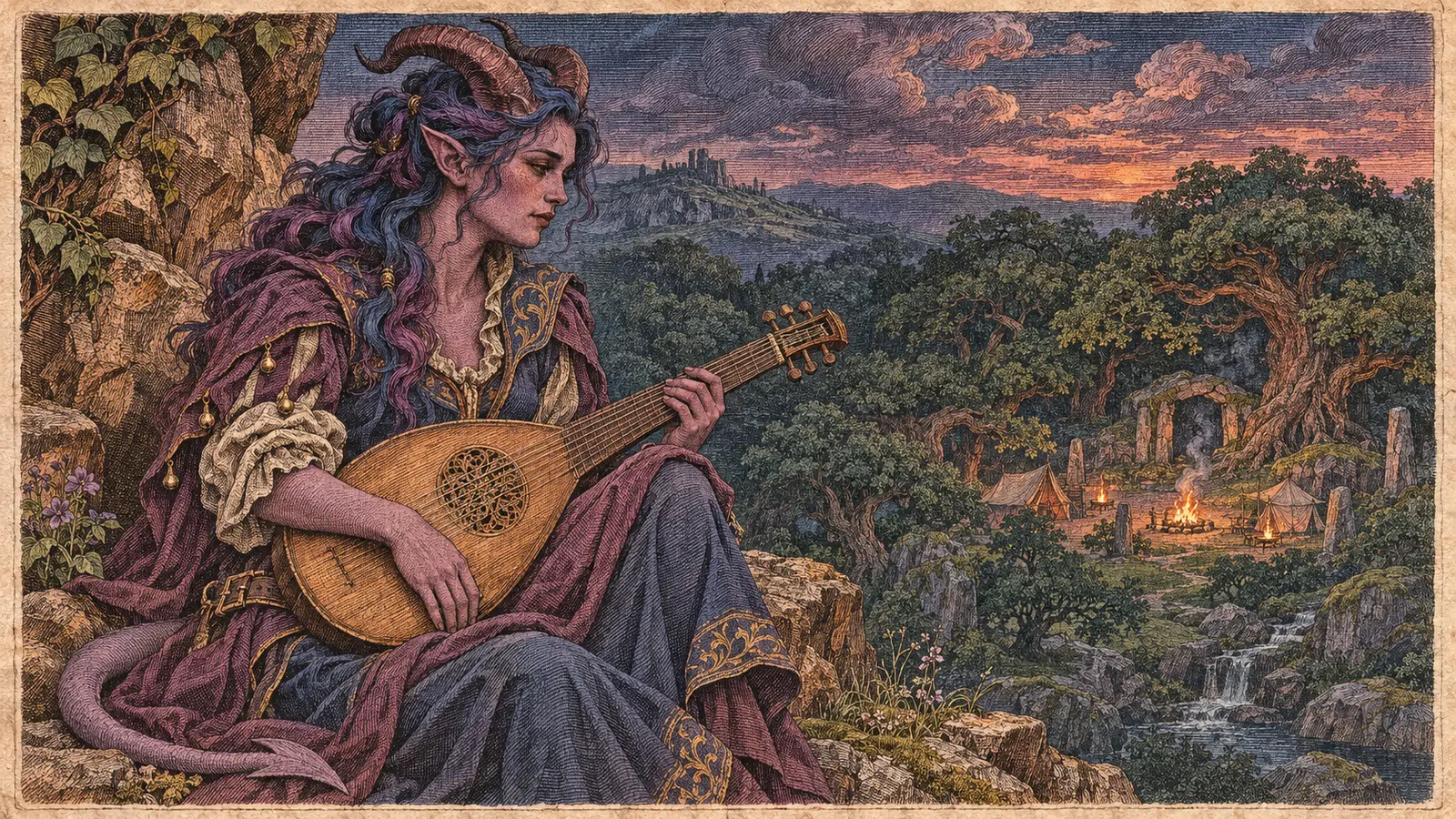
And there is , a tiefling bard who sits alone on a cliff above the druids' ritual, trying to write a song. She was apprenticed to a bard named , and she loves a tiefling named . In some paths through the story, Alfira and Lakrissa find a happy ending together. If you've ever played through that first act, you may remember the evening scene by the fire, and Alfira trying the song again and again, a soft lute line under the noise of the camp.
The refugees appear again in the second and third acts, as they make their way toward Baldur's Gate and try to find a place in a city that isn't sure it wants them. Their story became, for many players, the heart of the game's first act. The quest to protect them is called "Save the Refugees," and the choice it offers, whether to stand with the exiles or not, is one players still talk about.
Then there is .
Karlach Cliffgate is a tiefling of Zariel's bloodline, a barbarian, and one of the game's companions. She was voiced by Samantha . She grew up poor in Baldur's Gate and fought her way through its streets as a child. When she was still young, a man named Enver noticed her and hired her as his bodyguard. She trusted him completely and would have died for him.
Gortash sold her to Zariel. In exchange he received the resources he needed to build his army of Steel Watchers, the great mechanical soldiers that would later patrol the streets of Baldur's Gate. Karlach was taken to Avernus and fought on the front lines of the Blood War for ten years. Picture those years: the red sky, the endless battlefield, the smoke and the screaming engines, and a young woman from Baldur's Gate learning to survive in the worst place in all the planes.
In place of her heart, Karlach carries an infernal engine. It was the original prototype that Gortash used to create the Steel Watchers, which were built in . The engine burns. It burns so hot that no one can touch her, and she can't touch anyone, not a hand on a shoulder, not an embrace, nothing. For a person as warm and open as Karlach, that's its own small hell.
Over the course of the game, with infernal iron and the patient work of Dammon the tiefling blacksmith, her engine can be cooled enough that she can touch others again. It's a quiet, lovely moment when it happens. But the engine can't keep running forever in . Her endings are bittersweet. She may burn out. She may go back to Avernus, either with the player's hero or with , who by then has become the Blade of Avernus. Or she may become a mind flayer, which keeps her alive at the cost of who she was. Later the game expanded her epilogue, giving more shape to what comes after.
Béart has said that the biggest misconception about Karlach is that she's always sweet and cheerful, and that in Hell she was a very different person. That feels true to the tiefling story as a whole. The cheer is real, but it was chosen and fought for, and it sits on top of years nobody should have to live through.
Around Karlach and the refugees, Baldur's Gate 3 gathers other children of fiends, and their stories cast light on the tieflings by contrast.
is a cambion, half mortal and half fiend, and she serves Zariel. She's the warlock patron of Wyll Ravengard, the son of Grand Duke Ulder and a hero known as the Blade of Frontiers. Wyll traded his soul to Mizora for the strength to protect people, and in return she sends him to hunt devils. One clause of his pact stopped him from explaining it to anyone. When his father found him in the company of a devil, Wyll couldn't say a word in his own defence, and he was cast out of Baldur's Gate. At the end of the game's second act, Mizora lifts that silence. Wyll's story mirrors the tieflings' in a sideways way: a young man marked by an infernal bargain, misunderstood and exiled, carrying a debt he took on for other people's sake.
And there is , a cambion devil and the son of the archdevil , lord of . Raphael writes binding contracts for souls. He lives in the House of Hope, a luxurious infernal mansion, where his incubus is magically compelled to wear Raphael's exact face. Raphael wants the Crown of , an ancient artifact of terrible power, so that he can overthrow the archdevils and rule the Nine Hells himself. He's elegant, amused and endlessly patient, the very image of what a devil's bargain looks like from the other side of the table.
Between Raphael's contracts and Mizora's pacts, Karlach's stolen heart and Zevlor's exile, Baldur's Gate 3 tells a story in which the infernal is everywhere and the people most often punished for it are the ones who had the least to do with it.
Players could be tieflings in the game too, and there were three kinds to choose from, each tied to an infernal lord and each mirroring the bloodlines of Mordenkainen's Tome of Foes. A tiefling of could conjure flame from an open hand, answer a blow with hellish rebuke and call up darkness. A tiefling of Mephistopheles had a spectral hand, burning hands and a blade of flame. A tiefling of Zariel had thaumaturgy and spells that set their weapons alight with searing, branding fire. All of them could see in the dark, and all of them shrugged off fire. So when a player made their own tiefling and walked into the Emerald Grove for the first time, they were walking among their own people.
That makes a good place to pause and look at the other branches of the tiefling family: the variants, the cousins and the strange relations who grew up alongside them.
Chapter IX
Many fiends, many children: variants and offshoots
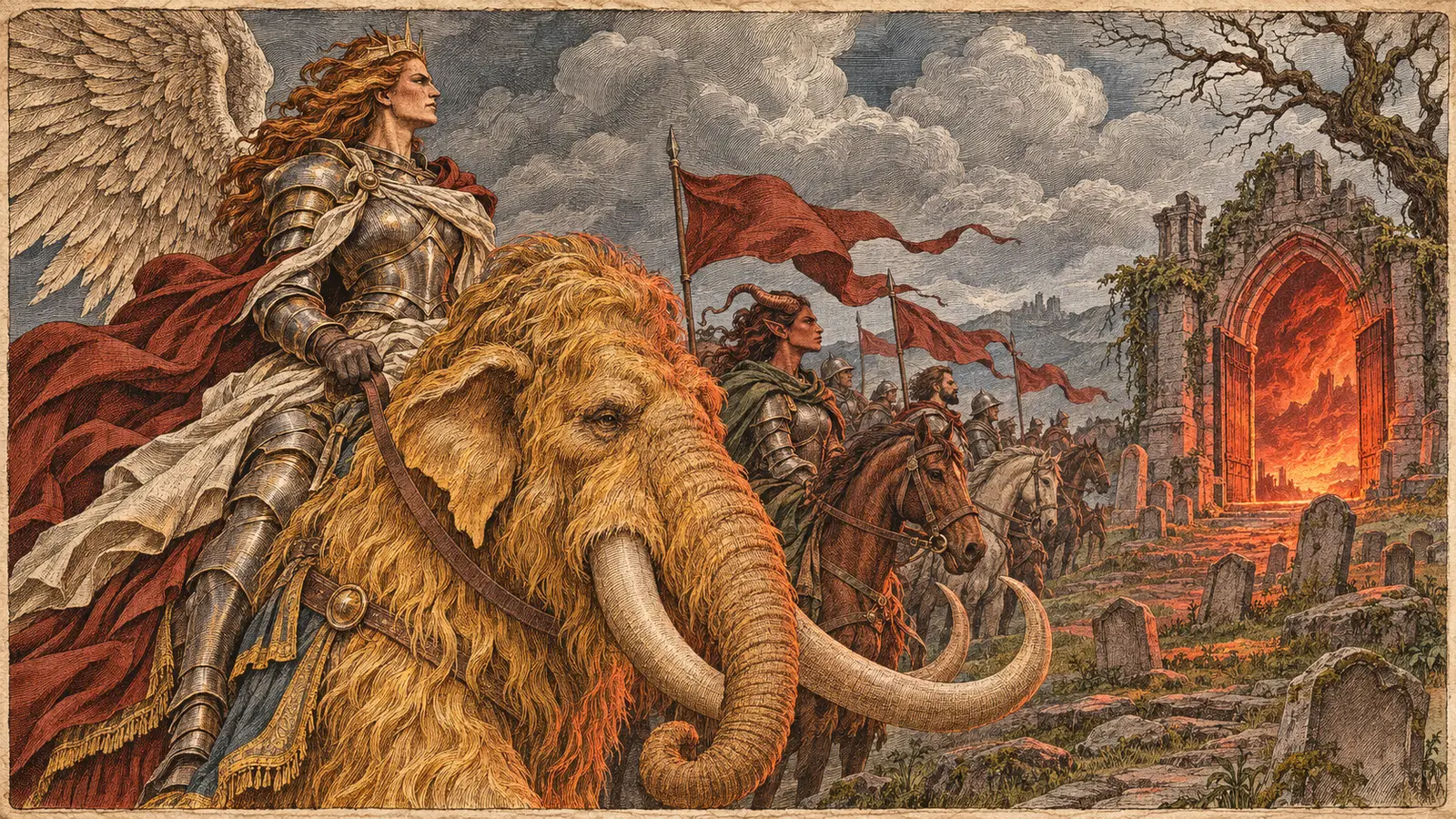
When the Sword Coast Adventurer's Guide said in 2015 that "not all tieflings are of the blood of ," it opened the way back toward the old variety of the Planescape years. With the Dungeon Master's permission, a player could build a tiefling that looked and worked differently from the standard kind.
The first variant was about appearance. Instead of the standard great horns and long tail, a tiefling might carry a handful of fiendish features, two or three or four or five of them, chosen from a list that reads almost like a spell of its own. Small horns. Fangs or sharp teeth. A forked tongue. Catlike eyes. Six fingers on each hand. Goat-like legs. Cloven hooves. A forked tail. Leathery or scaly skin. Red or dark blue skin. Casting no shadow and no reflection. A smell of brimstone.
Some of those features are wonderfully uncanny. Picture a tiefling who looks almost entirely human, except that when she walks past a mirror there's nothing in it, and when she stands in the lamplight the floor around her feet is bare of shadow. Or picture a tiefling with six long fingers on each hand, which she uses with great delicacy to play a lute. These are tieflings in the old Planescape spirit, each one a little mystery of inheritance.
The guide offered other variants too. A feral tiefling was quicker of body, gaining agility in place of the usual force of personality. A tiefling of the Devil's Tongue had a silver, beguiling voice, with magic for cutting mockery, charm and the power to enthral a whole crowd. A Hellfire tiefling's answering flame came out as a fan of burning hands, not the targeted rebuke of the standard kind. And the Winged tiefling gave up the infernal magic altogether and gained a pair of bat-like wings that let them fly. A tiefling could carry only one of these three gifts, the tongue, the fire or the wings, since each replaced the infernal legacy.
The winged tiefling is a striking image to end on. Imagine a figure on a city rooftop at night, horns against the moon, wings folding and unfolding behind her as she watches the streets below.
At the end of 2015, Wizards of the Coast published a playtest article called "That Old Black Magic" in its Unearthed Arcana series, where new ideas were tried out with players before they reached the books. It offered a tiefling of another kind entirely: the abyssal tiefling, whose bloodline traced back to the demons of the Abyss instead of the devils of the Hells.
Abyssal tieflings were hardy, with tough bodies and extra stamina. And their magic reflected the chaos of the Abyss. After each long rest they gained a few cantrips and spells chosen at random from a short list, so that no abyssal tiefling knew from one day to the next exactly what power would rise in them. They spoke Abyssal, the tongue of demons. The same article offered spells for conjuring demons of various kinds, the bloated barlgura and the hezrou, the shadow demon and the vulture-headed vrock. The abyssal tiefling remained a playtest idea at the time and never made it into a book in that form. But the idea didn't go away, and as we'll see, it came back years later as part of the core rules.
That return began with a playtest in August 2022 called Character Origins, which widened the tiefling's ancestry to cover all the Lower Planes once more. It sorted tieflings by the moral character of the planes their ancestors came from: infernal tieflings from the lawful evil planes, abyssal tieflings from the chaotic evil planes, and a new kind, chthonic tieflings, from the neutral evil planes in between. Those three legacies became the shape of the tiefling in the present day, and we'll walk through them when we reach it.
Now let's step sideways and look at the tiefling's wider family, the planetouched.
The aasimar we've already met: humans with celestial blood, the bright mirror of the tiefling. The genasi too: humans with the blood of the elements, fire or water, earth or air. But third edition spread the family wider still. In 2002 the Monster Manual II introduced the chaond and the zenythri, descended from beings of pure chaos and pure law. That same year the genasi returned as player races in Dragon magazine.
Then, in 2003, the Fiend Folio introduced tieflings for other peoples. The maeluth were dwarves descended from devils. They look like sturdy dwarves, but their diabolic heritage shows: red eyes, perhaps, or unusually long fingers, or bodies nearly hairless, which in a dwarf is a strange sight indeed. Picture a dwarven forge-hall where one smith works with no beard at all, his long fingers sure on the tongs and his red eyes reflecting the coals. That's a maeluth. The wispling was the halfling's counterpart to the tiefling, a small, quick person with fiendish blood. The same book offered other planetouched kin as well, the mechanatrix and the shyft. So the idea at the heart of the tiefling, that a person might carry a distant ancestor from another plane, turned out to apply to nearly any people in the world.
The two most storied of these cousins come from the Forgotten Realms, and they deserve more of our time. They are the fey'ri and the tanarukk.
The fey'ri are elves corrupted by demon blood. They are to elves what tieflings are to humans. Some fey'ri look entirely elven, beautiful and ageless and unremarkable. Others carry the marks of their blood: fangs, forked tongues, horns or barbed tails in various combinations. A few have extra arms, and a few have wings, one pair or more. They're also called the daemonfey, a name that belongs both to their organisation and to all who descend from the royal demonic blood of one particular elven house.
That house was House Dlardrageth, a noble house of sun elves, the gold elves, in the ancient elven realm of . They were proud and powerful, and they wanted to be more so. To strengthen their bloodline, as they saw it, they summoned demons to father half-fiend children. Their lair was hidden beneath a place called Ascal's Horn.
Some four and a half thousand years before the Realms began counting the Dalereckoning, the elven realm of , joined by the High Mages of , struck at House Dlardrageth. That attack, and Siluvanede's retaliation for it, became a long and bitter conflict called the Seven Citadels' War. When it was over, Dlardrageth, the house's matriarch, and her sons, among them , were captured and imprisoned in the Nameless Dungeon beneath . They stayed there for more than five thousand years.
Some of the house's kin escaped that fate. They hid in elven society, keeping their blood secret, and founded new daemonfey houses of their own. House was one of them. Imagine an elven court of silver and moonlight where some of the most graceful nobles carry, unseen, a demon's blood that has been hidden for thousands of years.
Above the Nameless Dungeon, Ascalhorn went on with its own history. It became a fair citadel and a haven for both elves and humans. Then a horde of demons and devils overran it, and it became Hellgate Keep, a fortress of fiends. Later still Hellgate Keep fell and was destroyed. Today only a blasted dell remains where it once stood.
In the Year of the Gauntlet, the same year was trying to steal his portal gem in , Sarya Dlardrageth escaped at last. She hid with her half-fiend son beneath , an ancient city of Siluvanede, and later went to ground in the ruins of , the great fallen elven city. Her spymaster was , a fey'ri. Her daemonfey marched against the elven refuge of and were driven back from its gates, and driven back again at the Lost Peaks and on the Lonely Moor. They left their stronghold. But they grew stronger after thousands of fey'ri warriors were freed from the Nameless Dungeon, where they had waited in the dark all that time.
These events are told in novels. Troy Denning's Return of the Archwizards trilogy, made up of The Summoning, The Siege and The Sorcerer, published between 2000 and 2002, features Evereska and the daemonfey. Richard Baker's Last Mythal trilogy, which includes Forsaken House and Farthest Reach, tells more of the story. The fey'ri first had game statistics in Monsters of Faerûn in 2001, and in 2003 Races of Faerûn made them a race players could choose. They saw in the dark, they couldn't be put to sleep by magic, and they resisted enchantment, as befits the elven half of their heritage. In the fourth edition they were framed in relation to the eladrin, the high elves of that edition, but the idea stayed the same.
The fey'ri give the tiefling story a long mirror. Here is a people whose fiendish blood didn't come from a random distant ancestor or a mysterious accident, but from a deliberate choice by their nobility to bind themselves to the Abyss for power. That should sound familiar. It's the story of told in elven silver.
The tanarukk are a rougher kind of cousin. They're orcs with the blood of evil outsiders, usually demons. They're short and stocky, with bristly hair and horns or bony ridges along the sides of their heads. They began as orc-demon crossbreeds bred inside Hellgate Keep, the same fallen citadel above the daemonfey's prison, as soldiers for the fiendish overlords who ruled there. Over long generations on , they came to be seen as a race of their own, distinct from orcs and distinct from tieflings.
The most famous tanarukk force was the Scoured Legion, a host of around two thousand tanarukk warriors, backed by bugbears, ogres and giants. Its leader was , a cambion, who styled himself "the Sceptered One and Master of the Scoured Legions." The Legion first held Hellgate Keep. After the keep fell, it moved down into the Underdark, to the ruined dwarven city of . Those of you who travelled with us through the Underdark will remember how deep and dark those roads run, and how many ruined cities lie along them. The Legion stayed in Ammarindar for many years, until around the Realms' year 1372. Kaanyr Vhok and his tanarukks also play their part in the War of the Spider Queen novels, which were published between 2002 and 2005 and follow the dark elves of the Underdark through a time when their goddess fell silent.
So the family of the tiefling turns out to be very large. There are the tieflings themselves, with their many bloodlines and variants, and there are the aasimar and genasi, the chaond and zenythri, the maeluth and wisplings, the elven fey'ri and the orcish tanarukk. Behind all of them stands the same old idea from the night stories of medieval Europe: a child who carries something from elsewhere.
Now let's step away from the lore for a while and sit down at the table, where tieflings are rolled up, played and faced.
Chapter X
Tieflings at the table
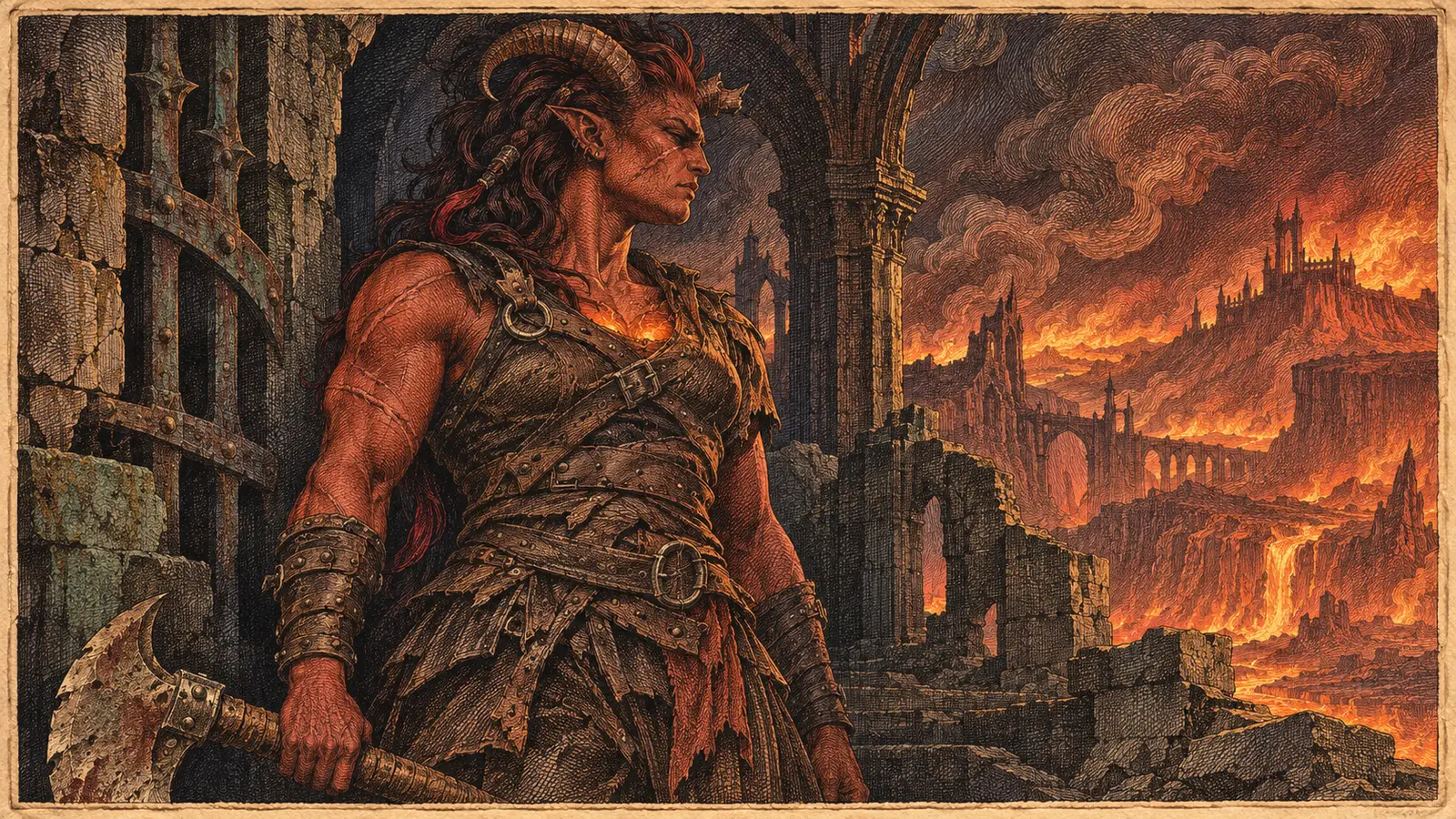
Playing a tiefling has always felt a little different from playing anything else, and the feeling has changed from edition to edition in ways that echo the lore.
In the second edition, a tiefling player sitting down with The Planewalker's Handbook had a choice. They could take the standard gifts, the darkness and the resistance to cold and the protection from fire, lightning and venom. Or they could put those aside and roll. Five rolls on the abilities table, one to four rolls on the appearance table, and out came a character nobody had ever played before. One player might end up with a horn on the forehead, red eyes, sight in the dark to a hundred and twenty feet and resistance to acid, and spend the rest of the campaign wondering what kind of fiend leaves that kind of trace. In practice no two tieflings looked or worked alike, and players found a strange delight in their characters' strange inheritances. The dice were acting out the lore: you don't choose what the blood gives you.
In the third edition the feeling changed. The tiefling was nimble and clever and good at lying and hiding, but other people found it unsettling, and the rules said so. A tiefling had a harder time charming a crowd than an ordinary human, and that weakness was written into the character. It was a fine fit for a rogue or a scout or a wizard who preferred to work quietly. Because of all its gifts the tiefling also counted as a little more powerful than an ordinary starting character, and a player who chose one advanced a touch more slowly to make up for it. Third-edition tieflings were also used as foes, drawn from the Monster Manual as villains and allies of uncertain loyalty.
In the fourth edition, a tiefling at the table felt like a predator. Bloodhunt meant they struck truer against a foe who was already badly hurt, so a tiefling fighter or warlock was always watching the battlefield for the enemy who was beginning to falter. Infernal Wrath meant that when an enemy within reach struck them, they could answer with a burst of fire. A good fourth-edition tiefling player learned to bide their time, take the hit and answer it.
The fifth edition of 2014 gave the tiefling a gentler, more expressive feel. With a gift for force of personality and a little extra intellect, they made natural spellcasters who drew on charm and will. They could see in the dark. Fire did them less harm. And thaumaturgy, their little cantrip, gave them all sorts of eerie flourishes: a voice that booms, candles that flicker or flare, eyes that change colour for a moment, an unlocked door that flies open on its own. Players loved it. A tiefling might use thaumaturgy to make a dramatic entrance into a tavern, to frighten a bully, or just to make a friend laugh by turning their eyes gold for a moment. And fire resistance meant a tiefling could walk calmly through flames that sent everyone else running, which is a wonderful image to put on a battlefield.
Mordenkainen's Tome of Foes gave players another layer: the choice of which archdevil's mark their character carried. A player who wanted a tiefling paladin might choose 's line, with its strength and smiting magic. A player who wanted a thief might choose . A player who wanted a spy might choose , with disguises and thought-reading. Every choice came with a lord of Hell and a layer of the Hells, and so with a story waiting to be told.
Some patterns have become so common that they're almost traditions. On D&D Beyond, the online toolset where many players build their characters, the tiefling ranks fourth among all species in the data from 2023, behind only humans, elves and dragonborn. The class tieflings choose most often by far is the warlock, with the sorcerer next. Rogue, the class once most closely linked to tieflings, has dropped to fourth place for them. It's easy to see why the warlock fits so well. A warlock is someone who has made a pact with a powerful otherworldly patron, often a fiend, and draws power from it. For a tiefling, who carries the legacy of an ancient pact in their very blood, choosing to make another pact is a story that almost tells itself. Commentators have called the tiefling warlock about as standard a pairing as a player can make.
The themes players bring to the table are just as consistent. stories so often turn on overcoming prejudice: the shopkeeper who watches too closely, the watchman who follows too long. They turn on found family, the companions who come to see past the horns. They turn on hidden or uncertain ancestry, and on choosing goodness in spite of a devilish appearance. A tiefling paladin who has sworn an oath to protect the very people who spit at her in the street, a tiefling cleric whose god accepted him when no village would, a tiefling bard who uses thaumaturgy to make children laugh: these are the kinds of characters that tables everywhere keep returning to.
Two tieflings from the actual-play show Critical Role became especially well known. In the show's second campaign, which streamed from 2018 to 2021 and followed a band of misfits called the Mighty Nein, two of the nine were tieflings.
, played by Laura Bailey, is a blue tiefling cleric of a mysterious god called the Traveler, who later turns out to be an archfey named . She grew up in the Lavish Chateau in the port city of , where her mother is a famous courtesan known as the Ruby of the Sea. Jester is joyful and mischievous. She loves elaborate pranks. She carries a sketchbook everywhere and draws in it constantly, and she has a tremendous sweet tooth. She's about as far from the grim, brooding tiefling of old stereotype as a character can be, and yet her cheer has depths, a loneliness from a childhood spent mostly in one room, and a fierce loyalty to her friends.
, played by Taliesin Jaffe, is a lavender tiefling blood hunter and tarot reader who travelled with the Fletching and Moondrop Traveling Carnival of Curiosities. He was a flamboyant showman and something of a con artist, with a missing past he chose not to dwell on. He lived as if every day were a performance, in a coat embroidered with patterns and covered in jewellery and charms. He died early in the campaign, while his companions were trying to free friends taken by slavers, and his death was a deep grief for many viewers. In the campaign's final episode, the person who had once lived in that body, Kingsley Tealeaf, awakens. Molly, the bright and laughing persona, is gone, but his story isn't quite over.
Both of these characters play against the grim old picture of the tiefling, and both show how far the idea has travelled since a saying warned you never to make a bet with one.
A Dungeon Master meets tieflings from the other side of the table, and across the editions they've appeared in every possible role. They are cult leaders and heretics, assassins and crime lords. They're the Tiefling Heretic throwing balefire from the back of a ruined temple, and the Tiefling Darkblade with a poisoned short sword. They're the crime lords of the roughest quarters described in the 2014 book. But they're just as often sympathetic figures: a shopkeeper in Sigil who sells portal keys, a refugee in a druid grove, a tout who'll guide you through the Cage for a fair price.
When a party does face a hostile tiefling, the old lessons hold. Fire won't work as well as you'd like. In the earlier editions, cold and lightning were blunted too. Expect magical darkness to fall at a bad moment, since every edition has given the tiefling that gift in one form or another. And expect that when you strike a tiefling, it may strike back with a flash of hellfire, the Infernal Wrath of the fourth edition or the hellish rebuke of the fifth. A careful party learns to respect that.
A tiefling at the table, in the end, is often the character a player picks when they want to tell a story about being misjudged. They're the one who walks into a village and watches the doors close, and then spends the rest of the evening proving everybody wrong, or right, depending on how the dice fall and how the player feels that night.
Chapter XI
Horns beyond the table: the wider legacy
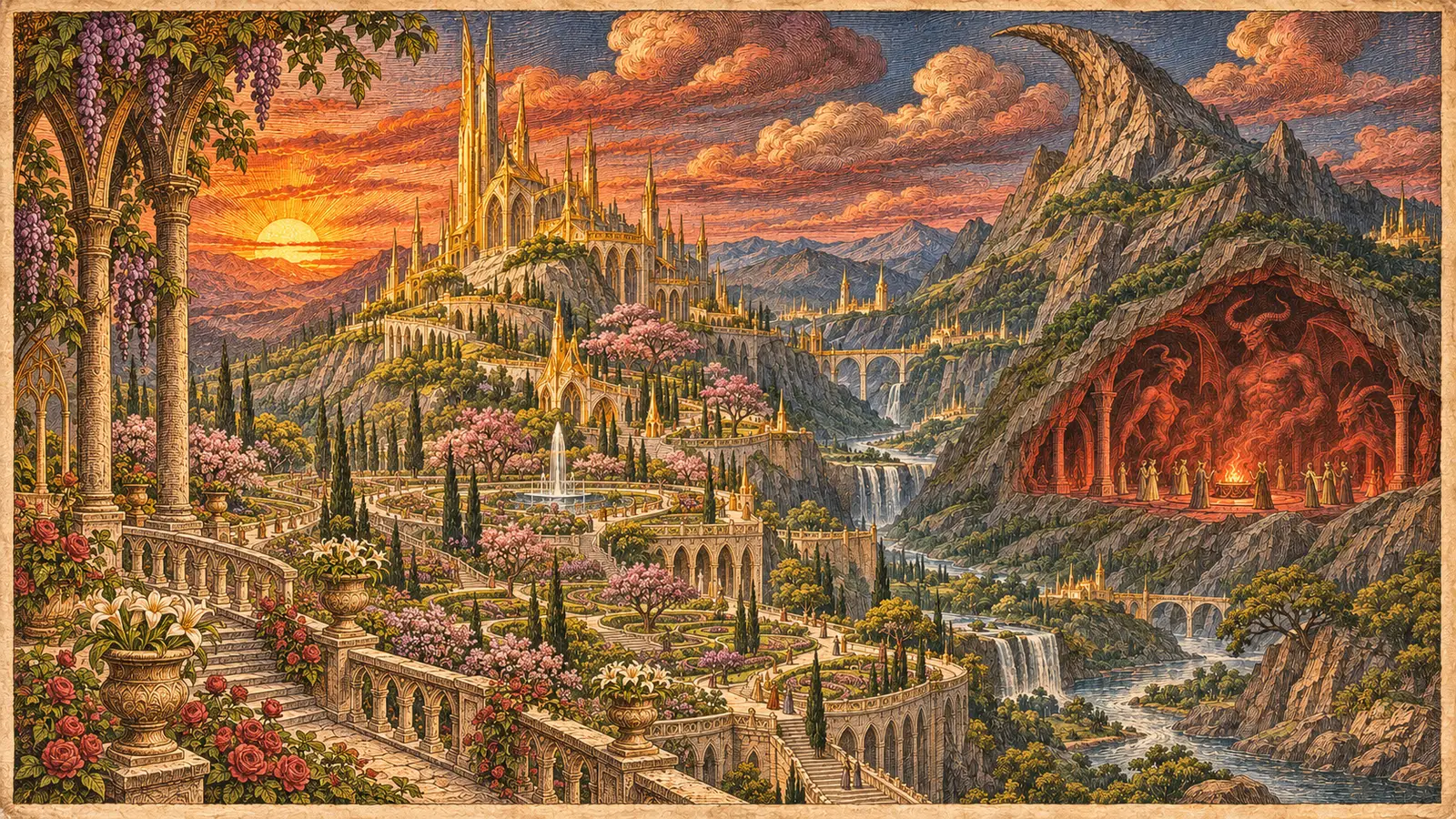
Over three decades the tiefling has walked out of the rulebooks and into the wider world, and a great many people who've never rolled a die know what one looks like.
Video games did much of that work. We've already met of Planescape: Torment, the sharp-tongued tiefling of the Hive, and , the theatrical Doomguard bard of Baldur's Gate II, and , the rogue of Neverwinter Nights 2 whom players first meet as she's being set upon for her heritage. Tieflings have been playable in later Dungeons and Dragons games too, among them the online game Neverwinter and Sword Coast Legends. But no game carried tieflings as far as Baldur's Gate 3.
Baldur's Gate 3 was released on PC on the third of August, 2023, and on other platforms over the following months. At The Game Awards that December it won six awards from its nine nominations, including Game of the Year. It became the first game to take the top honour at all five major industry ceremonies in a single awards season. It has sold more than twenty million copies, and at its peak on Steam close to nine hundred thousand people were playing it at once.
That means a vast number of people met the tieflings of as their first picture of the race. And what they met weren't sinister figures in dark alleys. They met people fleeing hardship and prejudice: trying to hold his people together, Mol and her band of children, and her unfinished song, at his anvil. They met , warm and loud and brave, with a heart that burns too hot to touch.
Karlach became one of the game's best-loved characters. Fans gave her the affectionate nickname "flammable, lovable," and she's one of the companions players most often choose to romance. Samantha , who voiced her and who is non-binary, recorded more than two hundred and sixty hours of motion capture for the role. Béart was longlisted for a BAFTA in the category of Performer in a Leading Role, and was named to the BAFTA Breakthrough cohort, the first performer whose breakthrough project was a video game.
Novels have their own place in the tiefling's legacy. Erin M. Evans's Brimstone Angels saga remains the best-known body of prose built around tieflings, with and , their dragonborn father and the cambion , whose bargain shadows all six books.
In March 2023 the tiefling reached the cinema. Dungeons and Dragons: Honor Among Thieves, released by Paramount, included a tiefling druid named , played by Sophia . Doric's human parents abandoned her as a girl because of her infernal nature, and she learned to survive alone in the wild. In the film she becomes the conscience of a band of thieves and outlaws. Lillis described her as the lawful-good "straight man" of the group, the steady one among the schemers. As a druid she changes her shape in the film, becoming a fly, a mouse, a deer and, most memorably, an owlbear, a great feathered bear that crashes through a set piece to the delight of anyone who has ever met one at the table. Her horns were magnetic, attached to a wig, and her tail was added digitally afterward. A prequel novel by E. K. Johnston, The Druid's Call, tells her story before the film begins.
In November 2025 the tiefling reached animation. The Mighty Nein, an animated series based on Critical Role's second campaign, premiered on Prime Video on the nineteenth of November, in more than two hundred and forty countries and territories. Its first three episodes were "Mote of Possibility," "Who Will You Be?" and "The Fletching and Moondrop Traveling Carnival of Curiosities," which brought Mollymauk's carnival to the screen. New episodes arrived weekly until the season's finale on Christmas Eve. The original cast returned to voice their characters, with Laura Bailey as Jester and Taliesin Jaffe as Mollymauk, so the two tieflings who had lived for years in people's imaginations now had faces and colours and movement of their own.
The tiefling's influence even reached beyond Dungeons and Dragons itself. Paizo's Pathfinder game used tieflings and aasimar for many years. After a dispute over the licence that let other companies use Dungeons and Dragons material, Pathfinder's 2023 remaster replaced them both with a new ancestry, the nephilim, which covers anyone with mixed angelic or fiendish blood. The name changed, but the idea it carries, the mortal child of distant celestial or infernal ancestors, came straight out of the old Planescape line.
Over the decades, the image of the horned and tailed outsider has travelled from the alleys of out into the wider world of fantasy through games, novels, actual-play shows, film and animation. For many people now, the tiefling is no longer a strange planar creature. It's a familiar figure: the outsider who might be the bravest person in the room.
Chapter XII
The present day: fiendish legacies and the road ahead
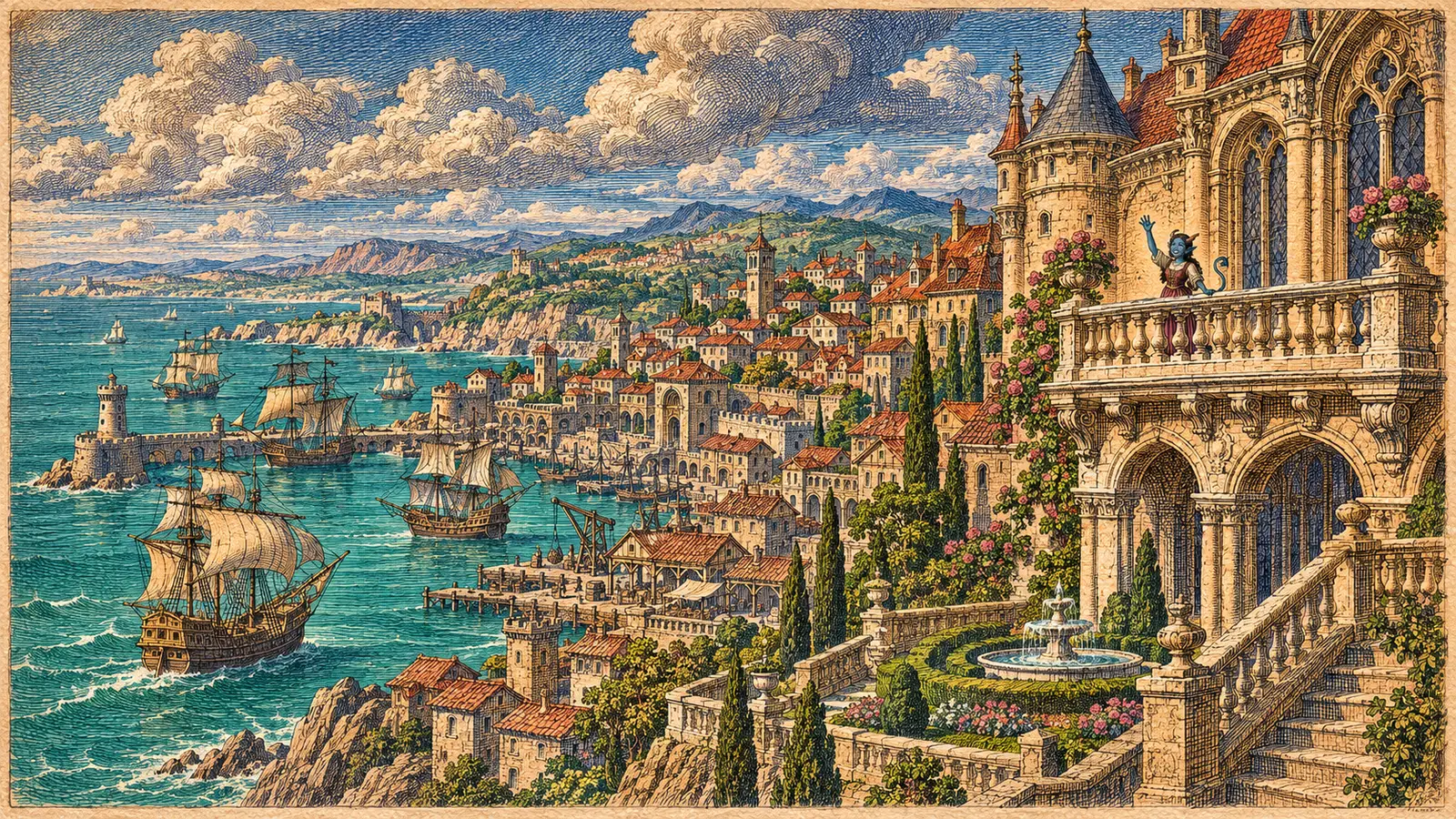
We come now to the present, and to the tiefling as it stands today.
On the seventeenth of September, 2024, Wizards of the Coast released a new Player's Handbook. During its development it had been called One D&D, and it had been playtested openly for a long time, with players filling in surveys on each new idea. Their feedback shaped many of the changes.
Two changes reached deep into the tiefling. The book no longer speaks of races. It speaks of species. And the old link between your people and your natural talents has been loosened: the bonuses to strength or wit or charm that once came with being a tiefling now come from your background, from the life you lived before you became an adventurer. A tiefling raised in a library and a tiefling raised in a forge no longer need share the same strengths.
The tiefling is one of ten core species in the new book, alongside the aasimar, the dragonborn, the dwarf, the elf, the gnome, the goliath, the halfling, the human and the orc. For the first time the tiefling and its celestial mirror, the aasimar, stand together in the core book.
The 2024 book tells the tiefling's story in a new and simpler way. Tieflings are either born in the Lower Planes or have fiendish ancestors who came from there. They are linked by blood to a devil, a demon or some other fiend. That link is called the tiefling's fiendish legacy. And the book adds the line that may be the most important sentence written about tieflings in their whole history: this legacy "comes with the promise of power yet has no effect on the tiefling's moral outlook." The inheritance is real, but it doesn't decide who a tiefling becomes.
Tieflings today often have pointed ears, horns, tails and glowing eyes, and their look can vary with their legacy. A tiefling can now be of ordinary human size or small, which is new. Every tiefling sees in the dark. And every tiefling has what the book calls an Otherworldly Presence, which gives them thaumaturgy, the little magic of booming voices and flickering flames and doors swinging open on their own. A player can choose whether that magic, and the magic of the legacies, flows from the tiefling's intellect, wisdom or force of personality.
The old bloodlines of the nine archdevils have been replaced by three legacies, and each one carries its own geography of the Lower Planes.
The first is the infernal legacy. These tieflings descend from devils and are tied to the lawful evil planes, the Nine Hells and the warlike plains of . They often have horns and spines, tails, golden eyes and a faint smell of sulphur or smoke. Fire does them less harm. They can hurl a bolt of fire from the start, and as they grow they gain the hellish rebuke and the darkness that tieflings have carried for so long. This is the tiefling most people picture, the heir of and of .
The second is the abyssal legacy, the old playtest idea from 2015 returned at last. These tieflings descend from demons, and in the book's words, "the entropy of the Abyss, the chaos of , and the despair of " call to them. They often have horns, fur, tusks and peculiar scents. Poison does them less harm, and they can spray venom from an open hand. As they grow they gain a ray of sickness and the power to hold a person still. Picture a tiefling with shaggy fur on her forearms and short tusks, who smells faintly of rain on stone, and who is entirely unbothered by the snake that bit her this morning.
The third is the chthonic legacy, the newest of the three. These tieflings descend from the fiends of the neutral evil planes, night hags and yugoloths and others, and they feel, as the book puts it, "the tug of Carceri but also the greed of and the gloom of ." Some look cadaverous. Some have the unearthly beauty of a succubus. Some share features with a night hag or a yugoloth. Death's cold does them less harm, and from the start they can reach out with a chilling touch of necrotic energy. As they grow they can wrap themselves in false life and draw the strength out of a foe. Imagine a pale, quiet tiefling with grey-tinged skin and eyes like still water, who smells faintly of old paper and cold earth, and who makes no sound when she walks.
So the present-day tiefling, in a way, has come full circle. In 1994 a tiefling might descend from any fiend of the Lower Planes. Through the fourth edition and much of the fifth, the tiefling was mostly the child of Asmodeus. Now the door has opened again, and a tiefling can trace their blood to devils, demons or the stranger fiends in between, and choose, at the same time, what kind of person to be.
In the Forgotten Realms, the story has gone on too. On the eleventh of November, 2025, Wizards of the Coast published two new Realms books, Forgotten Realms: Heroes of Faerûn for players and Adventures in Faerûn for Dungeon Masters. They were among the first official Forgotten Realms books in more than a decade. Heroes of Faerûn presents the core species through 's own cultures and history, and the tieflings of the Realms there still carry the shadow of 's fall. The exile of Elturel's tieflings, 's long walk west, the refugees in the Emerald Grove: all of it is now part of the Realms' memory, and the tieflings of Faerûn live with it.
Looking ahead, Wizards of the Coast announced in March 2026 a roadmap of seasons for the year, each built around a theme. An official crossover with the world of World of Warcraft is announced for the seventeenth of November, 2026. And at Gen Con in the summer of 2026, plans for 2027 were announced, including the return of the Dark Sun setting, a Greyhawk book called Greyhawk: Crown of the Witch Queen, and a program called D&D Icons. None of these announced books is built around tieflings, and no new Planescape book has been announced. For now the tiefling rests where the 2024 book left it, one of the ten core species, with its three legacies and its freedom to choose.
Chapter XIII
Horns in the lamplight
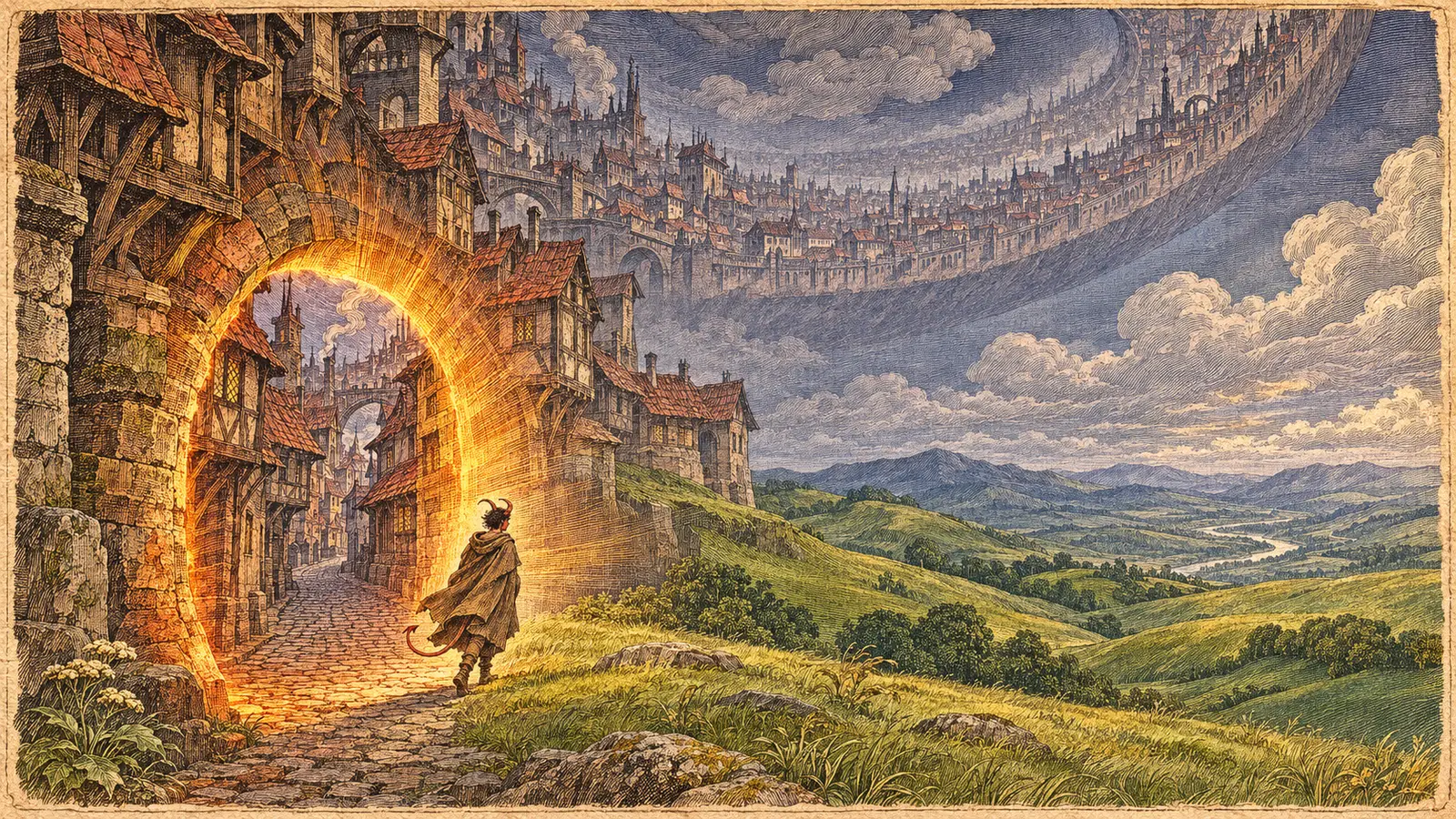
Let's end the evening somewhere quiet.
Picture a small tavern at the edge of a town, late, after most of the customers have gone home. The fire has burned low, and a single lamp hangs from a beam above a corner table. A tiefling sits there alone with a cup of something warm going cold between her hands. The lamplight catches the curve of her horns and throws their shadow, long and dark and a little crooked, across the wall behind her. Anyone glancing in through the window would see the shadow first, the horns of a devil stretched across the plaster, and might keep walking.
But she isn't thinking about devils. She's thinking about the road tomorrow, and a letter she means to write, and whether the friend she's waiting for will come in from the rain before the fire goes out.
That shadow on the wall is old. It goes back to a night spirit in a medieval story, and to 's mother waking in the dark. It goes back to the borrowed seed of the Malleus Maleficarum, and to the cambions and alu-demons of the old monster books. It goes back to a word gave to Zeb Cook, a child of the depths, and to the many-shaped tieflings of , whom the whole city blamed for everything and who climbed holy mountains anyway because nobody had told them they couldn't. It goes back to the nobles of dreaming of a ritual that would make their rule eternal, and to the thirteen warlocks of , and to a fallen angel on a golden mastodon riding through a gate into the fire.
None of that is the tiefling's doing. The pact was made by someone else, long ago. The sin, as the old book said, is ancient, and the blame was handed down like an heirloom nobody wanted. Through all the editions, all the redesigns and all the new legacies, that has stayed the one constant: the blood is inherited, and the choice belongs to the tiefling.
Some of them chose names for themselves when they were young, to have something of their own to carry. Hope. Music. Poetry. Reverence. A few, honestly, chose Weary, or Nowhere, and then went on living, and made those names into something gentler than they first sounded. grew up in the alleys of the Hive with a twitching tail and a sharp tongue, and she still walked beside a stranger who needed a guide. came home from ten years in Hell with a heart too hot to touch, and she laughed louder than anyone at the fire.
The legacy is like an ember, carried forward from one generation to the next. It warms, and sometimes it burns, but it doesn't command. What it lights is up to the one who holds it.
In the tavern the door opens, and the rain comes in for a moment, and the friend she was waiting for shakes the water from his cloak and sits down across from her. She smiles, and the shadow of her horns on the wall moves a little as she leans forward to listen. Then it settles, and stays there in the lamplight, quiet and warm, as the fire burns down.