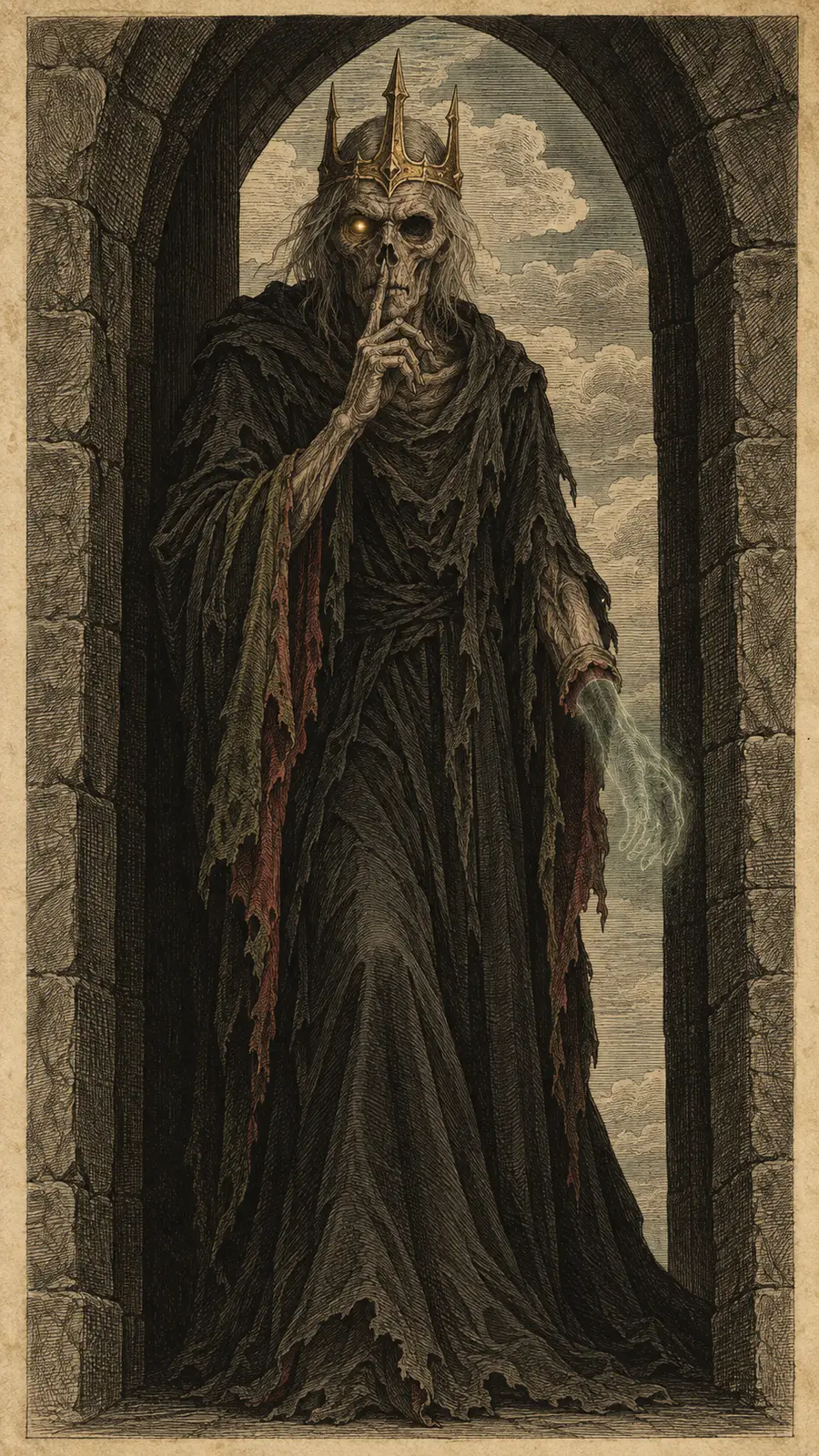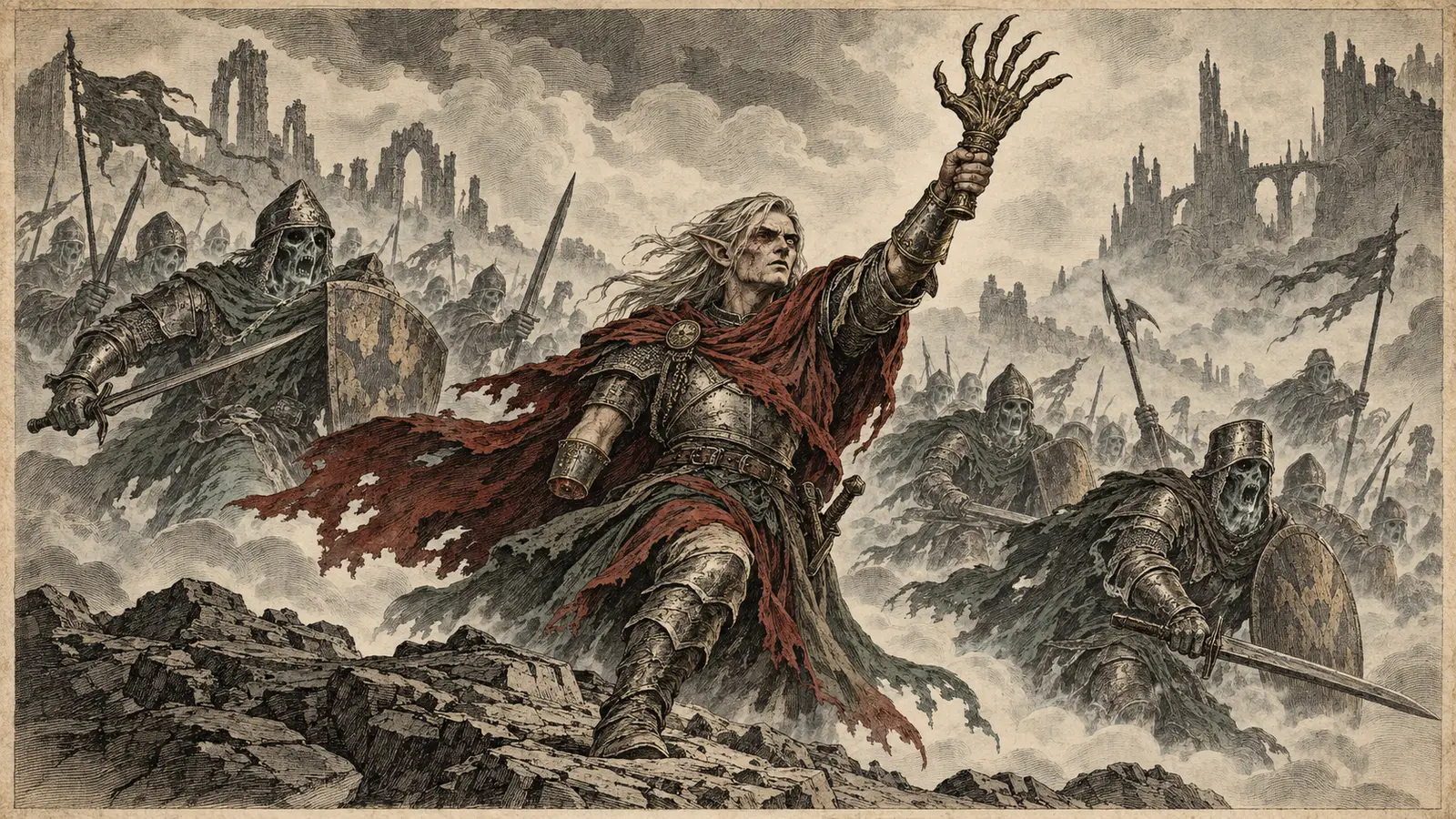
Chapter I
Three streams and a buried name
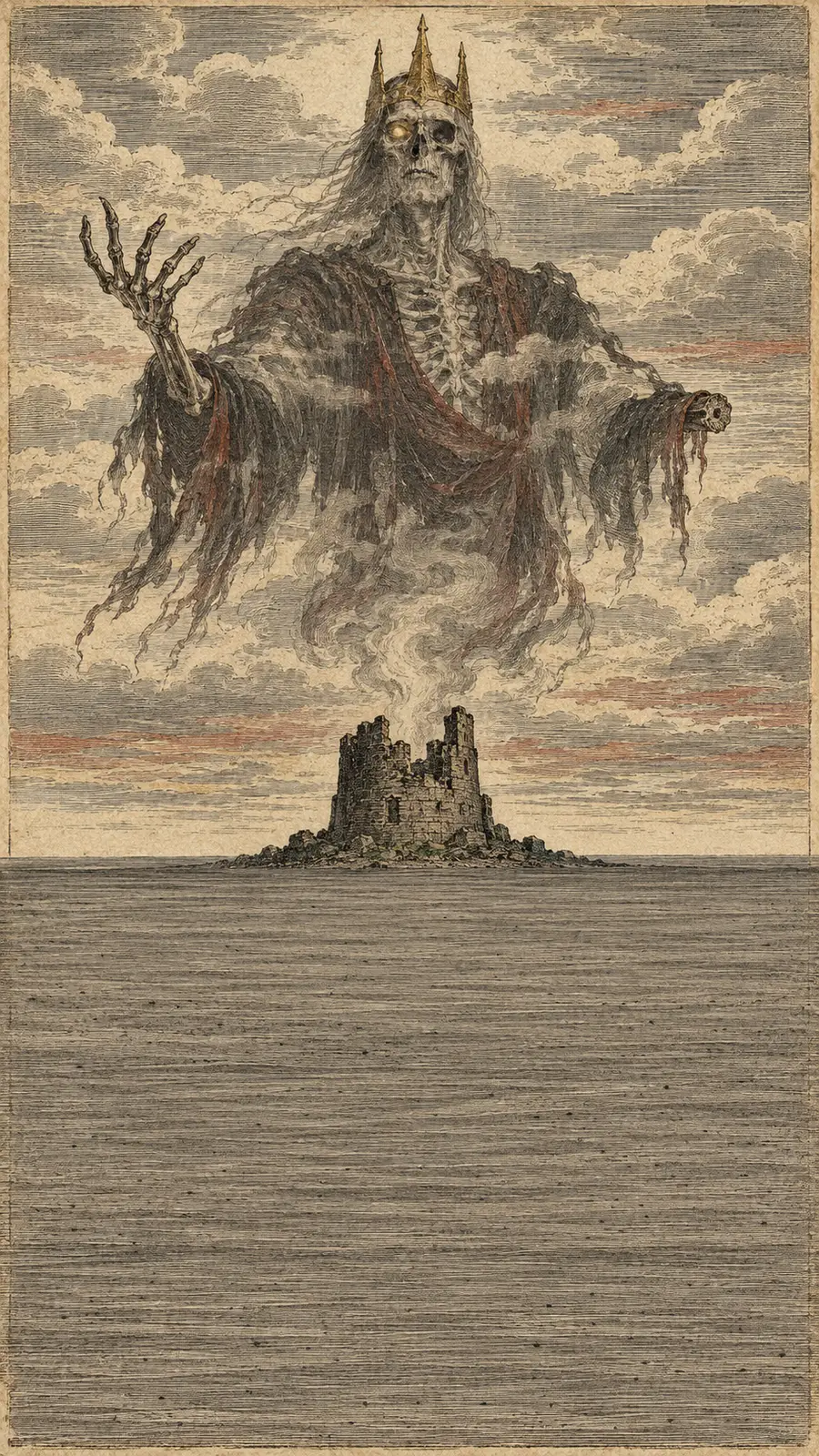
Before there was a , there were three older stories, and it helps to picture them as three streams coming down from different hills toward the same dark pool. None of them knew about the others. Each of them carried something the game would later need.
The first stream is a name. Take the letters of Vecna, turn them gently in your hand, and they rearrange into . Jack Vance was an American fantasy writer whose Dying Earth stories are set at the far end of time, when the sun has grown red and tired and the world is full of strange wizards living among the ruins of older ages. In one of those stories, "Turjan of Miir," the wizard Turjan keeps books that hold "the syllables of a hundred powerful spells, so cogent that Turjan's brain could know but four at a time." Each morning he chooses which four to carry. Once he speaks a spell, it leaves him, and he has to study it again before he can use it a second time.
Gary , co-creator of Dungeons & Dragons, loved these books. He had been a Vance reader since picking up Big Planet in the early nineteen-fifties, and he later said he was "absolutely enthralled" by The Eyes of the Overworld. He put the Dying Earth on his famous list of inspirations at the back of the first Dungeon Masters Guide, and he built the game's wizards on Turjan's habit. In Dungeons & Dragons a spell is memorized, spent when it's cast, and learned again before it can be used once more. Players still call this Vancian magic. So the greatest lich in the game carries, hidden in his name, a folded-up tribute to the writer whose spells shaped every wizard at the table. There's a quiet fittingness in it. A name tucked inside another name is exactly the kind of small secret the Whispered One would come to prize.
The second stream is a hand and an eye. In the early nineteen-seventies the British writer Michael began the books, part of his long Eternal Champion cycle, with The Knight of the Swords. Its hero, Corum Jhaelen Irsei, is the last of the Vadhagh, a long-lived and gentle people with a little magic, who spent their centuries on art and poetry. Men, whom the Vadhagh call the Mabden, come with fire under the savage Earl Glandyth-a-Krae and slaughter Corum's family. Corum tries to take revenge and is captured. His captors cut off his hand and put out his eye before he escapes.
Then comes a bargain. A mad sorcerer named , very nearly immortal, holds a woman named Rhalina hostage and offers Corum two relics to replace what he lost. One is the Hand of Kwll, which has six fingers. The other is the Eye of Rhynn. Kwll and Rhynn were a pair of gods, and their leftover parts still carry power. Through the Eye, Corum can look into a dim netherworld of the dead, a grey place that might be limbo or one of the endless hells. With the Hand he can reach into that place and call up the last beings he killed, and they come out to fight for him.
Hold that picture for a moment: a lost hand, a lost eye, and two relics from someone mightier set into the empty places, with a reach that stretches toward the dead. Dungeons & Dragons would take that picture and turn it inside out. In Moorcock's story the relics are gifts that heal a wounded hero. In the game they would be all that remains of a dead tyrant, and whoever wants them must first give up their own hand and their own eye.
The third stream is darker and older, and it runs out of the pulp magazines. Long before the game used the word "lich" for a particular monster, the word simply meant a corpse, whether it lay still or walked. Clark Ashton Smith used it that way in "The Empire of the Necromancers," and his stories are crowded with sorcerers who come back from death through their own terrible arts. Gygax said the game's lich came most directly from Gardner Fox's story "The Sword of the Sorcerer." The lich entered Dungeons & Dragons in the first supplement to the original rules, Greyhawk, which Gygax wrote with Rob in 1975: a wizard who has cheated death by his own magic and goes on thinking, planning and casting long after his flesh has withered.
So when Vecna arrived, the lich as a kind of monster was only about a year old in the game. He would become one of the very first liches to have a name.
The world he would come to belong to was growing up at the same time. In the winter of 1972, Dave showed a new sort of game to a group of wargamers in Lake Geneva, Wisconsin, and Gygax was among them. Gygax went home and began building a dungeon beneath an imagined ruin called Castle , where his players could test the rules. About a month later he added a city nearby, so that characters had somewhere to sell their treasure and rest their bones between expeditions. That city became Greyhawk, and the world around it became , which Gygax liked to pronounce "Oith," the way someone from Brooklyn might say "Earth." In those early days Oerth was a kind of mirror of our own world. The City of Greyhawk sat roughly where Chicago stands, and the city of Dyvers where Milwaukee would be. When the setting was finally published in the summer of 1980, as a folio called The World of Greyhawk, it came with a newly drawn map that kept many of those old places.
The last figure standing where the three streams meet is Brian . Blume grew up in the towns of northern Illinois. He played chess from the age of seven, played war games on boards and tables from boyhood, and loved history. In the winter of 1973, Gygax and his friend Don Kaye brought him in as an equal partner in their small company because they needed money to get Dungeons & Dragons printed and into the world. When TSR Hobbies was incorporated a couple of years later, Blume became its vice president, and in time he became its largest shareholder. He co-wrote the western game Boot Hill with Gygax.
And it was Blume who invented the Hand and the Eye of Vecna. Years afterward Gygax put it plainly: "Brian Blume was the creator of the Eye and Hand of Vecna, and nary a detail of those items did he ever reveal to me--beyond what appeared in print." Even his co-author never learned what Blume had in mind. From the very beginning, then, Vecna was someone else's secret.
Picture the three streams meeting now: a hidden name from Vance, a hand and an eye from Moorcock, and the pulp sorcerer who refuses to stay dead. They run together into one short entry in a small book, describing a lich who existed only in the things he had left behind. We come now to that book.
Chapter II
Two relics and a single sentence
In 1976, TSR published the third supplement to the original Dungeons & Dragons rules. It was called Eldritch Wizardry, written by and , and it was a slim booklet, the kind of thing that could slide easily into a folder of character sheets. For all its thinness it brought a remarkable amount into the game. Demons arrived in its pages, and with them the demon lords and , whose story we followed in an earlier episode. Psionics arrived, the strange powers of the mind, and with them the mind flayer. The druid became a class that players could choose, a nature-priest standing a little apart from the ordinary cleric. And near the back, the book introduced something that had never quite existed in the game before: artifacts and relics.
There were more than twenty of them, and they read like an inventory of a vault that no one had opened in ages. There was the Axe of the Dwarvish Lords and the Hut of , which walks on chicken legs. There was the Codex of the Infinite Planes, the Mace of , the Machine of Lum the Mad and the Orbs of Dragonkind. The Wand of Orcus was there, and the Throne of the Gods. One of them, the Rod of Seven Parts, had been broken into pieces, and each piece held its own power, and the more pieces a person gathered, the stronger each piece became. Keep that rod somewhere in the back of your mind. Nearly fifty years later it would be the one weapon able to reach .
The powers of these artifacts were tremendous, and the book was careful to keep them hidden from the players. A person who found one would have to learn what it did from rumor, or else by trying it and seeing what happened. That rule set the tone for everything that followed. An artifact was a mystery you carried, and you found out its nature only by paying for it.
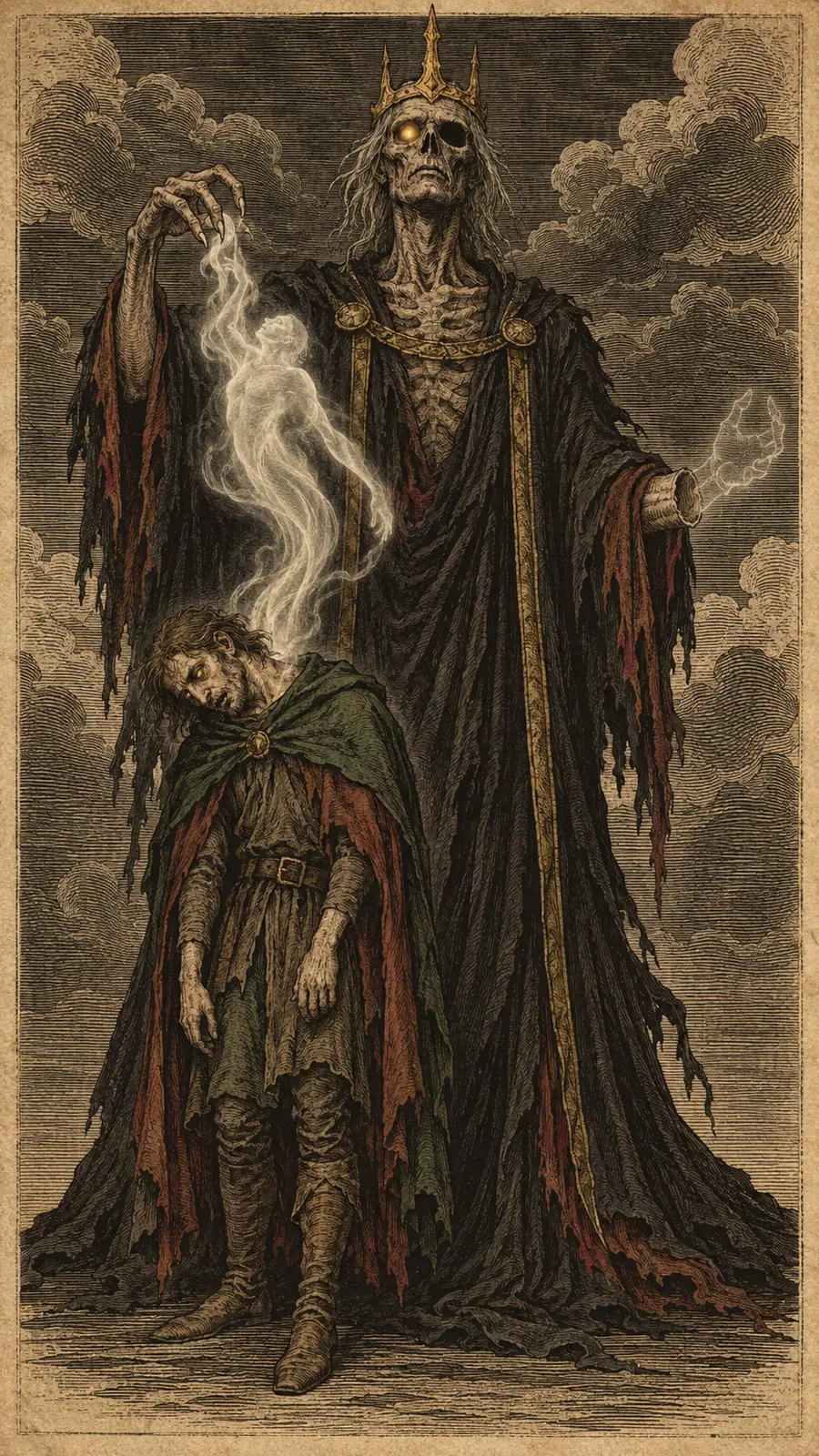
Among these treasures sat the Hand of Vecna and the Eye of Vecna. And here is the thing to notice, the thing that makes the whole long story that follows feel so strange: at this point, Vecna had almost no story at all. The book described the Hand as "the sole remains of an ancient lich who was so powerful that he was able to imbue his hand with wondrous and horrible powers." The lich had been destroyed long ago. Only these pieces were left. He had no kingdom yet, no tower and no throne. There was no birthplace and no mother, no betrayal and no godhood. He was a name behind two relics, a shape you could guess at only from what remained after it was gone.
There was one other name, set down almost in passing. The same book mentioned Kas, and said that Kas had been Vecna's bodyguard. The Sword of Kas sat among the artifacts too. That was all. Nothing yet about treachery, nothing about who struck whom. A lich, his bodyguard, a sword, a hand and an eye, and a great deal of silence around them.
The earlier episode on this channel walked through these two relics in careful detail, so we'll only pause over them long enough to see them clearly. The Hand, in this oldest tradition, is a dried, shriveled and blackened thing, as if it had been held in a fire. It survived when the rest of the lich's long-undead body crumbled away. To use it, a person presses it against the stump of their own severed wrist, and it takes hold. Its powers reveal themselves only by trial and error. And it turns its bearer thoroughly evil, so quietly that even a spell meant to detect evil won't notice the change.
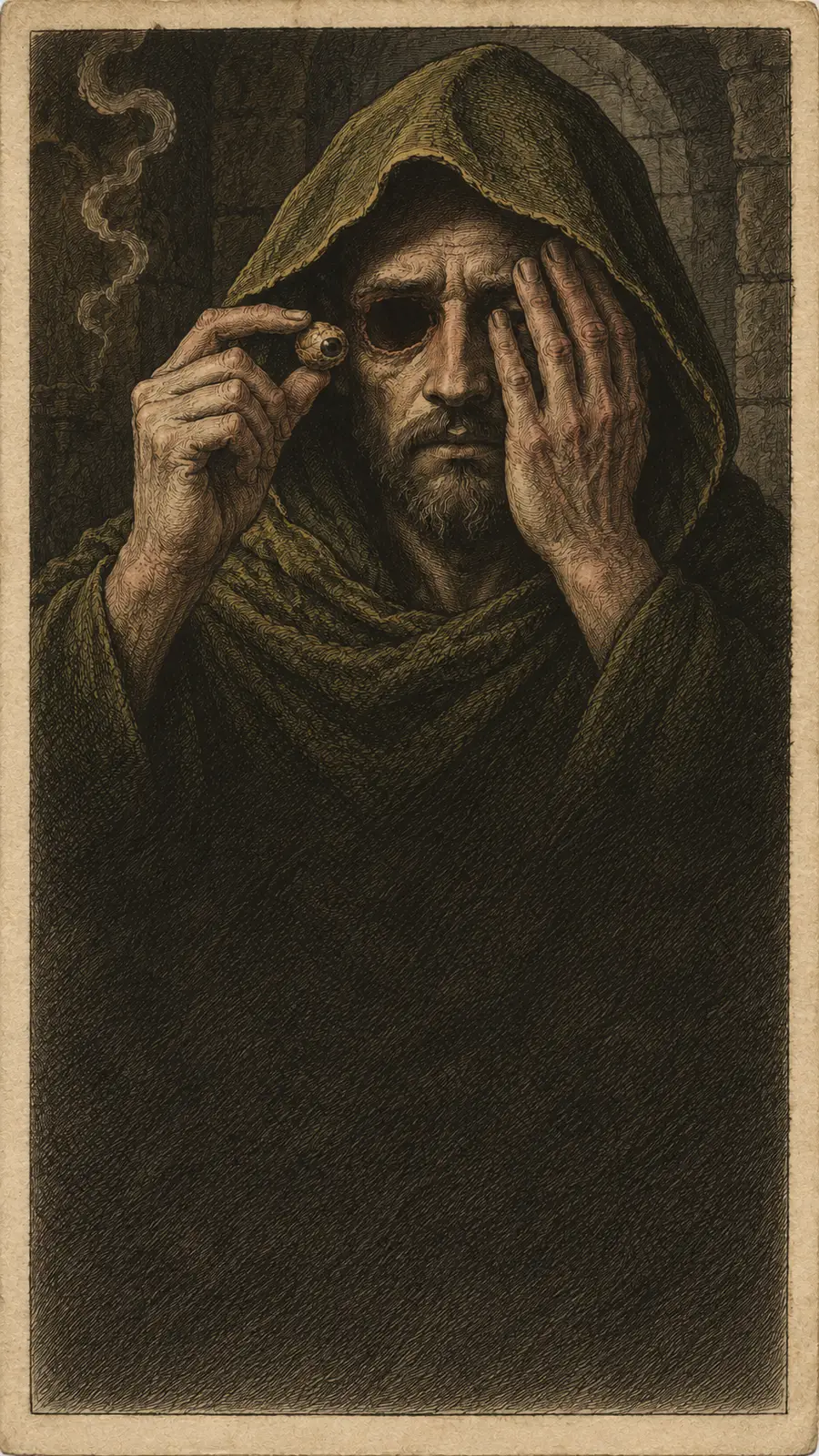
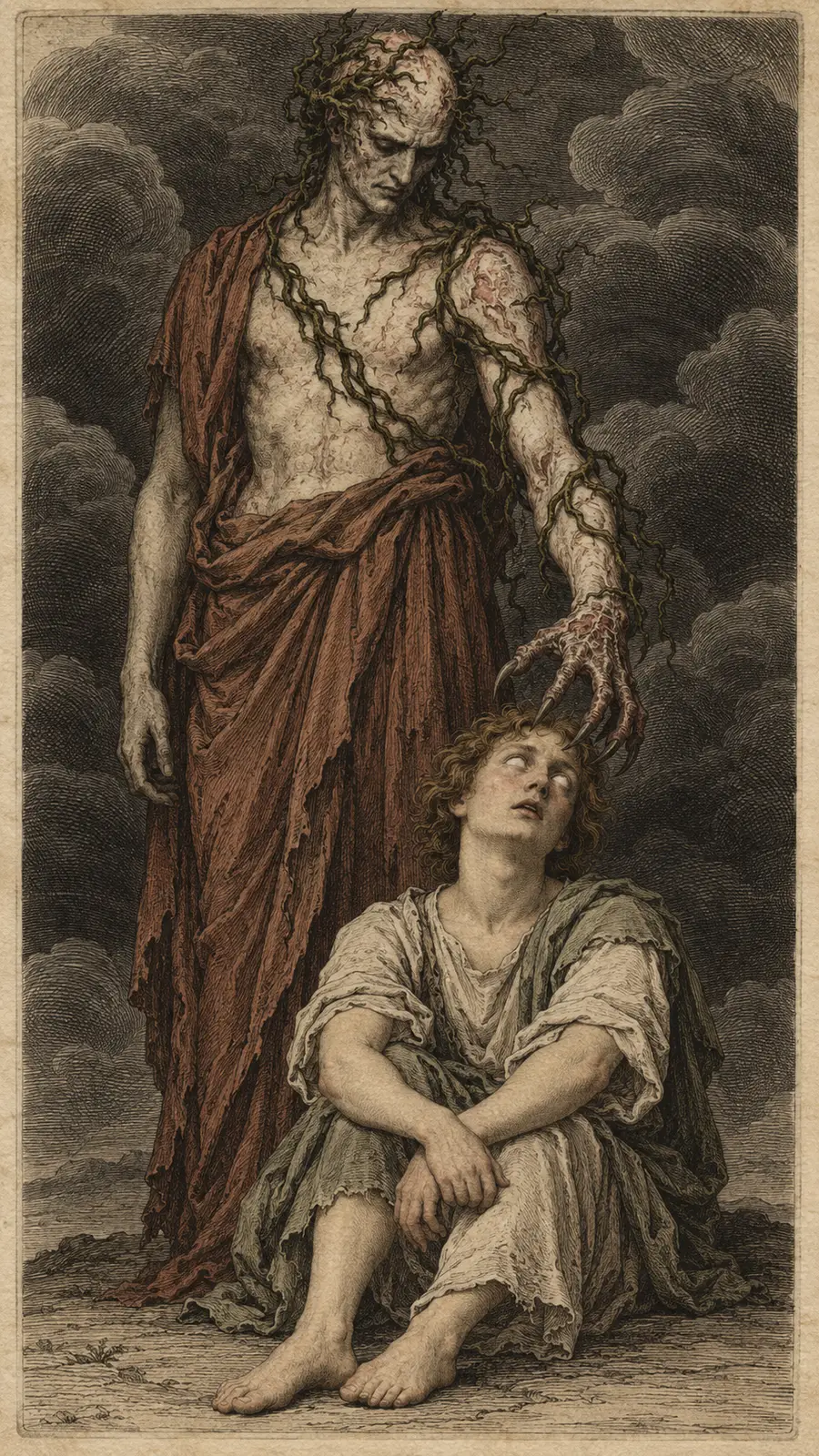
The Eye, when it's resting on its own, looks like nothing much: a small red pebble, perhaps, or a shriveled grape. To use it, a person has to set it into their own empty eye socket, which usually means removing their own eye first. It grafts itself there. In its new home it looks like a withered eye that glows with a foul crimson light.
You can see why these two became famous. Each one asks the same question of whoever finds it. How much would you give up to hold this kind of power? A hand. An eye. And then, slowly, yourself. That bargain, sitting in the back pages of a thin rulebook, is where the whole long legend begins.
Three years later, in 1979, Gygax's Dungeon Masters Guide for Advanced Dungeons & Dragons carried the Hand and Eye forward. It added a new and chilling note: anyone who used these relics might find Vecna himself taking an interest in them. The dead lich, it seemed, was not entirely finished. The guide also said that Vecna had procured "this most powerful sword" for his chief lieutenant, and in time that lieutenant would be known as Kas the Bloody-Handed. The shape of a story was starting to show through, the way a figure shows through fog. A master, a trusted servant, a great sword given as a gift. Nobody had yet written down what happened between them. But you can almost feel the story leaning toward it.
For the next decade Vecna stayed mostly in that half-lit state, a legend attached to two objects. Dungeon Masters placed the Hand and Eye at the bottom of deep places, and players argued at kitchen tables about whether anything could be worth such a price. The fuller legend of the man himself would arrive in pieces over many years and from many hands. So for our next chapter, let's do something a little different. Let's step inside the world of and tell that legend all at once, the way a storyteller in the Flanaess might tell it by a fire, gathered from all the tellings that came later.
Chapter III
The legend of the Spidered Throne
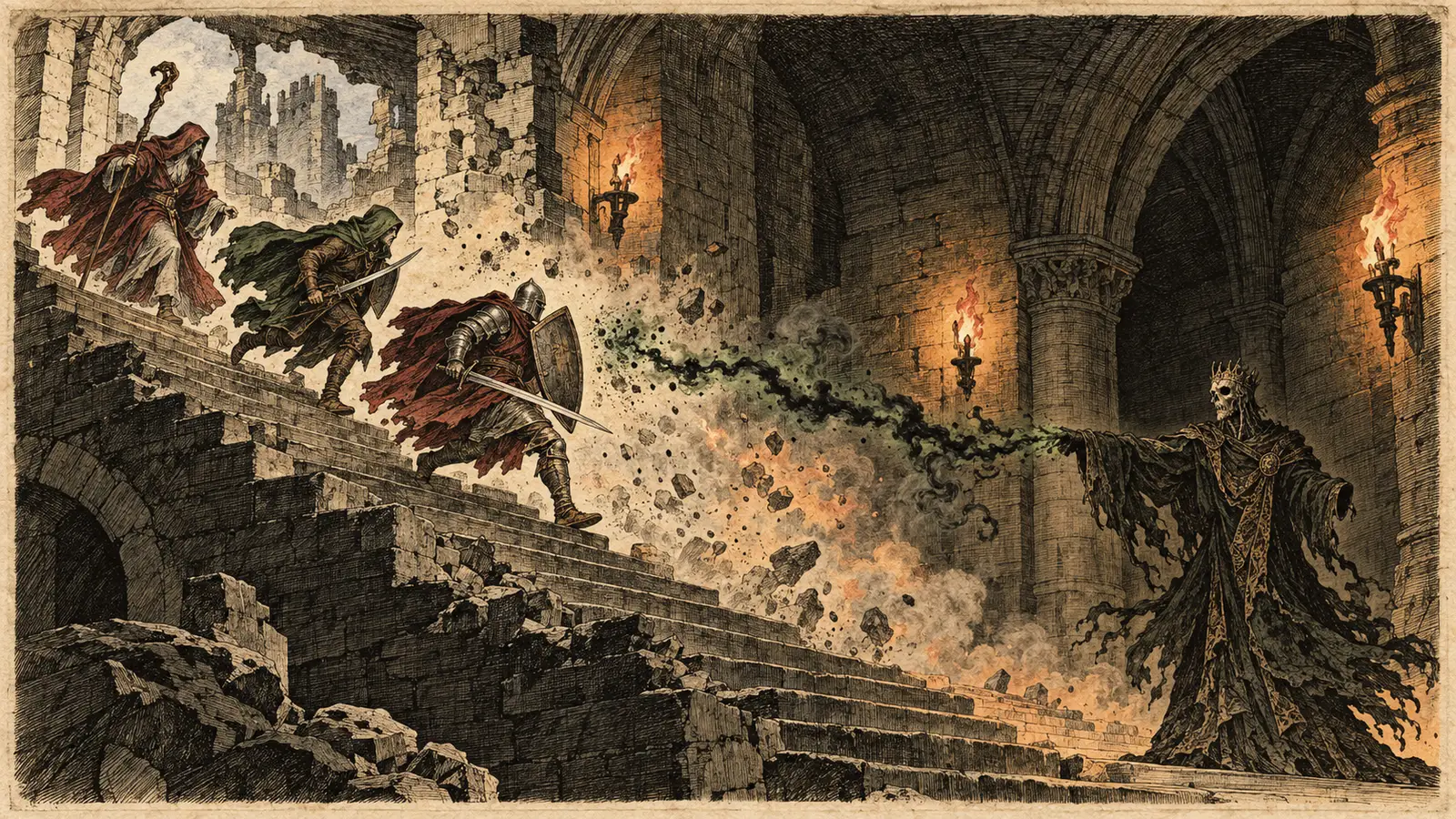
The fuller history of was gathered slowly. When second edition arrived in 1989, its Dungeon Master's Guide, written under Zeb Cook, expanded the lich's history in the description of the Hand and hinted that something of Vecna's spirit still lingered inside it. Cook's adventures and artifact books filled in more, and writers of the following decades kept adding threads: his birthplace, his mother, his teachers, his lieutenant's fall. What follows is the legend as it came to be told once all those threads had been woven in. We'll keep the real-world order for the chapters after this one. For now, let the fire burn low, and listen to the story as remembers it.
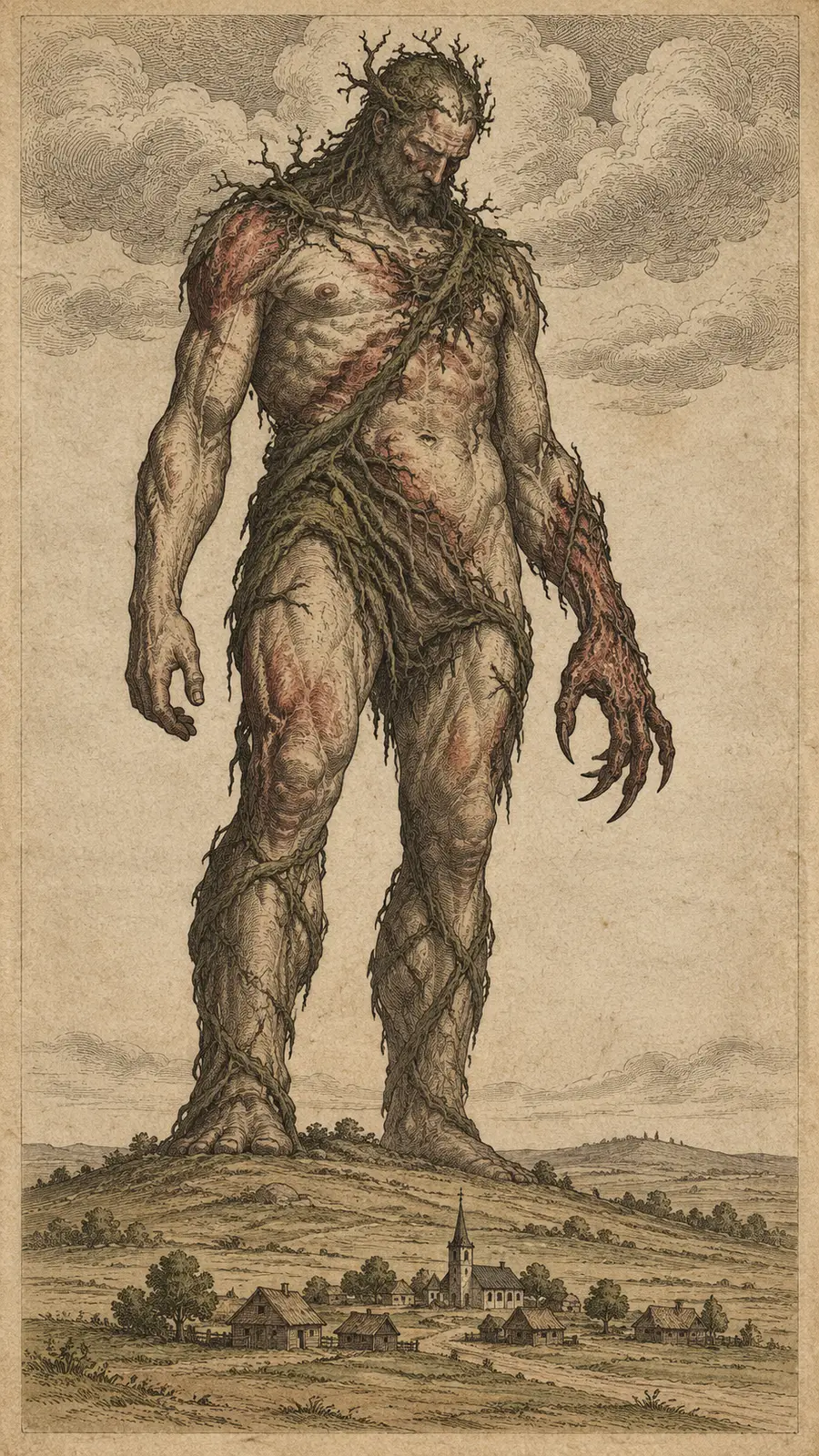
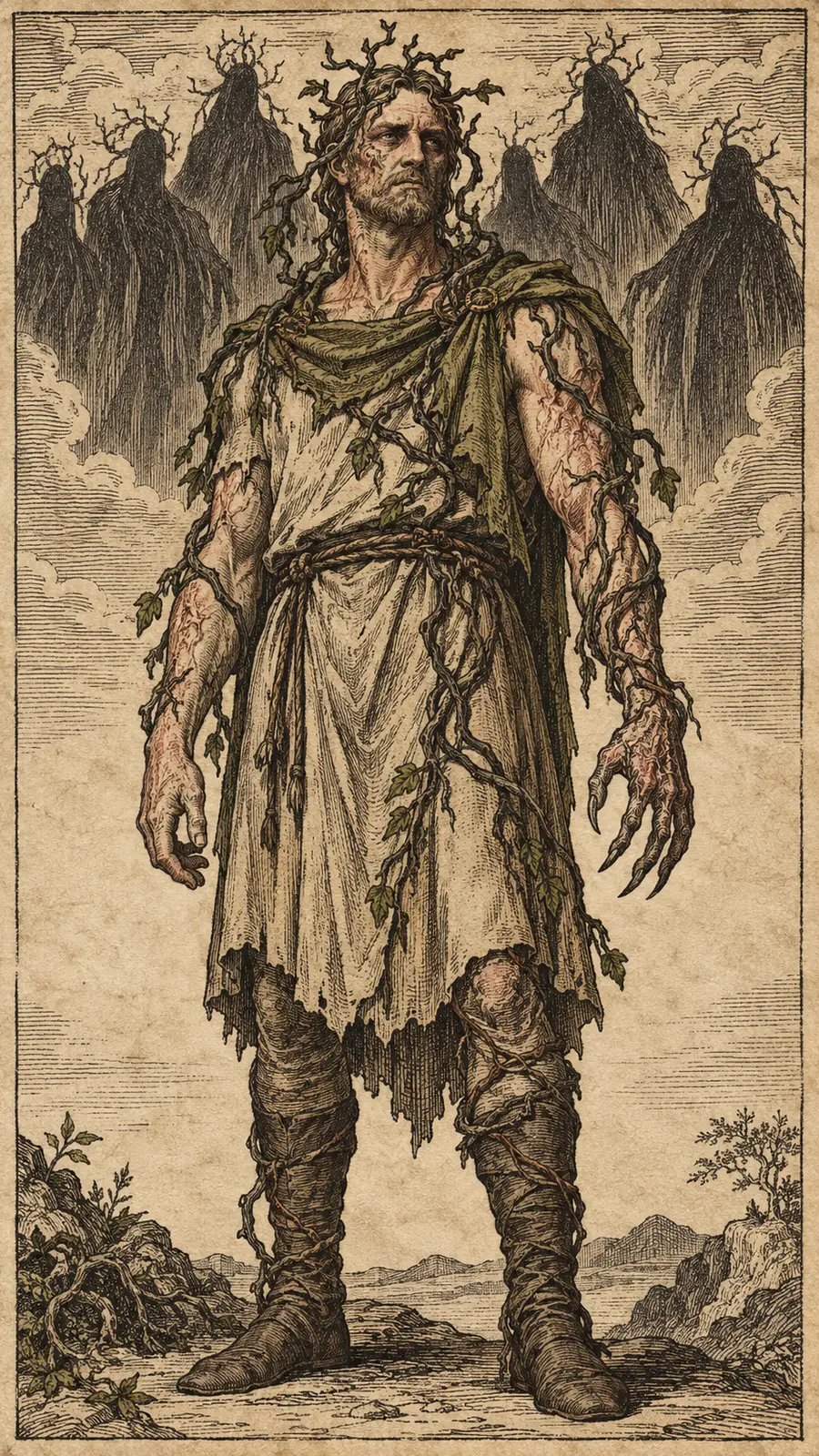
Long ago, before the great migrations that brought the Suloise and the Oeridian peoples into the eastern lands, the Flan were among the oldest folk of the region later called the Flanaess. Among their cities was one called Fleeth. Like many cities, Fleeth had people at the top and people at the bottom, and at the very bottom were the untouchables, a caste that others would not willingly touch, speak with or look upon for long. Into that caste a boy was born, and his name was Vecna.
His mother was named Mazzel. She knew magic, the small, stubborn craft of a hedge-witch, and she taught what she knew to her son. We can imagine a little of those lessons: a single candle, a low voice, words passed from mouth to ear because there was no one to write them down for. And then the rulers of Fleeth found out. They took Mazzel and burned her at the stake for witchcraft.
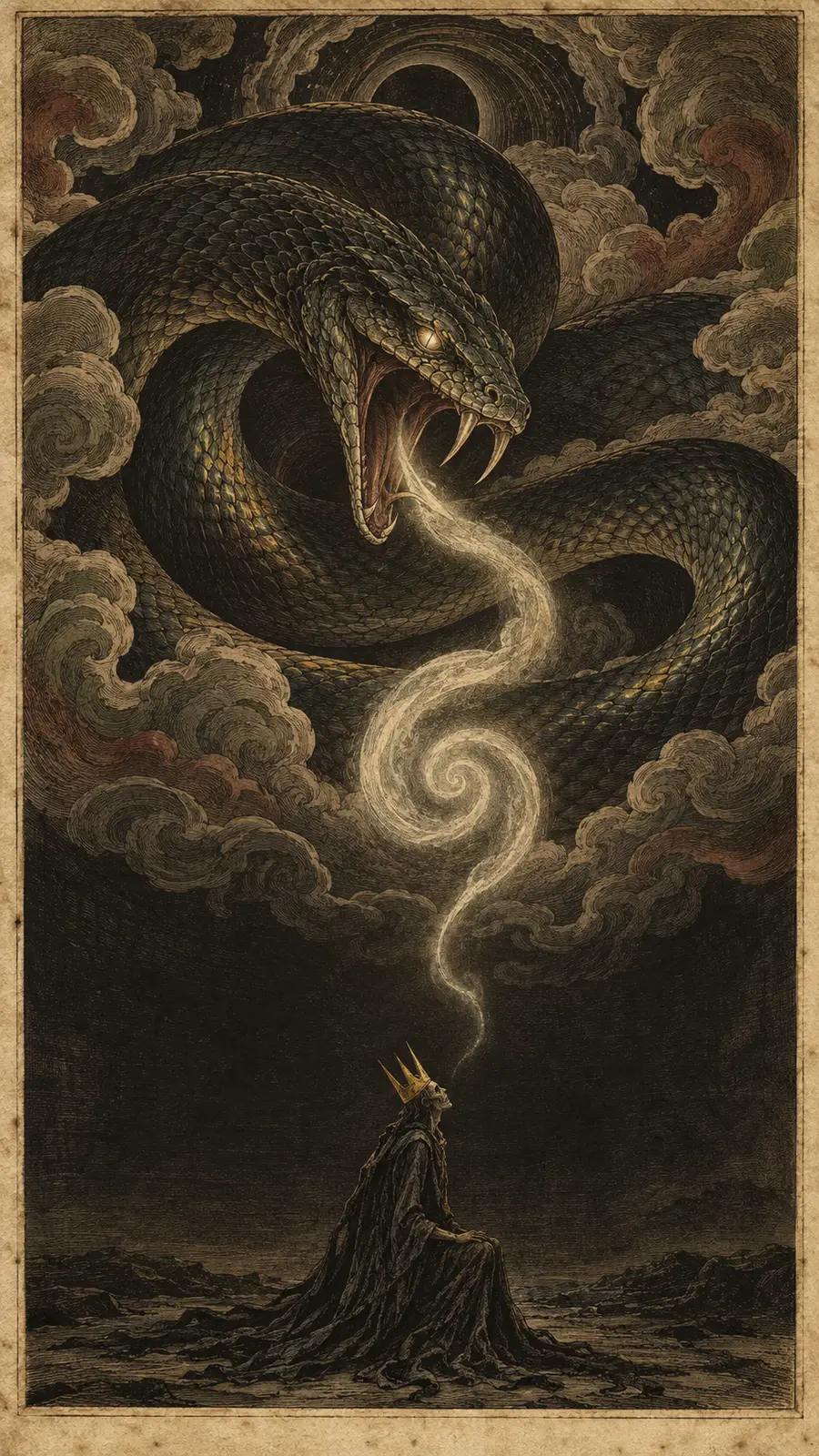
The boy survived, and he remembered. Nearly everything Vecna did afterward runs back to that fire in some way. His hunger for power, his contempt for those who rule by right of birth, his long and patient hatred of Fleeth itself, all of it has its root there. Some tellings add a second teacher. They say that a being called the Serpent, whose name is sometimes given as Mok'slyk, the living personification of arcane magic, came to the boy and taught him. In later stories the Serpent would become Vecna's one true ally, the only thing in the whole cosmos he ever worshipped. For now, simply notice that shape in the corner of the room, coiled and patient, and let it rest there.
Another telling, attached to a certain terrible book, gives a slightly different memory. In that version, Vecna's mother was exiled by an order of wizards, and when he had grown in power, Vecna hunted that order down and killed them all. Afterward, at the urging of a disembodied voice, he began to write. We'll come back to that book in time. The two stories disagree about the details, but they agree about the heart of it: a mother wronged by those who held power, and a son who never forgave.
Vecna grew into one of the mightiest wizards the world had ever known. And like many who reach great power in their lifetimes, he came to fear the one thing his power couldn't touch, which was death. One telling says that he learned the secret of undeath from himself, the demon prince of the undead, who taught him a ritual. He passed through it, and his body stopped living without his mind ever stopping at all. He became a lich. Many say he was the first of them, and nearly all agree he was the greatest.
Time, for a lich, becomes a different kind of thing. Vecna's flesh withered on his bones while his ambitions spread outward like ink through water. Over centuries he built an empire, sometimes called the Occluded Empire, a name that means hidden or shut away, which suits him. Its heart lay in the Sheldomar Valley, among the wetlands called the Rushmoors, not far from where the town of Shiboleth stands in the Gran March today. At its widest reach, the lich's dominion stretched from the Sheldomar all the way to the northwest shores of the Nyr Dyv, the great Lake of Unknown Depths. Subject kingdoms paid him tribute. His own direct hand lay heaviest on the country around his stronghold.
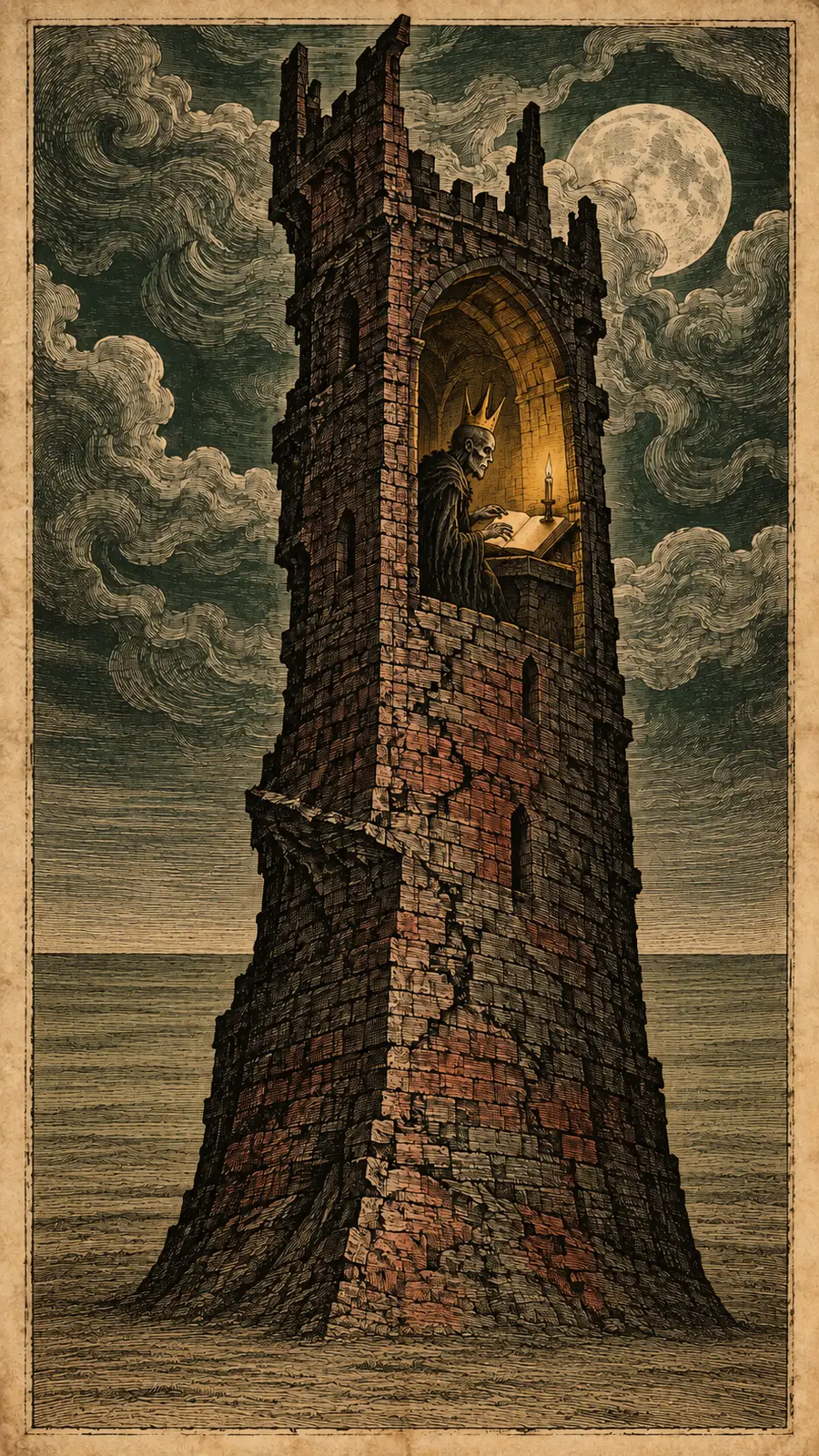
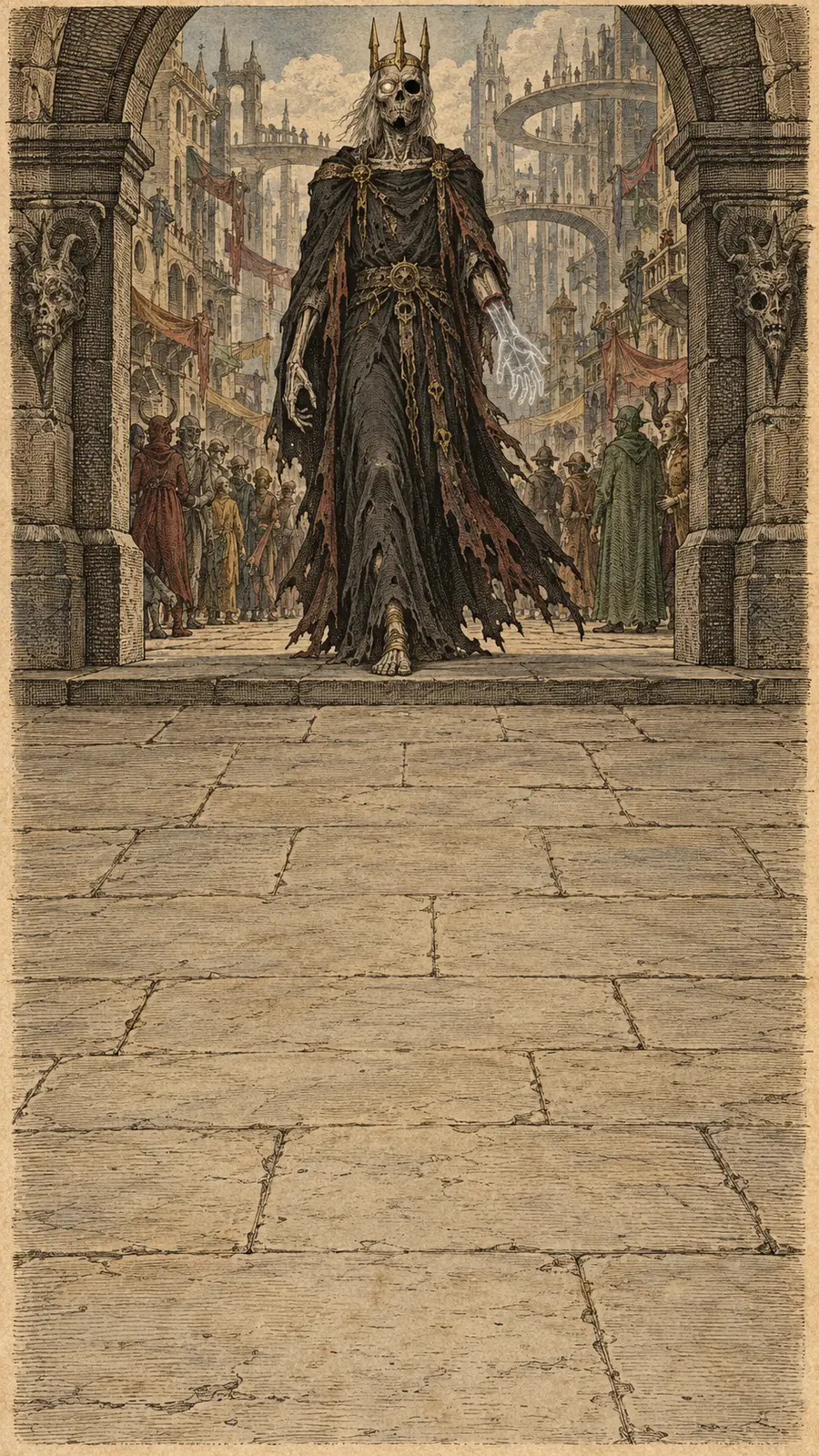
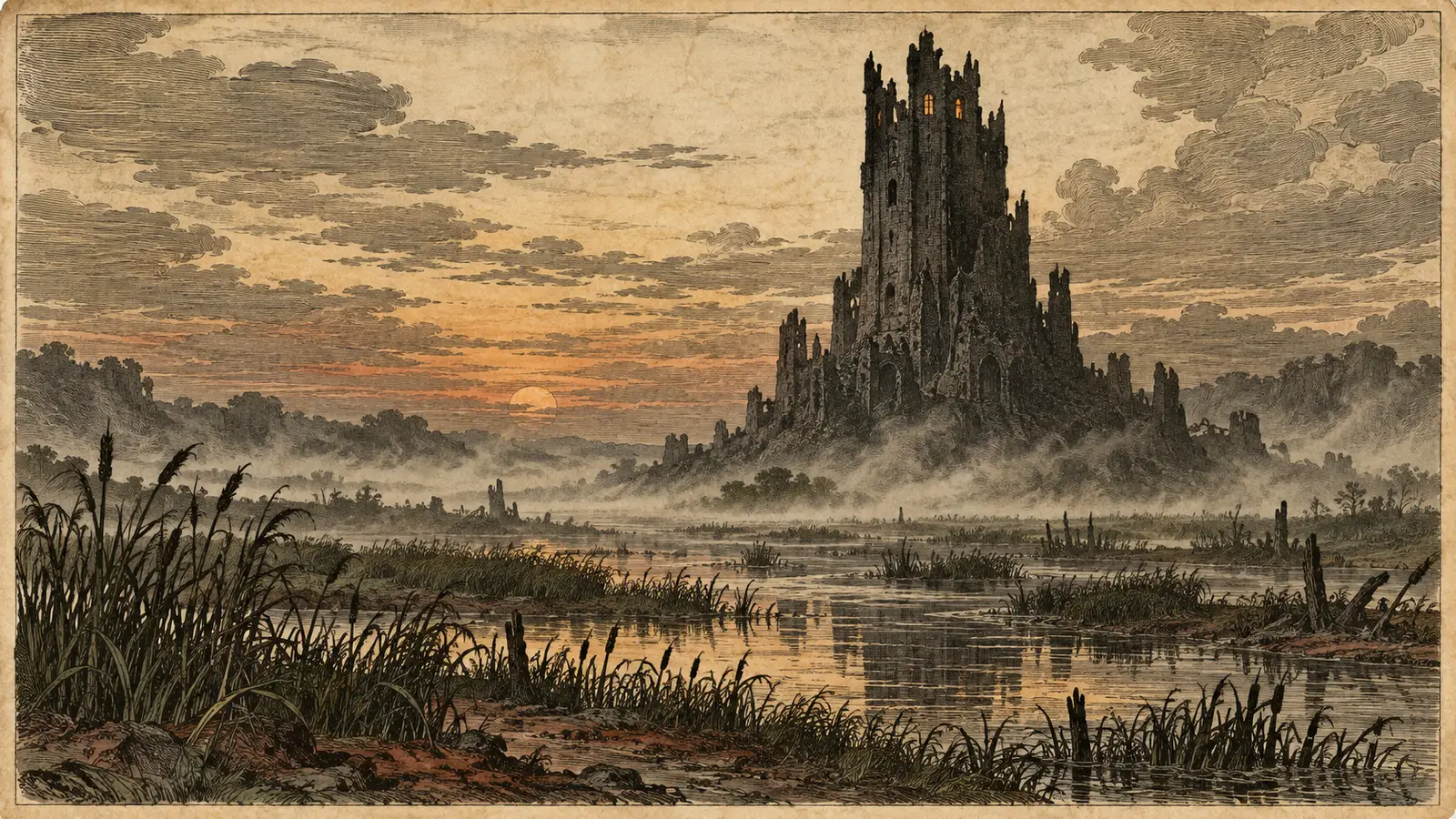
That stronghold was the Rotted Tower, which some call the Black Tower. Picture it rising out of the marsh mists of the Rushmoors, dark against a pale sky, with reeds hissing at its feet. Within it stood the seat from which he ruled, and it gave him one of his most lasting titles: Master of the Spider Throne, or of the Spidered Throne, as many prefer to say it. One old account of those days calls him "the One-Named-In-Whispers," who rose to that throne, and it records a single dry line about the early years of his reign: "in the third year of his ascendancy, the Whispered One demanded tribute." That's how empires usually begin, in a quiet sentence about taxes.
The scholars of Oerth, it should be said, have never fully agreed about where the Occluded Empire stood. Some place it beyond the great mountains in the west. Others whisper that the Rotted Tower once rose out of the depths of the Nyr Dyv itself, from the dark water in the middle of the lake. Perhaps it suits the Whispered One that no one can quite point to his old realm on a map. Later tellings name a capital, too, a fortress city called Ykrath, which held "miles and miles of towers, castles, and cathedrals all dedicated to him." Imagine walking such streets, where every spire and every chapel is a monument to one ruler, and every bell rings his name.
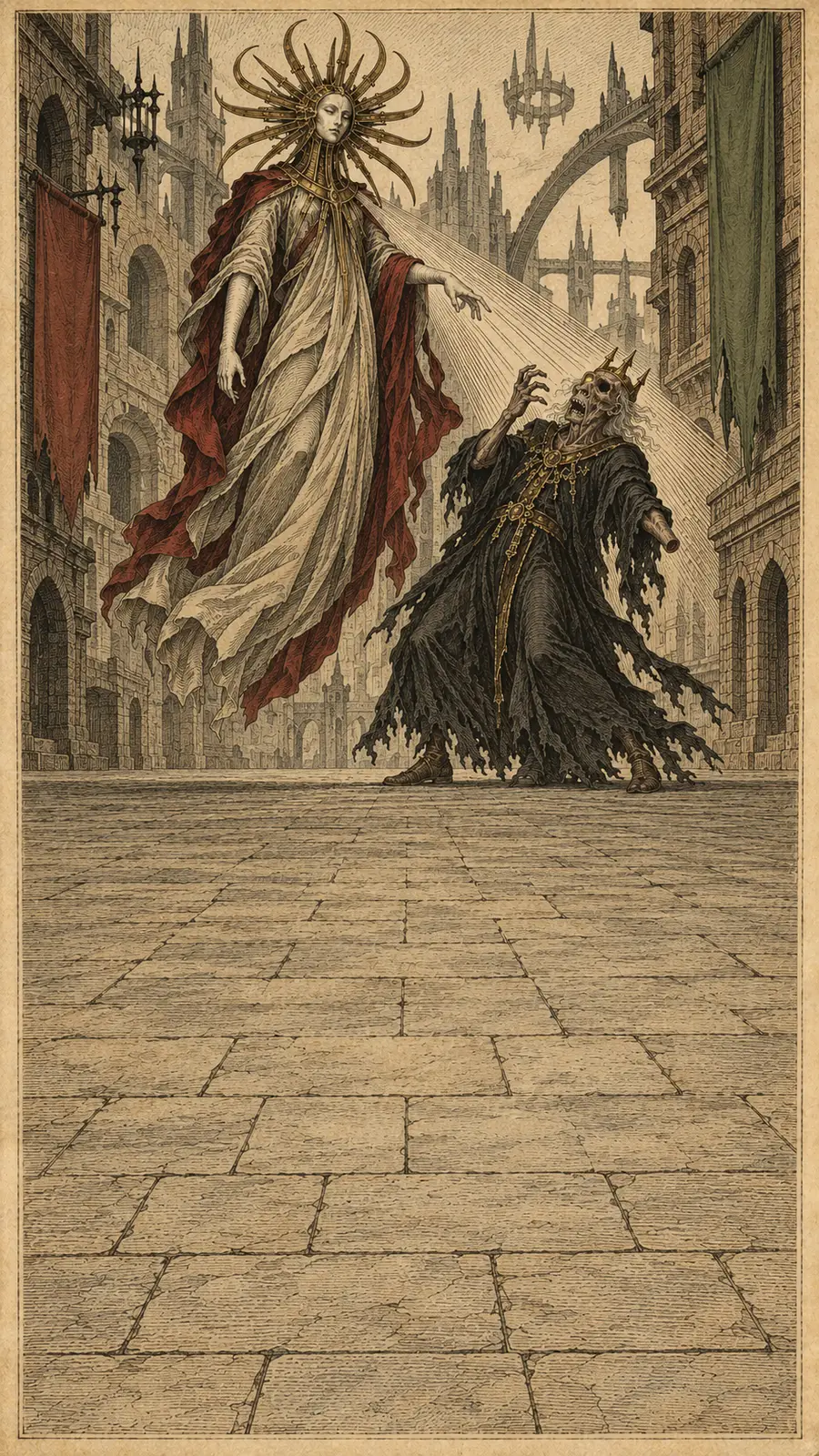
Nearly a thousand years after his birth, Vecna turned at last toward the city of his childhood. He came against Fleeth with an army of arcane spellcasters and marching dead. The legend says Fleeth might well have fallen, except that the clerics of Pholtus, the god of light, called down a tremendous burst of radiance against him. It struck him mostly on his left side, and it very nearly destroyed him. In that dark hour, one of his own apprentices, a young wizard named Acererak, pulled the wounded lich from danger, and Vecna rewarded him afterward with promotion. We'll meet Acererak again in a later chapter, for he became famous in his own right, and his tomb became famous too.
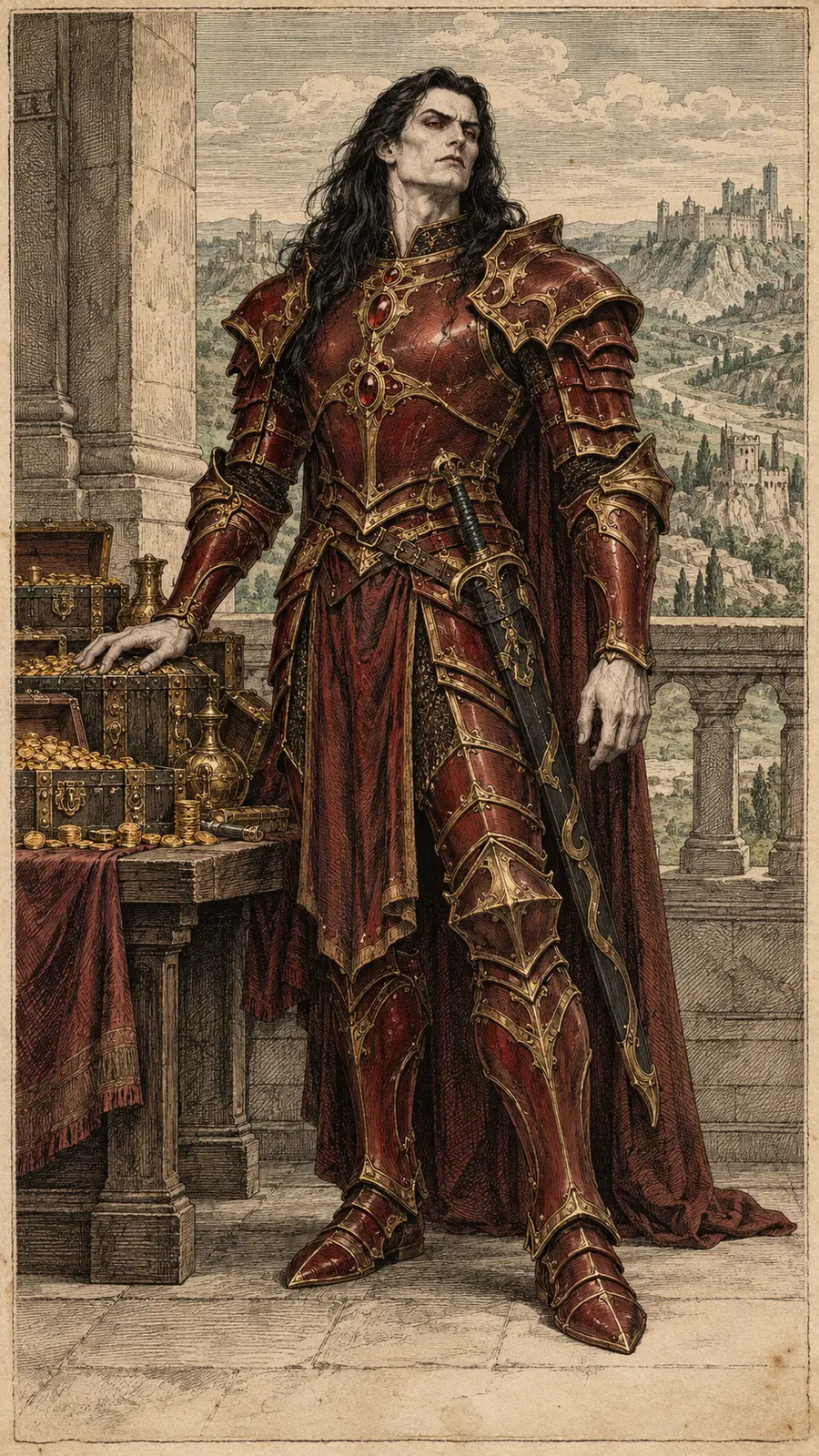
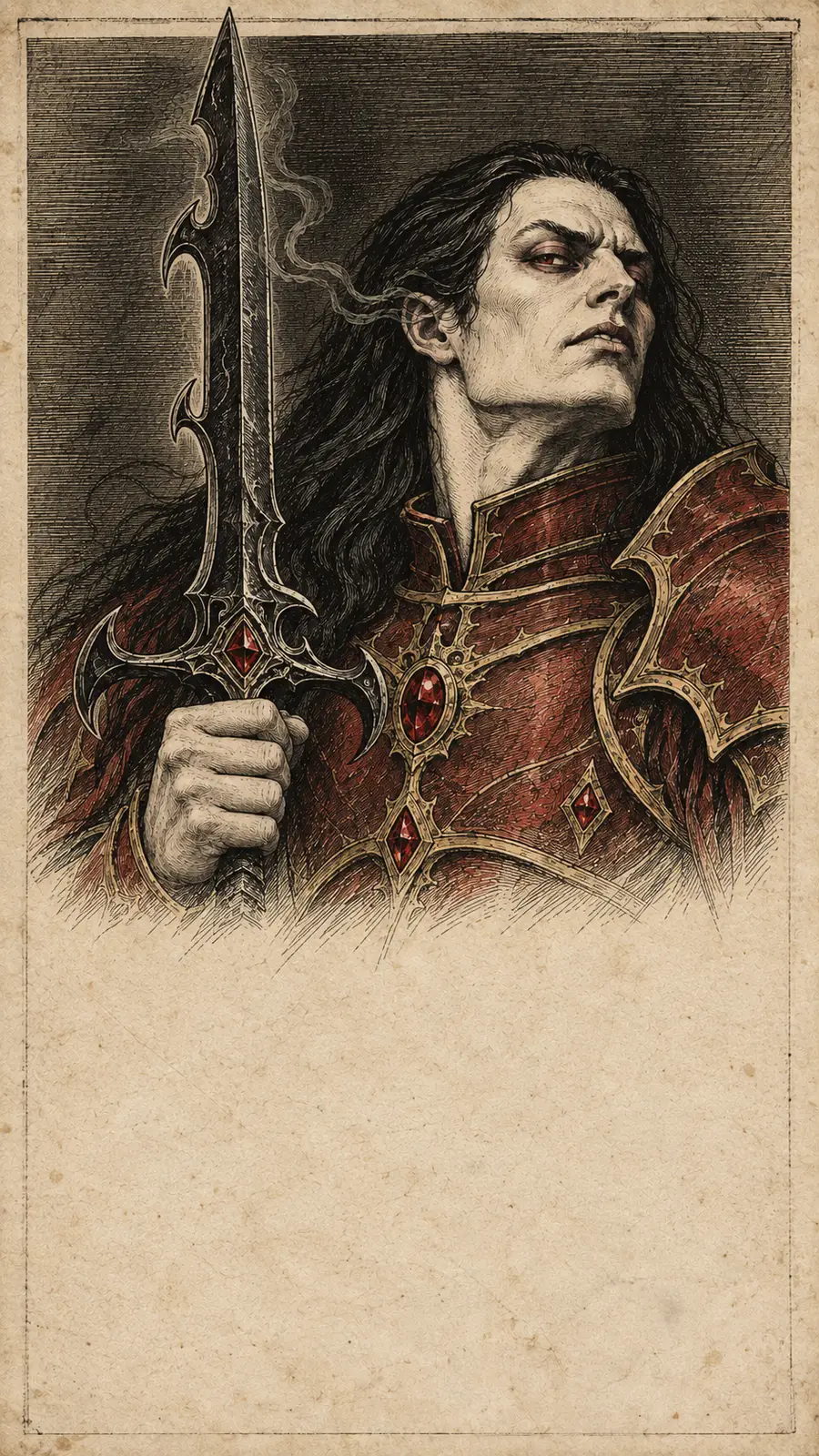
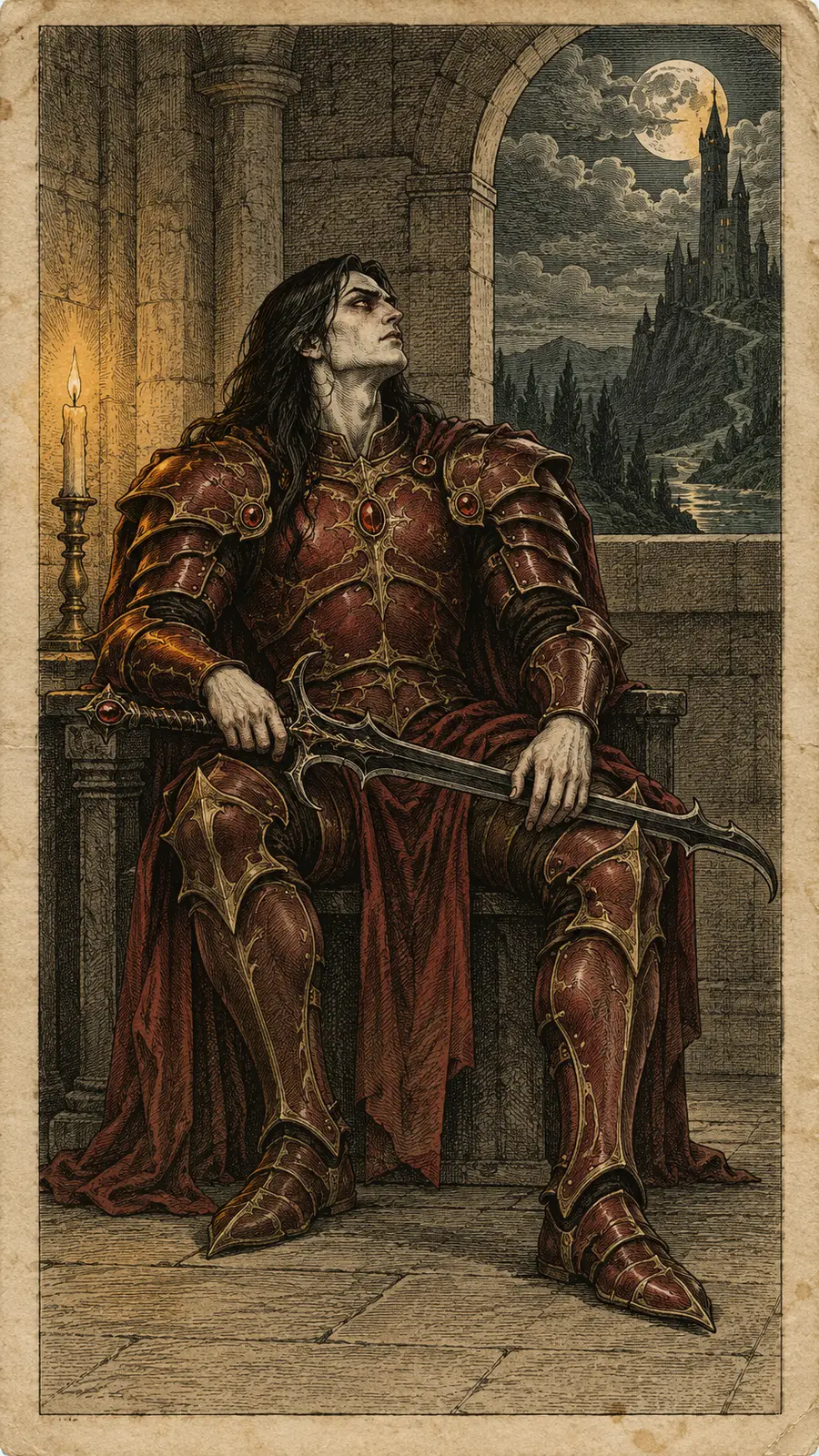
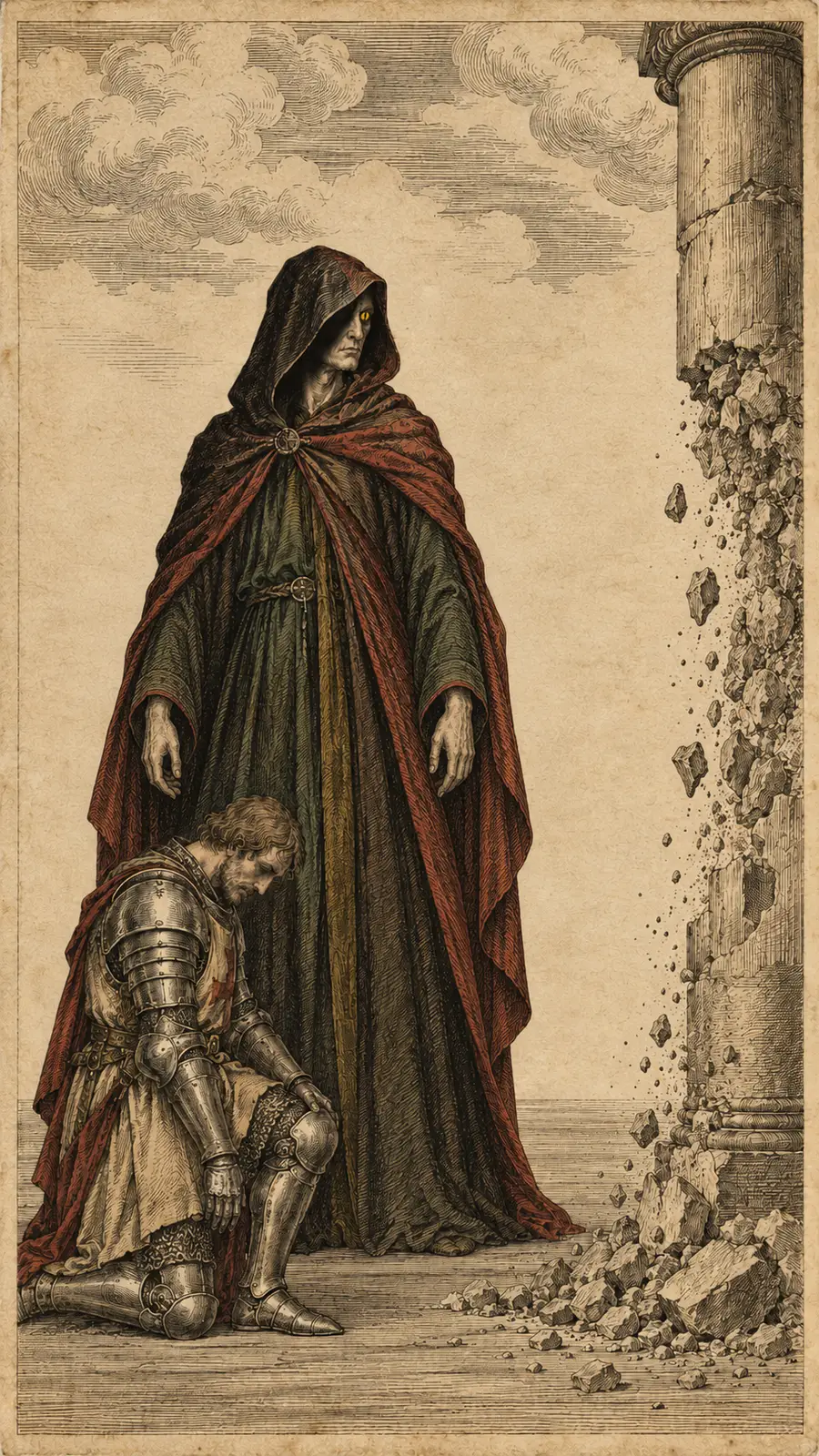
Now we come to the man at Vecna's side. Kas, in the legend, was born human in Tycheron, a region that in later ages would be known by the name of Dyvers. He began as a paladin, a holy warrior sworn to goodness. But he fell. Whatever pulled him down, it pulled him into Vecna's service, and he rose through the ranks of the lich's armies as a swordsman of frightening skill. The legend describes him as cruel and malicious, and also loyal, and it was the loyalty that Vecna valued most. Kas became the lich's bodyguard, his lieutenant, his warlord and his assassin. The histories call him Vecna's right hand and the instrument of his rule. In the end Vecna made him regent over his forces.
His names multiplied the way names do around people who frighten others: Kas of Tycheron, Kas the Terrible, Kas the Bloody-Handed. Later, when the story had run its course, people added Kas the Betrayer, Kas the Hateful and Kas the Destroyer.
As a mark of Kas's office, Vecna forged him a sword. Some tellings say he obtained it rather than made it, but the most familiar version has the lich shaping it himself, a blade "as ruthless and cruel as its master." It was honed to an edge beyond any smith's skill. It lent great strength to the arm that held it, and it could call lightning down out of the storm clouds overhead. While Kas carried it, the legend says, he could not be beaten in battle. Later tellings add one more detail, and it is the one that matters most. Vecna had poured some portion of his own consciousness into the blade. The sword was alive in its way, and it thought, and it wanted.
As the centuries wore on, something changed in the lich. Governing began to bore him. The daily matters of empire, the tribute and the garrisons and the petitions and the roads, slid more and more onto his lieutenant's shoulders, until Kas ruled the Occluded Empire in everything but name. Vecna withdrew into his tower and his studies, into whatever a lich dreams about when he no longer sleeps.
And the sword began to speak to Kas.
It spoke softly, in what the legend calls sweet whispers. Vecna's hatred and malice had soaked into the metal, and now that malice turned on its own maker. You rule already, the sword seemed to say. Why should anyone sit above you? Why not take the rest? Night after night the blade murmured, and Kas, who had already fallen once from a holy oath, listened.
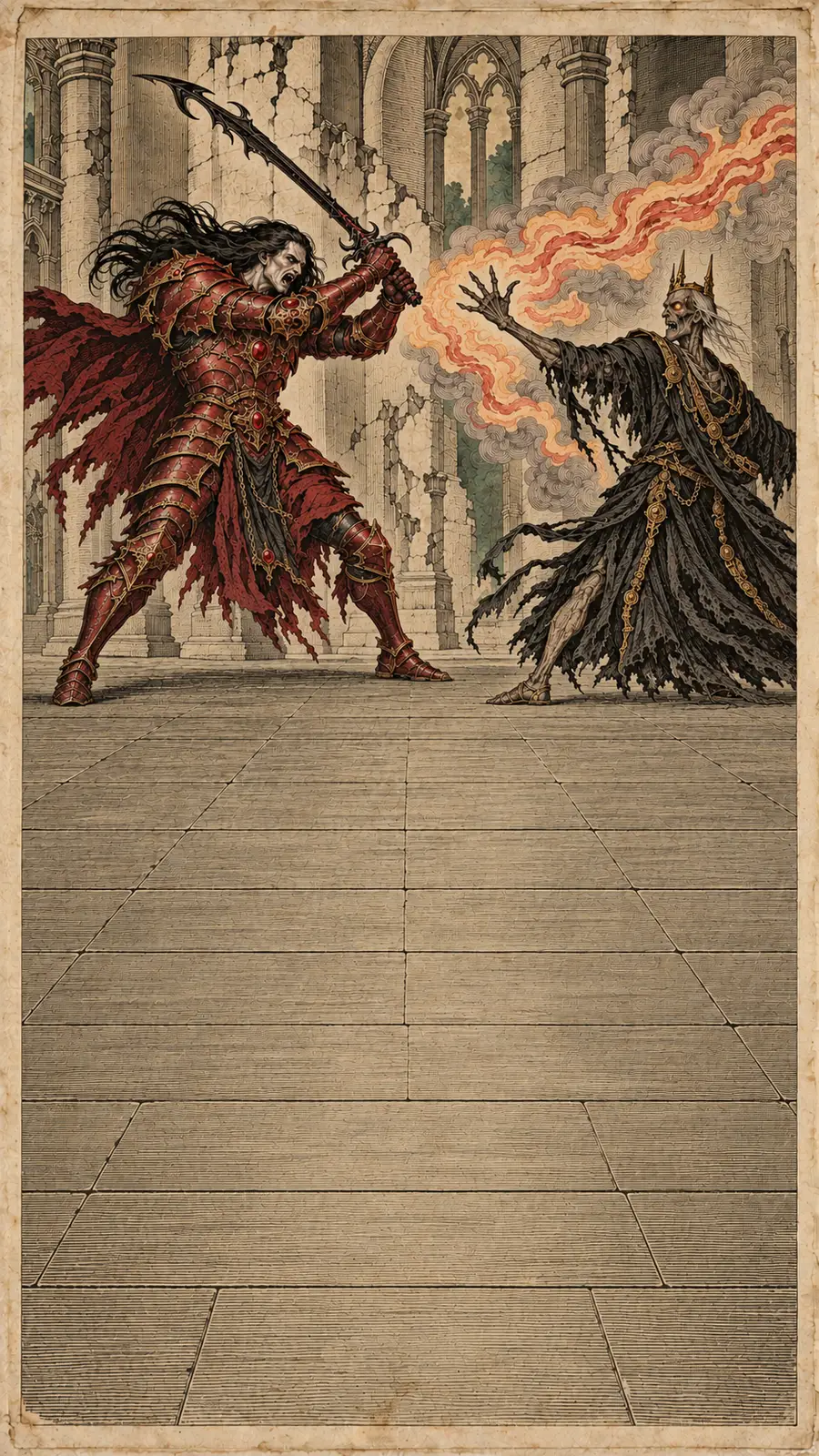
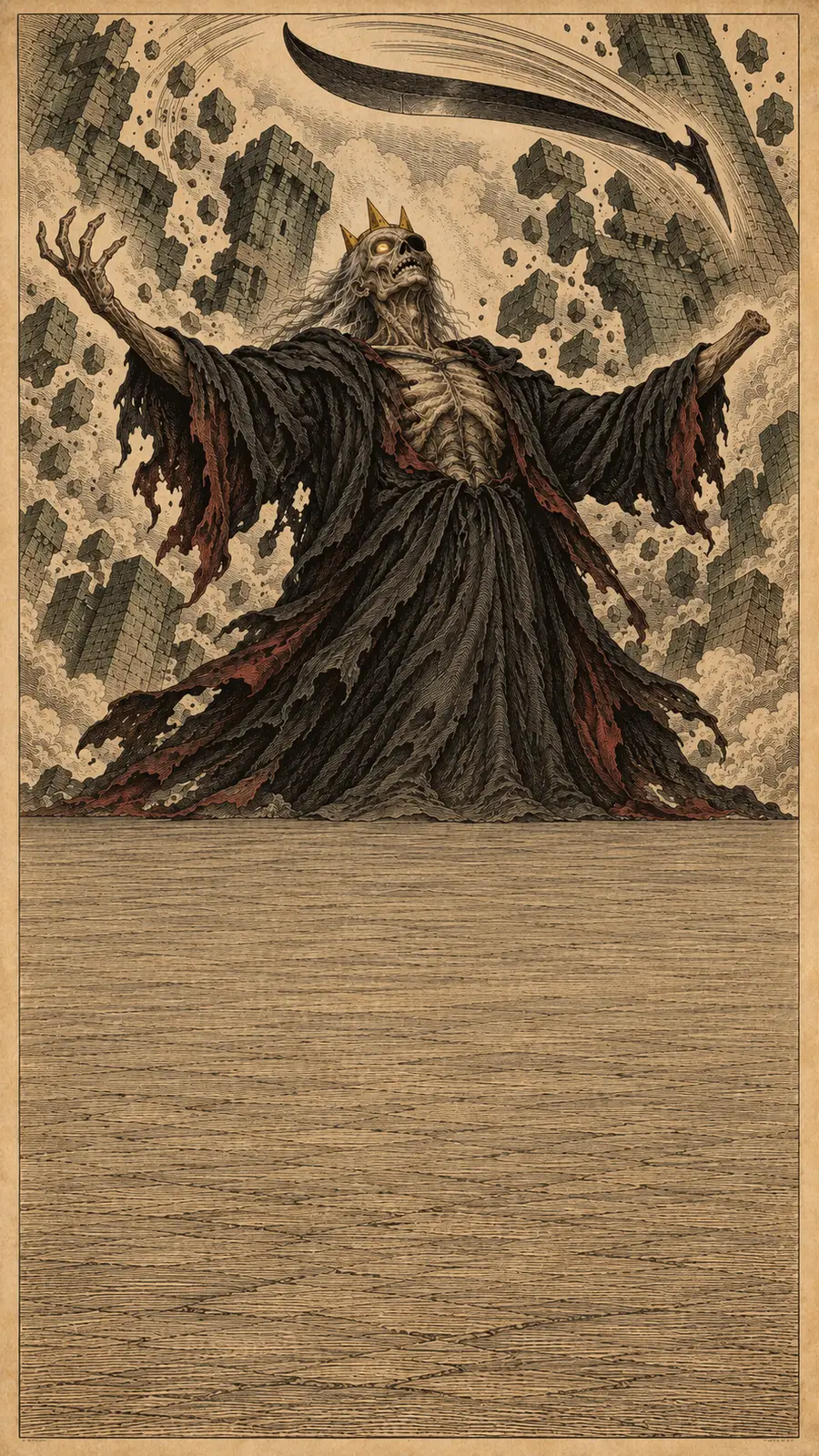
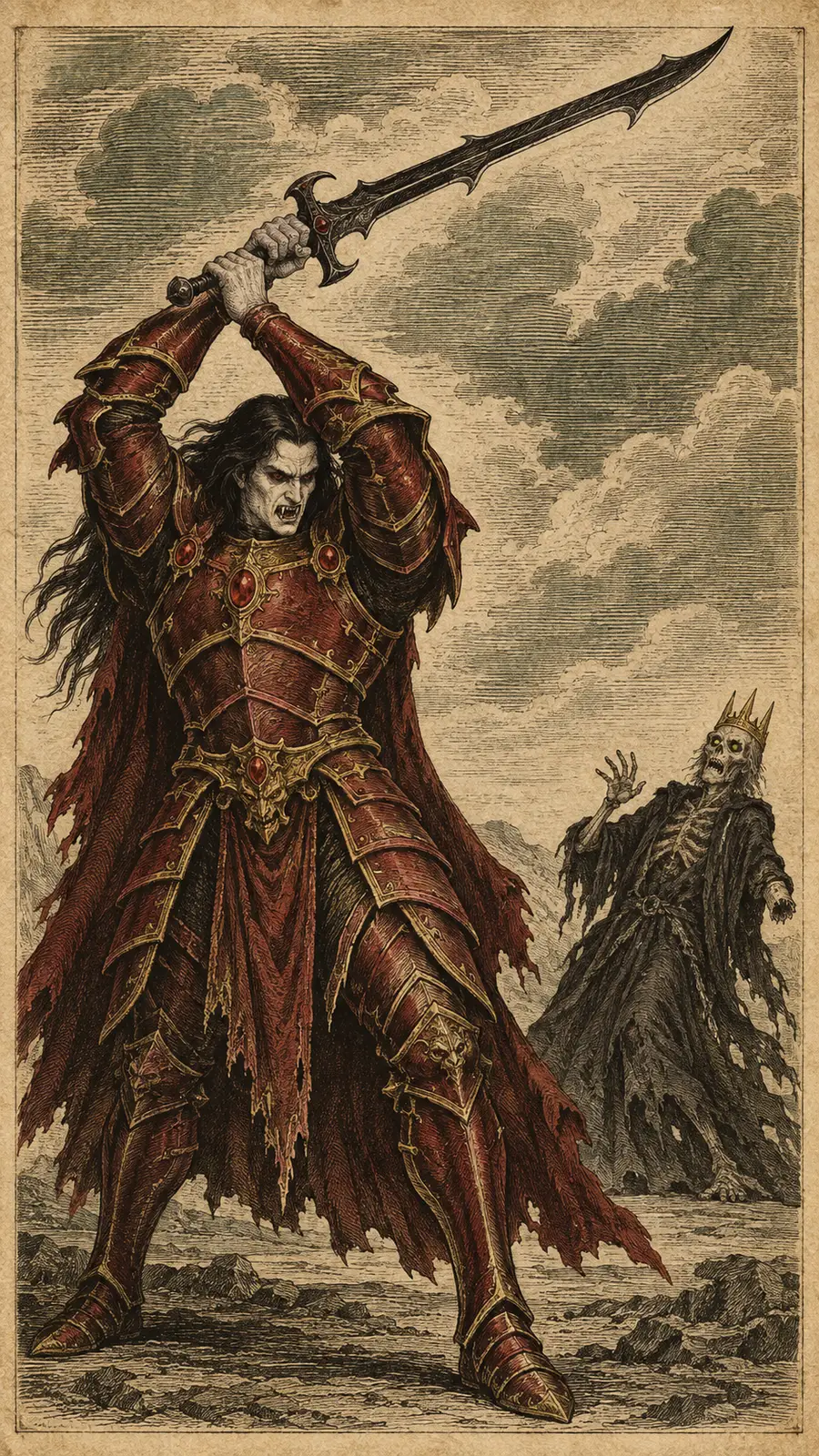
At last Kas turned the sword against his master. The battle between them was titanic. Spells and steel went back and forth through the halls of the Rotted Tower until the tower itself broke apart around them. One telling says the struggle left the tower in ash. At some point in that fury, Kas's blade struck Vecna, and it took his left hand and his left eye.
What happened next depends on who is telling it. The oldest version is simple and grim: both of them were destroyed. Good people rejoiced, the story goes. But it adds, very quietly, that it is said not all of the evil lich was destroyed. In the reckoning of years, that ending falls about three and a half centuries before the start of the Common Year, the calendar most folk in the Flanaess use.
And so the pieces fell where the older rulebooks had found them. A blackened left hand. A withered left eye. A sword with a murderous mind. The empire, its capital and its cathedrals crumbled or sank into the marshes, and the name of its ruler became something people spoke of only in a low voice, looking over their shoulders. Hence his best-known title, the Whispered One. After the betrayal he gained another, the Maimed Lord, and in time the Maimed God.
What became of Kas is a question the later tellings answer in different ways, and we'll hear those answers as they arrive. One version holds that the fallen paladin had already used the lich's gifts to make himself a vampire. Another says Kas was flung across the multiverse and imprisoned in one of Vecna's strongholds far from Oerth, where the cold breath of negative energy slowly turned him undead. A third says that with his very last breath before his body failed, Vecna himself sealed Kas away. Each version is darker than the one before it, which is often how legends grow.
Let's leave the Rotted Tower there, broken in the marsh, with the reeds moving over it. The story of Vecna's mortal life was over. The story of Vecna's second life, as it turned out, was only waiting for someone to write it down. At the turn of the nineties, someone did.
Chapter IV
Vecna lives, and the Circle of Eight falls
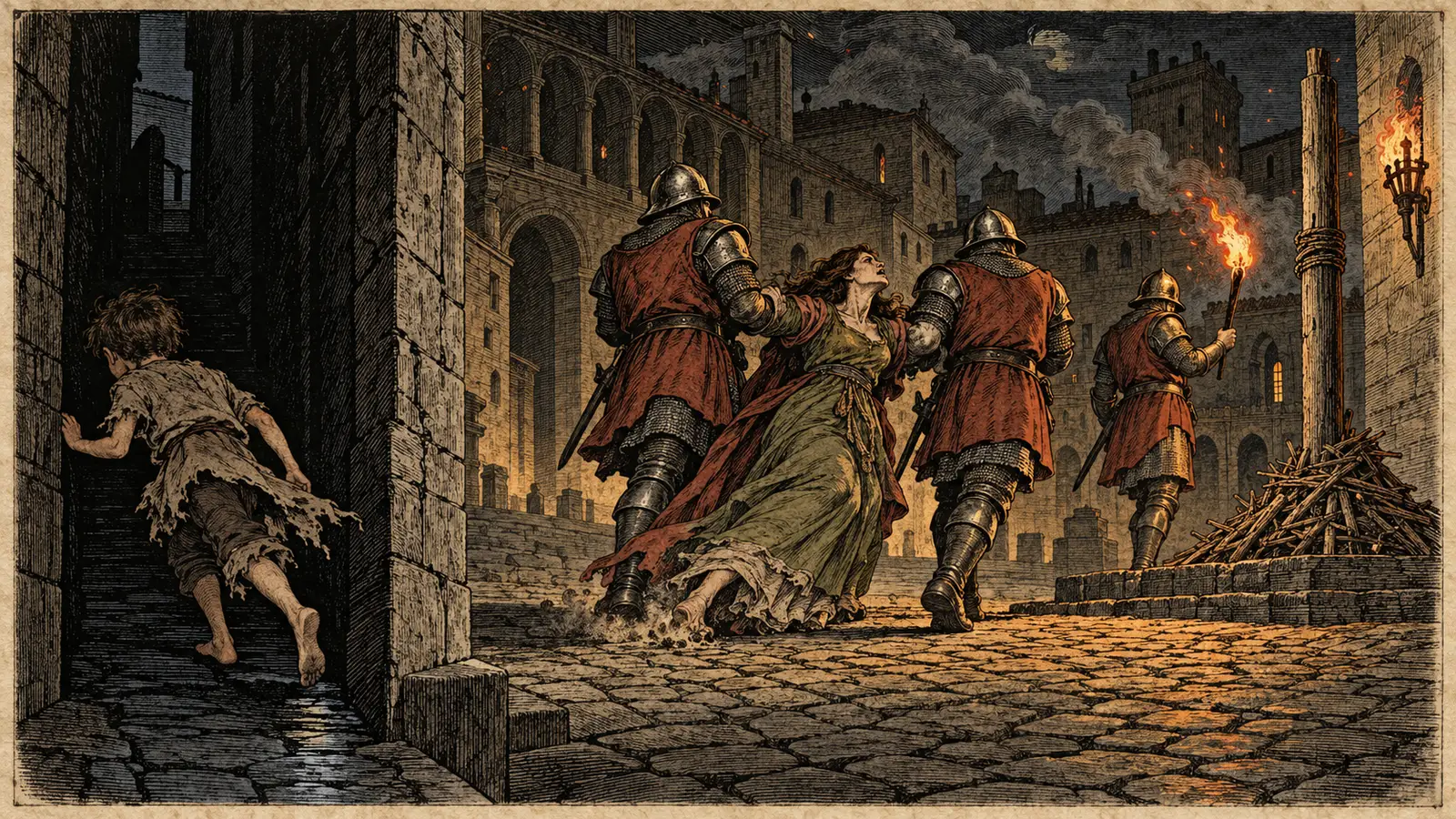
David Cook, whom nearly everyone calls Zeb, had already shaped a great deal of the game by the time the nineties began. He had written much of the second edition rules, and now he wrote an adventure to accompany The City of Greyhawk, a boxed set that had brought the great free city of to life in close detail. The adventure was called Vecna Lives!, with Jeff Easley's painting on the cover, and its title was a small earthquake all by itself. For the first time, stepped out from behind his relics and appeared in person. And he appeared as something more than a lich. Cook recast him as a demigod, a being with a divine spark, and made him the main villain of the story.
The legend on the back of the box told the old tale in a few lines. A wizard-lord of terrible power and cruelty, older than the coming of the Suloise, who became a lich as he grew old and kept up his reign of terror until his lieutenant Kas undid him. "In the end, both were slain and good people rejoiced. It is said that not all of the evil lich was destroyed." That last sentence is the whole premise, tucked into a closing line.
Here is what had happened, in the world of the adventure. The Hand and the Eye of Vecna had turned up again, and Vecna wanted them back. He had a cult now, and between them, the lich and his followers were working on a scheme to change Oerth forever. The plan was vast in its ambition. Vecna meant to overthrow the whole pantheon of 's gods and rule over the divine powers himself.
To understand what makes this adventure so remembered, we need to meet a group of wizards. In the Greyhawk setting, the Circle of Eight was a fellowship of the most powerful archmages in the Flanaess, gathered by the wizard Mordenkainen to keep a kind of balance in the world. Their names are familiar to anyone who has looked through a spell list, because many of the game's spells are named for them. , whose conjured hands grasp and crush. , with his floating disk. Otiluke and his resilient sphere. and his irresistible dance. Nystul, Drawmij and Rary. And Jallarzi Sallavarian, who had joined the Circle only six months before the story begins.
The adventure opens in the year that Greyhawk reckons as 581. Mordenkainen senses a great danger stirring somewhere in the land. He sends the Circle to investigate, and the players, instead of their own characters, take the roles of these legendary wizards. You can imagine the delight around the table. Here, at last, you get to be Bigby, or Tenser, or Otto, with every famous spell at your fingertips.
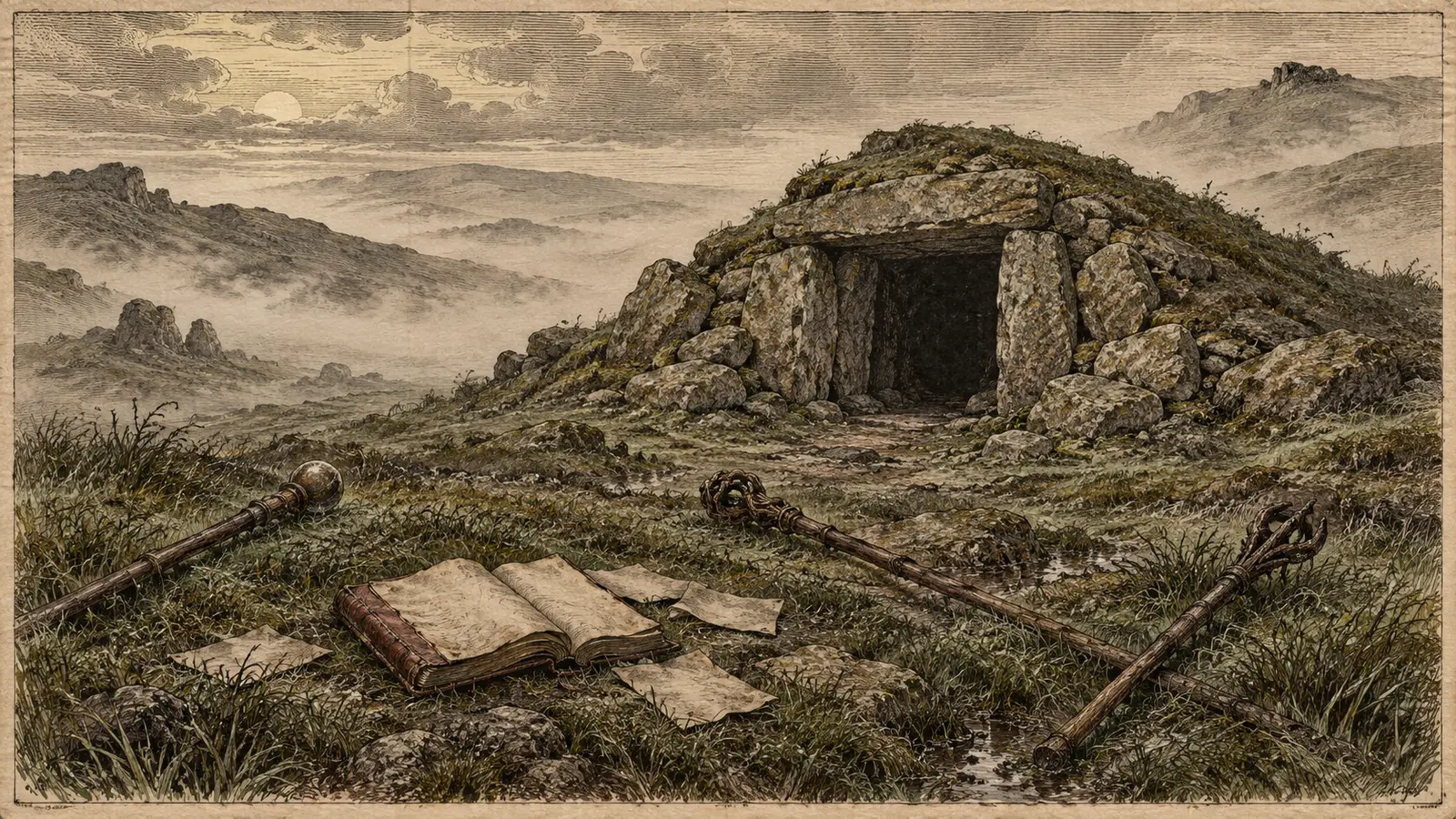
The Circle travels to the Kron Hills, to an old cairn. It belongs to a man called Halmadar the Cruel. Halmadar had been a warlord of the Shield Lands, and more than a century earlier he had done something almost no one had managed: he had gained both the Hand and the Eye of Vecna at once. He was only the second person known to have held them together. The relics took a cruel man and made him something worse, sadistic in a way that frightened even his own followers. His reign ended when his enemies drugged him and buried him alive in the Kron Hills.
He did not stay buried. By the time the Circle arrives, Halmadar is undead, still bearing the Hand and the Eye, and his will is no longer his own. Vecna moves him the way a hand moves a glove. He ambushes the Circle of Eight at his cairn, and within a few rounds, every one of them is dead.
Picture that moment at the table. The players have just sat down with the mightiest wizards in the setting, and before the first cup of coffee has cooled, they've watched all eight of them fall. Then the Dungeon Master gathers up those character sheets, and the real adventure begins.
Mordenkainen alone survives, because he had chosen to stay behind in the City of Greyhawk as a safeguard. Now he gathers whoever is left: the Circle's apprentices, old companions, trusted friends. These are the players' true characters, and Mordenkainen sends them on a nearly hopeless errand, to stop Vecna before he can complete his rise to power.
The trail leads through the City of Greyhawk itself, with its crowded quarters and guilds, and out into the Viscounty of Verbobonc, a hilly borderland to the south. It passes through a gnome warren called Osnabrolt, deep in the earth. Cells of Vecna's cult are hidden in the city and in Verbobonc, and the heroes must find them, which is hard, because the cult is secretive almost beyond reason.
Let's spend a moment with that cult, since it becomes one of the most enduring parts of Vecna's lore. Its holy symbol is an eye set in the palm of a left hand, the two lost relics joined into a single sign. Its members speak of their god only in whispers, if at all. In the fuller descriptions that later books gave, the cult arranges itself like a body. Vecna stands at the top, of course. Beneath him is the Voice of Vecna, a role that only a manifestation of the god himself can fill. Then comes the Heart of Vecna, the high priest. Each congregation, which the cult calls an organ, is led by a Thought of Vecna. The lesser priests are called the Memories of Vecna. And there are other named parts: the Hand, the Eye, the Teeth, the Fingers, the Blood.
Within this body there are smaller sects. The Eyes of Vecna are an undead cult made up mostly of thieves and rogues, watchers in the shadows. The Fingers of Vecna serve as his personal guard. Much later, a heretical group called the Ebon Triad would appear, dreaming of merging Vecna with two other dark gods of Oerth, Hextor and Erythnul, into one terrible being. The mainstream cult regards that idea with about as much warmth as you'd expect.
Now, back to the heroes on their hopeless road. The trail leads at last to a remarkable place, and we'll return to it more than once tonight, so let's take our time with it. On the open grasslands of the far west, on the Dry Steppes, stand the Stone Circles of Tovag Baragu. Picture something like Stonehenge, only far vaster and far older in spirit. Five broad circles of enormous white pillars stand on the plain, smooth and very hard, each about as tall as a four-story house. The whole ring is more than a mile across, and no stone like it can be found anywhere within a couple of hundred miles. Nobody quite knows how it came there.
The name comes from the Baklunish tongue, and it means the Navel of the Oerth. It is said to be all that remains of the old capital of the Baklunish Empire, which was destroyed in a catastrophe called the Invoked Devastation, one half of the Twin Cataclysms that ended the ancient wars between the Baklunish and the Suloise. Between its pillars, the stones open like doorways. Through them you can glimpse the past, present and future of the Flanaess, and sometimes the fallen city of Bakluna as it stood before the fire. Some of those doorways, if you're brave or foolish, can be walked through.
It is here that Vecna, with a kind of dreadful courtesy, invites the heroes to meet him so that he can reward them for their help. Their help, it turns out, has been part of his plan all along. At the climax they find an avatar of the Maimed God at Tovag Baragu. He has opened one of the stone doorways onto his own past, and through it lie the ruins of his palace, the hall of the Spidered Throne itself. Imagine standing on a windswept plain at dusk, and through a white stone arch seeing a dim, dust-hung throne room from a thousand years ago, with the spider-shaped seat still waiting.
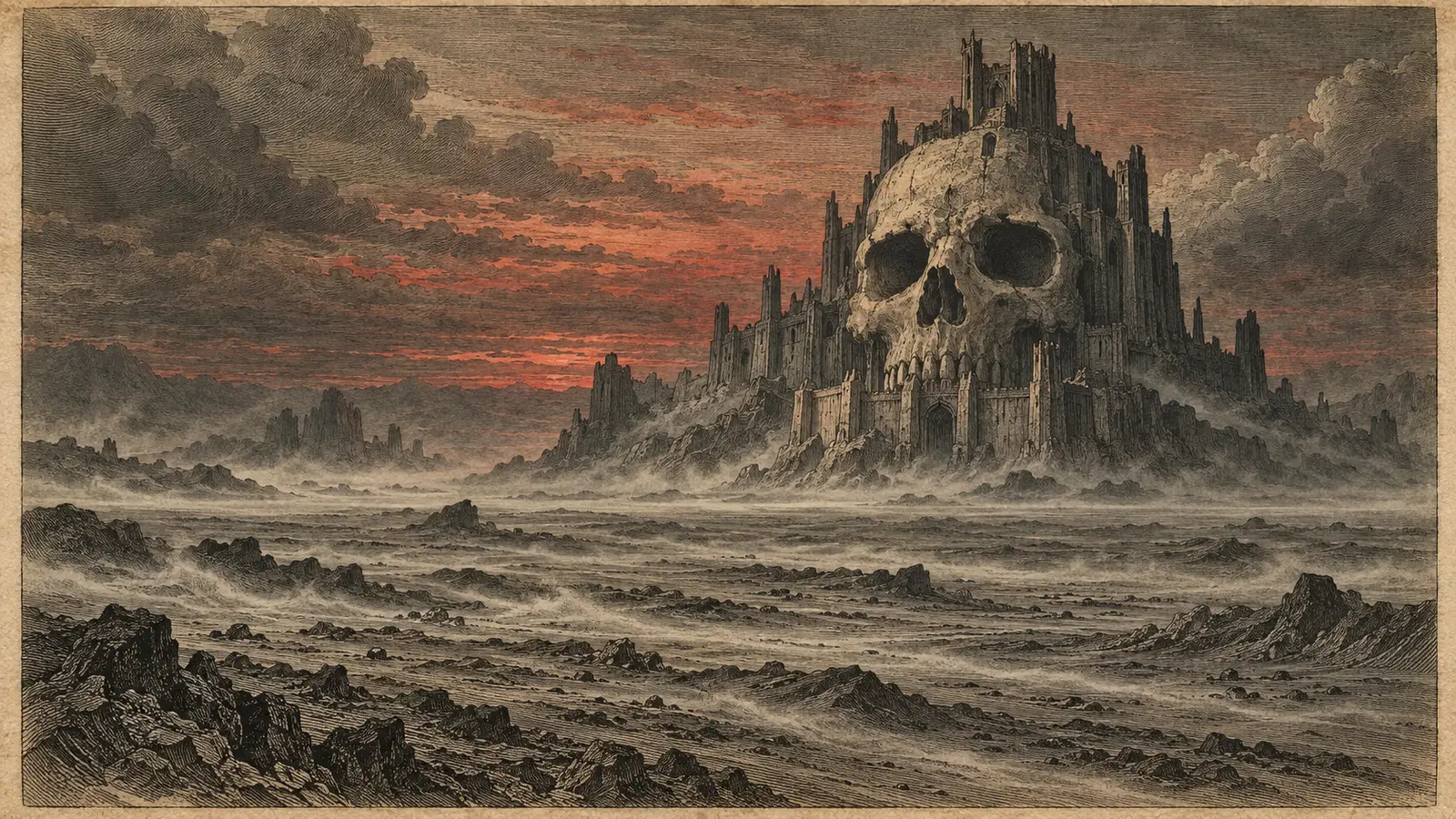
The adventure also sketched another of Vecna's homes, far from Oerth, and this one would matter a great deal in the years to come. It was called Citadel Cavitius, and it stood on the Quasi-Elemental Plane of Ash, a grey and cooling borderland near the Negative Energy Plane, where warmth and life seep slowly away. The citadel was shaped like an enormous human skull, and its walls were made of a substance identical to bone. Picture it from a distance, pale and eyeless on a plain of drifting ash, its gaping sockets looking out over nothing.
Cook's module was built to be hard, and it said so to the Dungeon Master in words that have become rather famous. "If you are a DM who cannot bring himself to kill a player's prized character or one who can be pressured to 'give a guy a break,' you must be extra strong when running Vecna Lives!" It was a gentle way of saying that the Whispered One does not bargain.
If the heroes succeed, they banish the Maimed God at Tovag Baragu, and Oerth settles back into something close to its old shape, except for one great absence. The Circle of Eight is gone. In time, Mordenkainen uses powerful magic to bring his colleagues back to life, but they return to a world already sliding toward war. The next year, the Greyhawk Wars break out, and the Circle is in disarray when they begin.
And Vecna? He is not destroyed. At the end of the adventure he is drawn away, out of Oerth and into the grey Mists of , where the Dark Powers keep their prisoners. Meanwhile the relics had one more small adventure of their own. A few years after these events, Vecna's cult got hold of the Hand and the Eye once more. They were thrown through one of the portals at Tovag Baragu and lost somewhere on an unknown outer plane. For a time, no one in Oerth knew where they had gone.
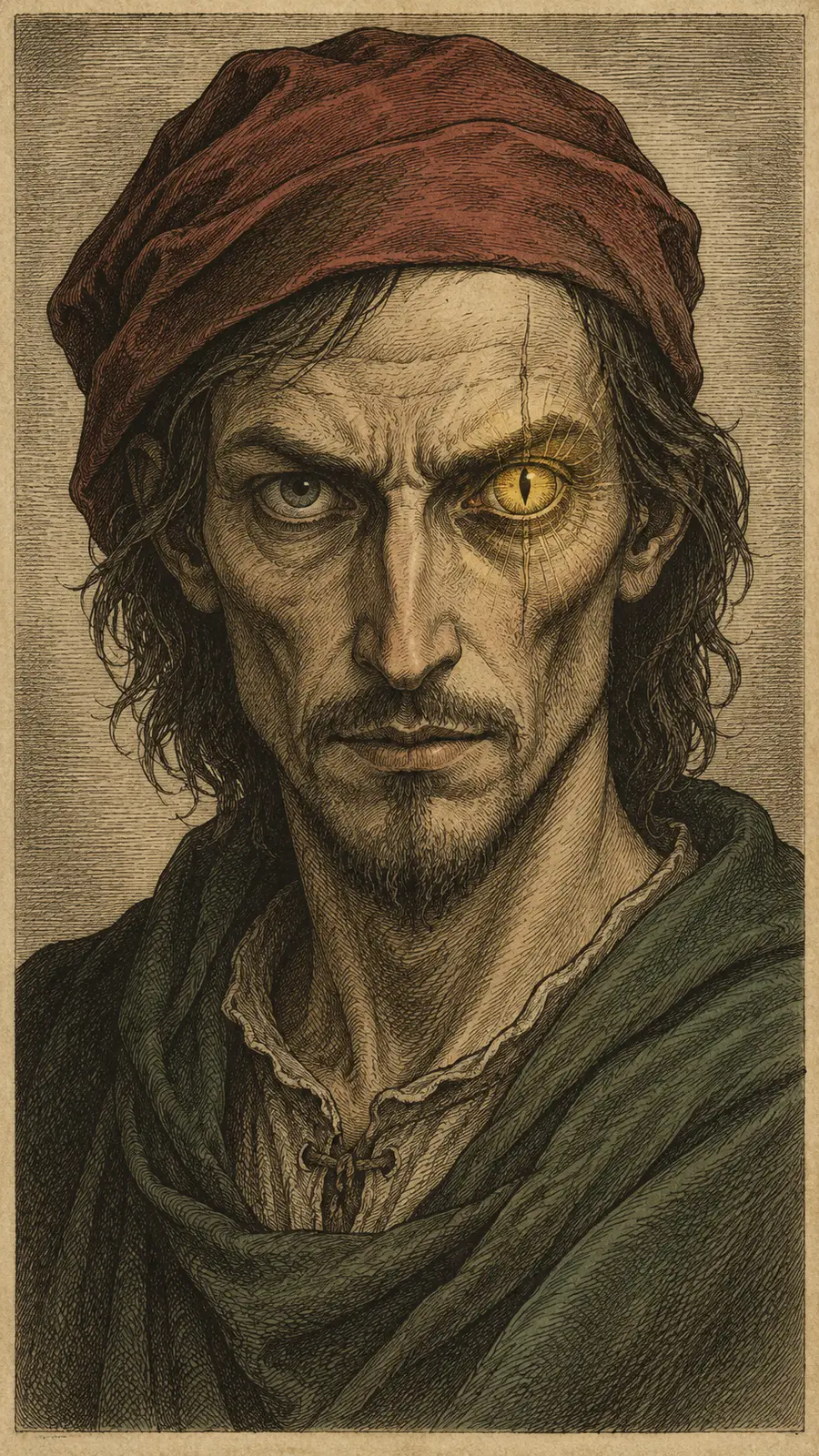
A few years later, in 1993, Zeb Cook returned to the relics in Book of Artifacts, a second edition treasury of the game's great objects. There the Hand is described as a claw-like left hand that grants its bearer tremendous strength and shrugs off even the humble magic missile, and its touch can kill outright. The Eye begins as a dark red clot and, once seated, becomes a golden eye with a slitted pupil, like a cat's, that grants true seeing. Other powers were left for each Dungeon Master to roll at random, so that no two tables would ever find quite the same relics.
Let the picture of the Stone Circles fade now into evening. The Maimed God has been pulled into the Mists, and the Mists are where we go next.
Chapter V
Chained in the Mists: Cavitius and Tovag
was a setting of gothic horror, first shaped in the early eighties around the vampire Strahd von Zarovich and his castle, and by the nineties it had grown into a whole realm of its own called the Demiplane of Dread. The idea behind it is quietly terrifying. Somewhere beyond the ordinary worlds, grey Mists drift and gather. When a person commits some deep enough evil, the Mists may come for them, and they are pulled away from their home into a land of their own, a domain shaped to match their crimes. They rule there, in a sense, as a darklord. But the domain is also their prison and their punishment. The borders close around them like a hand, and the beings who arrange all this, known only as the Dark Powers, never explain themselves.
We had left at the end of his great scheme, drawn into the Mists. For several years in the real world, the players of the game didn't learn much more about where he had landed. Then, in 1997, a boxed set called Ravenloft: Domains of Dread, written by William W. Connors and Steve Miller, revealed it.
The Dark Powers, it said, had taken both of them, Vecna and Kas together. And they had done something almost playful in its cruelty. They had made two new domains, twinned against one another, with a single mountain range between them. The whole arrangement is called the Burning Peaks cluster. On one side lies Vecna's domain, Cavitius. On the other lies the domain of Kas, called Tovag. Both were drawn out of , carved from the memory of the world the two of them once shared.
The curse the Mists laid on them is simple. They are at war, forever. Neither side can gain the upper hand. And neither of them can cross into the other's land to finish it. Master and servant, who once struck each other down in the Rotted Tower, are now bound to fight across a mountain range for all time, each forever almost able to reach the other and never quite able. It's a very Ravenloft sort of punishment. It takes the thing you want most and holds it just beyond the tips of your fingers.
Let's walk through Cavitius first, slowly, as a traveler would. The name comes from the old skull-citadel on the Plane of Ash, and the domain feels like a memory of that place. It is a desert. Volcanic ash drifts across it in low grey dunes. There is no true day and no true night, only an eternal twilight, a dim bruise-colored sky that never brightens. And the land itself is hungry. It slowly drains the life from anyone who enters, so that even walking across it is a kind of wound.
There is only one settlement in Cavitius, and that is the citadel city at its heart. It is a copy of Vecna's old skull-fortress on the Plane of Ash, rebuilt here by the Mists as a kind of mocking reflection. Within its walls the order of the living world is turned upside down. The undead are the leading citizens. The living have no rights at all. It is ruled by what are called the Undead Lords, and above them sits the Whispered One himself, a prisoner in a palace that looks exactly like his home.
Now look across the Burning Peaks to Tovag, and the landscape changes entirely. Tovag is a land of thick forests, deep and shadowed. You might think that forests would be bad news for a vampire, since stakes can be cut from any tree. But the Mists have a sense of humor about these things. No stake cut from the wood of Tovag can harm its darklord. Only wood from his homeland of Oerth, far away across the Mists, can pierce his heart.
In this telling, Kas is a vampire of great age and terrible skill, a chaotic and hateful thing, and the darklord of Tovag. His city and lair is called Tor Gorak. From there he drives his people like a whip drives cattle, forcing them into service in his endless war against Cavitius. What does he want from that war? He wants his sword back. The Sword of Kas, the blade that betrayed its maker and made Kas what he is, is lost to him, and Kas believes Vecna keeps it somewhere within his citadel. So he throws his subjects against the skull-city year after year, a war of slow attrition, reaching for a sword he may never touch again.
We might pause for a moment here and feel the particular sadness of it. Kas betrayed his master because a sword whispered to him. Now he has neither the master nor the sword, only the whisper that never quite stops.
The next year, in the late summer of 1998, TSR published an adventure called Vecna Reborn, written by Monte Cook. It forms the middle of what players came to call the Vecna trilogy. In it, Vecna is written as very nearly a god, though still held by the Mists, and he carries a new title that fits his circumstances precisely: the Chained God.
The story begins with something small, as Ravenloft stories often do. A chance meeting on a road marks the heroes as targets. They find they are being hunted by a cult, and the cult is working on something audacious. It means to bring about Vecna's rebirth, and it means to do it inside the domain of his arch-foe Kas, in the very heart of Tovag.
The cultists move through Tor Gorak like a sickness, and in fact they bring one with them. They spread a magical plague that ravages Kas's whole domain. The heroes have to move carefully through stricken streets to avoid it. Their search takes them after a tome called the Book of Inverted Darkness, and leads them to a room that lies outside space and time altogether. They creep through a temple of Vecna. They cross the undead-ruled city of Cavitius itself, where the living have no rights, and make their way through its twilight streets. They face a war machine built from animated body parts, a lumbering construction that seems to have been dreamed up by someone who very much admired the idea of taking bodies apart and putting them back together.
In the finale, the cult breaks into an asylum in Tor Gorak. Its target is one of the inmates there, whose death is the last condition of the cult's ritual. If the heroes fail, Vecna is born again beyond the borders that hold him, loosed from the Mists at last. The adventure promised a tale of betrayal, madness and sorcery that "may tear apart the Demiplane of Dread itself."
What you notice, reading across the trilogy, is how the Whispered One has changed. In Cook's adventure, he was a gloating demigod in full control, moving the undead Halmadar like a puppet. Here in the Mists, he is a prisoner, clever and patient but trapped, trying every door, every loophole, every cult and plague and birth, to get out.
He would find his way out soon enough. But to do it, he needed more power than a chained demigod possessed. He needed to become something greater. And for that, he needed a victim.
Chapter VI
The god who walked into Sigil
In June of 2000, the last great adventure of second edition arrived. It was called Die Die!, written by Bruce R. Cordell and Steve Miller, with a Paul Bonner painting on the cover. By then TSR had been folded into Wizards of the Coast, and the third edition of the game was only weeks away. This adventure served as a kind of bridge between the two, and it closed the Vecna trilogy in grand style. It moved through three settings, one after another, each in its own book: first, then , then Planescape and its great city, .
Let's begin, as Vecna did, with a scheme and a patient ally. The Serpent is back, the coiled shape we left in the corner of the room when Vecna was a boy. In this adventure it is described as his greatest and perhaps only true ally, a being he has always worshipped, and it is something far older than it looks. With the Serpent's help, Vecna made two magical tablets inscribed with spells beyond the ordinary limits of mortal magic, spells of the tenth level and higher. Then he had them buried at an archaeological dig on , like a bright lure dropped into dark water.
The fish he wanted was Iuz. On Oerth, Iuz the Evil, sometimes called the Old One, is a half-fiend demigod who rules a cruel empire in the north of the Flanaess. He had long dreamed of rising to greater divinity, and he was exactly the sort of being who would chase a rumor of forbidden magic. Iuz took the bait. He followed the trail of the tablets, just as Vecna knew he would.
The trail led, as trails in this story tend to do, to Tovag Baragu, the Navel of the Oerth. A death cult had seized the old stone circles, and Iuz stood behind it. Vecna's own cultists were there too, opening portals among the white pillars. Iuz struck at their temple and took the Eye of Vecna for himself, and then he stepped through one of the stone doorways into Vecna's realm in the Mists. The heroes came after him, carrying the other relic, the Hand. Picture them on that windswept plain once more, among pillars as tall as towers, with one withered hand wrapped carefully in cloth, stepping through an arch into grey fog.
On the far side lies Cavitius, ash and twilight and the skull-city. And there, at last, the trap closes. Iuz has been lured into the heart of Vecna's domain, and Vecna absorbs him. He draws the demigod into himself, and Iuz's divine power becomes his own. In that moment the Chained God becomes a greater god. The adventure also shows one of his reliquaries here, called the Heart of Vecna.
The heroes meet Kas in this part of the story, too, still bound to his war. The vampire warlord uses the Sword of Kas to carry everyone back to Tovag Baragu, pulling them out of the Mists in a single stroke.
And then Vecna breaks free. Newly divine, he tears his way out of Citadel Cavitius. He takes a piece of Ravenloft itself and shapes it into something like a great spiked funnel, and he drives it straight through the walls between worlds and into a place called the Sinker's Armory in Sigil.
Now, Sigil deserves a slow introduction, because Vecna's arrival there broke one of its oldest laws. Sigil is called the City of Doors. It sits at the center of the multiverse, and every archway, every doorframe, every gap between two pillars might be a portal to somewhere else, if you hold the right key. People sometimes call it the Cage. It is ruled by a silent, masked figure called the Lady of Pain, and among her laws, the most absolute is this: no god may enter Sigil. Gods who have tried have not survived her.
Vecna walked in anyway. He had a secret, as he always does. The Serpent had taught him a word, one fragment of what is called the Language Primeval. In this adventure the Serpent is revealed as one of the Ancient Brethren, beings older than the multiverse itself, whose power is as ancient as anything that exists. And the Lady of Pain, the adventure says, is one of the Ancient Brethren too. Because Vecna's power flowed from a source as old as hers, she could not simply unmake him. She could cause him great pain, and she did, but she could neither destroy him nor throw him out. He became the only god ever to set foot in Sigil and not be destroyed by the Lady.
What did he want there? The same thing he had wanted at Tovag Baragu, only larger. Sigil's countless doors lead everywhere. Vecna meant to use them to remake existence itself, and to make himself the supreme deity of the whole multiverse. The boy from the untouchable caste of Fleeth now stood at the center of all things, reaching for the rest.
The heroes stopped him at the last moment. The Lady of Pain helped them, in her silent way. And they carried something unusual into that last battle. They bore lesser pieces of Vecna's own mortal body, grafted onto their own flesh, the same bargain the old relics had always demanded. With those pieces of the lich turned against him, they destroyed his avatar. It weakened him just enough, and the Lady expelled him from the Cage.
In that same moment, Iuz tore himself free of Vecna's body and escaped. Stripped of the power he had swallowed, Vecna fell from a greater god back to a lesser one. He survived, diminished, and in time found his way back toward Oerth.
But the damage was done, and it couldn't all be undone. The Lady tried to heal the harm that Vecna's presence had worked on the city and everything connected to it, and she could only partly succeed. Some of the Outer Planes drifted away from one another. Others collided and merged. The nature of the Prime Material Plane itself was altered. Within the world of the game, this is part of why the shape of the cosmos is described differently in the editions that followed. In a sense, the whole map of the multiverse was redrawn around the wound Vecna left.
People who played through it still talk about it with a mixture of fondness and raised eyebrows. It felt like one of those vast comic-book crossovers of the nineties, where every hero from every series is thrown into one enormous crisis. It also broke some of the cosmology's most cherished rules, most of all the one about gods in Sigil, and it led its heroes rather firmly down a fixed path. But it gave Vecna the thing that would define him for decades. He was a god now, lesser but real. And in the edition that followed, that god would be given to every player of the game.
Chapter VII
A lesser god among the core pantheon
The third edition of Dungeons & Dragons arrived later in 2000, and it made a decision that quietly changed 's place in the world. Rather than inventing a new set of gods for its core rules, it borrowed the gods of and made them the default pantheon for everyone. A cleric in any campaign, anywhere, could now choose a Greyhawk god from the Player's Handbook. And among those gods, listed as a lesser deity, was Vecna.
Imagine what that meant for a moment. For most of his existence, Vecna had lived in the back pages of treasure lists and in a handful of adventures. Now he stood in the main rulebook, among the gods of light and war and harvest, a name any new player might read while choosing whom their character would pray to. The revised version of third edition, a few years later, kept him right where he was.
His alignment shifted slightly in this era, from lawful evil to neutral evil, as though the orderly tyrant of the Spidered Throne had become something more self-contained, loyal to his own designs and nothing else. And within the story of the world, this edition began just after the events we've been following. Adventurers had thrown him out of . Iuz had escaped him. He had returned to much weaker than he had been at the height of his power in the City of Doors, but still a god.
A new gazetteer of Greyhawk, published in 2000, summed him up in a line that has been quoted ever since: "a lich who hordes dark secrets, covets incredible power and holds dominion over the undead." It called him perhaps the most infamous of all the evil gods of Oerth. That's a strong claim in a world that also holds Iuz and Nerull, but the Whispered One had earned it.
Two years later, Deities and Demigods gave him a full divine entry, and here we can look at the god of the third edition clearly, as if he stood in a pool of lamplight. His portfolio, the things he rules over, is destructive and evil secrets, magic, hidden knowledge and intrigue. A cleric of Vecna draws on the powers of evil, of knowledge and of magic. His rank is lesser deity. His holy symbol is the one his cult had long used, an eye in the palm of a left hand.
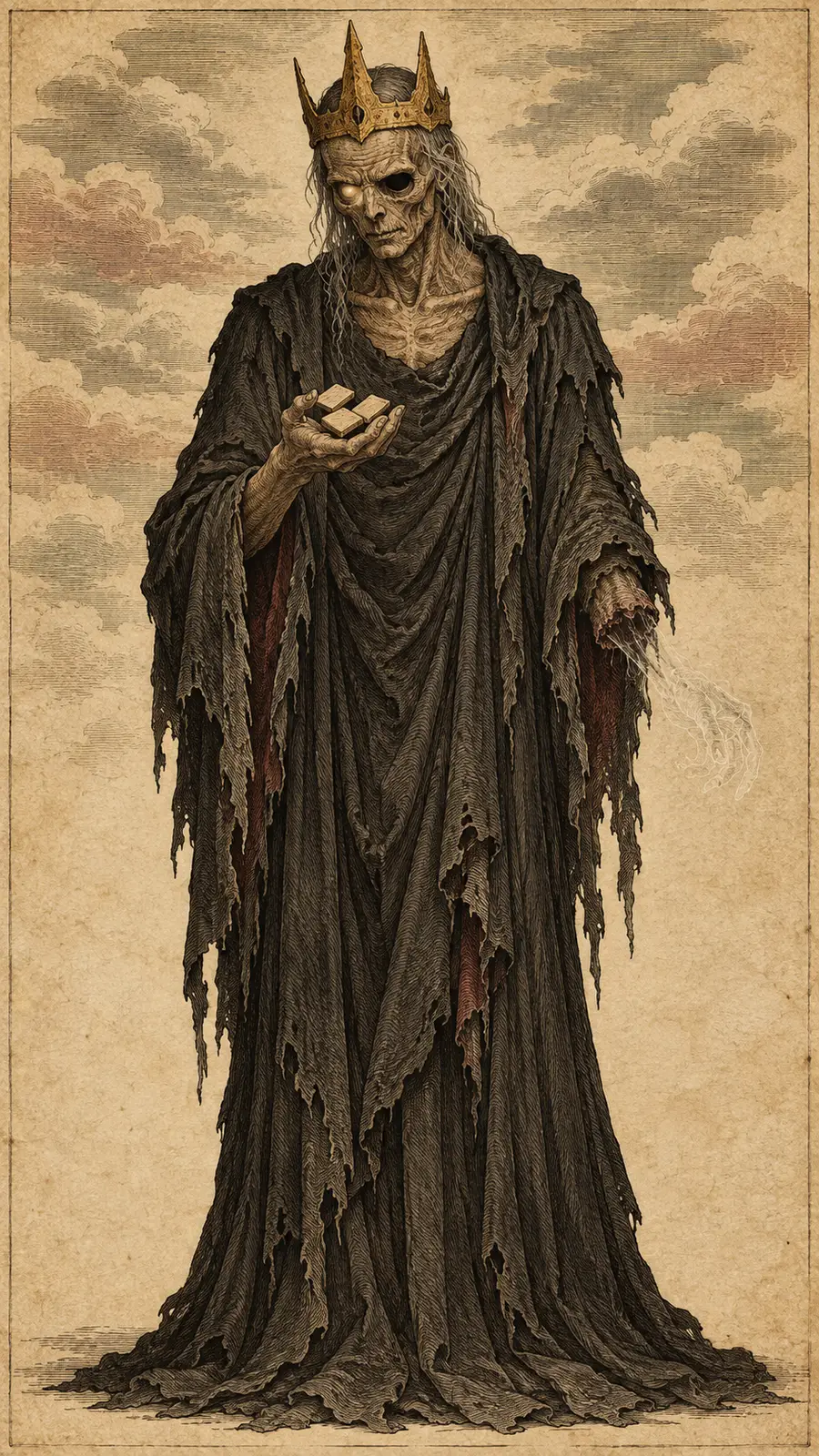
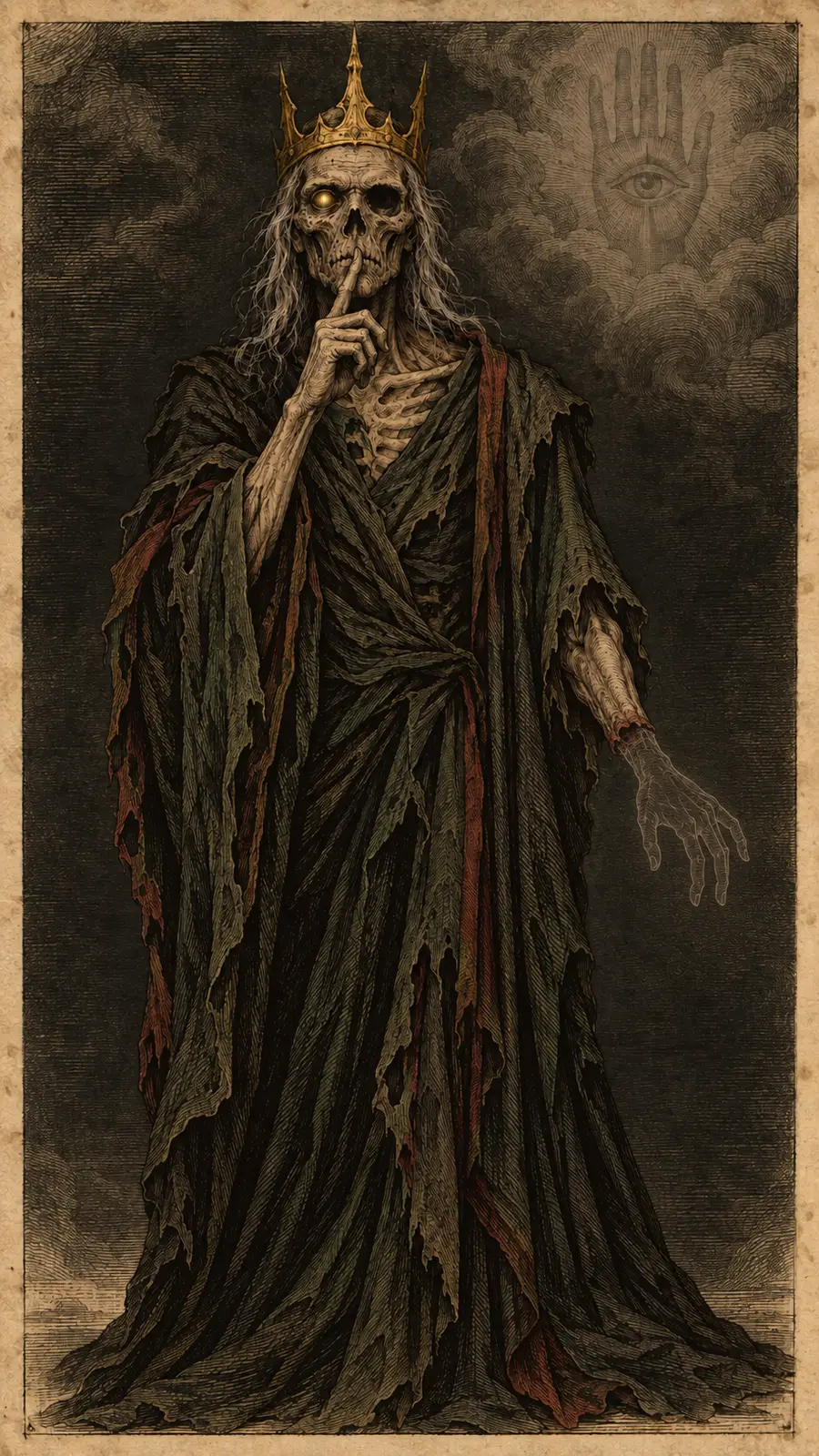
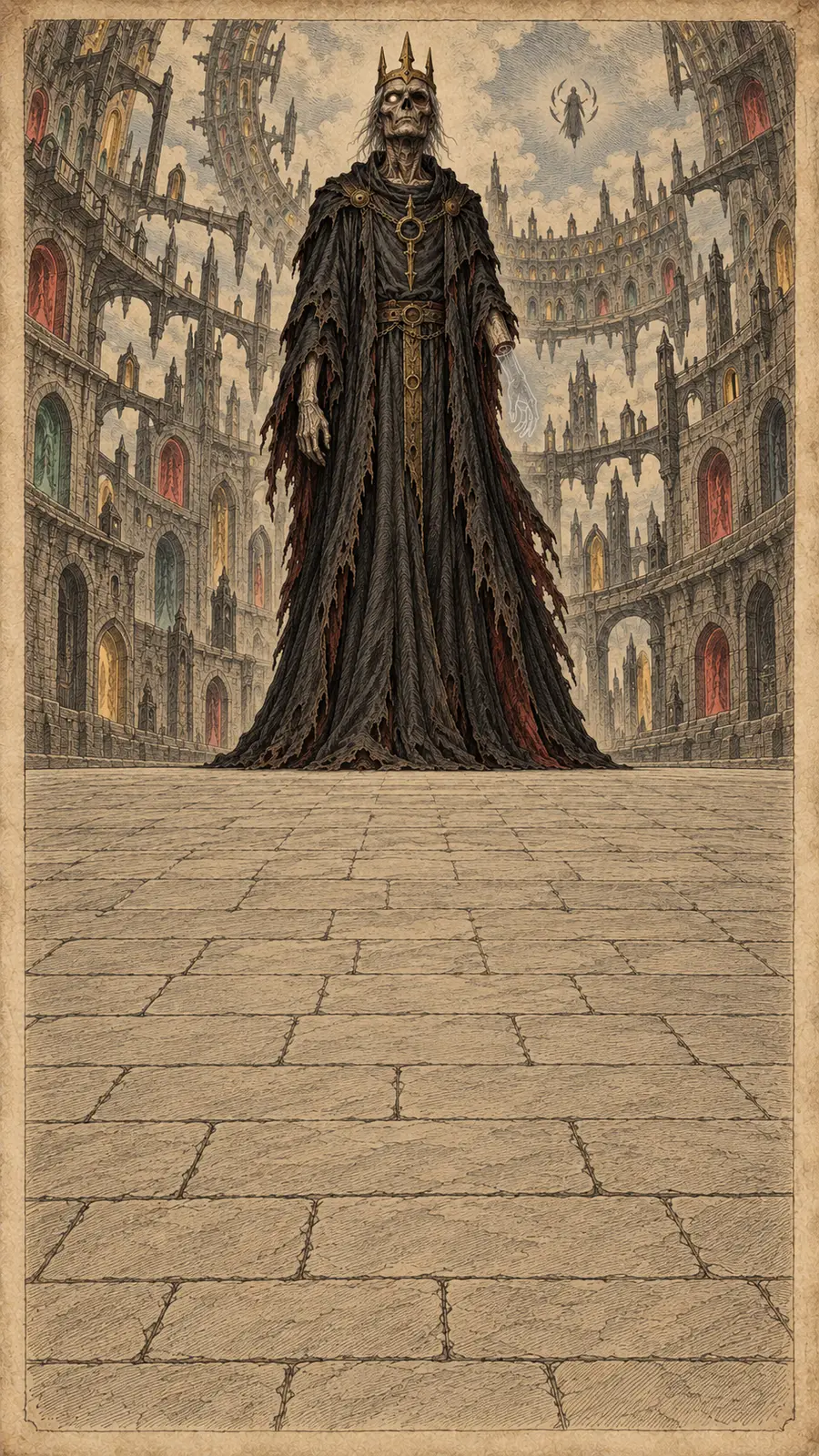
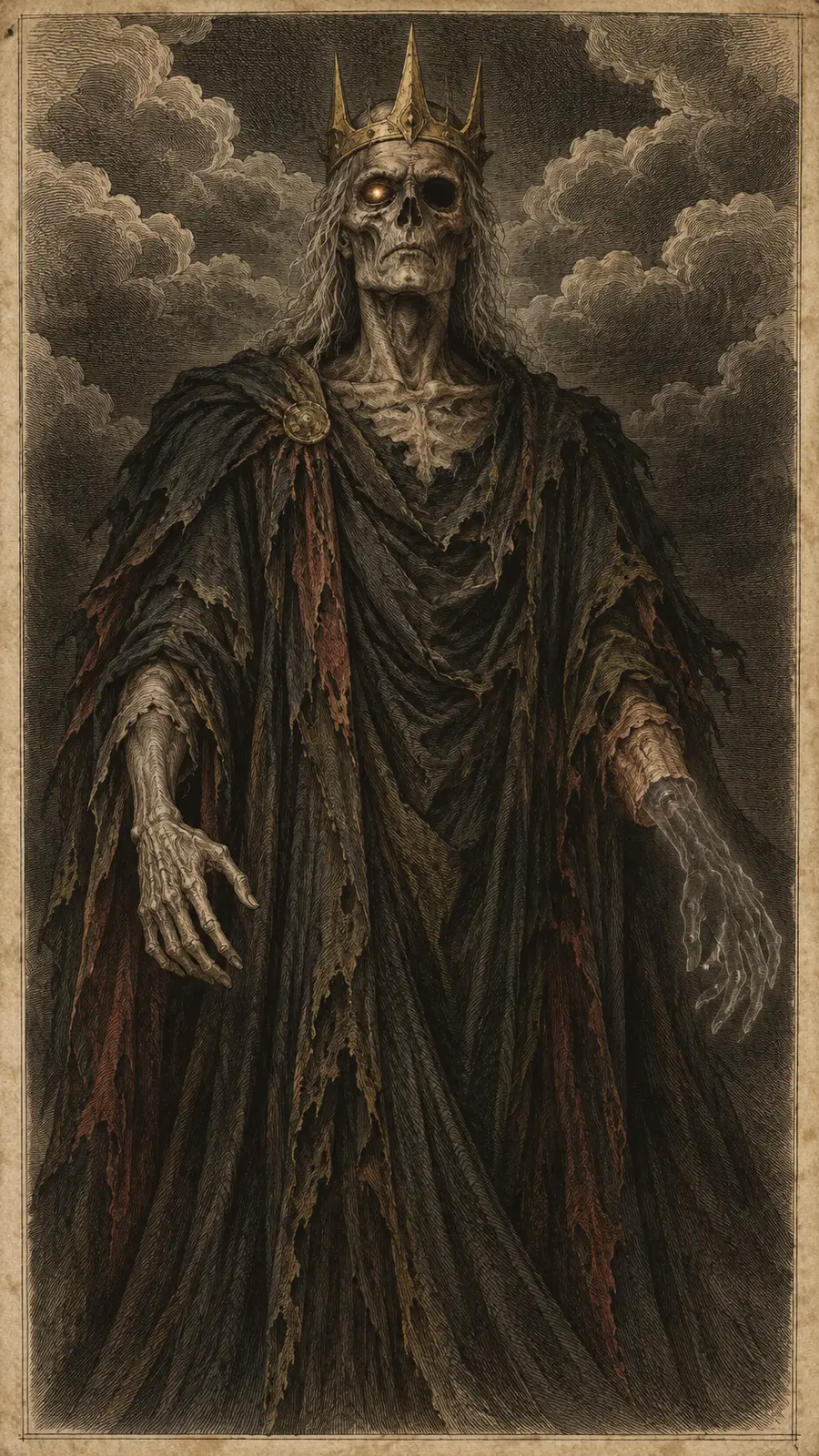
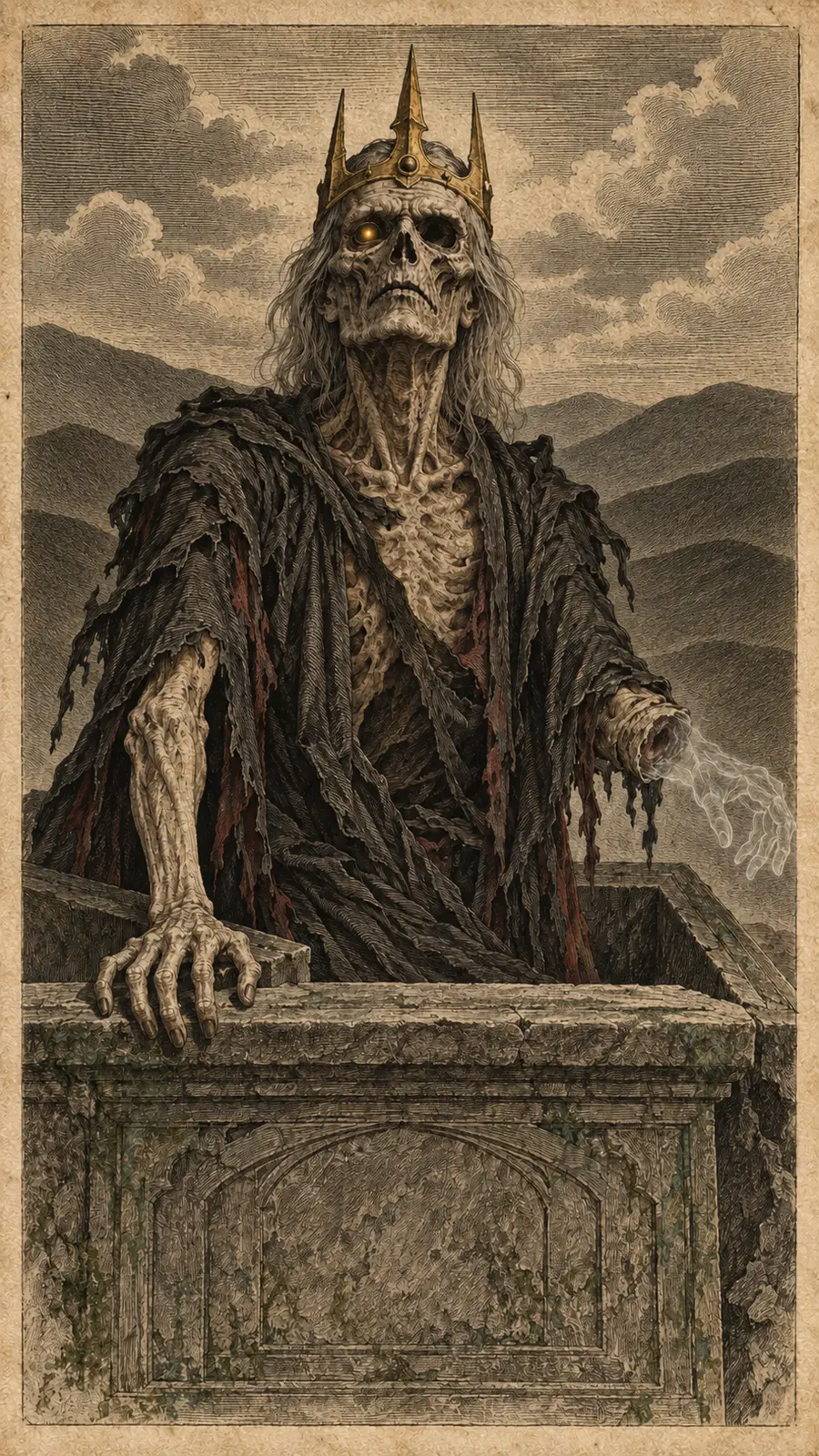
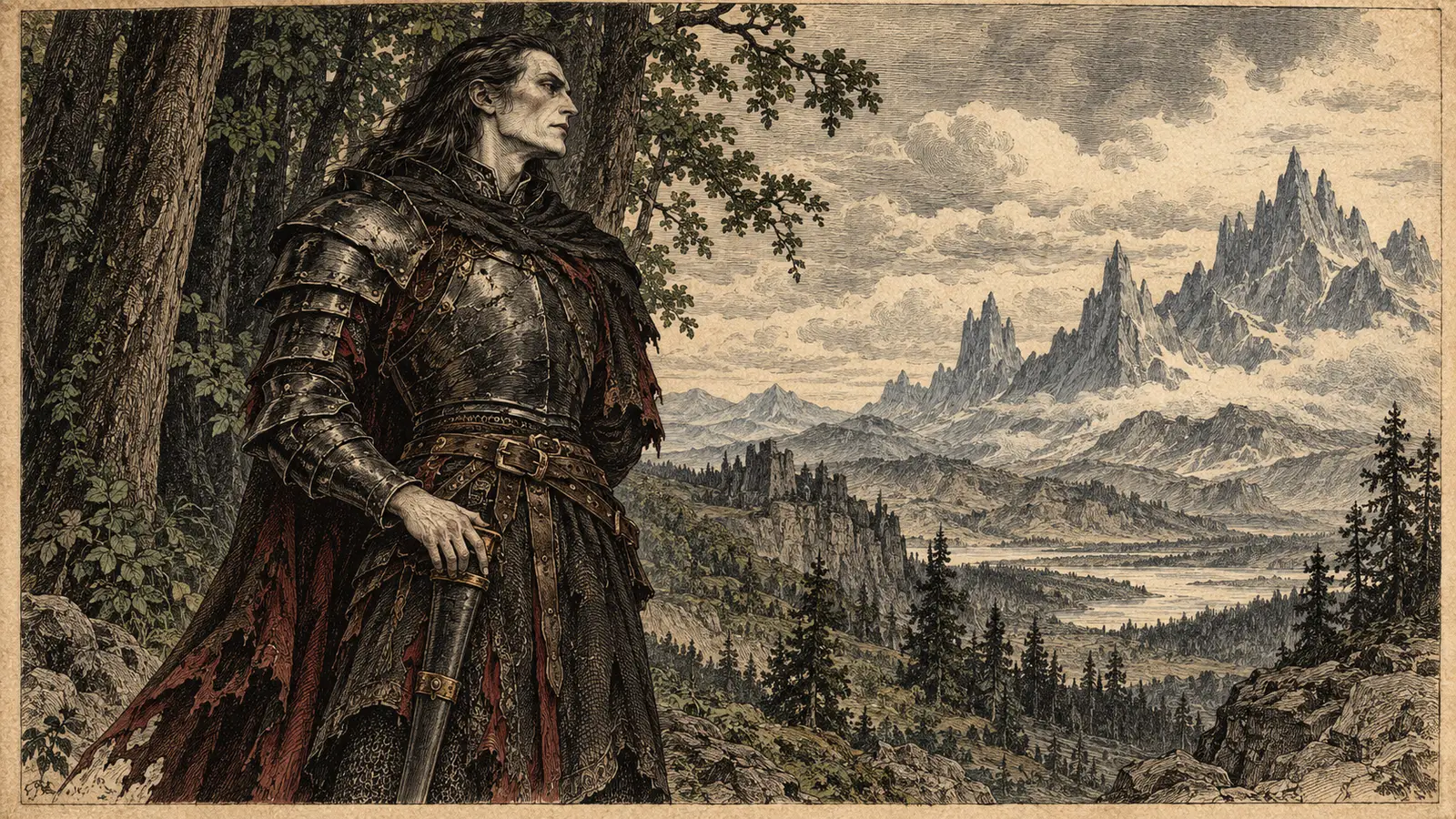
As for how he looks: he is missing his left hand and his left eye, as he always will be. In some depictions his remaining flesh is withered and mummified, clinging close to the bone like old parchment. In others there's no skin left at all, only bare bone. Either way, you can imagine him with his one good eye burning in its socket, and an empty place at the end of his left arm where the Hand used to be.
His divine realm, in this telling, is Citadel Cavitius, the skull-fortress on the Quasi-Elemental Plane of Ash, near the border of the Negative Energy Plane. So even as a god, he returns home to a skull on a grey plain, where warmth goes to die. There's something consistent about him in that way. He has always liked to live inside the shape of death.
He also carried a long string of titles by now, like beads on a cord. The Arch-Lich. The Chained God, from his years in the Mists. The Maimed God. Master of the Spider Throne. The Whispered One. The Dying King. Lord of the Rotted Tower. The Undying King. Each of them is a small story. Taken together they read like the chapters of his life.
The Hand and the Eye appeared once more in the third edition Dungeon Master's Guide, now formally counted among the great major artifacts. The Eye lets its bearer see through every illusion and into any darkness. It can bend the will of others to its bearer's. Its gaze can kill, and then turn the body to dust. It can even make holy ground unholy. The Hand's touch carries a deep, numbing cold. It can drain the strength and quickness out of another creature and give it to the one who wears it, and against anyone who is not evil it can daze, weaken, paralyze or kill. A person who bears both relics at once becomes very hard to find, very hard to harm with holy magic, and able to sense the magic around them and understand every tongue. The legend beneath them stayed the same: Kas, the vampire lieutenant, took that hand and that eye with the sword his master made.
In 2002, Monte Cook wrote a sourcebook for the darkest corners of the game, called the Book of Vile Darkness, meant for mature campaigns. It shares its name with an artifact in the world, a book of the same title, and that book is bound up with Vecna.
The legend of the book goes like this. Most who know of it believe Vecna wrote the original, or at least added a great deal to it. It is said to be a catalogue of every diseased idea and every piece of the blackest magic that he found or invented in his long existence. Over the ages, other evil figures have stitched their own pages and notes into it, so that the book is a kind of patchwork of wickedness, grown thicker with every owner. And this is where the other telling of Vecna's youth comes back. In the book's legend, after he killed the order of wizards who had exiled his hedge-witch mother, a disembodied voice urged him to begin writing, and he did. Some who hear that story wonder whose voice it was. The Serpent, perhaps, coiled in the corner as always.
His cult, for its part, prizes copies of the Book of Vile Darkness above almost anything, because Vecna had a hand in writing it. That's a small joke of the lore, if you like: the god who lost his hand had a hand in the book.
As third edition matured, later books gave Vecna's worshippers still more attention. Complete Divine described his priesthood in detail, and Libris Mortis, a book devoted to the undead, included him among the powers of death. The cult's body-shaped hierarchy, with its Heart and Thoughts and Memories, was well established by now.
So by the end of this era Vecna had become something he had never quite been before. He was familiar. He wasn't a buried rumor anymore. He was a god in the book, a name that clerics could invoke and villains could serve. And the next edition would take that familiarity and give it a larger stage.
Chapter VIII
The god of secrets and the Raven Queen
Fourth edition arrived in 2008, and it set its core rules in a new default world, a dim and scattered place of small lit towns surrounded by darkness. Players took to calling it the Points of Light setting, or the Nentir Vale, after the region its adventures began in. It had its own pantheon of twenty gods, some old, some new. Among the evil gods were familiar names like , Bane, Gruumsh, Lolth and , and two newcomers called Torog and Zehir. And there, in the company of the great, stood .
This was the edition that made him a major god. Before it he had been, above all, a figure of , a villain rooted in the Flanaess and its history. Now he was one of the central deities of the game's own default setting, and he was counted as a greater deity. The fourth edition Dungeon Master's Guide described him mainly as the god of secrets, and other books widened his reach to cover undeath, since he is a lich-god, and arcane magic. A later book of divine powers gave his clerics the domains of knowledge and undeath. His symbol was still a hand with an eye in its palm, a small drawing of everything he lost.
Years later, when fifth edition gathered these gods again, it gave them a name: the Dawn War pantheon. The name comes from the setting's creation myth, in which the gods fought the primordials, the raw elemental beings who were there first, for control of the newborn world. But Vecna didn't take part in that ancient war. He came later. The fourth edition still told him as a mortal who rose to godhood long after the world was made, and it retold his ascent briefly. He tempted another demigod into linking himself with the Eye of Vecna, swallowed that being's power, and then opened a gateway into . You can hear the shape of Iuz and the spiked funnel in it, told more simply, as a myth tends to simplify with the retelling.
His cult now had commandments, and they are worth hearing slowly, the way a novice might hear them whispered in a cellar. Never reveal everything you know. Find the seed of darkness in your own heart and nourish it, and find it in others and use it to your advantage. And a third teaching: oppose the followers of every other god, so that Vecna alone may rule. Because the cult is so secretive, it keeps no real body of scripture. Its teachings pass from mouth to ear, the way Mazzel's lessons once did.
This edition also gave Vecna a new rival, and she is one of the loveliest and coldest figures in the game. The Raven Queen was new to fourth edition. She is the goddess of death, of fate and of winter, and she is neither good nor evil. Long ago, the story says, she was a mortal sorcerer-queen who became the consort of the old god of death, Nerull, taking the name Nera. Then she overthrew him and took his place. Her home is a fortress of black ice called Letherna, standing in a frozen forest in the , the grey echo of the world where shadows gather. The souls of the dead pass through her halls on their way to wherever they go next, like travelers passing through a quiet station at night.
Vecna envies her. More precisely, he envies her power over that flow of souls, and all the knowledge that each passing soul carries with it. Think of what that must look like to a god of secrets: every memory of every life, moving through one place, and none of it his. One of his great ambitions is to overthrow her and rule the whole Shadowfell from her Fortress of Memories. He isn't her only enemy. , the demon prince of the undead, hates her even more bitterly and schemes to kill her and take her portfolio. So the Raven Queen stands in her fortress of black ice with two undead powers circling her, one full of hunger and one full of curiosity.
In the winter between 2008 and 2009, a sourcebook called Open Grave: Secrets of the Undead gathered the lore of the dead and the undying, and Vecna stood on its cover. It gave him game statistics that placed him near the very top of what the system allowed, as powerful a foe as fourth edition had to offer. And it wrote about him at length, as one of the most lore-heavy entries of the whole edition.
Open Grave also introduced a servant worth meeting. Osterneth, the Bronze Lich, was described as the mightiest of Vecna's servants. Picture an undead sorcerer whose remains are sheathed in bronze, gleaming dully in torchlight, carrying out the Maimed God's will in some far corner of the planes.
In this edition, Vecna was restless. He wandered the planes and kept more than one lair, but Citadel Cavitius remained his dominion, and it appeared both in Open Grave and in an issue of Dragon magazine. And here the fourth edition told Kas's fate in its own way, the third of those three versions we heard earlier. With his very last breath before losing his body, the story went, Vecna imprisoned Kas in Citadel Cavitius. There, slowly, the negative energy of that place turned Kas into a vampire, one who must suffer forever without being able to feed. And Vecna's spirit lived on in the citadel, and watched him. It's a patient kind of revenge, and very much in character.
The Hand and Eye appeared again in the fourth edition Dungeon Master's Guide, and now they had minds of their own. They preferred to be carried by wizards and other arcane spellcasters, and each of them longed to be reunited with the other in a single wielder. This edition gave artifacts a sort of mood toward their bearers, which rose or fell with the bearer's deeds. The Hand and the Eye grew warmer toward someone who betrayed a close friend, and colder toward someone who destroyed undead. So even the rules of the relics told Kas's story over again: betray the one closest to you, and the Maimed God will be pleased.
In January of 2011, by which time Dragon had become a digital magazine, the designer Robert J. Schwalb wrote a column called "Channel Divinity: Vecna." The series gave players a closer look at the gods, and this installment asked a genuinely interesting question: could a heroic adventurer do right while serving a master as vile as the Whispered One? It offered player characters who worshipped him a divine power called Vecna's Final Command. You can imagine how that would feel to play, a cleric who knows too much, keeping their god's secrets while trying, somehow, to do some good in the world.
By the end of fourth edition, then, Vecna was the god of secrets in the minds of most players. The empire and the throne were still there, back in the legend, and the relics were still in the treasure lists. But the thing people thought of first, when they heard his name, was a god who wanted to know everything and tell nothing. The next edition would keep that god and, for its fiftieth birthday, give him the whole multiverse to reach for.
Chapter IX
The archlich returns, and the eve of ruin
When fifth edition arrived in 2014, appeared in two places at once. The Player's Handbook listed him among the gods of as the god of evil secrets. The Dungeon Master's Guide placed him in the Dawn War pantheon, carried over from fourth edition, with the same portfolio. He had a foot in both worlds, the old Flanaess and the newer default setting, which suits a god who likes to keep more than one door open.
The Dungeon Master's Guide also told his legend again, in a clean, sure voice, and it's worth hearing how the story sounded by now. Vecna was one of the mightiest wizards who ever lived. Through dark magic and conquest he built a terrible empire. He feared death, and so he learned a ritual from , the demon prince of undeath, and became a lich, the greatest of them all. He was called the Whispered One, the Master of the Spider Throne, the Undying King and the Lord of the Rotted Tower. His reign ended in a terrible battle with Kas that left his tower in ash. All that remained of him were one hand and one eye, "grisly artifacts that still seek to work the Whispered One's will in the world."
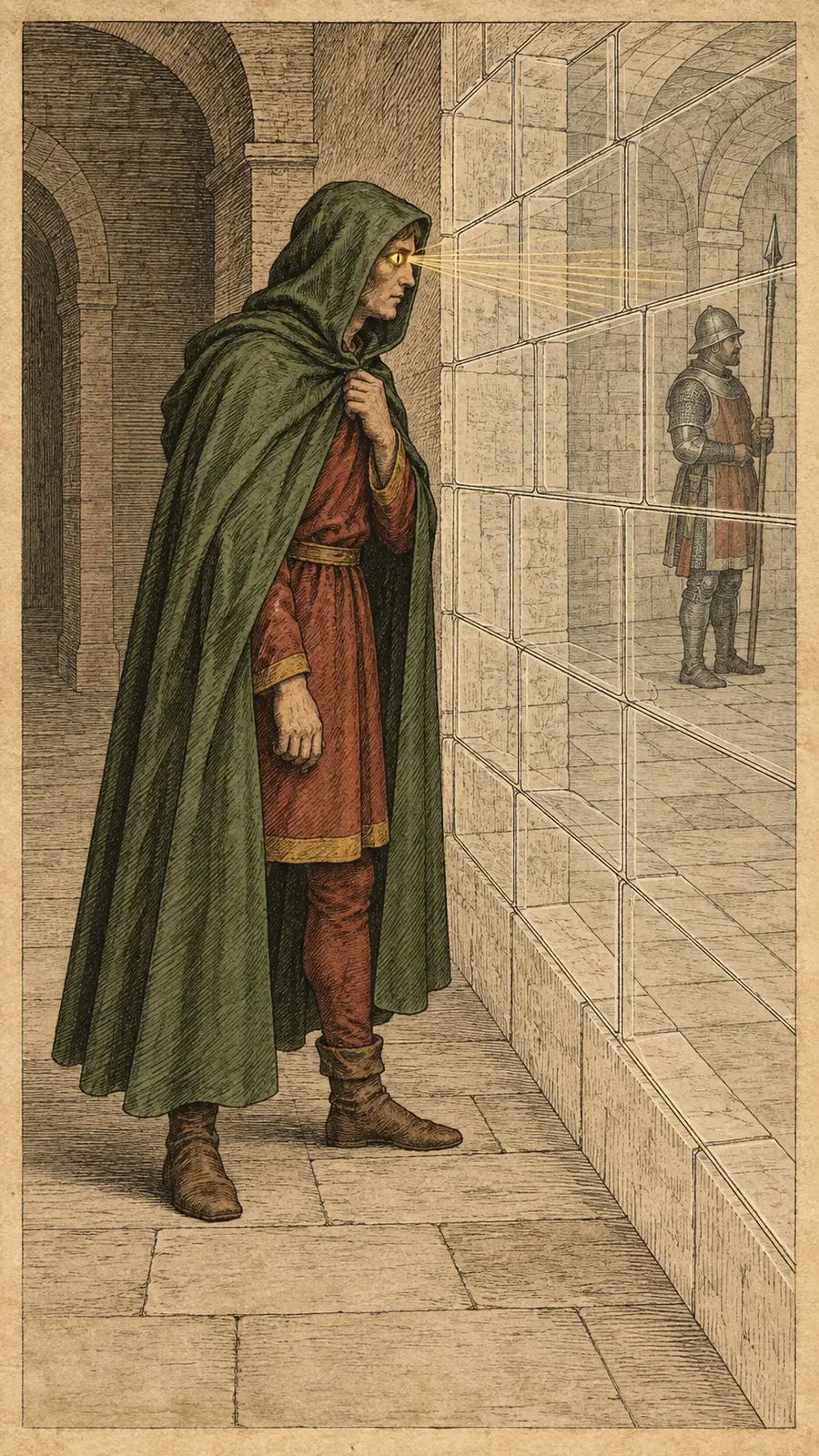
The relics in this edition feel very close to the oldest versions, with a few new shadows. To take the Eye, you gouge out your own eye and press the artifact into the empty socket. It grafts to you and stays until you die. If it's ever taken out, you die. Once it settles, it becomes a golden eye with a slitted pupil, like a cat's, and your heart turns toward neutral evil. You see with truesight now, past every disguise, and you can look through solid walls as if they were glass. The Eye lets you peer at distant places, cloud the minds of those around you, unmake things with a gaze and bend a creature's will entirely to your own.
But every time you call on its magic, there's a small chance that Vecna notices. If he does, he tears out your soul and devours it, and afterward he wears your body like a puppet. The Eye was never really yours. It was always his, and you were only keeping it warm.
The Hand asks the same kind of price. You cut off your own left hand at the wrist and press the artifact to the stump. It grafts on and works like any hand, and taking it off again would kill you. It lends you enormous strength. Your touch, and any weapon you hold, carries a biting cold. It can put others to sleep, slow them down, carry you across great distances in a heartbeat, and, like its master, point a finger and end a life. A person who wears both relics together can call on a wish, once in a long while, perhaps once a month. And each pair is a little different from every other, because the Dungeon Master rolls a few of their powers, good and bad, at random.
The Sword of Kas was here too, sentient and thirsty. It is a longsword that hungers for blood. If its bearer draws it and doesn't bathe it in blood within about a minute, the sword may take control of them and force the bloodletting itself. The spirit of Kas lives in it, making its bearer quick in battle and letting them turn the blade's power to their defense, and it is especially deadly against the undead, which is its maker's old nightmare turned into steel.
And the three relics are bound together by an old rule. If a single creature carries both the Hand and the Eye, and the Sword of Kas slays that creature, then both of the relics burst into flame and crumble into ash, destroyed forever. It works the other way too. Someone who bears both the Hand and the Eye can use their wish to try to unmake the sword, and then the two wills, the sword's and the bearer's, strain against each other. The betrayal in the Rotted Tower, written as a law of the universe.
In 2015 the Sword Coast Adventurer's Guide offered Vecna as a god for clerics devoted to arcane knowledge, and as a possible patron for warlocks who draw their power from the undying. And a few years later, in 2020, the Explorer's Guide to Wildemount brought him formally into Exandria, the world of the web series Critical Role. There he is one of the Betrayer Gods, known as the Whispered One, a god who climbed to divinity in that world too, and was fought. We'll spend more time with that story later tonight.
In June of 2022, when a new villain named after Vecna was frightening millions of television viewers, the game answered with a gift. D&D Beyond released a free digital booklet called The Vecna Dossier, which anyone could claim for a limited time. It told his backstory and his rise to power, shared lore on the Sword of Kas and the Book of Vile Darkness, and gave him a brand-new set of game statistics.
That stat block is fascinating, because it shows Vecna at a particular moment in his life. It describes him as the archlich before he became a god, and before Kas ever took his hand and eye. He is whole. He is a spellcaster of the highest order. He shrugs off defeat more often than almost any other monster can. His undead servants near him grow fearless and can't be turned away by holy power. He can raise wraiths and greater zombies from the ground to serve him. With his left hand, that same hand that will one day become a relic, he can reach out and touch a creature and drop it to the edge of death. And he can send out a cone of screaming, flying spectres, a feature named Flight of the Damned.
Perhaps the most telling feature is what happens if you do manage to kill him. His soul simply refuses its fate. It lingers as a bodiless spirit and slowly, over anywhere from a year to a century, builds itself a new body. Then he returns, at his full strength, as though nothing had happened. It's the lich idea taken to its limit, a being for whom death is only a delay.
Two years after that, in May 2024, Wizards of the Coast released Vecna: Eve of Ruin, the first book of the game's fiftieth anniversary year. It was a campaign for characters from tenth to twentieth level, built by a team led by Amanda Hamon, with Makenzie De Armas, Ron Lundeen and Patrick Renie among its designers. The earlier episode on this channel followed the relics through this book. Tonight, let's walk through the story itself, because it's one of the largest stages Vecna has ever been given.
He is weaving a ritual. It's called the Ritual of Remaking, and what it would do is almost too large to picture. It would wipe out good. It would destroy the gods. It would bring every world under his rule and remake the multiverse around him. And it would rewrite history itself, so that he sits at the top of reality, has never once known defeat, and leaves everyone who ever opposed him living in torment. Imagine a god so wounded by his defeats that he would unmake the past rather than live with them.
The ritual needs fuel, and its fuel is secrets. For years, his cultists on every plane and in every world have been ordered to pull important and powerful secrets out of people, and each stolen secret feeds the weaving. It is exactly the kind of engine the god of secrets would build.
The story begins in the city of , in the Forgotten Realms. Nobles have been going missing. Deep beneath the city, a cult of Vecna has been magically drawing secrets out of the people it kidnaps and passing that power on to its god. When the heroes break up one of the cult's sacrifices, they are flung sideways out of the world, into a place called . It is Neverwinter's reflection in the , a grey, undead-haunted version of the city where the lamps give no warmth. And they come back changed. They carry a new link to Vecna himself, a thread that lets them draw power from secrets they uncover. That same thread, as we'll see, will lead them to him at the end.
Next they find out why this is happening to them. Three famous wizards have learned of the ritual: Mordenkainen, founder of Greyhawk's Circle of Eight; , a young version of the witch who is the daughter of ; and Alustriel Silverhand, one of the Seven Sisters of the Forgotten Realms. Together they cast a wish in their sanctum in , asking for something that could spoil Vecna's plan. The wish summoned the heroes. So the characters meet the Wizards Three in the City of Doors, and learn what they must do.
They need the Rod of Seven Parts. Do you remember it, from that first cabinet of artifacts back in 1976? The rod that grew stronger as its pieces came together? Here, at last, it returns. Only the assembled rod can pierce Vecna's divinity and bring him back down to the form of an archlich, something that can be fought. And its pieces are scattered across the multiverse.
The hunt for those pieces is where the book becomes a tour of the game's fifty years of worlds. The heroes sail the Astral Sea aboard a vessel on its last voyage, in the silver void of . They search a ruined colossus in Eberron. They walk into Death House in Barovia, in , where Strahd von Zarovich waits, reshaped for a rematch. They travel to , the world of Dragonlance, where the followers of the death knight Lord Soth use a piece of the rod to make red moonlight, and that light corrupts a tribe of good werewolves, and a lunar dragon waits at the end. They go to the Isle of Serpents in Greyhawk, Vecna's own home world, to a tomb of wayward souls. And they descend into , the first layer of the Nine Hells, where the Dragon Queen keeps her pride. A strange false-lich version of Acererak turns up along the way, too, a small reminder of Vecna's old apprentice.
Along the way, the clues also lead into Cavitius, Vecna's domain in the Mists. There the heroes must find the secret way into the Shadowed Room, an ancient library that no longer exists anywhere in time or space, yet can still be reached through an arcane ritual. Imagine a reading room lit by candles that burn in no particular century, its shelves holding whatever is kept in a place that isn't anywhere.
Then comes the turn of the tale, and it echoes the oldest story in Vecna's life. The Mordenkainen who has been traveling with the heroes, advising them, helping them gather the rod, is not Mordenkainen at all. He is Kas.
Here is how it happened. In his prison domain of Tovag, the Dark Powers had whispered to Kas that his old enemy had returned. They led him to a hidden forge, and there he found a thing called the Crown of Lies. The crown masked his true purpose, made him seem sincere, and made him look human again, as he had been before he fell. It would reveal him as a vampire only once he acted on his real aims. Kas made a promise to the Dark Powers: he would deliver Vecna into their hands. And they let him go. Alustriel's wife, Malaina, is the first to suspect that something is wrong with this Mordenkainen. But by then Kas has what he wanted. He turns the assembled rod on Alustriel and Tasha, striking them down, though both survive, and he flees with it to , the plane of howling winds.
Kas has a plan of his own. He means to free an ancient being called Miska the Wolf-Spider and to seize Vecna's ritual for himself, remaking reality in his own image instead of his old master's. The servant who once took his master's hand and eye now reaches for his master's final triumph.
The heroes follow him into Pandemonium, through its winding tunnels, to the shore of a place called the Ruinous Sea. There Kas's demonic army fights to free Miska from his prison in the Ruinous Citadel. And across the field, an unexpected force is fighting against Kas's army: Lolth, the Spider Queen of the drow, allied for her own reasons with Vecna. Picture two spider-shaped powers on opposite sides of one battle, the wolf-spider bound in his citadel and the demon queen of spiders standing with the lich who once sat on a spidered throne. The heroes can win back the Sword of Kas, too, in what the book calls Kas's plane of torment.
And then comes the eve of ruin itself. The heroes pass through a series of demiplanes, each one showing a possible version of the dark multiverse Vecna means to create. In one, Neverwinter has a new king. In another, the gods themselves lie dead. Each is a glimpse of a world that almost was, the way a nightmare shows you a room you know with one thing wrong in it. Because the heroes have been bound to Vecna by that thread since the very beginning in Neverwinter, once they learn where the ritual is being worked, they need only think of going there, and they are drawn to him.
They find him in the Cave of Shattered Reflection, his inner sanctum, in the middle of his great weaving. The ritual has cost him. It has worn him down so far that they face him not as a god but as a near-mortal lich. Skeletal arms rise from the ground around him to seize the unwary, and waves of cold negative energy roll outward to feed his undead. The heroes must wear him down, and then one of them must ring the Chime of Exile, with Vecna clearly in view, to banish him. And all the secrets they've gathered across the multiverse, the hidden motives, the false faces, the sad old histories, can be spent now as boons against the god of secrets.
If the heroes chose to help Kas take Vecna's place, the ending turns once more. Kas and Miska fight at their side and destroy Vecna. But then the heroes must face Kas and Miska too, because otherwise the multiverse will still be unmade, only by a different hand.
People who played it called it a greatest-hits tour of fifty years of adventure, and that's a fair picture. Some found the Vecna at the end didn't quite live up to all the dread that came before him. But the story it tells is a deep one. It begins with a stolen secret in a cellar and ends with a lich trying to rewrite the past, stopped by people who learned the secrets he wanted most.
Before we leave the shadows of this story, though, let's look more closely at the figures who stand around Vecna. Some of them have stories of their own.
Chapter X
Kas, Acererak and the other shadows of the tower
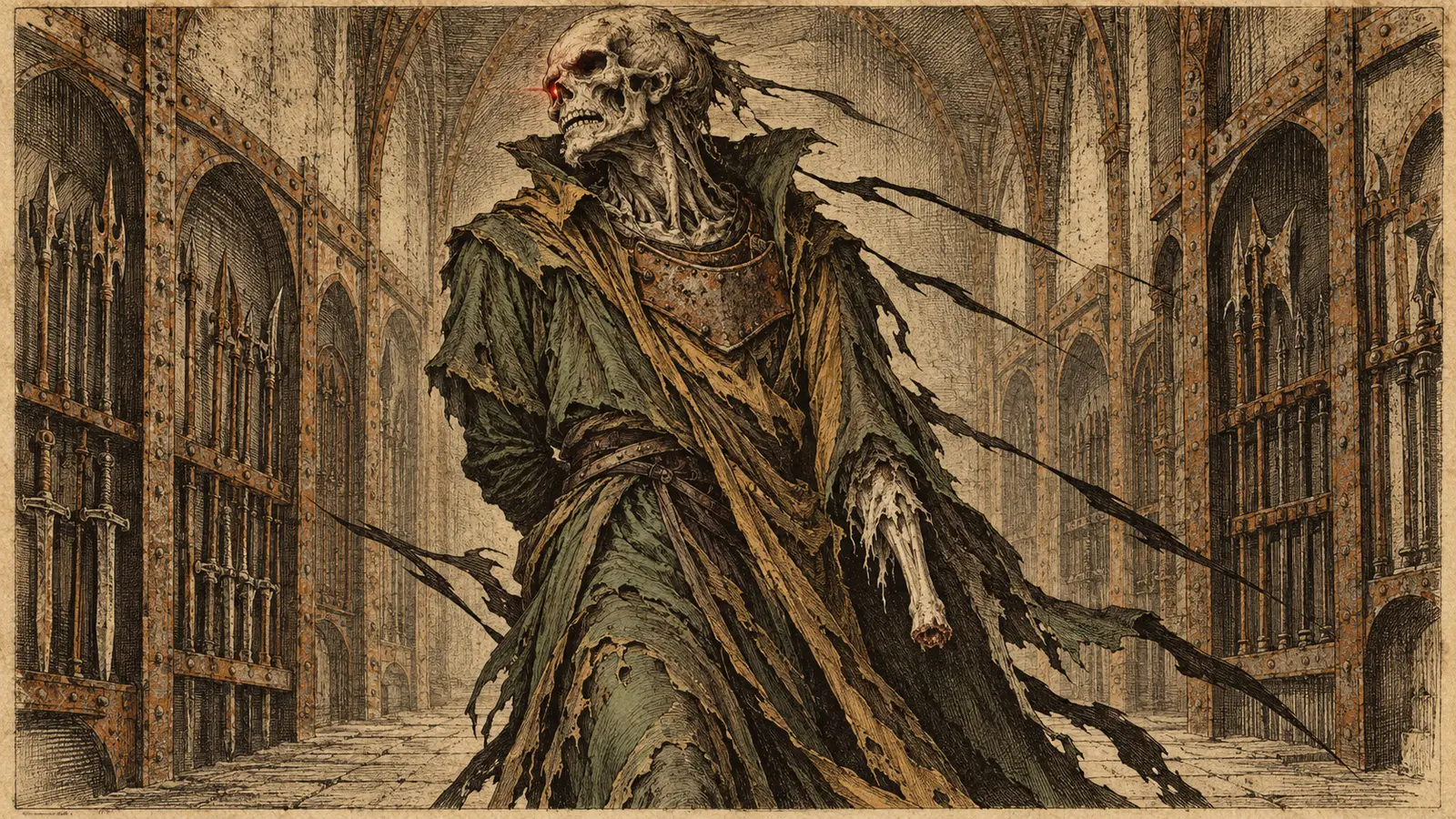
Every great villain casts other shadows, and 's are long. Some of those shadows are servants, some are rivals, and some are pale reflections of the lich himself. Let's walk among them one at a time.
Kas comes first, of course, because Kas is the shadow Vecna can never step out of. Look back over the whole of his story and you'll see how many shapes he has worn. In the beginning he was a single word in a slim booklet, a bodyguard. Then he was the chief lieutenant for whom Vecna procured a mighty sword. Then the fallen paladin of Tycheron, the regent, the ruler in all but name, the one the sword whispered to. Then the betrayer in the burning tower.
After that, the tellings branch like the roots of a tree. In one branch, he made himself a vampire with Vecna's own gifts. In another, he was flung across the multiverse into Cavitius, on the Plane of Ash, and the negative energy there slowly turned him undead, and he took the name Kas the Destroyer. After Vecna failed in his bid to rule , Kas was freed from that prison after centuries. The legend says a wall of mist rose up before him, and when it cleared, he was lord of Tovag, looking across the Burning Peaks toward the land of his old master. In a third branch, Vecna sealed him in the citadel with his dying breath, and watched him suffer, hungry, forever.
Across all those branches, a few things stay the same. Kas wants his sword. He wants whatever his master has. He is always almost within reach of it. And in the fiftieth-anniversary story, he did something new. He betrayed Vecna a second time, wearing the face of a friend, and reached for the whole multiverse. When the game later gathered its greatest villains for that anniversary adventure, it counted Kas among five iconic figures, beside Acererak, Lord Soth, Miska the Wolf-Spider and Strahd von Zarovich.
The Sword of Kas is its own shadow, and in some ways the most frightening of all. It began as one of the first artifacts in the game, in the same book as the Hand and the Eye. In the old stories it was razor-edged, strengthened its bearer's arm, and called down lightning from the storm. Over time it gained a mind, and then a hunger. What makes it so unsettling is simply this: a piece of Vecna lives inside it. When it whispered treachery to Kas, it was Vecna's own malice turned outward. It was Vecna who taught the sword to betray, and the sword that taught Kas. You might say the Whispered One was undone by his own whisper.
Now let's turn to Acererak, whom we met briefly at the siege of Fleeth. He has a history in the real world that runs alongside Vecna's own. Gary created him for a famous adventure called Tomb of Horrors in 1978, a dungeon so lethal that it became legendary for its traps. In that first telling, Acererak was simply a human wizard and priest of surpassing evil who became a lich, and later a demilich, which is what a lich becomes after so many ages that almost nothing is left but a skull and a few jewels. In that first version, he had no link to Vecna at all.
Two decades later, Bruce Cordell, who would go on to co-write the adventure where Vecna invaded , returned to the tomb in a boxed set called Return to the Tomb of Horrors. He gave Acererak a childhood. The boy had fiendish blood in him, and he was hunted and scorned for it; some tellings make him a tiefling, others a cambion, a child of a demon and a mortal. He became a wizard and a priest of . His tomb, it was revealed, had never really been meant to guard treasure. It was a test, built to winnow the souls of the adventurers who entered it. Cordell also gave him a hidden stronghold called the Fortress of Conclusion, in a demiplane named .
In later lore, the two liches' stories were woven together. When Acererak was young, the tale goes, an angry mob came for him, and Vecna rescued him. The boy became one of the very few spellcasters the Arch-Lich ever taught in person, and in time he followed his master into undeath. At the siege of Fleeth, when the light of Pholtus struck Vecna down, it was Acererak who carried him away, and afterward Vecna raised him higher.
Then came the betrayal, and Acererak found himself without a master. He went south, to a vast marsh called the Great Swamp, and there he built his underground temple, raising it to a power the old texts call "now deceased," a power later named as Orcus. He became a demilich and drifted across the planes as a skull, while his tomb drew adventurers into its dark corridors, one after another, to feed their souls to his phylactery.
There's a lovely contrast between master and pupil. Vecna wants to be a god, and has spent a thousand years reaching for it. Acererak, by the account given in the anniversary adventure, doesn't want godhood for himself. What he did instead, in a 2017 adventure called Tomb of Annihilation, was something stranger. In the jungles of the Forgotten Realms, in a place called the Tomb of the Nine Gods, he hid a necromantic engine called the . Through it he fed the souls of the dead to an atropal, an unborn godling he had found drifting in the Negative Plane, trying to grow a god rather than become one. The Soulmonger brought a death curse across the whole world of Toril. The student learned from the teacher, you might say, and then drew a different lesson.
Iuz the Old One is another shadow, and a very different sort. He isn't Vecna's servant or his reflection. He was his prey. In the final adventure of the trilogy, Vecna laid a lure for him and swallowed him whole. Iuz escaped only when Vecna was broken in Sigil, bursting free of the lich's body at the moment of his fall. It's hard to imagine two dark gods of Oerth with a worse history between them.
Halmadar the Cruel is a smaller shadow, but a memorable one. A warlord of the Shield Lands, he gathered both relics and let them eat away at what little kindness he had left. He was buried alive for it, and when he rose again, he was Vecna's hand in the world, the undead thing that killed the Circle of Eight in the Kron Hills. He is a picture of what the relics do to a person over time.
Osterneth, the Bronze Lich of the fourth edition, is Vecna's mightiest servant in that age, a gleaming undead sorcerer in his master's service. Miska the Wolf-Spider, freed or nearly freed in the anniversary story, is an ancient being Kas would use against his old master. Lord Soth, the death knight of , and Strahd von Zarovich, the vampire of Barovia, stand beside Vecna and Kas as fellow lords of darkness in that same adventure's gallery of villains, each a different answer to the question of what it means to be cursed.
And far away, in the world of Exandria, there is Arkhan the Cruel, a warrior who stood beside the heroes when they faced Vecna, and walked away from that battle with the Hand of Vecna grafted in place of his own. We'll meet him properly when we come to Critical Role.
Finally, there's the cult itself, which is less a single shadow than a whole flock of them. Across every era, it has been the way Vecna returns. The Heart and the Thoughts, the Memories and the Fingers, the cells in Greyhawk and Verbobonc and , the kidnappers pulling secrets out of frightened nobles. Whenever the Hand or the Eye turns up, whenever a ritual stirs in a cellar or a plague creeps through a town in the Mists, it's usually the cult at work, quietly assembling the pieces of their god.
From these shadows, let's turn now to the table itself, where real people sit down with dice and pencils and find out what it's like when Vecna comes to call.
Chapter XI
Vecna at the table
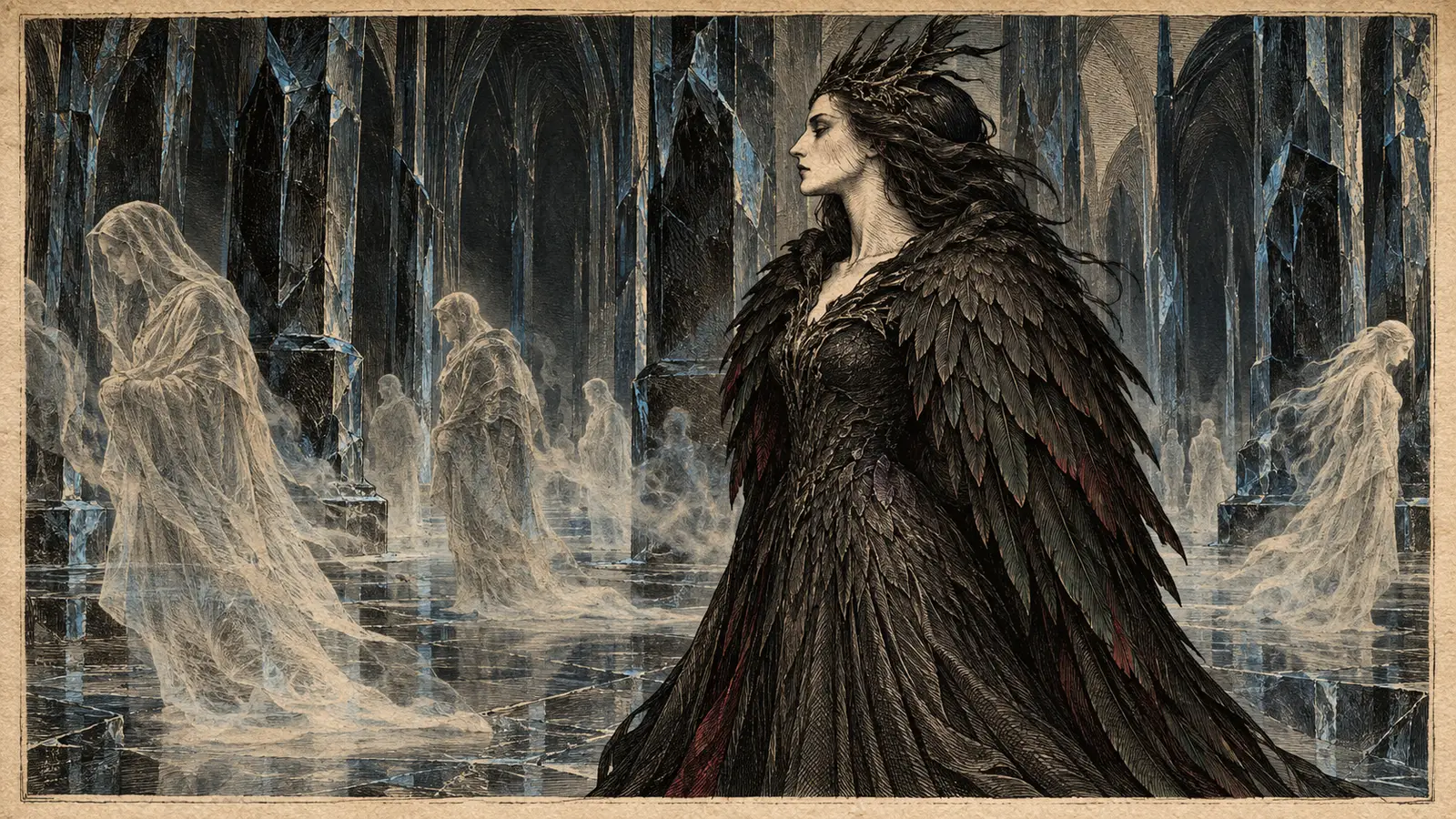
There's a particular hush that falls over a table when a Dungeon Master sets down a small, wrapped bundle in front of the players and says, very quietly, that it contains a blackened hand. Most people who have played the game for any length of time know what that bundle means. And most of them, if they're honest, feel the temptation at once.
That's the heart of the Hand and the Eye at the table. They are the game's great monkey's paw. They offer enormous power, and they ask for a price that is physical and permanent and a little horrifying. You must cut away your own hand, or take out your own eye, before the relic will join you. Once it's in place, you can't remove it without dying. It will change who you are, slowly, toward evil. In the newest rules, every time you use the Eye there is a small chance that himself will look back through it, eat your soul, and walk your body around like a puppet. And because some of their powers are rolled at random, no two tables' relics are ever quite the same. You don't really know what you've agreed to until you've agreed to it.
Imagine sitting across from your friends at that moment. One of them is already reaching for the bundle. Another is saying no, absolutely not, we're burying it. A third is asking the Dungeon Master, very casually, what happens if you only take the Eye. That conversation, happening at kitchen tables for fifty years, is one of the quiet traditions of the game. Players have schemed about these relics, argued over them and sought them out for longer than many of them have been alive.
In the fourth edition, the relics even kept score. They warmed to a bearer who betrayed a close friend and cooled toward one who destroyed the undead. So a player carrying the Hand might find the relic pushing, gently and constantly, toward the one act that made Kas famous. It's a way of letting players feel the story of the Rotted Tower in their own campaigns, without ever telling it directly.
Facing Vecna himself is a different kind of experience. In the adventure where Vecna first stepped onto the stage, the players began by sitting down as the Circle of Eight, with their famous names and their famous spells, and then they watched all eight of those wizards die in a few rounds at the cairn of Halmadar. There's no better way to tell a table that this villain is not like the others. After that, when they picked up their own characters, the apprentices and friends of the Circle, they knew exactly how thin the ice was beneath them. And Zeb Cook's advice to the Dungeon Master, to be extra strong and not give anyone a break, set the tone.
In the final adventure of the trilogy, the players stepped through three worlds in turn: the white stone circles on the steppe, the ash and twilight of Cavitius, the tangled streets of . At the end they carried pieces of Vecna's own body grafted to their flesh, so that the price of the relics became part of the victory. It asked for high-level characters and led them along a firmly fixed road, but many who played it remember the scale of it fondly, the feeling of every setting in the game colliding in one great climax.
For players who wanted to stand on the other side, fourth edition's column on Vecna offered something unusual. It asked whether a character could worship the god of secrets and still be a hero. Picture a cleric who keeps a small carved hand with an eye in its palm under her shirt, and never tells her companions everything she knows, and believes, perhaps, that some secrets protect people. It's an uncomfortable character to play, which is exactly what makes it interesting.
When a Dungeon Master brings Vecna to the table in fifth edition, they usually reach for the stat block from The Vecna Dossier, the one that shows him as the whole archlich before his maiming. Picture him standing in a vaulted chamber, and around him the floor begins to stir as wraiths and greater zombies rise at his call, up to a half-dozen at a time. The undead near him grow bold and can't be driven off by holy symbols. At the heroes' first attack he simply decides not to be affected, and does so again and again, more times than almost any other monster can. When he raises his left hand, and a spectral wind of shrieking spirits pours out of it in a long cone, the heroes know what Flight of the Damned feels like. And if one of them steps too close, he can reach out with that same left hand, touch them, and they fall to the very edge of death.
Even then, if the heroes somehow bring him down, he isn't gone. His spirit lingers and waits, and a year or a hundred years later, he returns. There's a lesson in that for any table. With Vecna, winning a fight and winning the war are different things.
The climax of Eve of Ruin turns those ideas around. By the time the heroes reach the Cave of Shattered Reflection, Vecna has spent himself on his great ritual, and they face him as a near-mortal lich rather than a god. The ground heaves with skeletal arms that grab at their ankles, and pulses of negative energy wash through the room to strengthen him and his servants. The heroes don't need to destroy him outright. They need to wear him down, and then someone needs to ring the Chime of Exile while keeping him clearly in sight. Meanwhile, every secret they collected across the multiverse becomes a small weapon in their hands. The false Mordenkainen's true face, a noble's hidden guilt, a tragic history uncovered in a haunted house: these are the currency of the final battle. It's a quietly clever idea. The god of secrets is beaten by people who kept a few of their own.
And then there's the most famous table of all, in its way, the one that millions of people watched from their own homes. In the first campaign of Critical Role, the long-running web series in which a group of voice actors play Dungeons & Dragons together, Matthew Mercer's players spent years building up their band of heroes, . And in the final arc of that first campaign, the villain was Vecna.
His cult revived him in an episode called "Race to the Tower," and the heroes realized with growing dread that he meant to become a god in their world of Exandria. The Briarwoods, a vampire couple who had troubled Vox Machina for a long time, and especially Delilah , turned out to be bound up in his rise. The heroes climbed a tower called Entropis to reach him, in an episode called "The Final Ascent." Joe joined them as a guest, playing Arkhan the Cruel, a warrior with his own reasons for wanting to see the lich brought down.
Their goal was not simply to kill Vecna. They meant to seal him away, which is harder, and they spent the last moments of the fight trying not to hurt him too much, so that he'd stay in place long enough for the seal to take hold. The battle ended in an episode called "Vecna, the Ascended," in the autumn of 2017. And in the middle of that victory, Arkhan did something that made many viewers laugh and gasp at once. He took the Hand of Vecna, replaced his own hand with it, and shifted away to another plane. Some things at a Dungeons & Dragons table never change. Put a powerful relic in front of a player, and someone will always reach for it.
The campaign closed with one more episode, "The Chapter Closes," in which the characters sat with what the battle had cost them, and the players talked quietly about what their heroes' futures might hold. It's a gentle way to end a story that had a god in it, and a good reminder that for most people, Vecna is an evening among friends.
From the table, let's widen the view further still, out into the world beyond the game, where the name of the Whispered One has traveled farther than anyone in that small office in Lake Geneva could ever have imagined.
Chapter XII
The Whispered One beyond the game
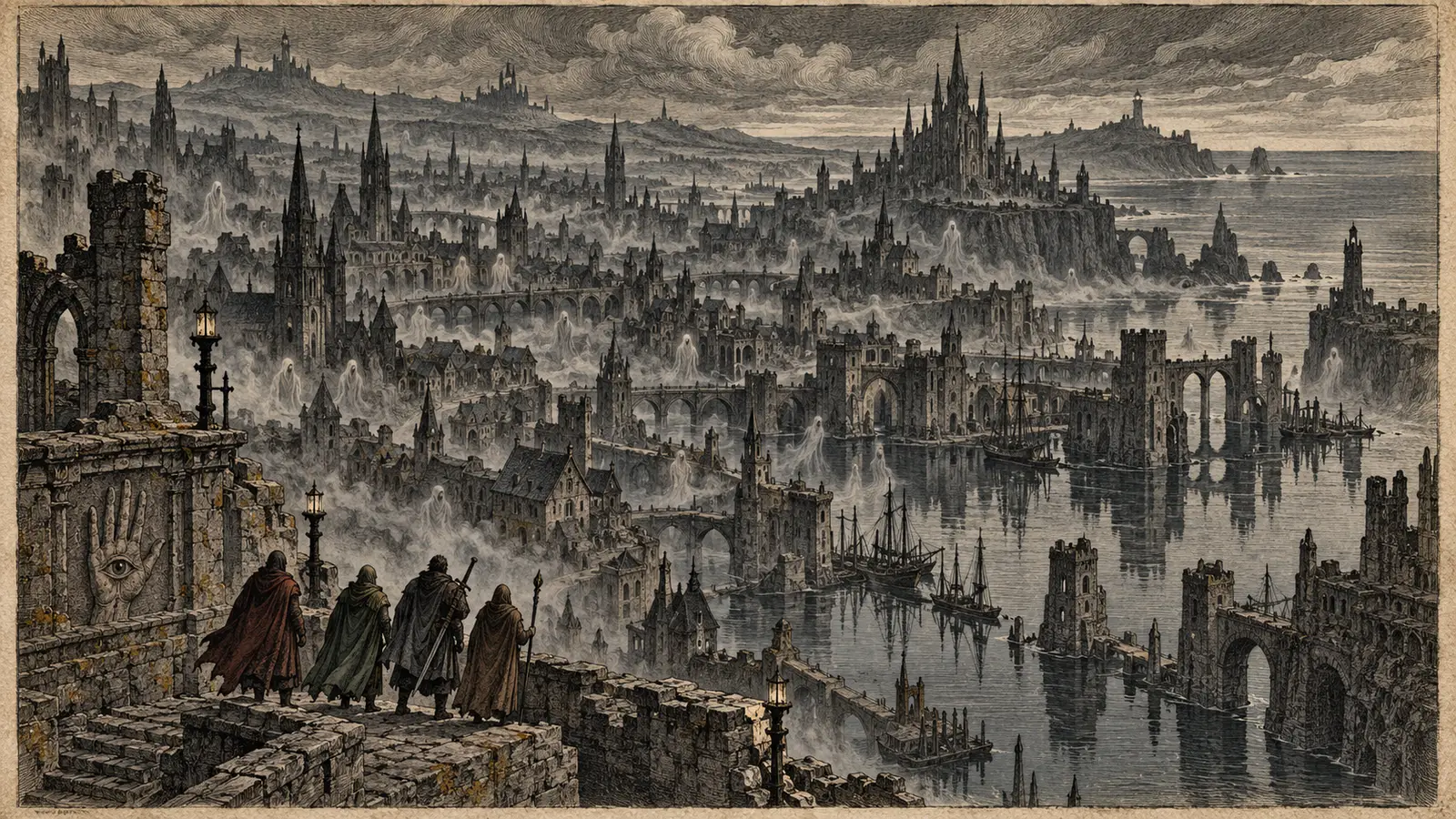
For most of his existence, 's story was told mainly through adventures rather than novels. The three great chapters of his tale, the scheme at Tovag Baragu, the prison in the Mists and the invasion of , were all adventures, meant to be played rather than read. In that sense, his legend was always something people built together, one session at a time. Over the years, people came to name him among the greatest villains the game ever produced.
But in the years around his fiftieth birthday, the name of Vecna escaped the game entirely and walked out into the wider world.
Much of that walk began with Critical Role. After the web series had carried to their battle against the Whispered One, the story became an animated series on Prime Video called The Legend of Vox Machina. And here the name itself became a secret, which Vecna would appreciate. The show didn't use the name Vecna. Instead, its villain is called simply the Whispered One, the old title standing in for the name, as it always has in the whispers of .
The third season, in the autumn of 2024, ended by hinting at him. The fourth season arrived in June 2026, in a dozen half-hour episodes released a few at a time. It picks up a year after Vox Machina's war against a band of dragons called the Chroma Conclave. The friends have drifted apart, and they must come back together as a long-sleeping evil begins to wake. There are cultists and blood rituals and troubling visions, and the Whispered One moving at the edge of everything. Wayne Brady joined the voice cast as Taryon Darrington. The season was warmly received. A fifth season has been announced as the show's last, and it will follow the heroes as they try to keep the Whispered One from being brought into the Material Plane.
Video games have carried his name for a long time, often in the form of treasures. In Baldur's Gate II and Neverwinter Nights, a wizard might find the Robe of Vecna, a powerful garment only an arcane caster can wear. In Planescape: Torment, a game set in Sigil, the very city Vecna invaded, a rare Eye of Vecna can be taken from a greater glabrezu, one of the pincered demons of the Abyss. Even in the old text-based game NetHack, some of its variants hide an Eye of Vecna in their depths, granting its carrier cold resistance and the ability to sense other minds.
In June 2024, the horror game Dead by Daylight released a chapter devoted to Dungeons & Dragons, and its new killer was Vecna himself, the lich of the game, voiced by Matthew Mercer, the same voice who had guided Vox Machina against him years before. In that game he lifts or blocks obstacles with a floating mage hand, sends out a row of five spectral flying spirits in his own Flight of the Damned, reveals hiding survivors and dispels their magic items with a sphere of dispelling power, and can simply rise into the air and fly. His abilities carry names like Weave Attunement, Languid Touch and Dark Arrogance. It's a curious thing to think of: the lich of the Rotted Tower, chasing survivors through a fog-bound field.
A few years earlier, in the summer of 2021, Magic: The Gathering gave the Whispered One a small, perfect story of his own. In its set Adventures in the Forgotten Realms, the Eye of Vecna is an artifact that lets its owner draw cards, at the cost of their life. The Hand of Vecna is equipment that makes a creature stronger for every card its controller holds. The Book of Vile Darkness creates zombies whenever its owner loses life. And if a player brings all three together, and sets them aside, they become Vecna himself: an indestructible zombie god, huge and dreadful, carrying all the powers of the three relics that made him. The god rebuilt from his leftover pieces. It may be the neatest summary of the whole legend ever printed on a small rectangle of cardboard.
The miniature makers WizKids gave him a set of his own too, a collection called "Eye and Hand of Vecna," so that players could set his servants on their tables in painted plastic.
And then there is Stranger Things.
When the Netflix series by Matt and Ross began its fourth season in May 2022, it introduced a villain who killed in a way no one in the town of Hawkins could explain. He reached into the minds of troubled young people and took them. In the season's first episode, called "The Hellfire Club," a young Dungeon Master named Eddie Munson runs a game for his friends, and he describes a terrible figure in the dark, one who is missing both his left arm and his left eye. Mike, one of the players, recognizes the description at once and says, "He was killed by Kas." The others protest that Vecna can't be here, that he doesn't exist, that he's dead. And Eddie answers, "No, he's alive. He's very much alive."
In the next episode, "Vecna's Curse," the young heroes give the new killer his name. They call him Vecna, after the lich in their game.
The Duffer Brothers were fond of the game and knew it well. They named the great horror villains of film, Freddy Krueger and Pinhead and Pennywise, among their inspirations for the character, and they admitted, with good humor, that they had "cheated a little bit" in that opening scene. Vecna, they said, "really wasn't a character until the '90s," and a game in the mid-eighties probably wouldn't have included him. But they decided that Eddie was a good enough Dungeon Master to bring him back anyway. It's a very gentle kind of cheating, and a very Vecna one: the Whispered One slipping into a story a few years before he was supposed to.
The character in the show is a very different being from the lich of Oerth. He is a man named Henry , also called One, son of Victor Creel, a man wrongly imprisoned for the deaths of his wife and daughter. Henry had strange powers of the mind from childhood. In the show's final season, which arrived in three parts at the end of 2025, Vecna's plan was to merge our world with a dark dimension beyond the Upside Down. In the last episode, called "The Rightside Up," Eleven faced him inside the vast shadowy mind of the Mind Flayer, and Will's newly awakened powers helped turn the struggle. Vecna told them that he and Henry were one. In the end, Joyce Byers brought his story to a close, and the Upside Down itself was undone. Before that, a stage play called Stranger Things: The First Shadow had told young Henry's story in 1959, opening in London's West End at the end of 2023, winning an Olivier Award for its set design, and moving to Broadway in the spring of 2025.
The effect on Dungeons & Dragons was remarkable. Searches for how to play the game rose sharply in the weeks after the fourth season arrived. Vecna turned up on toy figures and T-shirts, and his name reached millions of people who had never rolled a die or drawn a map. For a lich who had spent most of his fifty years in the back pages, rarely at the center of the game's story, it was a strange and sudden fame. Within two years he stood at the heart of the game's fiftieth anniversary, in Eve of Ruin.
There's something quietly fitting in all of this. A name folded out of another name, whispered in an office in the seventies, spoken at a thousand kitchen tables, and at last said aloud on television screens around the world. Even so, much of what people know about him still arrives in pieces: a missing hand, a missing eye, a name spoken softly. The legend has always traveled that way.
Let's come back now to the present, and see where the Whispered One's story rests today.
Chapter XIII
Where the lore rests now
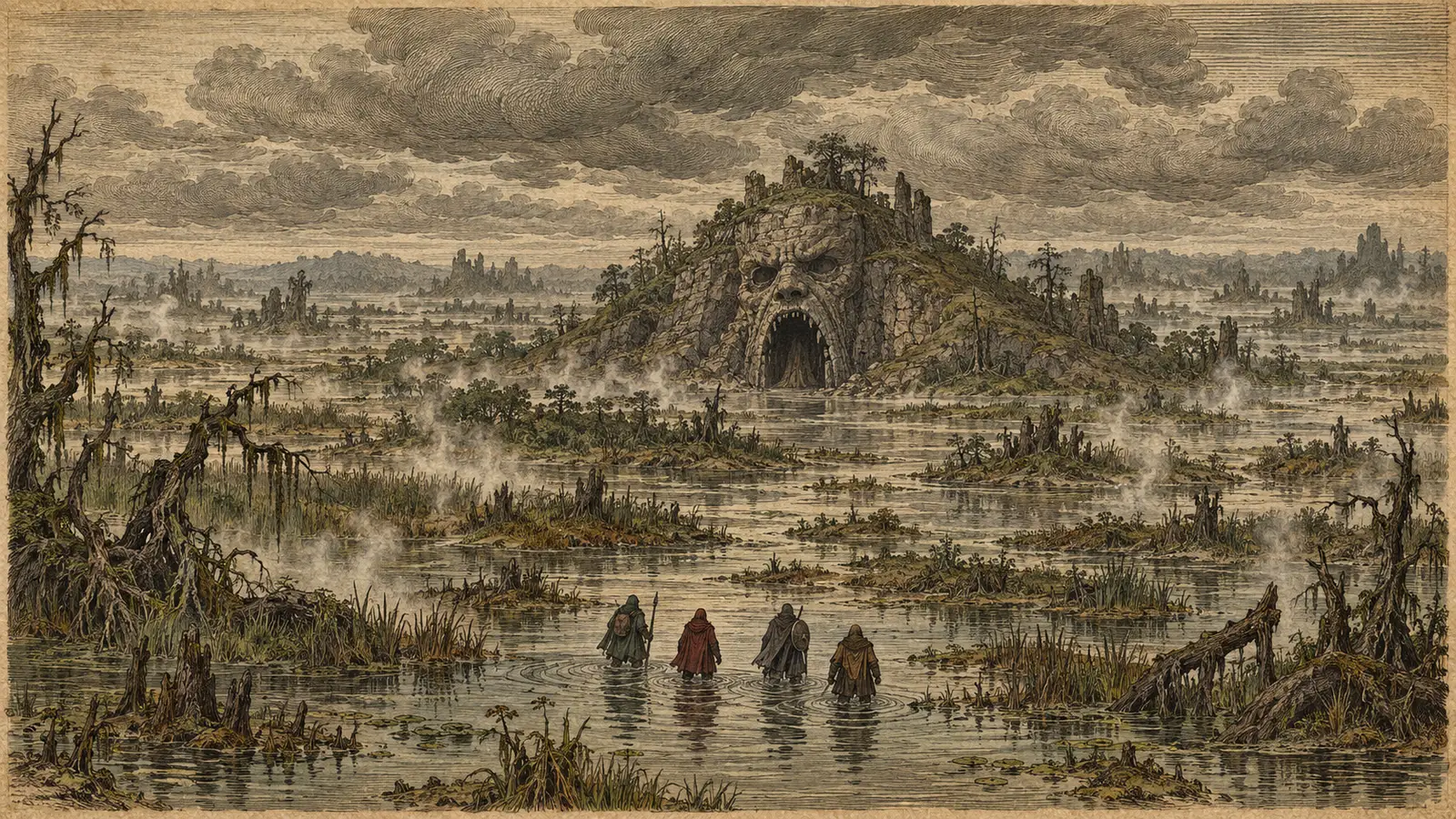
Here in the early autumn of 2026, the most recent full adventure to place at its center is still Vecna: Eve of Ruin. Its story stands as the latest great chapter of his life: the Ritual of Remaking, the secrets drawn from captives, the rebuilt Rod of Seven Parts, Kas's second betrayal, and the lich brought low in the Cave of Shattered Reflection and banished by the ringing of a chime. It isn't an ending. It's a pause. Nothing in all of Vecna's history has ever truly been an ending.
When the revised core rules arrived for the fiftieth anniversary, the new Dungeon Master's Guide of 2024 did something no guide had done before. It included a campaign setting within its pages, and the setting it chose was , in honor of the game's first published world. So , the world where a boy was born into the untouchable caste of Fleeth, returned to the core books, its map unrolled once more beside the rules.
The following year and into this one, the game has moved through a series of seasons, with books arriving in turn. In the summer of 2026, the Mists rolled back into view with Ravenloft: The Horrors Within, gathering the Domains of Dread again under its dim sky, with Strahd and many other darklords in their prisons. And in September, Arcana Unleashed arrived, with a companion adventure called Deadfall that takes high-level heroes against another great lich, Szass Tam of Thay, whom we met in an earlier episode. That story is framed through Alustriel Silverhand, one of the Wizards Three who summoned the heroes against Vecna. The two liches don't meet, but it's pleasant to imagine Alustriel, a little wearier now, thinking of the Cave of Shattered Reflection as she sets out against the next undead archmage.
There's one dated announcement that brings Vecna back into print. A book called Dungeons & Dragons Fiends & Foes: Beasts, Villains, and Monstrosities, written by Erin M. Evans, has been announced for the twenty-fourth of November, 2026. It's a lore and art book about the game's great villains, and its frame story follows a tiefling named Farideh as she carries a letter to Glasya, a princess of the Nine Hells. Her road takes her past many of the powers we've heard about tonight, and others besides: , Strahd, Lolth, , the mad wizard Halaster Blackcloak, the beholder Xanathar, and Vecna himself. No new adventure centered on the Whispered One has been announced. And on screen, the final season of The Legend of Vox Machina has been announced, following the heroes' effort to keep the Whispered One from being brought into the Material Plane.
So this is where the lore stands tonight. Vecna is a god of secrets, lesser in some tellings and greater in others, counted among the gods of Greyhawk and among the Dawn War pantheon. He was born human and wronged, became a lich and an emperor, was betrayed and maimed, was imprisoned in the Mists, broke into the City of Doors, and reached at last for the history of the entire multiverse. Each time, he has been stopped at the very edge. Each time, something of him has remained.
Chapter XIV
The secret that keeps itself
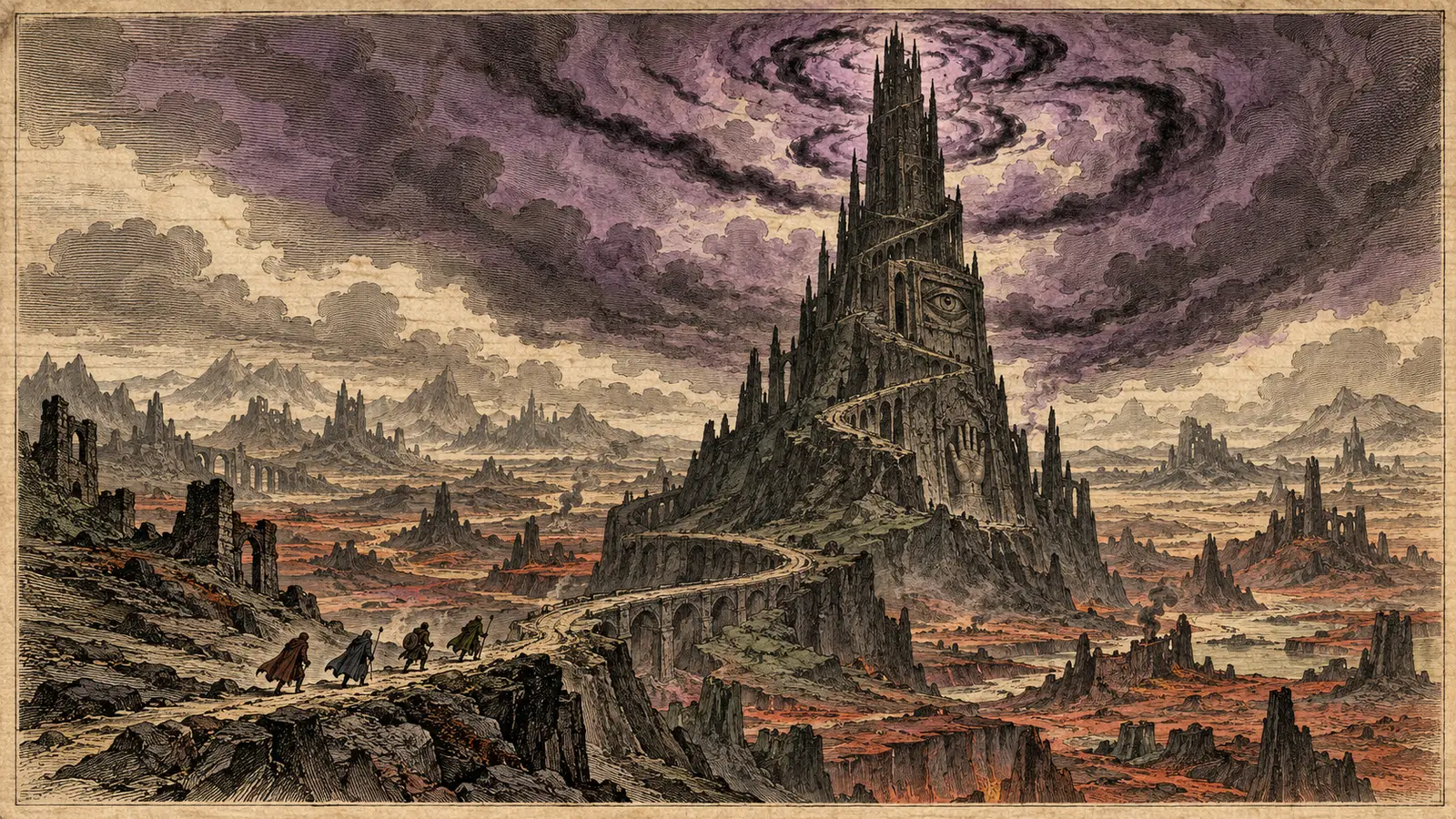
Let's end quietly, the way the Whispered One would want a story to end, with something held back.
Somewhere in the world, whatever world you like, there is a small room. It might be a cellar in Verbobonc, or a crypt beneath , or a forgotten chamber under the Rushmoors where the Rotted Tower once stood. The air is cool and still. A single candle burns on a stone shelf, and its light doesn't quite reach the corners.
On the shelf, beside the candle, rests a book with a plain, dark cover. It is closed. Perhaps it's a copy of the Book of Vile Darkness, stitched through with other people's pages. Perhaps it's something else, a book no one has ever opened. You don't open it tonight. You only notice that it's there.
Beside the book, wrapped in old cloth, lies a small bundle. You know what's inside. A blackened hand, dry and light as a dead leaf. A small red stone that isn't really a stone. They aren't doing anything. They're simply waiting, the way they've waited in treasure lists and tombs and cellars since a spring in the nineteen-seventies, when a man named Brian wrote them down and never told anyone what he meant by them.
And somewhere very far away, on a grey plain where warmth goes to die, or in a cave of broken mirrors, or in a place that no longer exists in time at all, their owner is thinking. He has lost a great deal. His hand, his eye, his tower, his empire, his servant, his godhood more than once. But he has never lost the thing he values most, which is the part of the story that no one else knows.
His followers have a teaching they pass from mouth to ear, never written in any scripture: never reveal all that you know. Perhaps that is why his legend has never quite finished. Every telling holds a little something back, a place just beyond the candlelight, where the Whispered One still keeps his own counsel.
The candle burns lower. The book stays closed. The hand and the eye rest in their cloth in the quiet dark. And if you listen very closely, you might hear his name, spoken once, very softly, by someone who would rather not say it at all. Then even that fades, and there's only the stillness of the room.